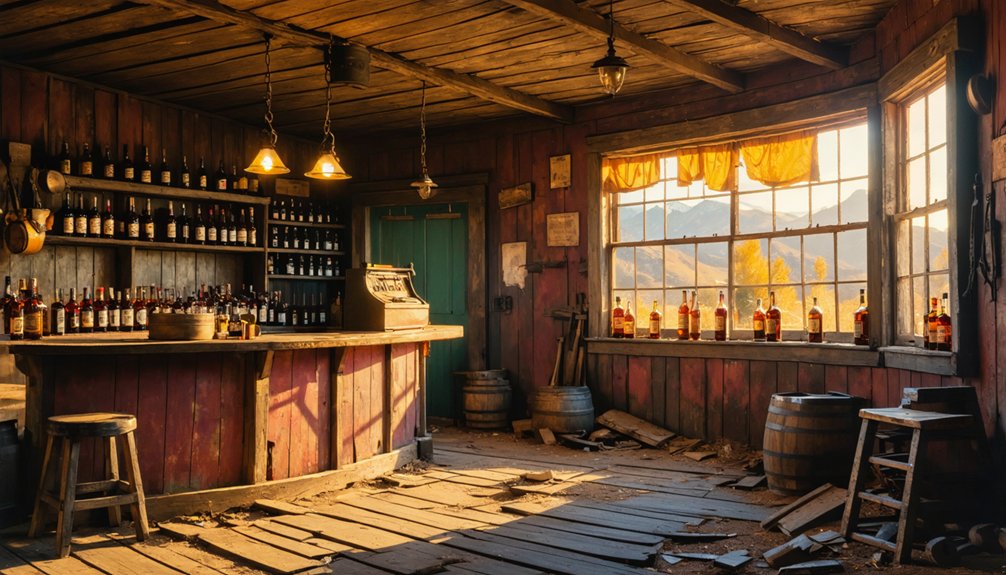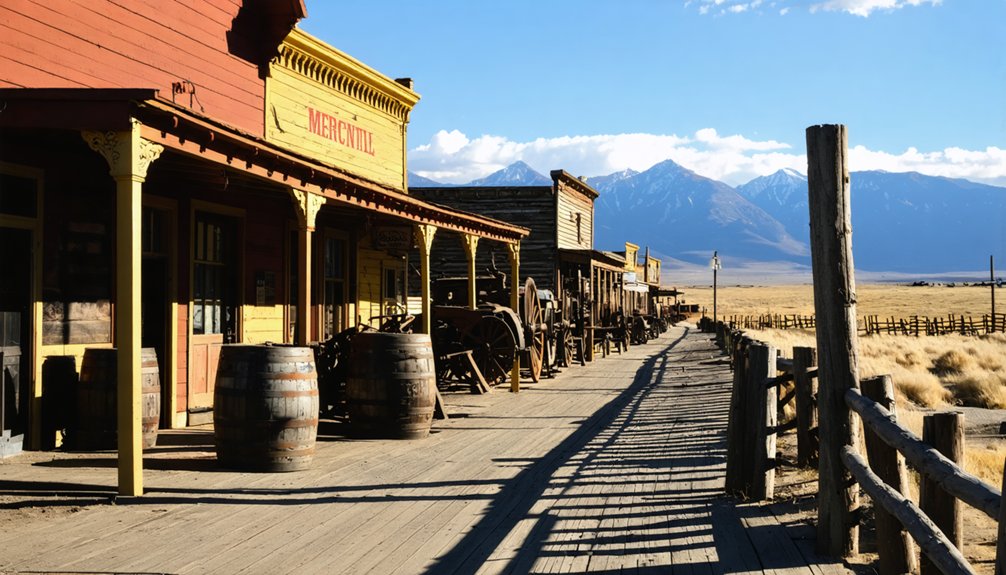
Planning your ghost town road trip to Swansea, California means following Highway 136 from Lone Pine to a silver-rush relic frozen in 1874. You’ll find crumbling stone walls, scattered artifacts, and a roadside monument marking where furnaces once churned out 150 silver bars daily. Pack water, offline maps, and a spare tire — cell service is unreliable out here. Visit in fall, winter, or spring to beat the brutal desert heat. There’s far more waiting ahead for the curious explorer.
Key Takeaways
- Swansea, founded in the late 1860s, processed silver ore from Cerro Gordo mines, producing 150 silver bars daily before closing in 1874.
- Access Swansea via 2WD roads from Lone Pine along Highway 136, traveling approximately 10 miles along Owens Lake’s western edge.
- Pack essential survival gear including water, food, a first-aid kit, and spare tire, as cell service is unreliable.
- Visit during winter, spring, or fall for manageable temperatures; summer heat can significantly limit comfortable exploration time.
- Never enter mine tunnels or shafts, watch footing near concealed openings, and never remove historical artifacts from the site.
Why Swansea, California Was Built and Then Abandoned
When silver ore started flowing out of the Cerro Gordo mines in the late 1860s, someone had to process it — and that’s exactly why Swansea, California came to life on the western shore of Owens Lake.
Col. Sherman Stevens constructed a furnace and mill in 1869, and by 1870, James Brady had taken over operations for the Silver-Lead Company. The town existed for one purpose: feed the demand.
Using available mining technology, the combined furnaces at Swansea and Cerro Gordo churned out 150 silver bars every 24 hours, each weighing 83 pounds.
At peak output, the furnaces produced 150 silver bars daily — each an 83-pound testament to industrial ambition.
But socioeconomic factors — shifting silver markets and dwindling ore yields — made continued operations unsustainable. By March 1874, the furnace closed, and Swansea quietly surrendered to the desert, leaving only crumbling walls and silence behind.
Ruins and Relics Still Standing at the Site
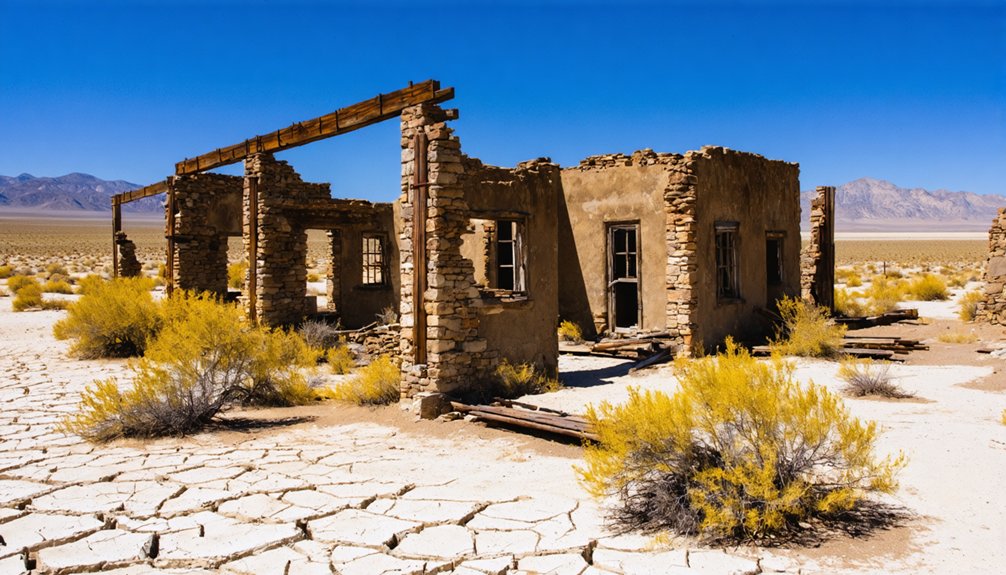
Today, a few crumbling walls, a stone cabin with a partial roof, and a roadside furnace monument are all that’s left of Swansea’s industrial ambitions.
The Silver-Lead furnace once churned out 150 silver bars every 24 hours, but now it’s a quiet roadside marker near Owens Lake along Highway 136.
Your ruins exploration here won’t take long, but it’ll leave an impression. The stone cabin still holds its shape, offering a rare glimpse into daily frontier life.
As you walk the site, you’ll spot historical artifacts embedded in the landscape, silent remnants of a town that vanished by 1874.
Respect what remains. Don’t remove artifacts, and stay clear of any unstable structures.
This place belongs to history, and you’re just passing through.
Nearby Ghost Towns to Pair With Your Swansea Visit
Swansea, California doesn’t have to be a standalone stop. The Eastern Sierra is rich with ghost town attractions that reward curious explorers.
Cerro Gordo, perched high above Owens Valley, fed Swansea’s very furnaces with silver-lead ore, making it a natural companion visit. Walking its ruins connects you directly to Swansea’s mining history in a visceral, tangible way.
Bodie State Historic Park, further north, offers one of California’s best-preserved ghost towns, frozen in time with structures still standing intact.
Darwin, tucked into the Inyo Mountains, adds another layer of remote mining heritage to your journey.
String these sites together across a long weekend, and you’ll trace a compelling arc of boom, bust, and abandonment across the California frontier.
When to Visit Swansea for the Best Experience
Timing your visit to Swansea, California makes a genuine difference in what you’ll experience out there. The best seasons are winter, spring, and fall, when temperatures stay manageable and the desert reveals itself without punishing you.
Summer heat along Highway 136 near Owens Lake turns brutal fast, draining your energy and shortening your exploration window considerably.
Summer heat hits hard here — plan accordingly or lose precious exploration time to the unforgiving desert sun.
Winter brings crisp air and quiet solitude, while spring awakens local wildlife across the high desert landscape, rewarding patient observers.
Fall delivers golden light that makes those crumbling walls and stone cabin remnants look especially dramatic against the Owens Valley backdrop.
You’ll travel 2WD-accessible roads, so no specialized vehicle is required.
Arrive early, move freely, and let the landscape speak for itself.
How to Reach Swansea on 2WD Roads
Starting your journey in Lone Pine, you’ll head south on Highway 136, a straightforward route that makes Swansea accessible even in a standard 2WD vehicle.
The drive covers roughly 10 miles, carrying you along the eastern edge of Owens Lake toward the remnants of this forgotten silver-lead town.
Keep your eyes open for roadside markers that signal your arrival at one of California’s most overlooked ghost town sites.
Starting From Lone Pine
If you’re heading to Swansea, California, Lone Pine serves as your natural launching point, sitting just 10 miles north of the site along Highway 136. This small Eastern Sierra town gives you easy access to one of the region’s most compelling ghost towns, rich with historical significance dating back to the 1870s silver rush era.
From Lone Pine, head south on Highway 136, following the road as it traces Owens Lake‘s western edge. The 2WD-accessible roads make this journey surprisingly approachable, letting you explore freely without specialized equipment.
Watch for the roadside monument marking the Owens Lake Silver-Lead Furnace site. Mild winters, spring, and fall offer the most comfortable visiting conditions, while summers bring intense desert heat you’ll want to avoid.
Highway 136 becomes your guide the moment you leave Lone Pine’s modest downtown behind, pulling you south through a landscape that feels like it’s slowly exhaling—wide, open, and stripped of everything unnecessary.
The Owens Valley stretches endlessly beside you, framed by the Sierra Nevada to the west and the Inyo Mountains to the east—two of the road trip’s most commanding Highway 136 landmarks.
You’ll cover roughly 10 miles before Swansea appears. The roads leading to the site are accessible by 2WD, so you don’t need a specialized vehicle.
Watch for scenic viewpoints near Owens Lake, where the dry lakebed shimmers with unexpected color. A roadside monument marks the old Silver-Lead Furnace site, signaling you’ve arrived at something worth remembering.
What to Pack for the Remote Desert Drive
Before you head out into the Owens Valley desert, you’ll want to pack essential survival gear: extra water, food, a first-aid kit, and a spare tire, since the remote roads near Owens Lake offer no roadside assistance.
You should also bring navigation tools like a detailed paper map or downloaded offline GPS route, because cell service is unreliable along Highway 136 and the surrounding back roads.
A charged emergency beacon or satellite communicator adds a critical layer of safety when you’re miles from help.
Essential Desert Survival Gear
Venturing into the remote Mojave or Owens Valley desert demands serious preparation, especially when you’re heading to isolated ghost towns like Swansea.
These desert essentials aren’t optional — they’re your lifeline when you’re miles from help.
- Water — Carry at least one gallon per person daily. Summer temperatures routinely exceed 100°F, making dehydration a serious threat.
- Navigation tools — Download offline maps before leaving cell range. GPS devices and paper maps are critical survival tips for unmarked desert roads.
- Emergency kit — Pack a first-aid kit, jumper cables, tire repair tools, and a reflective emergency blanket.
Tell someone your itinerary before departing.
The freedom to explore forgotten places like Swansea depends entirely on your ability to return safely.
Swansea California sits 10 miles south of Lone Pine along Highway 136, and once you leave that pavement, you’re on your own.
Download offline maps before you go — cell service disappears fast out here. A physical topo map and compass aren’t optional; they’re your backup when technology fails.
For safety precautions, carry a first aid kit, emergency whistle, and a satellite communicator like a Garmin inReach. Tell someone your exact route and expected return time.
Navigation tips worth remembering: note your mileage at Highway 136, watch for no-trespassing signs at the site, and never enter open mine shafts or tunnels.
The desert rewards prepared explorers and punishes careless ones. Pack smart, stay alert, and the freedom out here is absolutely yours.
Stay Safe Around Swansea’s Open Mine Shafts
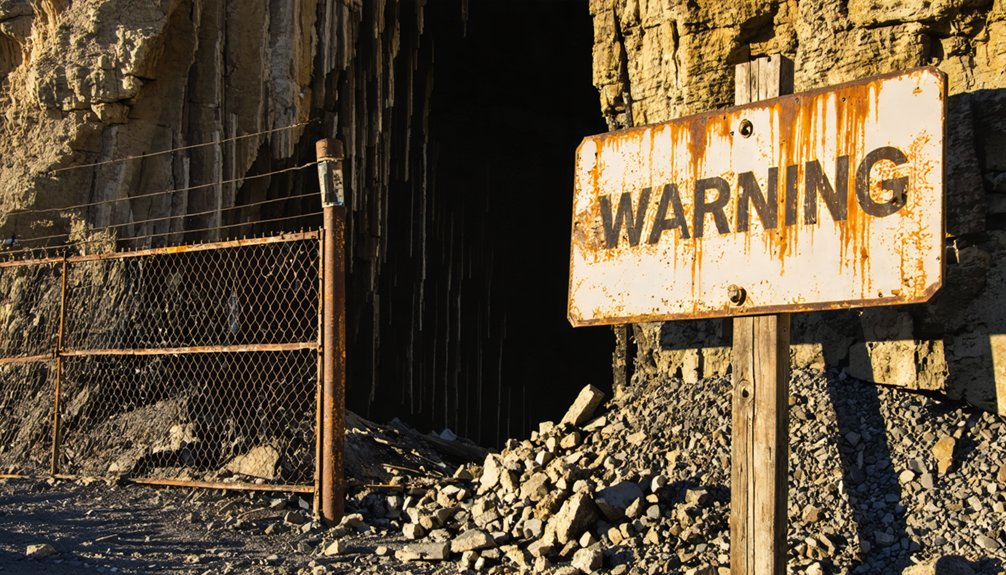
While the ruins of Swansea make for a fascinating exploration, the open mine shafts and tunnels scattered across the site are genuinely dangerous and demand your respect.
Understanding mine shaft dangers keeps your adventure free and your return trip guaranteed. Follow these essential safety precautions:
- Never enter tunnels or shafts — unstable walls and oxygen-depleted air can kill without warning.
- Watch your footing — shafts are often concealed by brush or debris, making every step a potential hazard.
- Keep children and pets close — unmarked openings appear suddenly across the landscape.
Swansea’s history belongs to everyone, so don’t remove artifacts either.
Explore freely, but explore smartly — the desert doesn’t forgive careless mistakes.
Is Swansea, California Worth the Trip?
What’s left of Swansea, California, is sparse — a few crumbling walls, a stone cabin clinging to its partial roof, and a roadside monument marking where the Owens Lake Silver-Lead Furnace once churned out 150 silver bars every 24 hours.
Yet that scarcity carries real weight.
If you’re drawn to places where history breathes through silence, Swansea delivers. Its mining legacy shaped the entire Owens Valley economy, and standing where Col. Sherman Stevens built his furnace in 1869 connects you to that raw, ambitious era.
The historic significance here isn’t manufactured — it’s embedded in crumbling stone and dry desert air.
Just respect the no-trespassing signs, don’t remove artifacts, and come ready for heat.
Swansea rewards curious, self-directed travelers willing to read the landscape carefully.
Frequently Asked Questions
Can You Take Artifacts or Souvenirs Home From Swansea, California?
You shouldn’t take artifacts home from Swansea, California. Artifact preservation protects this haunting site’s history for future explorers. Embrace souvenir ethics — you’re free to capture memories through photos, leaving every weathered relic undisturbed where it belongs.
Who Originally Built the Furnace and Mill at Swansea, California?
Col. Sherman Stevens built Swansea’s furnace and mill in 1869, shaping the town’s rich Swansea history. You’d marvel at the innovative mining techniques that once produced 150 silver bars every 24 hours, fueling your spirit of adventure!
How Many Silver Bars Did Swansea Produce Every 24 Hours?
When you explore Swansea’s remarkable mining history, you’ll discover it produced 150 silver bars every 24 hours. Each bar weighed 83 pounds, making its silver production a breathtaking demonstration of raw industrial freedom and pioneering ambition.
Is There an Entrance Fee to Visit Swansea, California?
Like an open book of history, Swansea’s entrance regulations won’t cost you a dime! You’ll freely explore its historical significance, though you must respect no-trespassing signs and never remove artifacts from this remarkable, time-worn site.
Are There Any Guided Tours Available at Swansea, California?
No guided tours are available at Swansea, California, but you’ll uncover ghost town history and local legends on your own, freely exploring crumbling walls, a stone cabin, and the historic furnace monument at your pace.
References
- https://www.youtube.com/watch?v=_OusTvk8NxQ
- https://davenkathy.blogspot.com/2019/01/swansea-ghost-town.html
- https://www.blm.gov/visit/swansea-historic-ghost-town
- https://www.ghosttowns.com/states/ca/swansea.html
- https://quarriesandbeyond.org/states/ca/structures/ca-swansea_monument.html
- https://www.youtube.com/shorts/7Qzqiy0zyI4
- https://digital-desert.com/swansea/