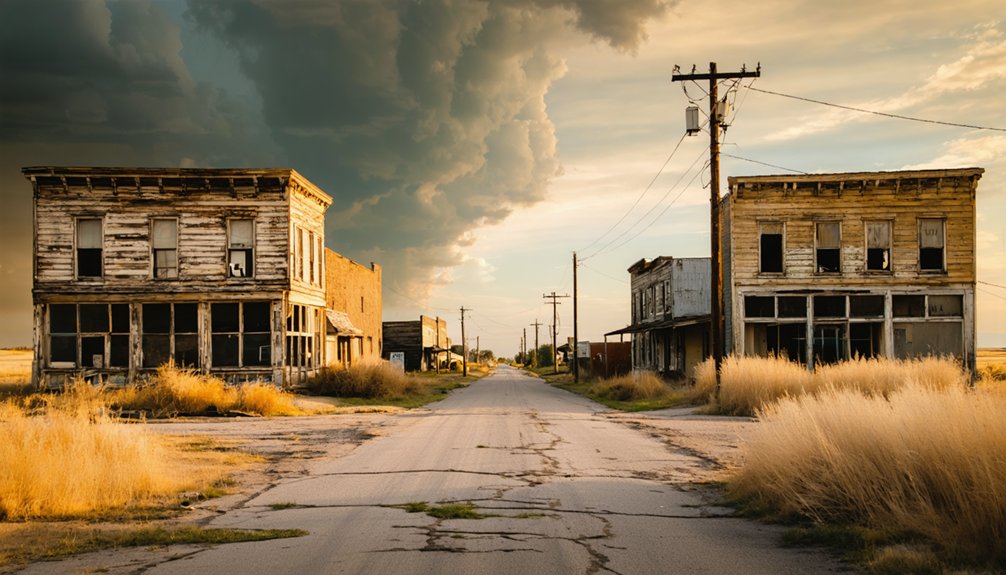
Despite what your search says, Taloga isn’t in Kansas — it’s in Dewey County, Oklahoma, about two to three hours from the Kansas border. You’ll find a living ghost town anchored by the 1925 Dewey County Courthouse, outlaw history tied to the Dalton gang, and a preserved 1892 land rush town layout. Stock up in Watonga before heading out, and bring cash, water, and offline maps. Everything you need to plan the perfect trip is just ahead.
Key Takeaways
- Taloga is actually located in Dewey County, Oklahoma, not Kansas, roughly 2-3 hours from the Kansas border via US-81 and US-183.
- The 1925 Dewey County Courthouse, listed on the National Register of Historic Places, anchors Taloga’s preserved original 320-acre town plat.
- Stock up on fuel, water, cash, and snacks in Watonga, 15 miles southeast, as it’s the last reliable supply hub.
- Spring and fall offer the best driving conditions; pack sturdy boots, layered clothing, a paper map, and a backup battery.
- Stay on public roads when photographing, seek permission before entering abandoned structures, and leave all artifacts untouched.
Taloga Is in Oklahoma: Why Kansas Travelers Should Care
Despite what the article title suggests, Taloga sits firmly in Dewey County, Oklahoma — not Kansas. But don’t let that stop you. If you’re chasing Kansan Curiosities across the plains, crossing the state line reveals a richer adventure.
Taloga is roughly two to three hours from Wichita via US-81 and US-183 — an easy, open-road stretch perfect for anyone craving wide horizons and untamed history.
The town carries the fingerprints of Oklahoma Outlaws literally. Members of the Dalton gang filed lots under fictitious names before settlers even arrived. That audacity is baked into Taloga’s bones.
You’ll find a county seat that peaked, quietly faded, and never fully disappeared — a living ghost town worth every mile you put between yourself and the Kansas border.
What Makes Taloga a Ghost Town Worth Visiting?
When you pull into Taloga, the 1925 Dewey County Courthouse immediately tells you this place once meant serious business.
Listed on the National Register of Historic Places, it anchors a town layout that still reflects the original surveyed plat — courthouse square, business district, and all.
You can actually walk the same streets the town’s founders mapped out before the 1892 land rush, making Taloga feel less like a ruin and more like a living blueprint of frontier ambition.
Historic Courthouse Still Stands
Although Taloga isn’t a ghost town in the traditional sense — no crumbling buildings or tumbleweeds rolling through empty streets — it’s got something most abandoned places can’t offer: a living, breathing piece of history still anchoring the town square.
The 1925 Dewey County Courthouse earns its spot on the National Register of Historic Places, and its courthouse architecture tells the story of a county seat that refused to disappear. You can stand in front of it and feel the historical significance of a community that survived economic decline, agricultural shifts, and the absence of a railroad.
Unlike ghost towns that offer only ruins, Taloga hands you something tangible. That courthouse isn’t just a building — it’s proof the town once thrived, and that proof is still standing.
Preserved Original Town Layout
What sets Taloga apart from a typical ghost town isn’t just its courthouse — it’s the original town plat that still shapes the community’s bones.
That preserved layout, surveyed across 320 acres before the 1892 land rush, gives you a rare chance to walk streets planned before Oklahoma even existed.
You’ll still find traces of the original design:
- Dedicated courthouse square anchoring the town center
- Platted business district along main corridors
- Designated church and residence lots
- Broadway’s community building footprint
- Clear separation between civic and commercial zones
Exploring this ghost town feels like reading an old map in real time.
The bones are there — you just have to look.
Bring your curiosity and respect private property as you roam.
The Outlaw History Behind Taloga’s Original Town Lots
Few Oklahoma towns can claim a founding story as colorful as Taloga’s: before the 1892 land rush even opened the territory, members of the Dalton gang had already slipped their names — fictitious ones — onto the original town plat, quietly staking their claims amid the chaos of frontier settlement.
These outlaw legends weren’t just riding trails and robbing trains — they were engaged in calculated town speculation, securing lots before ordinary settlers ever had a chance.
As you walk Taloga’s original plat layout today, you’re literally tracing ground that notorious frontier outlaws once quietly claimed under false identities.
That knowledge transforms a simple stroll through a fading Oklahoma county seat into something far more charged — a direct, tangible connection to America’s wildest, most unfiltered era of westward expansion.
The 1925 Courthouse and What Still Stands Downtown
Standing at the center of Taloga’s modest grid, the 1925 Dewey County Courthouse commands your attention in a way that little else in this quiet Oklahoma town can match.
This courthouse architecture earned a spot on the National Register of Historic Places (NR 85000680), making it the anchor of Taloga history worth driving miles to see.
Downtown still offers fragments worth exploring:
- The 1925 courthouse, structurally intact and historically designated
- Remnants of the original Broadway business district
- The community building that once anchored civic life
- Historic lot layouts reflecting the original 320-acre town plat
- Scattered original structures predating statehood
You’re walking through a living blueprint here.
Bring your camera, respect private property, and let the courthouse do the talking.
How to Get to Taloga From the Kansas Border

Heading south from the Kansas border, you’re looking at a two-to-three hour drive to reach Taloga, Oklahoma — and yes, that’s Oklahoma, not Kansas, despite what the article title suggests.
Kansas travelers departing from Wichita should take US-81 south, then connect to US-183, which delivers you directly into Dewey County territory.
Taloga access becomes straightforward once you hit State Highway 47, guiding you into this quiet county seat.
Stock your cooler and fuel tank in Watonga, roughly 15 miles southeast of Taloga, because amenities thin out considerably as you close in.
Spring and fall offer the most comfortable driving conditions — Oklahoma summers punish the unprepared.
The open highway stretch through the plains rewards you with wide skies and genuine solitude before you arrive.
Stock Up in Watonga: Your Last Stop Before Taloga
Before heading into Taloga, you’ll want to stock up in Watonga, Oklahoma — a small but well-equipped town roughly 15 miles southeast that serves as your last reliable supply hub.
Fill your tank here, since fuel options disappear once you push northwest toward Taloga’s quiet roads.
Watonga also offers a handful of local diners where you can grab a solid meal before trading paved convenience for wide-open Oklahoma countryside.
Watonga’s Essential Supply Stops
Watonga sits roughly 15 miles southeast of Taloga, making it your last real chance to stock up on fuel, food, and water before you venture into this small, amenity-sparse community.
Watonga amenities cover everything you’ll need before exploring Taloga history firsthand.
Grab these essentials before heading northwest:
- Fuel – Fill your tank completely; no gas stations await you
- Water and snacks – Pack more than you think you’ll need
- Cash – Digital payments won’t help in remote areas
- Paper maps – Cell service gets unreliable fast
- Sunscreen and layers – Oklahoma weather shifts unexpectedly
Don’t underestimate this stop.
Once you leave Watonga’s convenience behind, you’re trading modern comfort for raw, unfiltered history — exactly the kind of freedom a ghost town road trip promises.
Fueling Up Before Departure
Three essential stops in Watonga can mean the difference between a smooth ghost town adventure and a frustrating roadside breakdown.
Before heading northwest toward Taloga, hit the gas station on Main Street for fueling options that won’t be available once you leave town — Taloga’s remote stretch along US Highway 183 offers nothing in between.
Grab your trip essentials at Watonga’s grocery or convenience store: water, snacks, a paper map, and a basic emergency kit.
Cell service gets spotty past the county line, so download offline maps before you roll out.
Check your tire pressure and fluid levels while you’re parked.
Fifteen miles sounds short until you’re stranded on an Oklahoma back road with no signal and an empty tank.
Local Dining Options Nearby
Once your tank is full and your gear is squared away, your stomach deserves the same attention.
Watonga, roughly 15 miles southeast of Taloga, is your best bet for local eateries and solid dining recommendations before heading into limited-amenity territory.
Stock up and sit down while you can — options disappear fast once you roll northwest:
- Roman Nose Resort Restaurant — hearty Oklahoma comfort food inside a state park lodge
- Local diners on Main Street — rotating specials, friendly service, cash-friendly
- Grocery stores — grab road snacks and extra water
- Gas station delis — quick, no-frills fuel for the road
- Fast food chains — reliable backup if time’s short
Don’t leave Watonga hungry.
Taloga won’t have anything waiting for you.
Kansas Ghost Towns Worth Adding to Your Taloga Road Trip
Since you’re already venturing into Oklahoma’s ghost town territory, crossing back into Kansas to explore a few abandoned communities makes for a natural extension of your Taloga road trip.
The Kansas connections run deep, with compelling ghost town stories waiting just across the border.
Treece, Kansas, stands as one of the most haunting stops you can make. This former mining community received an EPA buyout in 2009 after toxic contamination made it uninhabitable.
Walking through its eerily quiet streets reveals the true cost of the Tri-State Mining District‘s boom-and-bust cycle.
Trading Post, another worthwhile Kansas stop, carries frontier-era history stretching back to the Civil War period.
Together, these sites transform your Taloga excursion into a multi-state journey through America’s forgotten communities.
The Best Season to Drive Out to Taloga
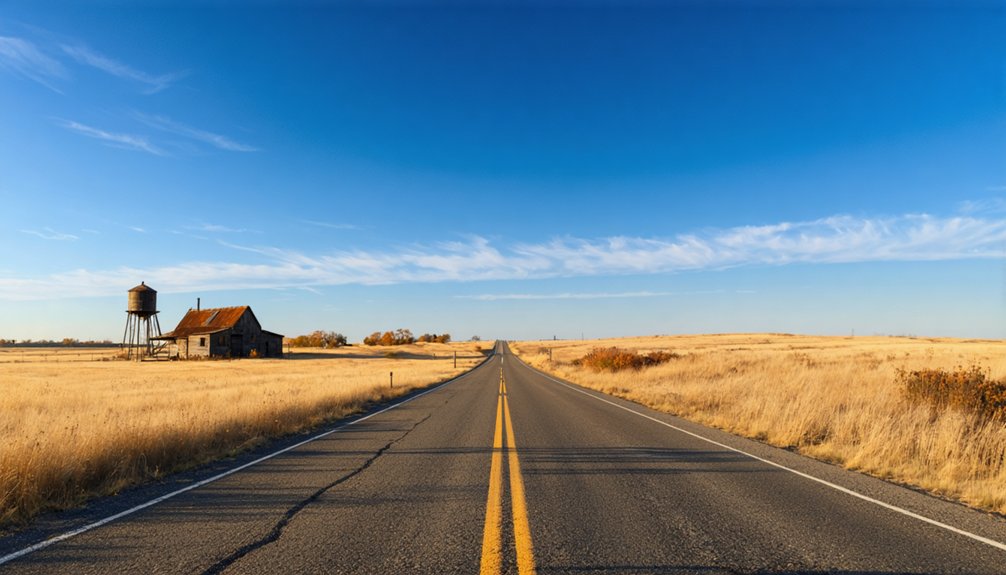
You’ll find spring and fall offer the most rewarding drives out to Taloga, with mild temperatures keeping the road comfortable and the landscape visually striking.
Fall foliage adds rich color to the Oklahoma plains, while spring brings clear skies and cooler air that make walking the historic town plat far more pleasant.
Avoid summer if you can — Oklahoma’s heat turns an outdoor ghost town exploration into an exhausting ordeal fast.
Spring Weather Driving Advantages
When spring rolls across the southern plains, the drive out to Taloga transforms into something genuinely worth savoring. Mild temperatures make comfortable travel effortless, and spring road conditions beat the cracked, heat-warped asphalt of July.
Here’s why spring earns the top spot:
- Temperatures stay between 60–75°F, keeping your vehicle cool and your focus sharp.
- Wildflowers line US Highway 183, rewarding every mile you cover.
- Longer daylight hours give you more time exploring without rushing.
- Reduced wind compared to winter makes open-road driving genuinely pleasant.
- Dry roads following winter thaw mean fewer hazards on rural Oklahoma stretches.
You’ll arrive refreshed rather than drained, ready to walk Taloga’s historic district and actually absorb what you’re seeing.
Fall Foliage Road Conditions
Fall offers its own compelling case for the drive out to Taloga, and the road conditions alone make it worth timing your trip for October or early November.
Summer’s brutal heat warps your experience, but fall stabilizes everything — cooler asphalt, sharper visibility, and less traffic crowding the rural highways.
US-183 and State Highway 47 cut through open Oklahoma terrain where fall foliage transforms the landscape into amber and rust, giving you something genuinely beautiful to watch between ghost town stops.
Rain is possible, so check forecasts before you leave Watonga. Gravel pull-offs near historic sites can turn muddy fast after a shower.
Keep your route flexible, carry a paper map, and you’ll move through this country exactly on your own terms.
Avoiding Harsh Summer Heat
Summer in Oklahoma doesn’t negotiate — it punishes. Triple-digit temperatures make ghost town exploration genuinely dangerous, so your summer alternatives are spring and fall. You’ll move freely, think clearly, and actually enjoy Taloga’s historic landscape.
Smart heat strategies start before you leave home. Consider these seasonal and practical guidelines:
- April through May offers mild temperatures and blooming prairie scenery
- September through October delivers cooling air and dramatic fall light
- Early morning departures beat afternoon heat spikes regardless of season
- Stock water and supplies in Watonga before reaching Taloga’s limited amenities
- Check weather forecasts 48 hours ahead — Oklahoma storms shift fast
Freedom means choosing when and how you explore. Don’t let summer steal that choice from you.
What to Pack for a Taloga Ghost Town Trip
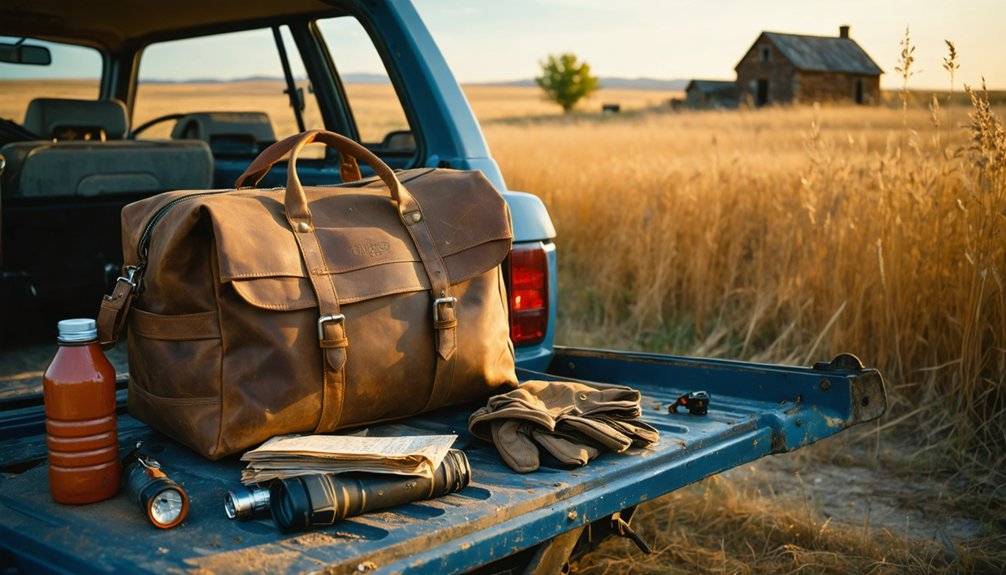
Packing smart makes the difference between a rewarding Taloga road trip and an uncomfortable one. Your exploration checklist should include sturdy boots, layered clothing, and plenty of water since Watonga’s amenities are your last reliable supply stop.
Don’t overlook safety precautions: carry a basic first aid kit, a paper map, and a charged backup battery since cell service gets spotty across Dewey County’s open terrain.
Your camera gear deserves serious attention here. Bring a wide-angle lens to capture the 1925 courthouse’s full facade, plus a polarizing filter for Oklahoma’s intense sky contrast. Extra memory cards and lens cloths handle dust buildup quickly.
Packing essentials round out your kit: sunscreen, insect repellent, snacks, and a flashlight guarantee you’re exploring confidently, independently, and on your own terms.
Private Property, Public History: How to Explore Taloga Without Crossing a Line
Though Taloga isn’t a fully abandoned ghost town, it still draws explorers enthusiastic to walk streets platted before Oklahoma statehood—and that’s exactly where the line between public curiosity and private intrusion gets blurry.
Respectful exploration means recognizing that historical preservation depends on your behavior today.
Preservation isn’t passive—every choice you make in a historic space either protects or erodes what’s left.
Keep these boundaries clear:
- Stay on public roads when photographing original town plat layouts
- Visit the 1925 Dewey County Courthouse—it’s publicly accessible and historically significant
- Ask locals before entering any structure that appears abandoned; private property laws apply
- Support community engagement by checking whether the county seat museum is open
- Leave everything untouched; removing artifacts accelerates decay and violates preservation ethics
Taloga’s story survives because people respect what remains.
You’re a witness here, not a collector.
Frequently Asked Questions
Does Taloga Have Any Overnight Lodging Options for Road Trippers?
You won’t find lodging options in Taloga itself, so you’ll want to base yourself in nearby Watonga. Stock up on supplies there, grab bites at local eateries, and enjoy day-tripping freely into Taloga’s historic streets.
Are There Guided Tours Available of Taloga’s Historic Downtown Area?
You won’t find formal guided tours of Taloga’s historic downtown, but you’re free to explore its ghost town history independently. Wander the courthouse square, soak up local legends, and discover remnants at your own adventurous pace.
Was Taloga Ever Considered for Relocation Due to Its Decline?
You won’t find records of Taloga’s relocation consideration, but its ghost town history reflects real economic decline — you’d see how limited railroad access shaped a community that simply shrank rather than moved.
Can Visitors Access the Dewey County Courthouse Interior During Visits?
Yes, you can typically access the Dewey County Courthouse interior during business hours. Don’t let its small-town setting fool you — its courthouse architecture and historical significance from 1925 make it a genuinely rewarding stop worth exploring freely.
Did the Dalton Gang Ever Return to Taloga After Filing Lots?
The historical record doesn’t confirm the Dalton Gang ever returned to Taloga after filing lots under fictitious names. You’ll find this mysterious chapter of Taloga History adds thrilling outlaw intrigue to your ghost town adventure!
References
- https://legendsofkansas.com/kansas-ghost-town-list/
- https://www.okhistory.org/publications/enc/entry?entry=TA009
- https://www.businessinsider.com/photos-of-ghost-town-treece-kansas-2017-4
- https://www.youtube.com/watch?v=zyj1rXAVIRM
- https://theactiveage.com/these-kansas-towns-didnt-stand-a-ghost-of-chance/
- https://www.youtube.com/watch?v=OyBXD18P_j4
- https://hometownhistorymaps.com/pages/history-of-taloga-oklahoma
- https://www.youtube.com/watch?v=Td_gmiDMfI4
- https://legendsofkansas.com/wichita-county-extinct-towns/