Planning a ghost town road trip to Parr, Oklahoma means visiting one of America’s most toxic abandoned communities. Once a booming lead and zinc mining town established in 1918, Parr’s poisoned soil and contaminated groundwater eventually forced every resident out. An EF-4 tornado in 2008 finished what the EPA buyout started in 1983. You can safely view remnants from paved roads, but strict precautions are essential. Stick around to uncover everything you need to know before you go.
Key Takeaways
- Parr, Oklahoma, was a lead and zinc mining community established in 1918, now abandoned due to toxic contamination and environmental hazards.
- Visible remnants include collapsed structures, overgrown lots, and EPA-fenced chat piles; stay on paved roads and keep vehicle windows closed.
- Avoid bringing children or pets, wear a dust mask, and remain alert to dangerous ground subsidence throughout the area.
- Visit between August and October for drier conditions, or winter for frozen ground, which reduces harmful airborne dust exposure risks.
- Nearby ghost towns Picher, Cardin, and Treece, Kansas, offer additional stops illustrating mining’s devastating impact on surrounding communities.
What’s Actually Left of Parr, Oklahoma?
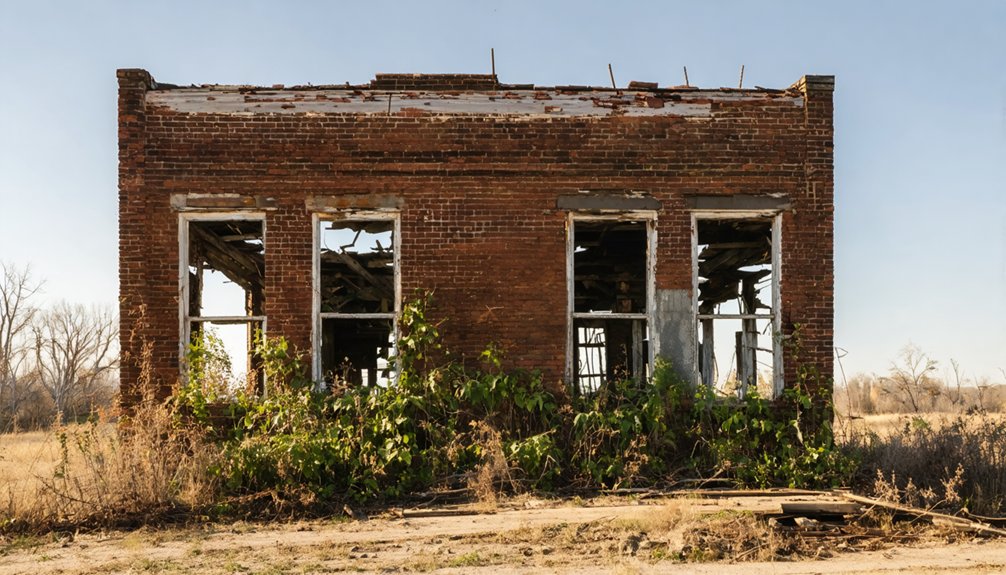
When you roll into what’s left of Parr, Oklahoma, the emptiness hits harder than you’d expect. Structures have collapsed or been demolished, leaving scattered foundations and overgrown lots where a thriving mining community once stood.
Parr history stretches back to 1918, when lead and zinc extraction built schools, businesses, and theaters here practically overnight.
Lead and zinc extraction transformed Parr overnight — schools, businesses, and theaters rising from Oklahoma soil starting in 1918.
What remains today tells a darker story. The toxic legacy of decades of unregulated mining left behind contaminated soil, poisoned groundwater, and unstable ground riddled with underground mine tunnels.
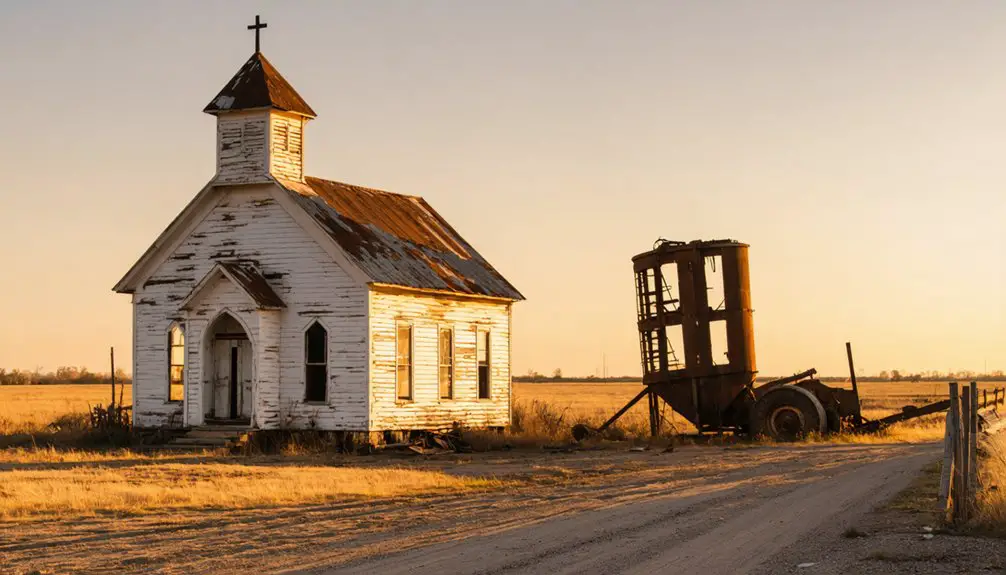
Chat piles — massive mounds of mining waste — still loom across the landscape, fenced off by EPA restrictions. An abandoned church stands as one of the few recognizable structures.
You’re looking at a place that contamination, not time, erased.
How Lead Mining Poisoned a Town and Forced Everyone Out
When you look at Parr’s collapse, you can’t separate the history from the poison left behind by decades of lead and zinc mining.
The chat piles — those massive mounds of crushed mining waste — leached cadmium, lead, and zinc into the soil, water, and air, causing birth defects, learning disabilities, and chronic illness among residents who’d no idea the ground beneath them was killing them slowly.
Mining’s Toxic Legacy
Decades of lead and zinc mining left Parr’s soil, water, and air laced with toxic heavy metals that made the town uninhabitable long before anyone officially admitted it.
The environmental impact wasn’t subtle — it was devastating and unavoidable. Toxic contamination crept into every corner of daily life through three primary threats:
- Chat piles leached lead, zinc, and cadmium into groundwater, turning creek water red and causing skin burns in swimming holes.
- Underground mine tunnels created dangerous subsidence, swallowing structures from below.
- Airborne dust from exposed chat carried heavy metals directly into residents’ lungs.
Children suffered learning disabilities and birth defects from lead exposure.
You couldn’t escape it — the poison was everywhere, invisible, and relentless.
Lead Poisoning Devastates Residents
The chat piles didn’t just contaminate Parr’s environment — they contaminated its people. Lead exposure silently ravaged entire generations, and residents had no idea what was happening until the damage was done.
Children played on those gray mountains of mining waste, breathing toxic dust and swimming in red-tinted water that burned their skin.
The health impacts were devastating. Families reported rising rates of birth defects and learning disabilities directly linked to lead poisoning. Blood tests revealed dangerously elevated lead levels in local children, robbing them of healthy futures before they even started school.
This wasn’t abstract environmental data — it was your neighbor’s kid, your family’s well water, your body absorbing poison daily.
That reality made leaving Parr not just a choice, but a survival necessity.
Forced Evacuation and Abandonment
By the 1980s, Parr’s toxic legacy had grown too dangerous to ignore, and the federal government stepped in with a brutal but necessary solution: pay residents to leave and never come back.
This forced relocation permanently erased a community that once thrived.
Three events sealed Parr’s fate:
- 1983 — EPA buyout program launched, offering residents cash to surrender their homes
- May 2008 — An EF-4 tornado demolished 20 blocks, stripping away any remaining hope
- 2009 — The town officially ceased operations, government refusing all rebuilding permits
The environmental impact was irreversible.
Contaminated soil, collapsing mine tunnels, and poisoned groundwater made staying impossible.
What Can You Actually See From the Road in Parr?
As you roll slowly down the roadside, you’ll catch glimpses of Parr’s haunting remnants — collapsed structures, overgrown lots, and the skeletal outline of an abandoned church that still stands as an eerie landmark.
The most striking features are the massive chat piles, those gray-white mountains of toxic mining waste, now fenced off by EPA barriers that signal just how dangerous this landscape remains.
You can take in the full, unsettling scene without ever leaving your car, which is exactly how authorities want it — entry is restricted, and the ground beneath those fences could literally swallow you whole.
Visible Roadside Remnants
Pulling up to Parr on OK-137, you’ll notice the landscape tells its story before you even stop the car. Ghostly echoes of the mining era surround you through visible remnants that no cleanup effort has fully erased.
From your vehicle, you’ll spot three powerful mining artifacts and landmarks:
- Chat piles — massive grey-white mounds of toxic mining waste rising unnervingly from flat terrain.
- Collapsed foundations — concrete slabs and broken walls marking where homes and businesses once thrived.
- Rusted infrastructure — twisted metal frameworks, old shaft markers, and deteriorating equipment scattered roadside.
You don’t need to leave your car to feel the weight of this place. The scenery itself delivers an honest, unfiltered account of industrial ambition meeting catastrophic environmental consequence.
Fenced Chat Piles
The chat piles are hard to miss — towering grey-white mountains of crushed mining waste that rise abruptly from the flat northeastern Oklahoma landscape like something deposited by a careless giant.
Chain-link fencing surrounds them now, marking boundaries you shouldn’t cross. Those barriers aren’t bureaucratic theater — they’re acknowledgment of real chat pile hazards, including windblown lead dust that still drifts across the roadside on breezy days.
The environmental impact here remains active, not historical. Cadmium, zinc, and lead leach steadily into surrounding soil and groundwater.
You’ll notice the fencing is weathered, patched in places, occasionally spray-painted by curious visitors who got closer than they should’ve.
Respect the boundaries. The piles aren’t going anywhere soon — EPA remediation moves slowly — but the contamination moves faster than you’d expect.
How to Get to Parr From Tulsa or Joplin

Whether you’re starting your journey from Tulsa or Joplin, reaching Parr takes only a few hours and follows straightforward routes through northeastern Oklahoma’s old mining corridor.
Road conditions vary seasonally, so check forecasts before heading out, especially in spring when tornado weather rolls through. These travel tips will keep your trip efficient:
- From Tulsa: Drive northeast on US-412 toward Miami, then take OK-137 north through Commerce — roughly 3-4 hours total.
- From Joplin: Head southwest on US-60 into Ottawa County, connecting near Picher in under 2 hours.
- Final Approach: Follow OK-137 north from Commerce, parking roadside near the site’s perimeter fence.
Don’t attempt entry — view Parr from the road and stay safe.
Safety Rules Every Visitor to Parr Must Follow
Visiting Parr isn’t like stopping at a typical roadside attraction — you’re stepping near one of the most contaminated Superfund sites in the United States, and the hazards here are invisible, cumulative, and serious.
Lead dust, cadmium, and zinc saturate the soil and air, making essential safety precautions non-negotiable. Stay on paved roads and never walk onto chat piles or disturbed ground. Don’t touch vegetation, fencing, or debris.
The ground here is poisoned — lead, cadmium, and zinc linger invisibly, making every precaution absolutely essential.
Keep your windows up while driving through — airborne particles carry real health hazards, especially on windy days. Never let children exit the vehicle. Avoid bringing pets.
The underground mine tunnels create unpredictable subsidence, meaning the ground can collapse without warning. Parr rewards curiosity, but only from a safe, respectful distance. Your freedom to explore ends where the contamination begins.
The Other Tri-State Mining Ghost Towns Near Parr
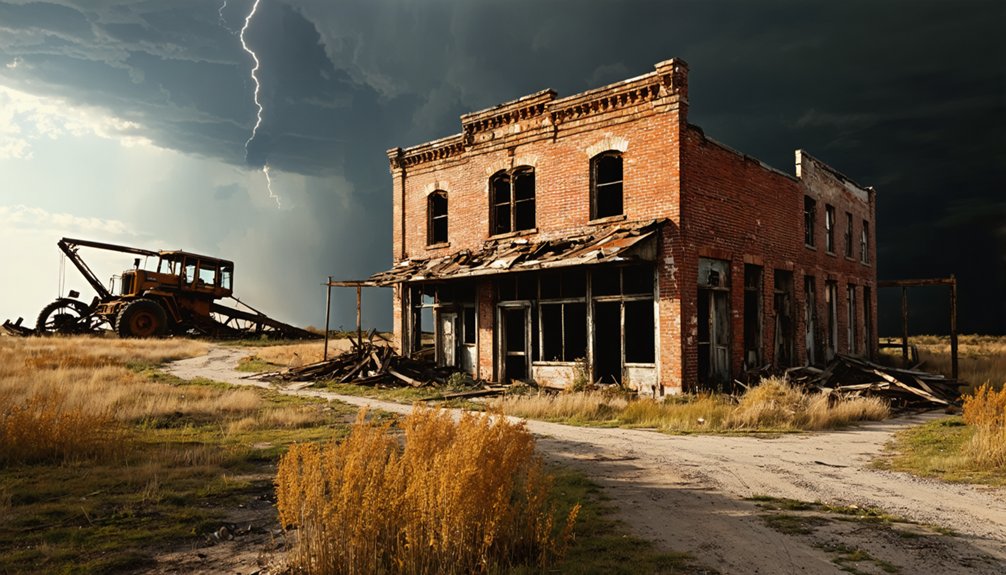
Once you’ve absorbed Parr’s eerie stillness from the safety of your car window, you’ll realize it’s not an isolated tragedy — it’s one ghost in a whole haunted corridor.
The Tri-State Mining District scattered several ghost towns across this toxic landscape, each carrying its own collapsed story.
Explore these neighboring sites to complete your mining history journey:
- Picher, Oklahoma — The district’s most infamous ghost town, featuring massive chat piles and crumbling infrastructure frozen mid-abandonment.
- Cardin, Oklahoma — A quieter shell just miles away, where foundations and empty lots reveal a once-bustling community.
- Treece, Kansas — Cross the state line to find this Kansas counterpart, equally devastated by contamination and subsidence.
Together, these ghost towns form an unforgettable, sobering road trip through America’s industrial past.
When Should You Actually Make This Drive?
Timing your visit to Parr matters more than you’d think — this isn’t a destination where bad weather is just inconvenient, it’s one where it can be genuinely dangerous.
Spring brings tornado season to northeastern Oklahoma, and Parr already proved catastrophically vulnerable in 2008. That’s your biggest seasonal warning among travel tips for this region.
Your best seasons are late summer through early fall — August through October offers drier roads, calmer skies, and manageable heat.
Winter works too, since frozen ground actually reduces dust inhalation risks from contaminated chat piles.
Whatever time you choose, arrive during daylight only, wear a dust mask, and stick to roadside viewing.
You’re not fighting restrictions — you’re respecting real hazards that have already displaced an entire community permanently.
Frequently Asked Questions
Did Any Former Parr Residents Ever Attempt to Legally Reclaim Their Properties?
Ironically, you’d fight to reclaim land that’s legally yours yet fatally toxic. Former Parr residents did pursue property disputes, but legal history shows federal buyouts and Superfund restrictions effectively extinguished all reclamation rights permanently.
Are There Any Guided Tours Officially Organized for the Parr Ghost Town Area?
You won’t find any officially organized ghost town tours at Parr due to Superfund restrictions. However, you can explore its historical significance through nearby Miami’s Route 66 sites and Quapaw tribe experiences instead.
What Native American Tribes Historically Occupied the Land Before Parr’s Founding?
You’ll find the Quapaw Tribe historically occupied this land, giving it deep tribal history and cultural significance. Their rich heritage predates Parr’s founding, and you’re exploring sacred ancestral grounds every time you visit this region.
Can You Legally Photograph or Film Inside the Superfund Restricted Zones?
You can’t legally enter Superfund restricted zones, making photography regulations and filming permissions irrelevant inside those boundaries. Capture your shots from public roadsides instead — you’ll still document eerie, hauntingly beautiful scenes without risking fines or health hazards.
Has Parr Ever Appeared in Any Documentaries, Films, or Television Programs?
You’ll find Parr history featured in several ghost town documentaries exploring Oklahoma’s abandoned mining communities. These films capture the eerie, toxic legacy, letting you virtually experience what you can’t safely visit in person.
References
- https://economichardship.org/2025/12/a-ghost-town-revival/
- https://www.okhistory.org/publications/enc/entry?entry=GH002
- https://mix941kmxj.com/here-is-the-sad-tragic-story-of-toxic-little-oklahoma-ghost-town/
- https://www.youtube.com/watch?v=1UptjVmgvOw
- https://www.changesinlongitude.com/picher-oklahoma-a-modern-american-ghost-town/
- https://www.youtube.com/watch?v=WCoabzqxjpw
- https://en.wikipedia.org/wiki/Picher