Three Saints Bay isn’t your typical ghost town road trip — there are no roads here. You’ll fly or sail 60 miles southwest of Kodiak Island to reach Russia’s first North American colony, established in 1784. Shallow pits, rectangular depressions, and a weathered cemetery are all that remain. You’ll need permits, advance bookings, and serious gear for Alaska’s unpredictable coast. Everything you need to plan this extraordinary journey into forgotten history is waiting just ahead.
Key Takeaways
- Three Saints Bay is inaccessible by road; reaching it requires booking a floatplane ($400–$600) or charter boat ($150–$300) from Kodiak.
- Permits are mandatory before visiting; contact the Alaska State Historic Preservation Office and begin applications 6–8 weeks in advance.
- Visit during June through August for calmer seas, longer daylight, and reduced risk of storms blocking access.
- Hazards include Kodiak brown bears, hypothermia risks, earthquakes, tsunamis, and rapidly shifting fog and storms requiring careful preparation.
- Before visiting, explore Kodiak’s Baranov Museum and Alutiiq Museum to better understand the site’s Russian colonial and indigenous history.
Why Russia Built Its First Colony at Three Saints Bay
When Grigory Shelikhov sailed into the protected waters of Three Saints Bay in August 1784, he wasn’t just dropping anchor — he was planting Russia’s flag on North America’s doorstep. Russia’s motivations were straightforward: control the lucrative fur trade and establish colonial strategies that would push imperial reach across the Pacific.
Shelikhov chose this sheltered inlet on Kodiak Island’s southeast side deliberately — it offered natural protection, access to abundant marine resources, and proximity to native trade networks built over centuries. He named the settlement after his ship, Three Saints, making the ambition personal.
Within six years, roughly 70 people called it home. You’re not just visiting a ghost town — you’re standing where Russian expansion ultimately shaped America’s decision to purchase Alaska in 1867.
The Russian Colonial History That Made This Site Matter
Three Saints Bay didn’t just witness Russian ambition — it incubated it. From this remote Kodiak inlet, Grigory Shelikhov launched Russian Expansion across the North Pacific, establishing trade networks that stretched from Alaska to California.
Three Saints Bay didn’t just witness Russian ambition — it incubated it, launching an empire across the North Pacific.
You’re standing at ground zero of colonial leverage.
The colonial impact radiating from this bay ultimately reshaped an entire continent’s political geography. Russia’s fur-trading empire, built on native labor and relentless resource extraction, pressured European powers and forced diplomatic conversations that ended with the 1867 U.S. purchase of Alaska.
That transaction didn’t begin in Washington or St. Petersburg — it began here, on this quiet shoreline.
When you visit, you’re not just exploring a ghost town. You’re tracing the precise moment when Alaska’s fate was set in motion.
What Remains at the Three Saints Bay Archaeological Site Today
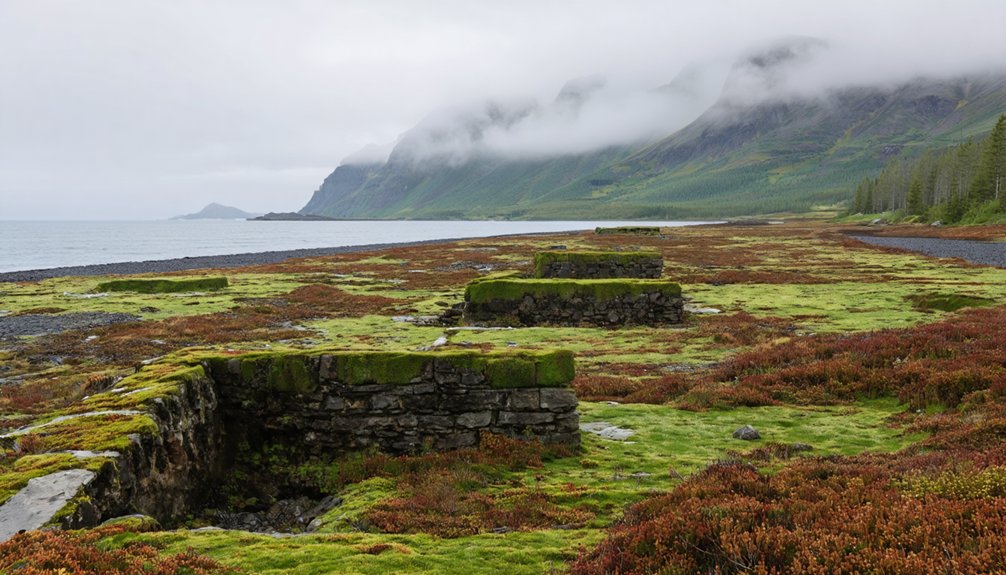
All that colonial ambition left surprisingly little for your eyes to find. The surface reveals shallow pits and rectangular depressions where Russian structures once stood, quiet impressions pressed into Kodiak Island’s earth. A cemetery sits southeast of the main settlement, marking lives claimed by isolation and hardship.
Yet the archaeological findings run deeper than appearances suggest. Excavations confirm native occupation stretching back to circa 100 BCE, layering indigenous story beneath Russian colonial narrative.
Introduced plant species hint at small-scale agriculture, a bold experiment in this unforgiving landscape.
The site’s historical significance earned it National Historic Landmark status in 1978, validating what your boots will sense standing there — that this remote inlet quietly launched an empire’s reach across an entire continent.
Do You Need a Permit to Visit Three Saints Bay?
Before you set foot on this storied ground where Russia’s first North American colony once stood, you’ll need to secure the proper permits, as Three Saints Bay holds National Historic Landmark status requiring authorization for visits.
You can obtain permits by contacting the relevant federal and state agencies, including the Alaska State Historic Preservation Office, well in advance of your trip.
Visiting without a permit isn’t just a legal risk — it’s a disservice to one of North America’s most significant archaeological sites, where layers of history stretch back to 100 BCE.
Permit Requirements Explained
Because Three Saints Bay holds the title of a National Historic Landmark, you’ll need to secure proper permits before setting foot on this hallowed ground.
The permit types vary depending on your visit’s purpose — casual exploration differs from research or photography. Either way, you’re dealing with federal oversight, so start the application process early.
Contact the Bureau of Land Management or the relevant Alaska state authority to request the appropriate documentation. You’ll submit basic details about your visit, group size, and intended activities.
Processing takes time, so don’t wait until the last minute. This place witnessed the birth of Russian America — it deserves your respect and preparation.
Securing your permit isn’t a bureaucratic burden; it’s your ticket to walking where history literally began.
How To Obtain Permits
Three simple steps stand between you and one of North America’s most consequential ghost towns.
First, identify your permit types — you’ll likely need both a National Historic Landmark access permit and Alaska state land authorization.
Second, contact the Alaska State Historic Preservation Office (SHPO) directly; they’ll guide your application process and clarify any archaeological site restrictions.
Third, coordinate with the Kodiak National Wildlife Refuge office, since Three Saints Bay falls within a federally managed area.
Start your application process at least six to eight weeks before your planned visit. Delays happen, especially during peak summer season.
Gather your travel dates, group size, and intended activities before submitting. Once approved, you’re cleared to walk ground where Russian America literally began.
Visiting Without a Permit
Permits sound straightforward on paper, but you might be wondering whether you can simply show up. Technically, Three Saints Bay sits within a National Historic Landmark, meaning unauthorized visits risk serious federal penalties. You can’t pocket historical artifacts or disturb the site’s fragile archaeological layers without facing consequences.
That said, spontaneous explorers aren’t entirely shut out. Arriving by boat and remaining outside designated protected zones lets you absorb the haunting coastline and observe local wildlife without formal paperwork.
However, stepping onto the landmark itself demands proper authorization.
Think of the permit less as bureaucratic red tape and more as your passport into a genuinely extraordinary place. Without it, you’re watching history from a distance — close enough to feel it, but never quite touching it.
How to Get to Three Saints Bay From Kodiak
Getting to Three Saints Bay isn’t a Sunday drive — it’s an expedition worthy of the site’s storied past. From Kodiak, your best routes involve either a floatplane or a charter boat, since no road connects the city to this remote southwestern shore. The bay sits 60 miles southwest — wild, windswept, and deliberately difficult to reach.
Among the essential travel tips: book your floatplane or boat charter well in advance, especially for summer departures. Weather shifts fast on Kodiak Island, so build flexibility into your schedule.
Experienced local operators know these waters and skies intimately. Trust them. Once you land or anchor near the inlet, you’re standing where Russian colonists first planted their flag on North American soil in 1784.
Boat vs. Floatplane: Which Option Makes More Sense?
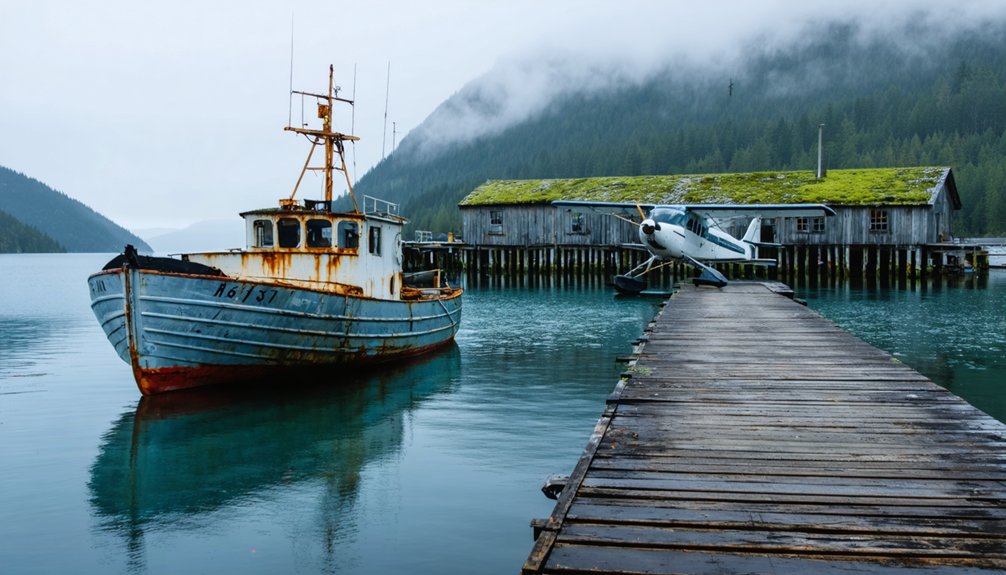
Whether you charter a boat or hop aboard a floatplane, you’re trading convenience for adventure the moment you leave Kodiak behind.
A floatplane cuts the 60-mile journey to roughly 20 minutes but costs considerably more than a multi-hour boat charter, which offers a slower, sea-level approach across the same waters Russian fur traders once navigated.
If rough swells or seasickness concern you, the floatplane wins on comfort and accessibility, though the boat’s deck gives you an unmatched, horizon-wide view of the wild Kodiak coastline.
Cost And Travel Time
Reaching Three Saints Bay means committing to either a boat charter or a floatplane out of Kodiak, and each option carries its own trade-offs.
Floatplanes cut travel time dramatically, landing you near the site in roughly 30 minutes, but cost estimates typically run $400–$600 per person depending on group size. You’ll trade speed for a birds-eye view of the same coastline Russian fur traders once navigated below.
Boat charters stretch the journey to several hours across open water, with cost estimates ranging $150–$300 per person. Travel logistics favor floatplanes for efficiency, but the slower boat passage lets the remoteness sink in before you set foot on land where Russia’s North American ambitions were born in 1784.
Choose what fits your pace.
Comfort And Accessibility
Both options drop you into wilderness that hasn’t changed much since Grigory Shelikhov anchored here in 1784, but how you arrive shapes the experience entirely.
Your accessibility options are simple: boat or floatplane from Kodiak.
Floatplanes deliver speed and aerial views of Kodiak Island’s raw coastline, landing you directly on the bay in minutes.
Boats offer slower immersion, letting the 60-mile southwest passage connect you to the same waters Russian fur traders once navigated.
For comfort tips, pack layers regardless of your choice — summer weather shifts fast here.
Boats allow more gear; floatplanes demand ruthless packing discipline.
Neither option coddles you, and that’s exactly the point.
You’re visiting a ghost town that swallowed an empire’s ambitions.
Arrive ready for both.
The Best Time of Year to Visit Three Saints Bay
Summer is your window to Three Saints Bay, and it doesn’t stay open long. From June through August, the best season delivers calmer seas, longer daylight hours, and weather conditions that won’t fight you at every turn.
Summer opens a brief window — June through August — when calmer seas and longer days finally work in your favor.
You’ll need those advantages — reaching this remote National Historic Landmark means traveling by boat or floatplane from Kodiak, where unpredictable coastal weather can shut down access entirely.
Outside summer, storms roll in hard and fast, making safe travel nearly impossible. Kodiak Island’s climate doesn’t forgive the unprepared.
Arrive during summer’s brief mercy, and you’ll walk ground where Grigory Shelikhov planted Russia’s first North American foothold in 1784. The bay rewards those who respect its terms.
Plan early, move decisively, and let history meet you on its own wild shore.
Must-See Stops in Kodiak Before You Head to the Site
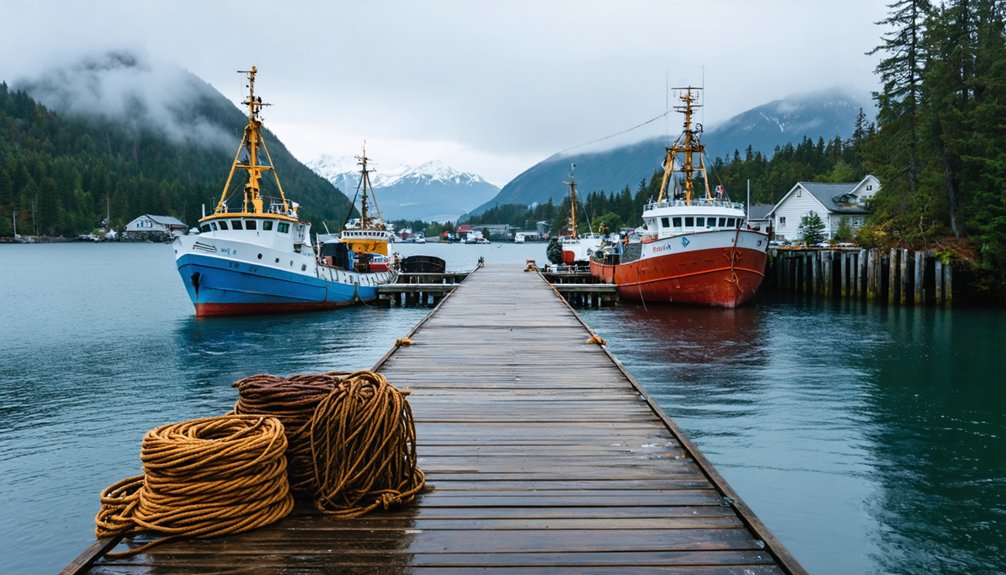
Before you board a floatplane or charter a boat toward Three Saints Bay, Kodiak itself has stories worth hearing.
Stop at the Baranov Museum, where Russian artifacts — trade goods, icons, colonial-era tools — connect you directly to the empire that once claimed this rugged coastline. You’ll feel the weight of those early ambitions in every display case.
Wander next through the Alutiiq Museum, where Kodiak culture breathes through ancient carvings, oral histories, and objects predating Russian contact by centuries.
These weren’t passive people waiting to be discovered — they built complex lives here long before Shelikhov arrived.
Both museums sharpen your instincts before you reach the site. You’ll read the landscape at Three Saints Bay differently, seeing layers rather than empty ground.
Gear, Clothing, and Supplies for the Three Saints Bay Trip
Packing for Three Saints Bay means respecting both the history underfoot and the weather overhead. Alaska’s unpredictable summers demand smart weather considerations and solid camping essentials. You’re stepping onto ground where Russian colonists once struggled to survive — don’t repeat their provisioning mistakes.
- Waterproof layers — rain gear and moisture-wicking base layers defend against coastal downpours.
- Navigation tools — GPS and paper maps, since cell service vanishes completely.
- Camping essentials — tent, sleeping bag rated for 40°F, and a portable water filter.
- Permit documentation — carry your National Historic Landmark access permits; rangers enforce them.
Travel light but deliberately. Every item earns its weight when you’re reaching a remote ghost town accessible only by floatplane or boat.
Hazards to Know Before Visiting Three Saints Bay
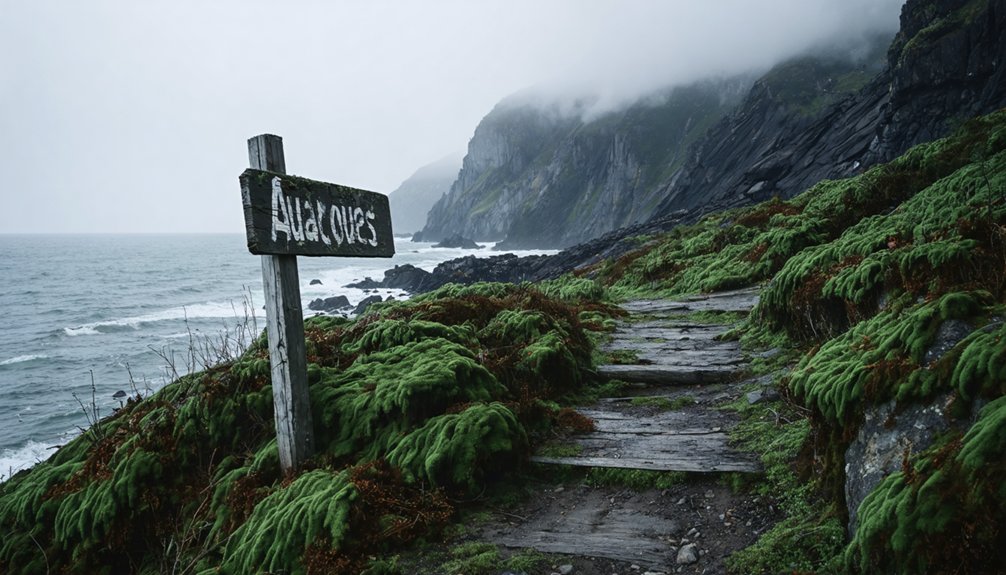
Three Saints Bay doesn’t forgive the unprepared — the same volatile geology that swallowed Shelikhov’s colony in 1792 still shapes this coastline today. Earthquakes and tsunamis remain real threats here, not just historical footnotes.
Weather conditions shift without warning. Dense fog, sudden storms, and powerful tidal surges can trap you onshore or strand your vessel. Always file a float plan and monitor marine forecasts obsessively.
The weather here doesn’t negotiate — fog rolls in, storms erupt, and the tides don’t wait for anyone.
Wildlife encounters add another layer of risk. Kodiak brown bears — among the largest on Earth — roam the island’s southern reaches. Carry bear spray, make noise on trails, and never leave food unsecured.
The sea itself demands respect. Cold Pacific waters mean hypothermia sets in fast. Dress accordingly, know your exit routes, and treat this remote coastline as the unforgiving wilderness it’s always been.
Frequently Asked Questions
Can You Camp Overnight at the Three Saints Bay Archaeological Site?
You’ll need permits to visit due to its archaeological significance. Camping regulations are strict here, so check with authorities before you pitch a tent at this historic, freedom-calling Alaskan frontier.
Are Guided Tours Available for Three Saints Bay Visits?
Guided tour options don’t flood this remote frontier! You’ll want to hunt down local tour companies in Kodiak, as they occasionally organize historically-informed expeditions to this legendary ghost town, letting you roam Alaska’s untamed past freely.
What Wildlife Might Visitors Encounter at Three Saints Bay?
You’ll encounter diverse wildlife perfect for wildlife photography, including black-footed geese — honoring the bay’s indigenous name — plus marine mammals and seabirds. Species identification enriches every adventure, connecting you to this historically rich, untamed Alaskan wilderness.
Is Three Saints Bay Accessible to Visitors With Mobility Limitations?
Like Odysseus traversing uncharted seas, you’ll face real challenges here — Three Saints Bay lacks accessible pathways and mobility aids support. You’ll reach it only by boat or floatplane, demanding rugged, untamed terrain that tests every adventurer’s spirit.
How Long Does a Typical Three Saints Bay Visit Take?
You’ll spend roughly 2–4 hours exploring Three Saints Bay’s haunting grounds, uncovering its historic significance and whispering local legends. Wander freely through ancient depressions, breathe Alaska’s wild air, and let Russia’s forgotten empire speak directly to your adventurous soul.
References
- https://www.thealaskalife.com/blogs/news/alaska-ghost-towns-youve-probably-never-heard-of
- https://en.wikipedia.org/wiki/Three_Saints_Bay
- https://getlostinamerica.com/alaska-ghost-towns/
- https://threesaintsbay.com/about-us/
- https://www.ebsco.com/research-starters/earth-and-atmospheric-sciences/three-saints-bay
- https://www.nps.gov/places/three-saints-bay-site.htm
- https://alaska.guide/bay/three-saints-bay
- https://cdn.ghosttowns.com/states/ak/threesaintsbay.html
- https://www.jstor.org/stable/25615550