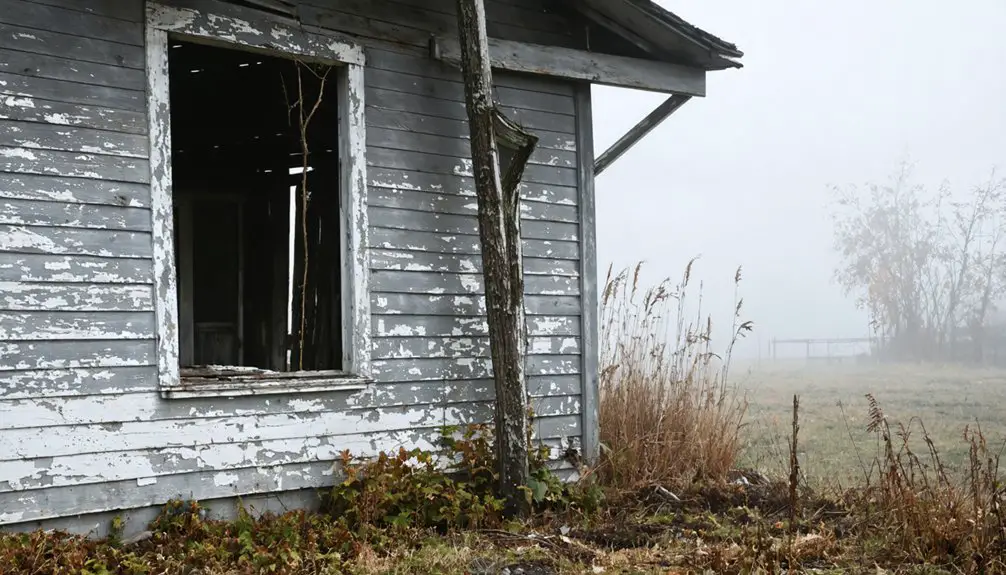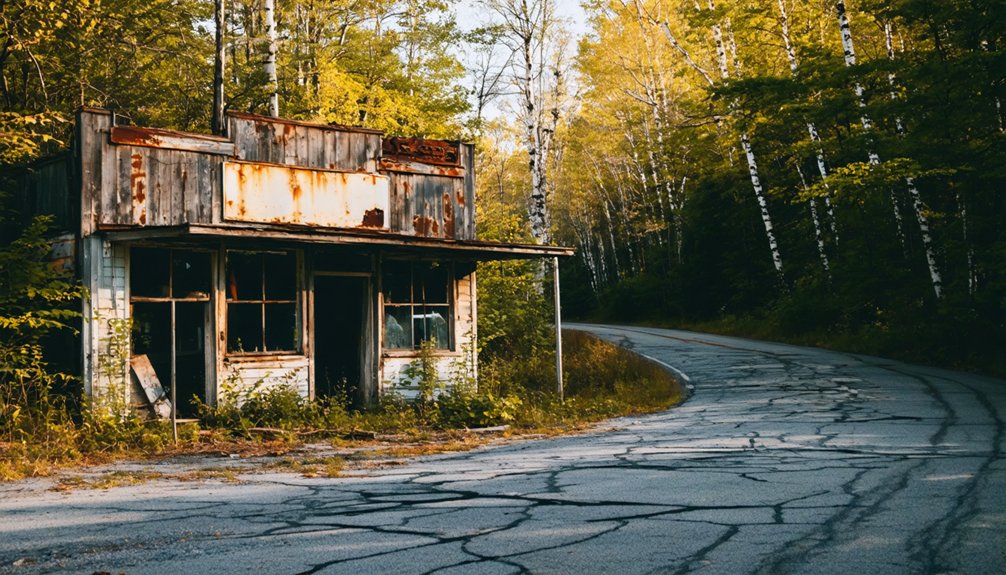
To plan your ghost town road trip to Aral, Michigan, head to Esch Beach inside Sleeping Bear Dunes National Lakeshore, about four miles south of Empire. You’re walking where a sawmill town of 200 once thrived, burned, and quietly disappeared by the 1920s. There’s a hanging tree, a historical sign, and a shoreline that holds more secrets than it reveals. Stick around — there’s a stranger story waiting just beneath the surface.
Key Takeaways
- Aral, Michigan, a ghost town in Benzie County, is accessible via Esch Road through Sleeping Bear Dunes National Lakeshore, roughly 4–5 miles south of Empire.
- The town thrived in the 1880s around a steam-powered sawmill before a mill fire in 1899 and resource depletion caused its rapid decline.
- A historical sign near Esch Beach documents Aral’s rise and fall, including the infamous hanging tree linked to the 1889 tax collector standoff.
- Late spring or early fall weekday mornings offer the best experience, with fewer crowds and atmospheric fog enhancing the ghost town’s haunted ambiance.
- Pack water, snacks, sturdy footwear, layered clothing, and a camera, as Esch Beach has no services and terrain can be uneven and sandy.
What Was Aral, Michigan?
Once a thriving sawmill town hugging the shores of Lake Michigan, Aral, Michigan rose from the timber-rich wilderness of Benzie County in the early 1880s and vanished just as quickly as the white pines that built it. At its peak, around 200 residents called it home, drawn together by the lumber industry’s relentless appetite for timber.
Aral history reads like a classic American frontier story — ambition, community, and eventual collapse. A steam-powered sawmill, a 90-foot dock, a general store, a schoolhouse, and a post office once defined this lively settlement.
When the trees ran out and the mill burned in 1899, Aral’s fate was sealed. By the 1920s, nothing remained. Today, you’d never guess a town once stood where waves now quietly meet the shore.
Where Exactly Is Aral Located?
Tucked along the Lake Michigan shoreline in Benzie County, Aral sits at the mouth of Otter Creek, roughly 4 to 5 miles south of Empire, Michigan.
You’ll find it by following Esch Road through Sleeping Bear Dunes National Lakeshore until the pavement ends at what locals now call Esch Beach. It’s a freely accessible stretch of shoreline where swimmers splash in the same waters that once carried lumber-loaded sailing ships away from a thriving mill town.
The national lakeshore boundaries protect this ground today, preserving its historical significance without locking it away from curious travelers.
You’re standing on the northern edge of Benzie County when you arrive — open sky above, cold lake ahead, and a ghost town quietly buried beneath your feet.
Aral’s Sawmill, Its Sheriff, and the Hanging Tree
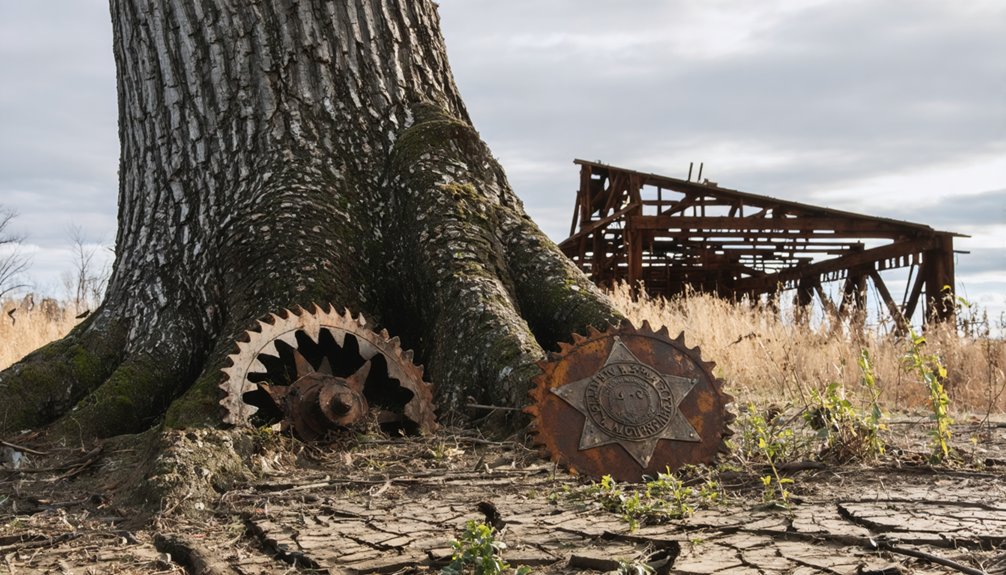
By the early 1880s, you’d have heard the screech of Dr. Arthur O’Leary’s steam-powered sawmill cutting white pines, with a 90-foot dock jutting into Lake Michigan to load lumber onto sailing ships and steam barges.
In August 1889, that industry collided hard with the law when a deputy and treasurer rode in to collect unpaid mill taxes, only to find manager Charles T. Wright shutting everything down and fleeing into the forest.
What followed was a tense standoff centered on a single tree, where Sheriff and a posse of 20 men hoisted Wright’s handyman Peter Lahala twice by rope to extract his boss’s whereabouts — a moment that earned that tree a grim nickname still whispered about today.
Steam-Powered Mill Operations
When Dr. Arthur O’Leary acquired the land in the early 1880s, he brought serious sawmill technology to Aral’s shores. By 1882, a steam-powered mill was cutting through Benzie County’s white pines, feeding a lumber industry hungry for raw material.
You can almost hear the hiss of steam and the screech of saw blades echoing across Otter Creek. Workers loaded freshly cut lumber onto a 90-foot dock stretching into Lake Michigan, where sailing ships and steam barges carried it away to distant markets.
At its peak, this operation supported a town of roughly 200 people. The mill represented both freedom and ambition — men carving independent lives from raw wilderness.
That relentless drive, however, would eventually consume the very forest sustaining them.
Tax Collectors Arrive
August 1889 brought a reckoning to Aral’s busy mill town, when a county deputy and treasurer rode in to collect overdue sawmill taxes.
Charles T. Wright, the mill manager, wasn’t about to cooperate. He shut down operations and vanished into the surrounding forest, leaving the authorities frustrated and empty-handed.
That’s when the ghost stories really began. Sheriff’s men seized Wright’s handyman, Peter Lahala, binding him to what locals would forever call the hanging tree.
They hoisted him twice, demanding Wright’s whereabouts. Before a third hoist occurred, Wright surrendered and was taken into custody.
You can still visit that old tree near Esch Beach today. Those tax collections triggered a chain of defiance that echoes through Aral’s haunted legacy, reminding you that even small towns harbored fierce, untamed spirits.
The Hanging Tree Standoff
The standoff that unfolded at Aral’s sawmill in 1889 reads like something straight out of a frontier dime novel. When the sheriff and his posse of 20 arrived to settle the tax standoff, mill manager Charles T. Wright did what any self-reliant man might do — he shut everything down and vanished into the forest.
What happened next was something else entirely. The posse seized Wright’s handyman, Peter Lahala, and hoisted him twice from a nearby hanging tree, demanding Wright’s whereabouts.
Wright, watching from the tree line, surrendered before a third hoist could occur.
You can still visit the area today. A gnarled old tree near Esch Beach is believed to be that very hanging tree — a silent, weathered witness to Aral’s wildest chapter.
How the Town Rose, Burned, and Disappeared
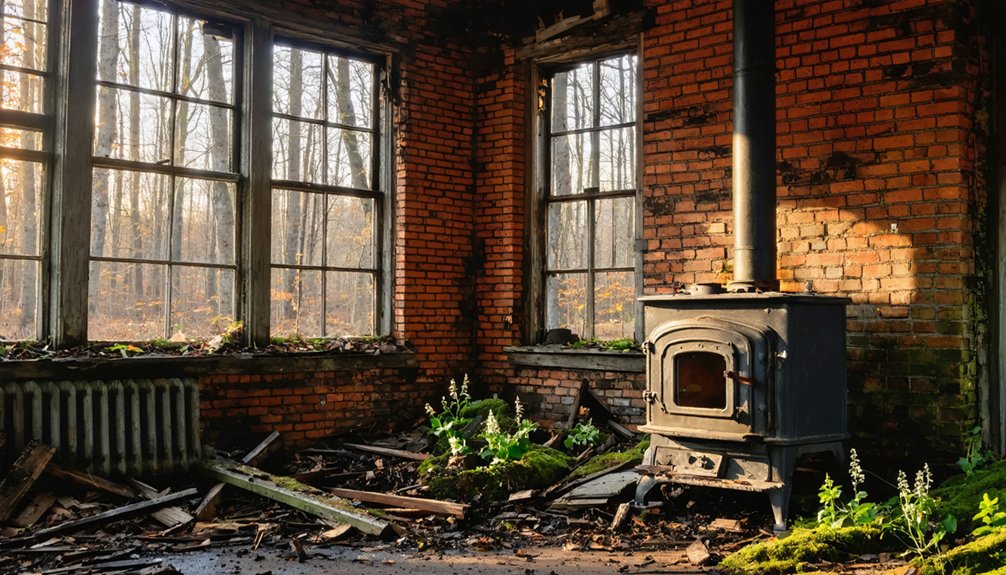
By 1886, Aral’s sawmill had drawn nearly 200 souls to its shores, complete with a post office, general store, schoolhouse, and a 90-foot dock loading lumber onto sailing ships and steam barges.
Then, in 1899, fire consumed the mill — arson suspected — and the town’s lifeblood drained away, its post office already shuttered, its timber nearly gone.
You’ll find no buildings standing today, as the forest quietly swallowed everything that remained, leaving only a historical sign at Esch Beach to mark where a thriving community once stood.
Sawmill Sparks Aral’s Growth
When Dr. Arthur O’Leary arrived in the early 1880s, he saw opportunity standing tall in every white pine. His steam-powered sawmill roared to life by 1882, and with it, Aral’s future seemed limitless.
You can almost hear the blades cutting through timber, smell the fresh sawdust drifting toward Lake Michigan. The sawmill’s significance can’t be overstated — it built a community from raw wilderness.
A 90-foot dock stretched into the lake, loading lumber onto sailing ships and steam barges that carried Aral’s timber impact across the region. By 1886, roughly 200 souls called this place home, drawn by wages, purpose, and possibility.
A post office, general store, schoolhouse, and boarding house followed. The forest fed everything — until, inevitably, it couldn’t anymore.
Fire Seals Town’s Fate
Aral’s story arc bends toward a familiar frontier tragedy — boom, burn, and silence. In 1899, fire consumed the sawmill, and arson likely struck the match. Without the mill, Aral’s purpose evaporated almost overnight.
The post office had already closed in 1900, and by 1904, only the Bancroft family remained, stubborn witnesses to the fire’s impact on everything they’d built.
The Israelite House of David briefly revived operations after 1908, rebuilding the mill until the last timber disappeared.
The Bancrofts finally left in 1922, and remaining structures moved or collapsed beneath brutal Lake Michigan winters.
The town legacy survives only in a roadside sign at Esch Beach and one weathered tree — possibly where a desperate man once bargained for his freedom.
Forest Reclaims Abandoned Land
Once the Bancrofts packed up and left in 1922, nature wasted no time reclaiming what lumbermen had carved out of the wilderness four decades earlier.
Forest ecology moved swiftly, erasing nearly every trace of Aral’s existence through historical reclamation. Today, you’ll find almost nothing standing where 200 people once lived and worked.
Here’s what disappeared:
- The rebuilt sawmill
- The boarding house
- The schoolhouse
- The church and general store
Harsh Lake Michigan weather demolished the shoreline structures, and advancing forest consumed the rest.
Walking Esch Beach now, you’d never guess a thriving lumber town once stood here. Only a historical sign and one weathered old tree — possibly the infamous hanging tree — remain as silent witnesses to Aral’s forgotten story.
What’s Left of Aral’s Ghost Town Today?

Though the forests have long swallowed what remains of Aral, you can still feel the ghost of this once-bustling lumber town at Esch Beach. The abandoned structures are gone, reclaimed by decades of harsh Lake Michigan winters and creeping woodland, but the stories haven’t disappeared.
A historical sign near the beach traces Aral’s rise and fall, grounding local legends in documented fact. Look closely at the old tree nearby — many believe it’s the same hanging tree where Peter Lahala dangled twice before Charles Wright finally surrendered. Nothing confirms it, but that ambiguity makes it more compelling.
You’re standing where 200 people once lived, worked, and fought. That’s worth pausing for before you chase the next stop on your road trip.
How to Find Esch Beach From Empire
Finding Esch Beach is straightforward: head south from Empire on M-22 roughly four to five miles into Benzie County, then turn west onto Esch Road and follow it through the national lakeshore until it dead-ends at the shore.
These road directions put you exactly where Aral’s sawmill once hummed with life. Follow this simple sequence:
- Start at Empire, heading south on M-22
- Turn west onto Esch Road inside Sleeping Bear Dunes National Lakeshore
- Drive until pavement surrenders to open shoreline
- Park and walk where 200 residents once built their forgotten world
Esch Beach greets you with wild Lake Michigan freedom and quiet history beneath your feet.
The forest reclaimed nearly everything, but standing here, you’ll feel Aral’s ghost unmistakably.
Best Time to Visit Aral’s Ghost Town Beach
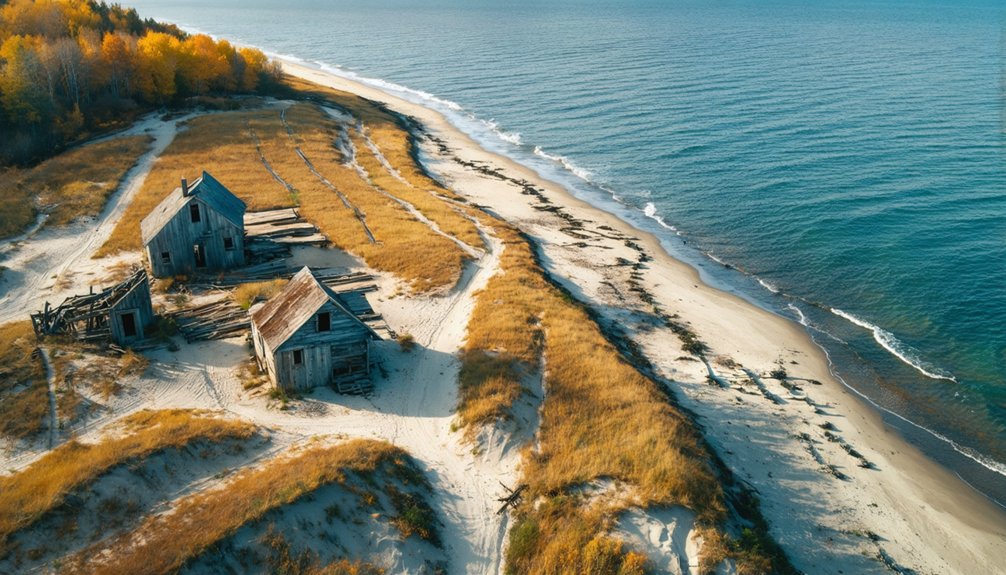
When you visit shapes how much of Aral’s ghost you’ll actually feel. For best visiting, come in late spring or early fall.
Timing matters here. Come in late spring or early fall to feel Aral’s ghost most deeply.
Summer crowds dilute the haunted atmosphere, filling the beach with towels and laughter where mill workers once hauled lumber. Weekday mornings hit differently — the fog still clings to Otter Creek’s mouth, and the tree line feels older somehow.
Fall strips everything back. The colors burn across the dunes, the lake turns steel-gray, and you’ll stand on that shoreline imagining the 90-foot dock stretching into nothing.
Beach activities like swimming and exploring remain genuinely rewarding, but save your wandering for the edges. That’s where the old growth lingers, where the hanging tree still stands, quietly keeping Aral’s story alive.
What to Pack for an Aral Ghost Town Visit
Packing smart for Aral means respecting both the terrain and the story. You’re walking ground soaked in historical significance, where sawmill workers, lumber barons, and local legends like Charles Wright once shaped daily life. Come prepared.
- Water and snacks — no services exist at Esch Beach
- Sturdy footwear — sandy trails and uneven terrain demand it
- Camera — capture the hanging tree and lakeshore remnants
- Weather layers — Lake Michigan shifts moods without warning
Read Aral’s trailhead sign before wandering. Let the local legends sink in.
You’re not just visiting a beach — you’re standing where an entire community lived, worked, quarreled, and ultimately disappeared. Pack accordingly, and carry some curiosity with you.
Other Ghost Towns Near Sleeping Bear Dunes
Aral isn’t the only ghost haunting this stretch of Michigan shoreline. The Sleeping Bear Dunes region harbors several forgotten histories worth chasing down open roads.
Nearby Glen Haven once thrived as a shipping and canning hub before the national lakeshore quietly absorbed it.
Port Oneida, just north, preserves ghostly legends tied to its 19th-century farming families, its weathered barns still standing like stubborn sentinels.
Glen Arbor itself carries echoes of a rougher, wilder era before tourism softened its edges.
Together, these communities form a loose constellation of lost worlds, each one rewarding the curious traveler willing to slow down, read the roadside markers, and imagine the lives that vanished when the timber ran out and the ships stopped coming.
Where to Eat and Stay After Your Aral Visit
After trading Esch Beach’s sand for something warmer, you’ll find that Empire, just a few miles north on M-22, keeps things delightfully unhurried.
Local dining and lodging options here honor the same unhurried spirit that once defined Aral itself.
Consider these stops worth your time:
- Deering’s Market – grab fresh provisions like settlers once did
- Joe’s Friendly Tavern – cold drinks, warm locals, zero pretension
- Empire Village Inn – simple lodging options rooted in small-town character
- Sleeping Bear Bed & Breakfasts – scattered along M-22, offering quiet mornings with lake views
Frequently Asked Questions
Was Aral, Michigan Ever Featured in Any Books or Documentaries?
The knowledge doesn’t confirm any literary references or documentary features about Aral. You’ll find its story lives mostly through a roadside sign at Esch Beach, where history quietly whispers to freedom-seeking explorers like you.
Are There Any Artifacts From Aral Displayed in Local Museums Nearby?
The knowledge base doesn’t confirm museum displays, but you’d still find artifact significance alive at Esch Beach’s historical sign. Scroll through local history at Benzie Area Historical Museum — they’re your best bet for uncovering Aral’s vanished soul.
Can Visitors Legally Take Souvenirs or Items Found at Esch Beach?
You can’t take souvenirs from Esch Beach — it’s federally protected land. Beach regulations prohibit removing artifacts, honoring souvenir ethics that preserve Aral’s ghostly legacy. Respect the silence; let history breathe where those forgotten souls once lived.
Did Any Notable Historical Figures Ever Visit or Mention Aral?
The knowledge doesn’t confirm any notable visitors to Aral, but you’ll feel the town’s historical significance walking its shores. Notable visitors or not, you’re connecting with a raw, forgotten freedom that once thrived here.
Are Guided Ghost Town Tours of Aral or Esch Beach Available?
Once home to 200 souls, Aral offers no formal guided tours, but you’ll find ghost town exploration deeply rewarding. Discover its historical significance independently via Esch Beach’s informative sign and the legendary hanging tree nearby.
References
- https://www.youtube.com/watch?v=1KeSmsO68H8
- https://99wfmk.com/aral-michigan/
- https://glenarborsun.com/a-shootout-in-the-ghost-town-of-aral/
- https://lostinmichigan.net/hanging-tree-ghost-town/
- https://leelanau.com/the-ghost-town-of-aral-in-the-sleeping-bear-dunes/
- https://benziemuseum.org/2025/02/17/march-13-2025-benzonia-academy-lecture-aral-saga-of-a-ghost-town-presented-by-jerry-heiman/
- https://www.nps.gov/places/000/aral-a-town-that-vanished.htm