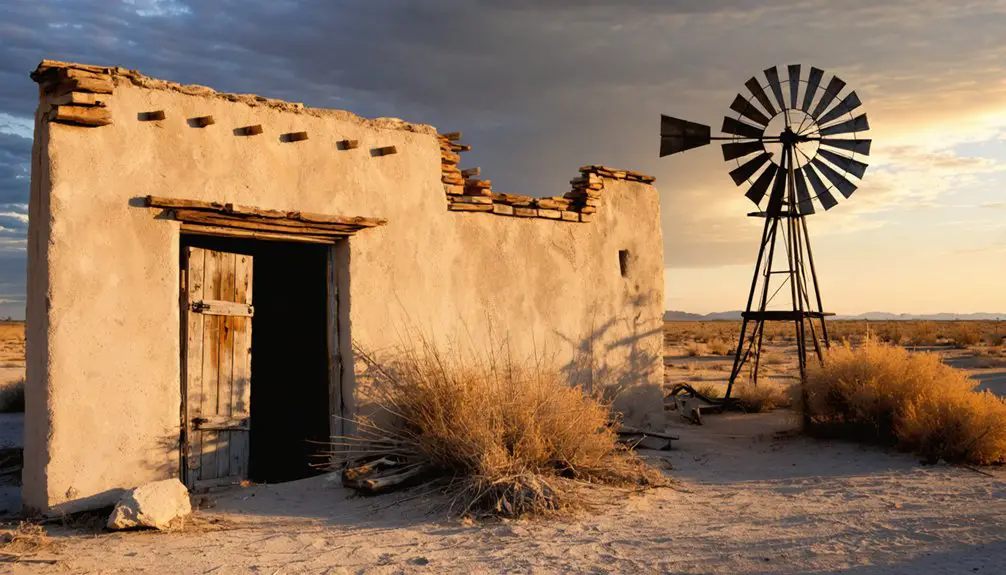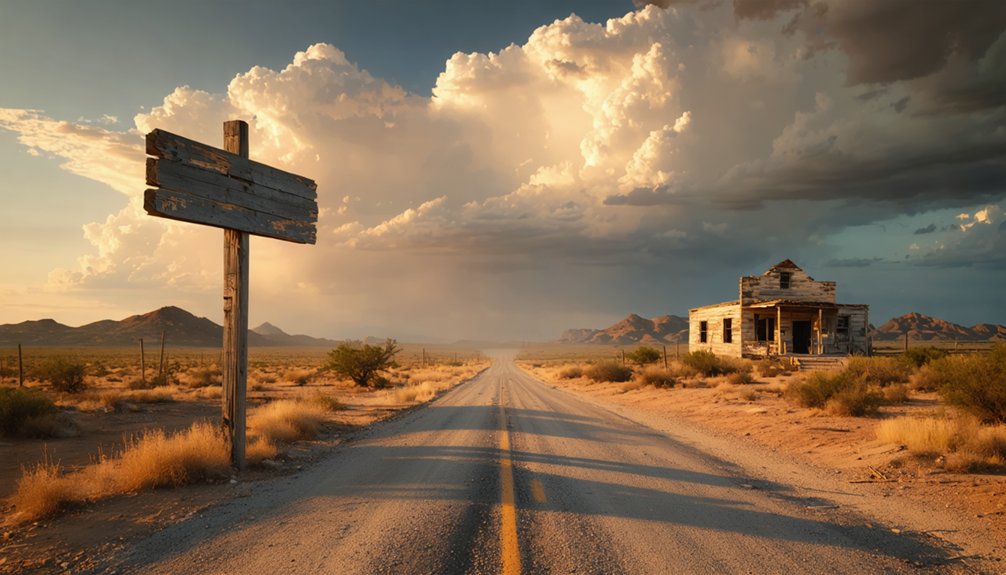
Your ghost town road trip to Arispe begins where Interstate 10 bisects a community erased by time—nothing remains but wind-scoured earth and whispers of the 1885 railroad settlement. You’ll navigate dusty backroads west from Sierra Blanca through the Chihuahuan Desert, where spring’s wildflowers (March-May) soften the brutal landscape. Pack water, a reliable vehicle, and GPS for this journey into pure absence. The coordinates reveal no weathered buildings or rusted rails, only the profound silence of complete abandonment that demands your imagination fill the void.
Key Takeaways
- Arispe is located west of Sierra Blanca along Interstate 10, accessible via unmarked dusty backroads through the Chihuahuan Desert.
- No structures or ruins remain from the 1885 railroad settlement; only barren landscape and absence mark the site.
- Visit during spring (March-May) for ideal temperatures and wildflowers; avoid summer’s extreme heat exceeding 100°F.
- Bring essential supplies including water, GPS navigation, and a reliable vehicle for remote desert conditions.
- Expect no historical markers or amenities; photography captures stark desert beauty and complete solitude.
The Rise and Fall of a Railroad Town
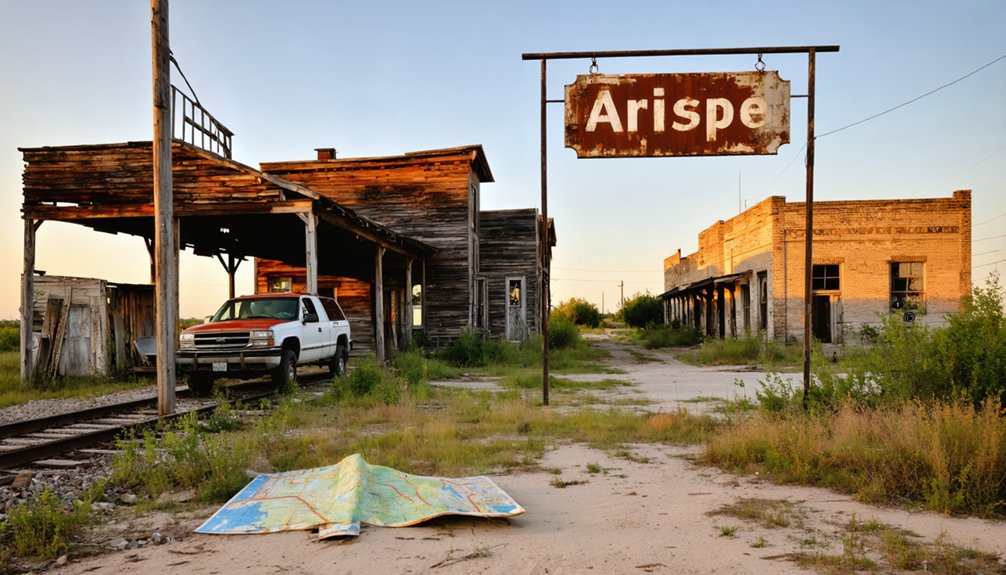
The screech of iron wheels against steel rails once echoed across the barren stretches of Hudspeth County, announcing the birth of Arispe in 1885. You’d have watched this railroad section house spring from dust, another watering stop for thirsty locomotives every twenty miles along the Texas and Pacific Railway.
The enduring pioneer spirit thrived here briefly—Mrs. Alice Auten ran the La Valley post office from 1909 to 1911, serving travelers against intriguing geologic formations stretching endlessly westward. But freedom from dependence proved impossible. When T&P traffic plummeted and the line merged with Missouri Pacific in 1976, Arispe’s heartbeat flatlined. The station that built this town ultimately killed it, leaving weathered structures standing sentinel over silent tracks.
What Makes Arispe a True Ghost Town
Standing at the coordinates where Arispe once existed, you’d search in vain for even a single wall or foundation stone. Unlike partially-occupied ghost towns clinging to survival, Arispe represents complete abandonment—no remnant ruins, no weathered buildings, nothing but desolate landscape.
Arispe offers the purest ghost town experience—absolute erasure where not even foundation stones survived to mark where families once called home.
Modern highways literally paved over its history, erasing physical proof of the community that once housed 57 souls.
- Zero structures remain from the original 1885 railroad settlement
- Interstate 10 and US Highway 8 now bisect where families once lived
- Complete population loss occurred by the 1940s with no revival attempts
- Total dependency on Missouri Pacific Railroad doomed it when operations ceased
You’re standing on pure abandonment—the truest ghost town experience Texas offers.
Getting to Arispe From Sierra Blanca
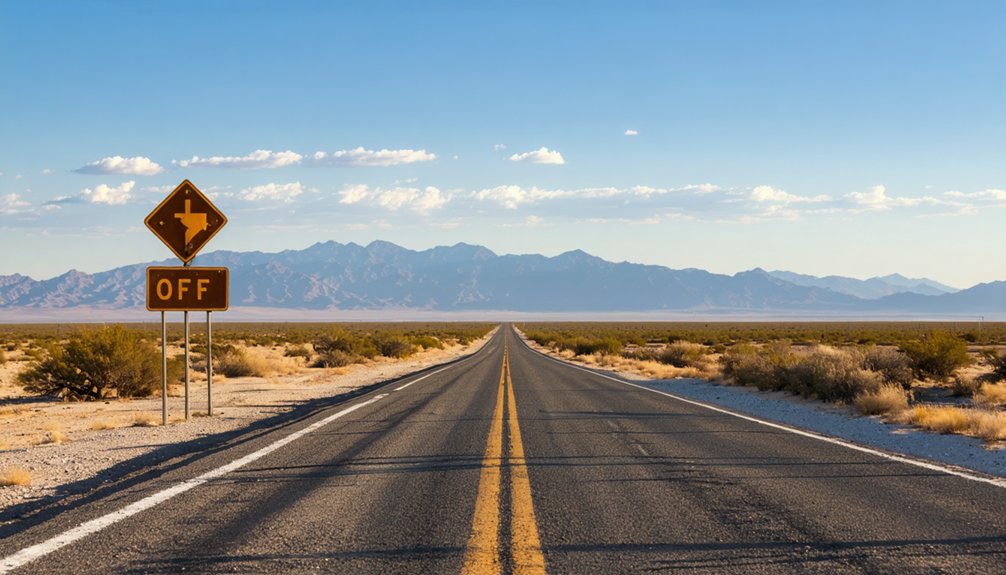
From Sierra Blanca, you’ll journey westward along Interstate 10 through one of Texas’s most unforgiving stretches of Chihuahuan Desert. The turnoff demands attention—Arispe doesn’t announce itself with billboards or fanfare. You’ll navigate dusty backroads where pavement surrenders to gravel, following coordinates more than signs. This route embodies minimalist travel requirements: a reliable vehicle, water, and functional GPS suffice. No hotel reservations or restaurant stops clutter your itinerary here.
The landscape unfolds with brutal honesty—creosote bushes, distant mountains bleeding purple at dusk, silence so complete it rings in your ears. Scenic route options remain limited; there’s solely one path threading through this emptiness. Eagle Flat marks your progress. Then civilization vanishes entirely, leaving only wind-scoured earth and the ghost town’s skeletal remains waiting ahead.
Best Time to Visit West Texas Desert Sites
You’ll find West Texas deserts most welcoming during spring’s wildflower-dusted March through May, when warm days dissolve into cool nights perfect for stargazing above Arispe’s crumbling adobes.
Summer’s brutal 100°F-plus heat transforms these ghost towns into shimmering mirages best avoided unless you’re limiting explorations to dawn’s first light.
Winter brings crisp 50-70°F afternoons and empty landscapes where you’ll wander Big Bend’s trails and abandoned settlements without another soul in sight.
Spring Weather Advantages
When planning your ghost town adventure to Arispe, spring emerges as the undisputed champion of visiting seasons. Mid-March delivers ideal outdoor comfort with daytime highs hovering between 81-85°F, while overnight lows settle around 48-52°F—a gentle temperature change that lets you explore without weather extremes cramping your style.
You’ll experience desert conditions at their finest:
- Clear, sunny skies dominating the 14-day outlook with minimal cloud interference
- Low humidity paired with breezy afternoons that won’t leave you gasping
- Dawn temperatures starting crisp at 34-37°F, warming beautifully by midday
- Light winds averaging just 2 mph overnight for comfortable camping
This shoulder season hits before summer’s brutal heat arrives, giving you extended hours to photograph crumbling adobe walls and wander abandoned streets. The reduced moisture enhances visibility across West Texas’s sprawling landscapes, making every discovery feel sharper, more immediate.
Summer Heat Precautions
Summer transforms West Texas into a furnace that’ll test your resolve. June through August, Arispe bakes under 91-94°F highs while concrete ruins radiate stored heat long after sunset. You’ll feel the triple-digit heat index slam you the moment you step outside—that’s when morning hydration becomes non-negotiable, not optional.
Plan your ghost town wandering for dawn or dusk. Midday exposure in this desert will drain you faster than you’d imagine, with winds stripping moisture from your skin before you notice. Schedule afternoon shade breaks under whatever crumbling structures still stand, or retreat to your air-conditioned vehicle.
September offers redemption—temperatures drop to 85°F, and you can actually explore without feeling like you’re melting into the caliche. Freedom means respecting the desert’s power.
Winter Access Conditions
While winter strips away the desert’s scorching hostility, it replaces heat with ice that’ll send your vehicle sideways across forgotten ranch roads. Before chasing Arispe’s ruins, check DriveTexas.org—those desolate highways become treacherous when Arctic fronts sweep through West Texas.
Snow removal operations rarely reach ghost town access routes, leaving you to navigate:
- Shaded cattle guard approaches that freeze solid while main roads stay clear
- Overpasses coating with ice hours before surrounding pavement
- Ranch roads where thick snow obscures the difference between track and ditch
- Stoplights knocked dead by downed lines at rural intersections
Winter driving conditions demand triple your normal following distance and full fuel tanks. TxDOT’s 800-452-9292 hotline provides real-time updates, but remember—neighborhood roads stay sketchy long after highways clear.
Share your travel plans. Freedom means knowing when weather’s turned the journey suicidal.
What to Expect at the Abandoned Site
What remains of Arispe today will test your imagination. You’ll find nothing but empty desert where 57 souls once carved out their railroad existence. The barren landscape stretches endlessly, interrupted only by Interstate 10’s ribbon of asphalt slicing through what was once La Valley’s dusty streets. Don’t expect informative historical markers commemorating the post office or section house—this ghost town guards its secrets silently.
Your on site photography opportunities capture stark beauty: weathered earth, endless sky, and the profound absence of human presence. The Missouri Pacific Railroad’s ghost whispers through sagebrush where tracks once gleamed. You’re standing where ambition met isolation and lost. Pack water, bring curiosity, and prepare for solitude. Arispe demands you fill its emptiness with your own wanderlust-fueled stories.
Exploring Nearby Ghost Towns in Hudspeth County
Your exploration of Arispe shouldn’t end at its crumbling foundations—Hudspeth County sprawls before you like a graveyard of forgotten dreams, each ghost town whispering its own story across the desert wind.
From Acala’s abandoned cotton gins rising against the Rio Grande horizon to Fort Quitman’s weathered cemetery stones, you’ll find remnants of communities that thrived and vanished within a single generation.
Pack extra water and download offline maps before heading out, because cell service dies long before you reach these skeletal outposts where Arden’s rusted railroad tracks once carried prosperity into the wilderness.
Arden’s Historical Railroad Legacy
The ghost town of Arden sits in the shadows of one of America’s most dramatic railroad achievements—the 1881 convergence of two titan rail companies that had clawed their way across a continent from opposite shores. While Arden’s railroad remnants are scarce today, you’ll discover this settlement’s deeper roots in butterfield overland history, where stagecoaches once thundered across unforgiving terrain.
Arden’s Transportation Legacy:
- Stage stand operated near the early post office, serving westbound travelers
- Positioned thirty miles downriver from the previous Butterfield station
- Route carved through eastern Hudspeth County, connecting distant territories
- Surveyors established camps in the northeast county during expeditions
When Southern Pacific and Texas & Pacific finally joined tracks at nearby Sierra Blanca in December 1881, Arden’s stagecoach era faded into memory.
Desert Route Planning Tips
Beyond Arden’s vanished stage stops, Hudspeth County spreads across 4,572 square miles of Chihuahuan Desert—a weathered canvas where ghost towns cluster like forgotten constellation points. You’ll navigate remote ghost town locations like Arispe and Lobo using USGS coordinates, since most don’t appear on standard maps.
I-10 cuts east-west through the county, while US 62/180 skirts Salt Flat’s crumbling water tower. For challenging terrain features like Devil Ridge and Diablo Canyon, you’ll need high-clearance 4WD and spare fuel—gas stations vanish quickly out here.
Pack GPS coordinates for windmill markers: Flattop at 31.630000, -105.036389 guides you through featureless stretches. Water sources remain scarce, so carry triple what you’d normally need. The desert rewards those who prepare and punishes those who don’t.
Essential Supplies and Safety Considerations
Before you set foot on the crumbling foundations of Arispe’s abandoned structures, you’ll need to prepare for a journey into one of East Texas’s most unforgiving landscapes. Protective clothing considerations start with long sleeves and sturdy boots—ticks and rattlesnakes don’t respect curiosity. Pack a gallon of water per person daily, stored in insulated containers against the relentless heat.
Wilderness navigation precautions demand redundancy:
- GPS devices paired with paper maps for when technology fails
- Satellite communicators for genuine emergencies beyond cell towers
- Offline maps downloaded before departure
- Two-way radios keeping your group connected
Your vehicle needs high-clearance 4WD capability, spare fuel, and recovery gear. Stock extensive first aid supplies, snake bite kits, and multiple light sources. This isn’t suburban exploring—it’s authentic backcountry freedom requiring serious preparation.
Capturing the Desolate Beauty of Arispe
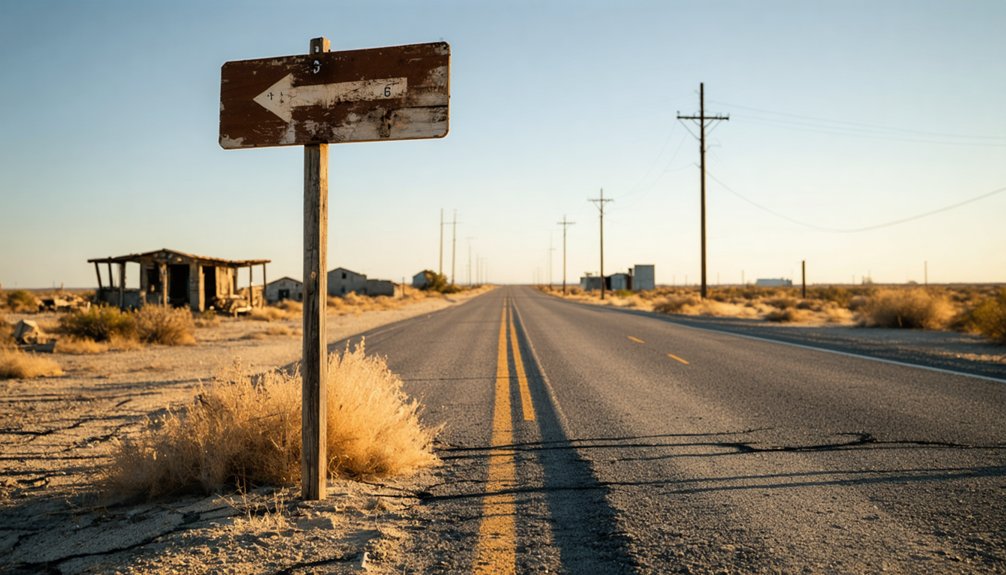
Five miles southwest of Sierra Blanca, where Interstate 10 slices through Hudspeth County‘s unforgiving expanse, Arispe exists as little more than a whisper against endless desert. You’ll find scattered ruins where railroad workers once lived, their foundations dissolving into rust-colored earth.
The Missouri Pacific tracks still cut through this eerily tranquil landscape, a steel reminder of what drew people here in 1885.
Bring your camera for golden hour—when slanted light transforms decay into art. The timeless ghost town atmosphere reveals itself in fragments: weathered posts, sun-bleached debris, shadows that stretch toward modern highway traffic.
You’re witnessing freedom’s harsh edge, where civilization retreated and nature reclaimed its territory. These desolate frames tell stories the bustling Interstate can’t touch.
Frequently Asked Questions
Are There Any Entrance Fees to Visit Arispe Ghost Town?
You won’t pay entrance fees at Arispe—it’s completely free to explore. You’ll discover historical significance through crumbling structures while local preservation efforts remain minimal, letting you wander unrestricted through authentic Texas ruins where freedom-seekers embrace unfiltered history.
Can I Camp Overnight Near the Arispe Site?
The tumbleweed rolls where it pleases—but you’ll find no documented campsites at Arispe itself. Overnight camping regulations remain unclear for this remote ghost town. You’ll need to verify accessibility of camping sites and local land permissions before pitching your tent.
Is Cell Phone Service Available in the Arispe Area?
Cell tower coverage near Arispe is spotty at best—you’ll likely lose data connectivity as civilization fades in your rearview mirror. Embrace the digital detox; download maps beforehand and let the silence become your compass.
Are There Restroom Facilities at or Near Arispe?
Since Arispe’s existence remains unverified, you’ll need to scout nearby accommodations or active towns for public restrooms. Pack provisions and embrace self-reliance—true freedom means preparing for remote exploration where modern conveniences vanish into dusty horizons.
Do I Need a Four-Wheel Drive Vehicle to Reach Arispe?
You won’t need four-wheel drive to reach Arispe. Standard accessibility by car works fine, though dirt road conditions vary with weather. Your regular vehicle handles the journey beautifully, letting you chase ghost town freedom without special equipment worries.