Planning a ghost town road trip to Ashwood, Oregon means heading 32 miles northeast of Madras into Jefferson County’s rugged high desert. You’ll navigate unpaved roads best suited for a four-wheel-drive vehicle, so preparation matters. Founded in 1898 as a silver mining hub, Ashwood offers crumbling shaft houses, historic tailings, and eerie legends that’ll send chills down your spine. Spring and fall offer the best conditions, and there’s far more to this haunted destination than first meets the eye.
Key Takeaways
- Ashwood, Oregon, is 32 miles northeast of Madras, requiring a high-clearance four-wheel-drive vehicle on unpaved gravel and dirt roads.
- Visit in spring or fall for the best conditions, avoiding summer heat exceeding 100°F and winter snow blocking access.
- Pack essentials including water, a paper map, first aid kit, and sun protection, as no cell service or shops exist.
- Explore remnants of the Oregon King mine, which produced over 232,000 ounces of silver between 1935 and 1950.
- Respect all historic structures, stay on marked paths, leave no trace, and avoid removing or touching irreplaceable artifacts.
What Is Ashwood, Oregon and Why Visit?
Tucked 32 miles northeast of Madras in Jefferson County, Ashwood, Oregon is a ghost town that’s equal parts history, mystery, and rugged high desert beauty. Founded in 1898, this former silver mining hub once buzzed with ambition around the Oregon King mine.
Today, it rewards adventurous travelers with crumbling shaft houses, massive tailings piles, and historic tunnels you can explore on your own terms. Trout Creek and Ash Butte frame the landscape dramatically, making wildlife observation a genuine highlight alongside the ruins.
You won’t find local cuisine here — this is raw, unfiltered exploration. If you crave open roads, untouched terrain, and stories carved into weathered wood and stone, Ashwood delivers exactly the kind of freewheeling road trip experience you’re chasing.
How to Get to Ashwood From Madras
To reach Ashwood from Madras, you’ll head northeast for roughly 32 miles through Jefferson County’s stark high desert terrain.
The route takes you approximately 15 miles southeast off Highway 197, so you’ll want a reliable vehicle with good clearance before you go.
Expect unpaved stretches of remote road that can turn rough or muddy depending on the season, so check current conditions before departing.
Route From Madras
Reaching Ashwood from Madras takes you through 32 miles of rugged, high desert terrain that’s as scenic as it’s remote. Head northeast, staying alert for local wildlife crossing the road and watching for vintage signage that marks your path into Oregon’s forgotten past.
- Take Highway 97 north from Madras toward the Culver junction.
- Turn northeast onto Ashwood Road and follow it through open rangeland.
- Watch for unmarked forks — keep right toward Trout Creek.
- Pass through sparse juniper forests before the landscape opens dramatically.
- Look for the deteriorating structures signaling your arrival at the site.
You’ll need a reliable vehicle with good clearance since the road turns rough. Give yourself extra time — this drive rewards patience, not speed.
Road Conditions Ahead
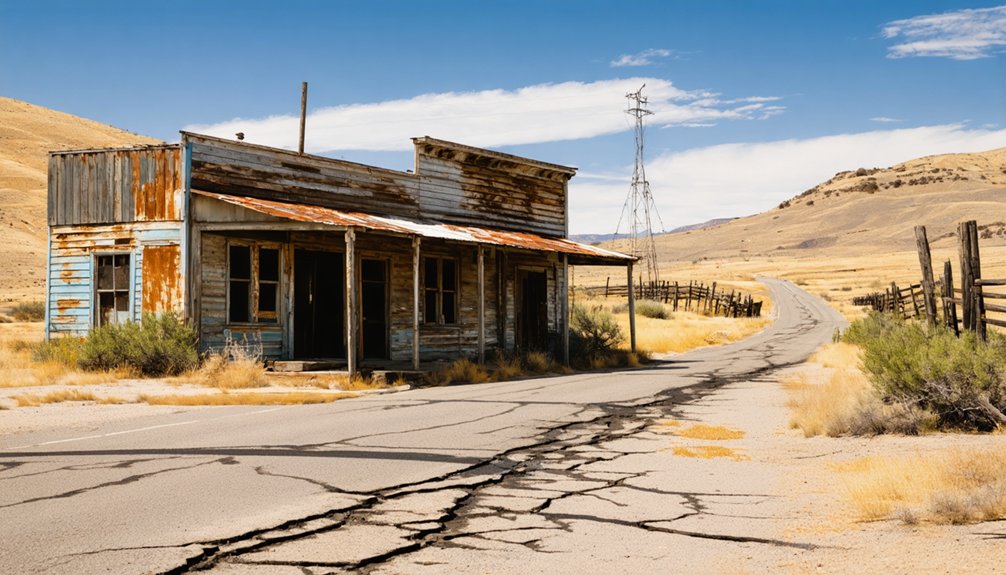
Knowing the route is only half the battle — the road itself demands respect. Once you leave Madras, paved roads give way to gravel and dirt surfaces that shift dramatically with the seasons. Rain turns stretches into muddy traps, while summer heat bakes ruts into unforgiving hardpack. You’ll want a high-clearance vehicle — ideally four-wheel drive.
Watch for local wildlife crossing unexpectedly, particularly deer and pronghorn that roam these open high desert corridors freely.
Seasonal foliage along Trout Creek signals changing conditions worth noting — dry brush in summer creates fire awareness concerns, while fall moisture signals slicker surfaces ahead.
Check road conditions before departing through Jefferson County’s local resources. Cell service disappears fast out here, so download offline maps and carry extra fuel, water, and a spare tire.
Best Time of Year to Visit Ashwood
Timing your visit to Ashwood can make or break the experience, since this remote high desert landscape in Jefferson County shifts dramatically across seasons. Spring and fall deliver the sharpest rewards, offering mild temperatures, wildlife encounters along Trout Creek, and stunning scenic viewpoints near Ash Butte.
- Spring (April–May): Wildflowers bloom, temperatures stay mild, and wildlife activity peaks.
- Summer (June–August): Expect brutal heat exceeding 100°F; carry extra water.
- Fall (September–October): Crisp air, golden light, and quieter roads make exploration ideal.
- Winter (November–March): Snow and ice can block access roads entirely.
- Avoid holiday weekends: Solitude defines Ashwood’s appeal, so travel on weekdays.
You’ll experience the ghost town most authentically when you arrive with the right season behind you.
The Mining History That Built Ashwood
Once you’ve chosen your season and plotted your route, the landscape itself starts telling the story before you even step out of the car. Volcanic formations rise around Ash Butte, wildflower blooms dot the high desert floor, and tailings piles signal that something significant once happened here.
Ashwood’s mining era began in earnest in the late 1890s, anchored by the Oregon King mine. Between 1935 and 1950, operations extracted over 232,000 ounces of silver and nearly 2,400 ounces of gold. That production fueled rapid growth, pushing peak population between 1901 and 1902.
When the ore ran out, so did the people. Today, shaft houses and sealed adits remain standing beneath some of Oregon’s best stargazing spots, letting you read the boom-and-bust story written directly into the terrain.
The Oregon King Mine and Its Silver Legacy
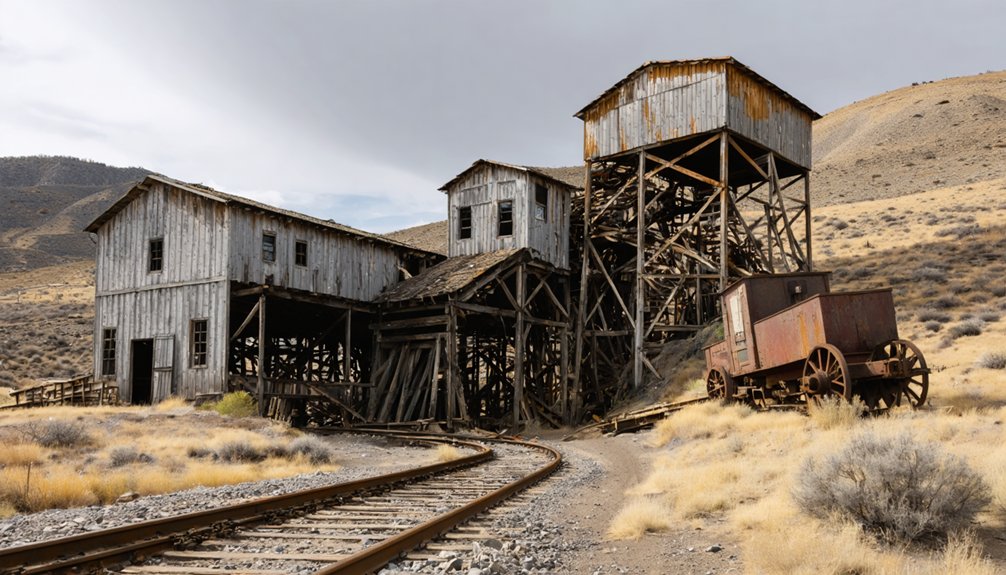
Standing at the heart of Ashwood’s story, the Oregon King mine drove everything—the population surge, the infrastructure, and ultimately the town’s collapse when the ore gave out.
The Oregon King mine didn’t just shape Ashwood—it created it, sustained it, and took it down with it.
Workers followed rich silver veins deep into the earth using mining techniques that shaped the entire region’s identity.
Here’s what the numbers tell you:
- 232,402 ounces of silver extracted between 1935 and 1950
- 2,419 ounces of gold pulled during peak operations
- Silver veins ran deep, requiring advanced mining techniques for the era
- Shaft houses and support buildings rose quickly to sustain production
When ore depleted, every business, family, and dream followed the miners out.
You’re walking ground where an entire economy once breathed. The Oregon King didn’t just produce silver—it produced Ashwood itself.
What’s Left to See at the Ghost Town Today?
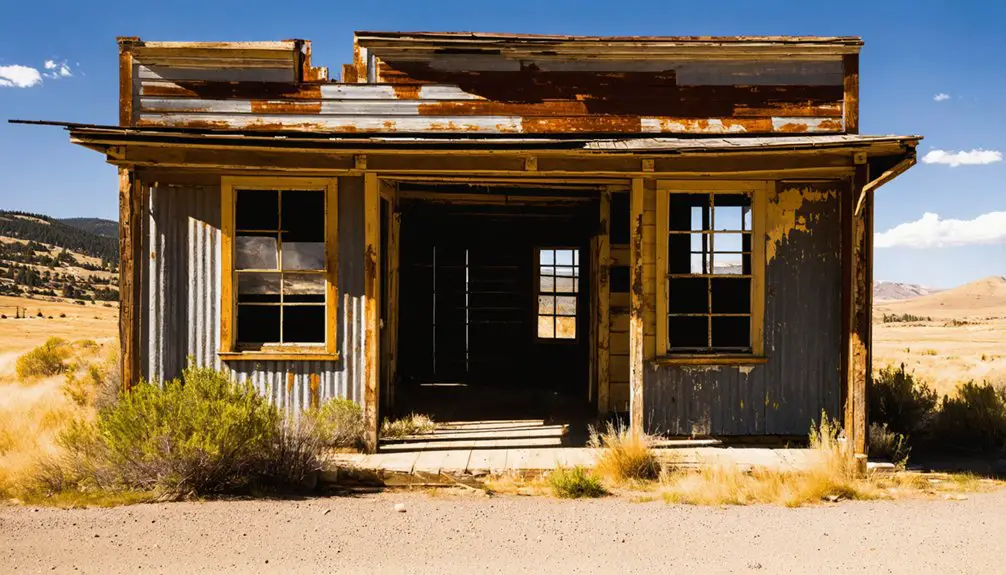
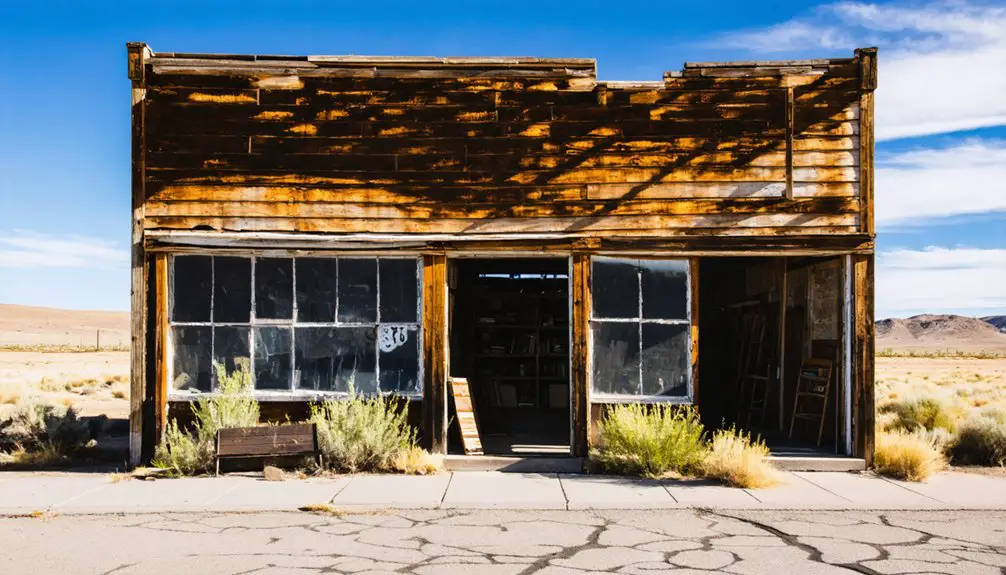
Although the town emptied out decades ago, Ashwood still holds enough physical evidence to make the drive worthwhile. You’ll find partially intact shaft houses, crumbling foundations, and massive tailings piles that tell the story of the Oregon King mine’s silver legacy.
Historic tunnels are accessible for self-guided exploration, letting you move through the site at your own pace.
For photography tips, arrive during golden hour when low light casts dramatic shadows across the volcanic terrain and weathered structures. Ash Butte and Trout Creek add compelling natural backdrops to your shots.
Wildlife encounters are common here — watch for raptors, mule deer, and high desert reptiles moving through the landscape.
The original post office building still stands, offering one of the most striking subjects you’ll photograph all trip.
Ghost Stories and Legends From Ashwood
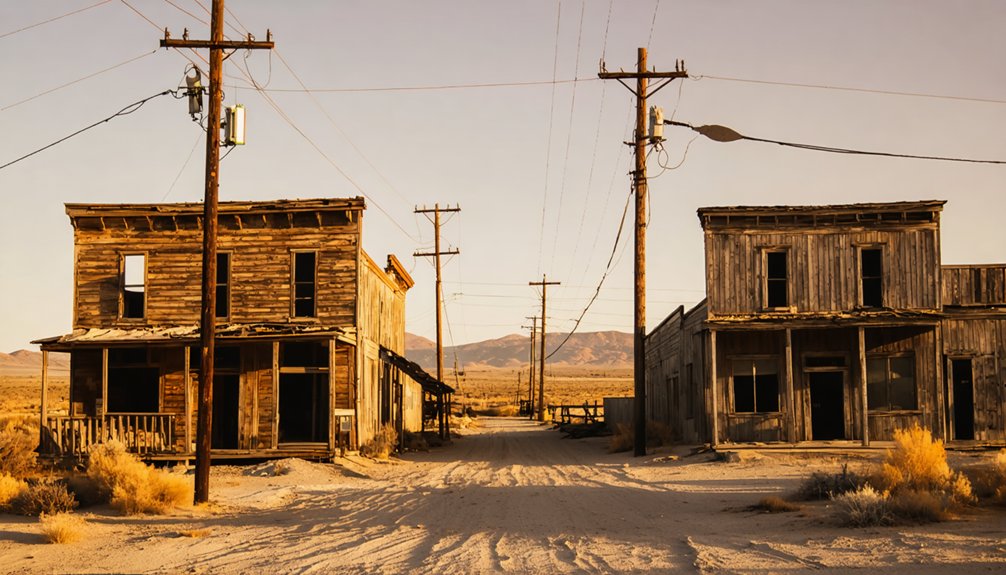
If you visit Ashwood after dark, you may hear more than the desert wind — locals report phantom footsteps echoing near the crumbling mining structures. Spectral figures are said to wander the ruins when night falls.
The Oregon King mine carries its own dark whispers, with tales of lost miners who never found their way out still circulating among those who know the area well.
Even more unsettling is the grim legend known as the “Ritual Became Murder” case, a folklore event that adds a chilling human darkness to Ashwood’s already haunted reputation.
Phantom Footsteps And Figures
When the sun dips below Ash Butte and darkness settles over Ashwood’s crumbling ruins, visitors report something unsettling: the sound of footsteps where no one walks. You’ll hear tales of spectral figures drifting past shaft houses and sealed adits after midnight.
Watch for these reported phenomena during your visit:
- Unexplained footsteps near the Oregon King mine foundations
- Shadowy figures moving between abandoned support buildings
- Strange wildlife encounters where animals freeze and stare at nothing
- Eerie stillness that veteran photographers describe before capturing anomalous images
- Apparitions spotted along Trout Creek’s darkened banks at night
Photography tips from seasoned ghost town explorers suggest long-exposure night shots near the tailings piles often reveal unexpected light anomalies.
Whether you’re a skeptic or believer, Ashwood’s atmosphere makes these legends feel genuinely convincing.
The “Ritual Became Murder” Legend
Among Ashwood’s many dark legends, none unsettles visitors quite like the story locals call the “Ritual Became Murder” case. According to those who’ve preserved the tale, a secretive group once gathered near the volcanic formations surrounding the ghost town, drawn by the region’s raw, isolated energy.
What began as a ritual reportedly turned fatal, leaving behind questions that nobody’s fully answered.
You’ll feel the weight of this story as you walk past the mineral deposits exposed along old mining cuts, where silence feels heavier than it should. Locals won’t always volunteer details, but if you ask the right questions, fragments of the account surface.
Whether fact or folklore, the legend adds another layer of unease to Ashwood’s already haunted atmosphere, making your visit genuinely unforgettable.
Nearby Stops Along Highway 197 Worth Adding to Your Route
Highway 197 runs about 15 miles northwest of Ashwood, making it a natural spine for your road trip route. You’ll find scenic viewpoints and local wildlife encounters scattered along this stretch of central Oregon highway.
Add these stops to your itinerary:
- Tygh Valley – a small community with riverside charm and easy trail access
- Sherar’s Falls – a dramatic waterfall where Native American dip-net fishing still occurs
- White River Falls State Park – stunning cascades inside a rugged canyon setting
- Maupin – a riverside town offering rafting, dining, and overnight stays
- Deschutes River State Recreation Area – prime local wildlife spotting along cottonwood-lined banks
Each stop rewards you with raw Oregon landscape and genuine freedom to explore on your own schedule.
What to Bring When Exploring a Remote Ghost Town Like Ashwood
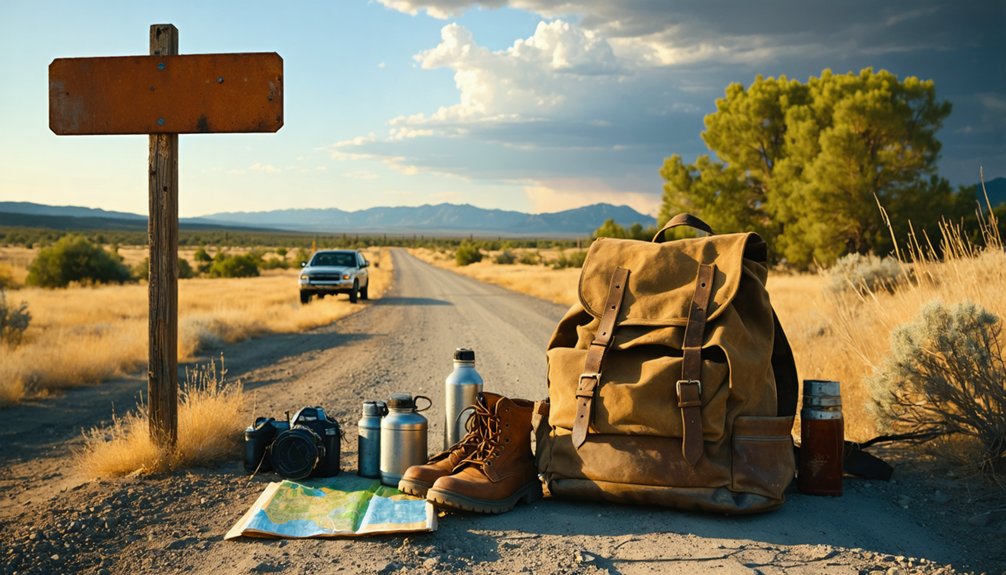
Preparing for a remote high desert site like Ashwood means packing with purpose. You’re 15 miles from Highway 197, so don’t count on nearby help. Bring more water than you think you’ll need, sturdy boots for uneven terrain around the tailings piles, and sun protection for the exposed desert landscape.
A first aid kit and a paper map are non-negotiable when cell service disappears.
Carry a quality camera for wildlife photography — the volcanic formations around Ash Butte and Trout Creek create stunning natural backdrops worth capturing.
Since there’s no souvenir shopping at a ghost town, grab meaningful mementos before you leave Madras.
A portable charger, snacks, and a flashlight for exploring mining remnants will keep your adventure moving forward smoothly.
Rules of the Road When Visiting Ashwood
When you visit Ashwood, treat every crumbling structure and weathered foundation as the irreplaceable historical artifact it’s — touch nothing, take nothing, and leave the site exactly as you found it.
You’ll want to stick to marked paths, since wandering off-trail risks both personal injury from unstable terrain and damage to the fragile remnants of the town’s mining-era past.
Respecting these boundaries isn’t just courteous — it’s what keeps Ashwood accessible for the next road-tripper who wants to experience its haunted, high desert history firsthand.
Respect Historical Structures
Ashwood’s partially intact mining structures and historic foundations are fragile remnants of a bygone era, so you’ll want to treat them with genuine care during your visit.
Historic preservation keeps this ghost town alive for future explorers, and your choices on-site make a real difference.
Follow these guidelines to protect what remains:
- Don’t climb on shaft houses, foundations, or deteriorating walls
- Leave tailings piles, artifacts, and debris exactly where you find them
- Stay on established paths when exploring accessible mining tunnels
- Photograph freely, but never pry loose materials for souvenirs
- Avoid entering any structures showing visible structural compromise
Your respect directly sustains Ashwood’s fragile character.
Every responsible visitor helps preserve these weathered remnants so the next traveler experiences the same authentic, unfiltered piece of Oregon history.
Leave No Trace
Visiting a ghost town like Ashwood means stepping into a landscape that can’t replenish itself once it’s damaged. Every artifact, foundation, and tailings pile carries cultural significance that belongs to the broader human story — not your backpack. Pack out everything you bring in, and don’t pocket rocks, relics, or debris as souvenirs.
Historical preservation depends entirely on visitors like you choosing restraint over impulse. Stay on established paths to avoid destabilizing weakened structures and fragile desert soil. Don’t carve names into wood, spray paint surfaces, or disturb sealed mine adits.
Trout Creek and the surrounding high desert ecosystem are equally vulnerable — keep them clean.
Freedom to explore places like Ashwood exists because others protected it before you arrived. Honor that by leaving it exactly as you found it.
Stay On Marked Paths
Respecting the land goes hand in hand with respecting its boundaries. Marked paths exist to protect both you and Ashwood’s fragile landscape. Straying off-trail risks destabilizing historic foundations and disturbing the natural environment surrounding Trout Creek and Ash Butte.
- Stay on designated routes for safer wildlife observation opportunities
- Use marked viewpoints for the best photography tips and compositions
- Avoid climbing deteriorating shaft houses or unstable mining structures
- Keep clear of sealed adits and tailings piles, which shift unexpectedly
- Follow posted signage directing foot traffic around sensitive terrain
Freedom means knowing where the real boundaries lie. Marked paths actually disclose the best views Ashwood offers. You’ll capture stronger photographs, spot more wildlife, and experience the ghost town’s haunting atmosphere without putting yourself or the site at risk.
Frequently Asked Questions
Are There Any Guided Tours Specifically Available for Ashwood Ghost Town Visitors?
You won’t find formal guided tours at Ashwood, but you’ll enjoy self-guided exploration through historic mining tunnels and ruins. Embrace historical preservation as you freely discover shaft houses, tailings piles, and fascinating remnants at your own adventurous pace.
Is There Cell Phone Service or Emergency Contact Available Near Ashwood?
Don’t count on cell service near Ashwood’s remote high desert terrain. You’ll want to prepare emergency contacts before venturing out, share your itinerary with someone trusted, and carry a satellite communicator for reliable safety coverage.
Can Visitors Legally Collect Rock or Mineral Samples From Ashwood’s Tailings Piles?
Sure, pocket those rocks—nobody’s watching! But rock collection regulations and mineral sampling policies actually prohibit removing materials from historic sites. You’d be violating federal preservation laws, so admire Ashwood’s tailings piles with your eyes, not your hands.
Are Pets Allowed When Exploring the Ashwood Ghost Town Site?
The knowledge doesn’t specify pet friendly policies for Ashwood, but you’ll want to research animal safety considerations before visiting. Keep your pets leashed, protect them from sharp debris, and guarantee they’re safe in the remote desert environment.
Is There Any Entrance Fee Required to Access the Ashwood Ghost Town?
You don’t need to pay an entrance fee to explore Ashwood! There aren’t any visitor facilities managing historical preservation here, so you’re free to roam this remote ghost town and uncover its fascinating mining remnants independently.
References
- https://en.wikipedia.org/wiki/Ashwood
- https://westernmininghistory.com/towns/oregon/ashwood/
- https://www.mpaxauthor.com/off-the-beaten-path-ashwood-oregon-naturephotography-naturebeauty-photography/
- https://dirtyfreehub.org/routes/oregon/ghost-of-ashwood/
- https://ktvz.com/news/2012/04/09/fire-destroys-historic-ashwood-grange-hall/
- https://www.youtube.com/watch?v=6vJxTt7gJvA
- https://www.youtube.com/watch?v=IvwzBnxUTdI
- https://www.oregon.gov/dogami/milo/archive/HistoricalSociety/Josephine/GoldHistoricWesternTrailsPublication.pdf
- https://traveloregon.com/things-to-do/culture-history/ghost-towns/ashwood-2/
- https://en.wikipedia.org/wiki/List_of_ghost_towns_in_Oregon