Planning a ghost town road trip to Goo, Michigan, means embracing the unknown. Goo doesn’t appear on official maps or state registries, making it one of Michigan’s most elusive and mythic destinations. You’ll navigate remote Upper Peninsula backroads near Route 426, passing through dense forests and forgotten landscapes. Expect crumbling foundations, eerie silence, and nature reclaiming what humans left behind. If you’re ready to uncover everything about this mysterious destination, there’s much more ahead.
Key Takeaways
- Goo, Michigan, likely doesn’t officially exist in state registries, so research USGS archives, county plat maps, and DNR documentation before planning your trip.
- Nearby documented ghost towns like Watson, Mashek, Arnold, and Pere Cheney along Route 426 offer authentic alternatives worth including in your road trip.
- Fall is the optimal visiting season, combining accessible roads with dramatic foliage that enhances the atmosphere of abandoned structures.
- Pack sturdy boots, printed maps, first aid supplies, and extra batteries, as remote areas often lack cell service and reliable navigation.
- Expect crumbling foundations, overgrown ruins, and reclaimed landscapes, with silence and absence of signage defining the ghost town experience.
What Is the Ghost Town of Goo, Michigan?
While the name might spark curiosity, Goo, Michigan doesn’t actually exist as a ghost town — or any kind of town, for that matter. No official records, state registries, or USGS databases confirm any settlement by that name. It’s likely a misspelling, a fictional reference, or simply an internet myth.
That said, you don’t need a phantom town to fuel your road trip. Michigan’s 70+ documented ghost towns carry genuine historical significance, offering real stories of abandoned settlements and forgotten communities. Places like Pere Cheney and Watson reward curious travelers with preservation efforts still visible in crumbling foundations and overgrown landscapes.
If you stumbled across “Goo” searching for adventure, you’re already thinking right — you just need to redirect that energy toward Michigan’s actual ghost town treasures.
Where in Michigan Is Goo Located?
Goo sits in a remote corner of Michigan that you’ll need to look closely to find on any standard map. You won’t spot it listed among the state’s 70-plus documented ghost towns, which makes pinpointing its exact location a challenge even for seasoned road trippers.
Your best approach is cross-referencing historical county records and regional travel guides to narrow down where this elusive settlement once stood.
Goo’s Michigan Geographic Location
Tucked into Michigan’s Upper Peninsula, the ghost town of Goo sits along Route 426, placing it within the same scenic corridor as Watson, Mashek, and Arnold. You’ll find this forgotten settlement nestled among dense forests and rural backroads that once bustled with early Michigan settlers.
Its historical significance ties directly to the broader Upper Peninsula mining and logging era, when small communities sprouted quickly and vanished just as fast. Local legends surrounding Goo add a layer of mystery that draws curious travelers off the beaten path.
As you navigate Route 426, you’re moving through a landscape where abandoned ambitions left their mark on the land. Goo’s location makes it a natural stop when you’re already exploring the surrounding ghost town corridor through Michigan’s rugged northern wilderness.
Finding Goo On Maps
Finding Goo on a modern map takes a bit of patience, since it won’t appear on most standard navigation apps or printed atlases.
Historical myths and folklore legends surrounding this phantom settlement make the search itself part of the adventure.
You’ll need to dig deeper than Google Maps to uncover its rumored location.
Try these alternative approaches:
- Check USGS historical topographic archives for older Michigan survey maps
- Browse Michigan DNR ghost town documentation for obscure settlement references
- Explore county-level plat maps from local historical societies
- Search Michigan.org’s 70+ ghost town inventory for nearby confirmed locations
Since no official record confirms Goo’s existence, cross-referencing multiple historical sources gives you the best shot at piecing together its mysterious, map-defying story.
How Do You Get to Goo, Michigan?
Since Goo, Michigan doesn’t appear in any official state records, GPS databases, or ghost town registries, you won’t find a direct route there — because it simply doesn’t exist as a documented destination. No county road signs point toward it, no trail markers reference it, and no local folklore places it on any recognizable Michigan landscape.
Ghost town legends sometimes generate phantom locations that feel real but trace back to fiction, typos, or misremembered names. If you’re chasing genuine abandoned history, redirect your road trip toward confirmed destinations like Pere Cheney, Watson, or Mashek.
These real ghost towns offer actual ruins, atmospheric scenery, and documented stories worth exploring. Don’t waste your freedom on a destination that exists nowhere except imagination — Michigan’s real ghost towns deliver far more.
What Does Goo Look Like When You Arrive?
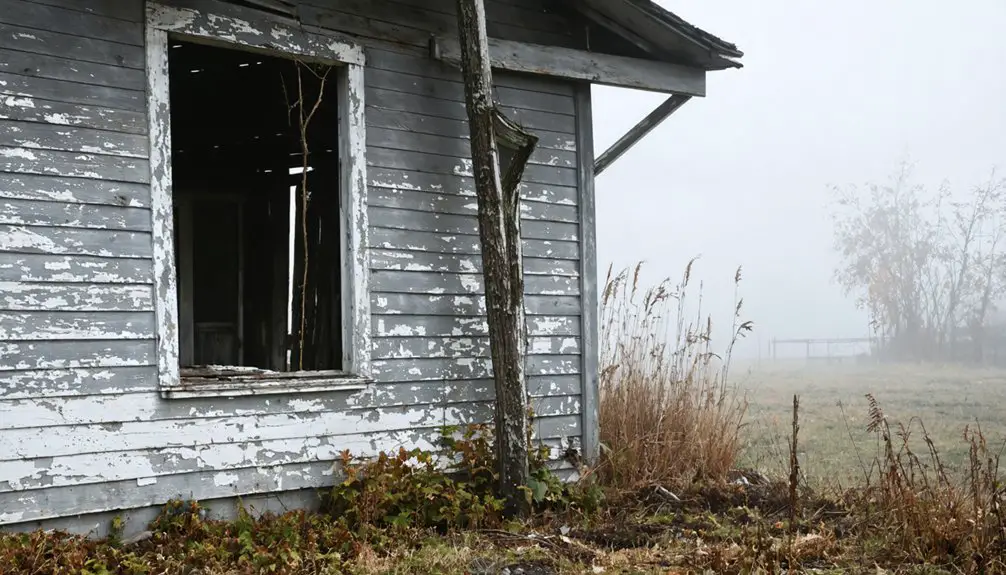
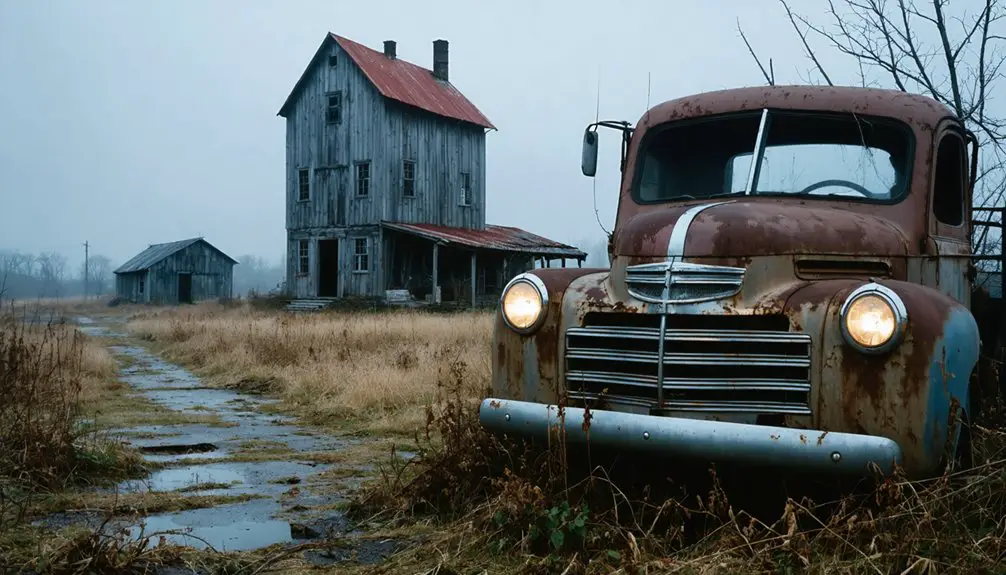
When you arrive at Goo, Michigan, the silence hits you first — there are no crowds, no signage, and no obvious markers welcoming you to a town. You’ll spot a handful of crumbling structures scattered across the landscape, each one a weathered reminder of the community that once thrived here.
The abandoned buildings, overtaken by vegetation and time, tell the story of Goo’s slow fade from a living settlement into a ghost town frozen in place.
Arriving At Goo
Here’s what greets you when you arrive:
- Decayed foundations barely visible beneath decades of undergrowth
- Eerie stillness broken only by wind moving through abandoned corridors
- Remnants of daily life—rusted tools, broken glass, forgotten pathways
- No crowds, no signs—just raw, unfiltered history waiting for you to explore
You’re not just visiting a location. You’re reclaiming a forgotten piece of Michigan’s past on your own terms.
Goo’s Visible Landmarks
Once you’ve taken in that initial silence and let the weight of the place settle on you, your eyes start picking out what’s left of Goo itself. Weathered foundations push through the soil like old bones, marking where homes and storefronts once stood. A crumbling chimney stack rises against the tree line, stubbornly refusing to disappear.
Nature has reclaimed most of it, wrapping timber remnants in moss and vine. Historical preservation here is raw and unmanaged — no plaques, no fences, just time doing its work.
Local legends say certain structures still hold faint markings from original settlers, if you look closely enough. You’re free to explore at your own pace, reading the landscape like an open journal nobody thought to close.
Goo’s Abandoned Structures
Stepping into Goo, you’ll notice the abandoned structures aren’t dramatic ruins so much as slow surrenders to time. Weathered wood, collapsed rooflines, and vine-choked foundations tell quiet stories that fuel both urban legends and ghost stories passed down through generations.
What you’ll likely encounter:
- Rotting timber frames leaning at impossible angles, as if mid-conversation with the earth
- Crumbled foundations barely visible beneath decades of overgrowth and Michigan soil
- Broken window cavities that stare outward like hollow eyes, inviting your imagination
- Scattered debris fields where floors once held families, now holding only silence
You’re free to wander, photograph, and interpret what remains. Goo doesn’t perform for visitors — it simply exists, unfiltered and unapologetic, waiting for those bold enough to show up.
Nearby Ghost Towns Worth Adding to Your Route
While you’re mapping out your Goo road trip, you’ll find that Michigan’s ghost town network makes it easy to turn a single stop into a full-fledged adventure. Route 426 through the Upper Peninsula connects you to Watson, Mashek, and Arnold, each carrying their own historical legends and local folklore worth exploring.
Pere Cheney delivers Michigan’s most literal ghost town experience — nothing but railroad tracks and open land.
Mashek surprises visitors with an enormous abandoned school standing alone in silence.
Arnold’s single corner store is a haunting landmark you won’t forget.
For a structured route, follow County Road FF from Frost through Pori toward McKeever, hitting multiple ghost towns in one sweep.
Michigan’s 70+ documented ghost towns guarantee you’ll never run short of destinations.
Best Time of Year to Visit Michigan Ghost Towns Like Goo
Timing your visit to Michigan ghost towns makes a real difference in what you’ll experience. Seasons shape everything from accessibility to atmosphere, directly affecting your photography opportunities and historical preservation observations.
- Summer (June–August): Roads are clear, trails accessible, and natural light ideal for capturing dramatic shots.
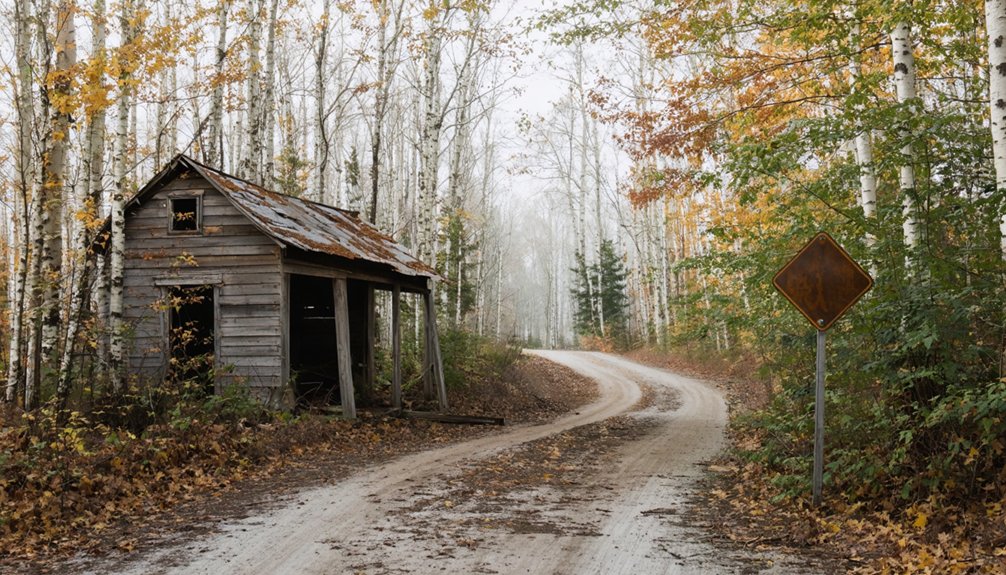
- Fall (September–October): Foliage frames abandoned structures beautifully, creating stunning photography opportunities.
- Winter (November–March): Snow adds eerie atmosphere but expect road closures and limited access.
- Spring (April–May): Melting ice reveals forgotten foundations and structures emerging from winter.
You’ll want to avoid mud season in early spring when unpaved county roads become impassable. Fall remains the sweet spot, balancing accessibility with dramatic scenery that honors historical preservation efforts surrounding Michigan’s forgotten settlements.
What to Pack for a Michigan Ghost Town Road Trip
Packing smart separates a memorable ghost town road trip from a frustrating one. Michigan’s abandoned settlements demand practical gear and creative preparation. Bring sturdy hiking boots, layered clothing, and a reliable first aid kit — remote spots like Watson or Pere Cheney offer zero nearby stores.
For photography tips, pack a wide-angle lens to capture crumbling architecture and overgrown landscapes. A tripod helps in low-light conditions inside deteriorating structures. Bring extra batteries, since you’ll drain power quickly shooting historical background details like old foundations and forgotten signage.
Carry printed maps because cell service disappears fast in Michigan’s Upper Peninsula. Pack water, high-energy snacks, and a portable charger. Your freedom to explore depends entirely on your self-sufficiency once you’ve left the last paved road behind.
Frequently Asked Questions
Are There Any Entry Fees or Permits Required to Visit Michigan Ghost Towns?
Most Michigan ghost towns are free to explore! Take Pere Cheney — you’ll walk right in. For historic preservation, check local guides first, as some sites may require permits to protect fragile remnants.
Is It Legal to Take Artifacts or Souvenirs From Michigan Ghost Towns?
You shouldn’t remove artifacts from Michigan ghost towns — souvenir regulations strictly prohibit it. Artifact removal from historic sites is illegal and can result in hefty fines. Respect these places; you’ll preserve their haunting stories for fellow freedom-seeking explorers.
Can You Camp Overnight Near Michigan Ghost Town Locations Legally?
You can legally camp near Michigan ghost towns on public lands! Check state forest campgrounds close to historical preservation sites, enjoy stunning photography opportunities at dawn, and always verify private property boundaries before setting up your tent.
Are Michigan Ghost Towns Accessible for Visitors With Mobility Limitations?
Like Steinbeck’s wanderers seeking open roads, you’ll face accessibility challenges at Michigan ghost towns—uneven terrain limits mobility. However, historical preservation efforts at sites like Pere Cheney mean you can still explore paved pathways and accessible viewing areas freely.
You’ll find cell service is unreliable in Michigan’s remote ghost towns, so download offline maps beforehand. Prioritize emergency preparedness by carrying a satellite communicator, ensuring you’re never stranded without navigation or help.
References
- https://en.wikipedia.org/wiki/List_of_ghost_towns_in_Michigan
- https://www.onlyinyourstate.com/trip-ideas/michigan/ghost-town-road-trip-mi
- https://www.youtube.com/watch?v=PNsiAFMsOpk
- https://wmmq.com/13-michigan-ghost-towns/
- https://takemetotn.com/a-strange-little-road-trip-through-13-michigan-towns-that-seem-boring-at-first/
- https://99wfmk.com/michigan-roadtrip-the-ghost-towns-of-route-426/
- https://www.reddit.com/r/Michigan/comments/1lmgyq/any_good_ghost_towns_in_michigan/
- https://www.onlyinyourstate.com/trip-ideas/michigan/abandoned-road-trip-mi
- https://www.onlyinyourstate.com/trip-ideas/michigan/haunted-road-trip-mi
- https://99wfmk.com/ghost-town-route-michigan/