Astoria, South Dakota sits about 15 miles west of Custer in a remote prairie landscape where weathered buildings and crumbling foundations tell the story of railroad dreams gone quiet. You’ll access it via Highway 44, then shift onto Forest Service roads, so check seasonal conditions before you go. Bring water, a physical map, and sturdy boots since there are no facilities nearby. Everything you need to plan a safe, unforgettable visit is just ahead.
Key Takeaways
- Astoria, located in Custer County, is accessible via Highway 44 and Forest Service roads, approximately 15 miles west of Custer.
- The ghost town features weathered buildings, crumbling foundations, and prairie reclamation, offering an authentic glimpse into frontier settlement history.
- No facilities exist nearby, so pack water, snacks, a first aid kit, and a physical map for unreliable cell service areas.
- Avoid entering unstable buildings, wear sturdy boots, and inform someone of your location and expected return time before visiting.
- Nearby ghost towns like Rockerville, Rochford, and Mystic can be combined into a fuller South Dakota ghost town road trip.
What Makes Astoria a True South Dakota Ghost Town?
Nestled in Custer County’s quiet prairie, Astoria checks every box of a true South Dakota ghost town.
You’ll find weathered buildings surrendering to the elements, empty streets echoing with silence, and crumbling foundations that speak louder than any history book.
Astoria’s historical significance runs deep, dating back to the late 19th century when railroads fueled prairie agriculture and early mining operations.
Astoria’s roots stretch back to the late 1800s, when railroads and mining ambitions shaped the wild prairie.
When steam engines gave way to diesel and mining camps closed, Astoria simply faded.
Local legends connect this forgotten settlement to gold fever dreams and frontier ambition that never quite paid off.
South Dakota claims roughly 600 ghost towns, and Astoria stands among them as a raw, unfiltered example.
If you crave authentic freedom and untouched history, Astoria delivers exactly that.
Where Astoria Sits and How to Get There
You’ll find Astoria tucked into Custer County, South Dakota, at roughly 44.5°N latitude, about 15 miles west of Custer and 20 miles from Deadwood.
To reach it, you’ll need a vehicle capable of handling remote rural roads, as the site connects via maintained Forest Service roads near Highway 44.
If you’re a biking enthusiast, you can also tie your visit into the nearby Mickelson Trail network for a more scenic approach.
Astoria’s Exact Prairie Location
Where exactly does Astoria sit on South Dakota’s vast prairie? You’ll find it in Custer County, resting near approximately 44.5°N latitude, surrounded by geographical features that shaped its historical significance as a frontier hub.
Here’s what pins this ghost town to the map:
- County: Custer County, South Dakota
- Proximity: Roughly 15 miles west of Custer, 20 miles from Deadwood
- Access Road: Maintained Forest Service roads near Highway 44
- Trail Connection: Links to the Mickelson Trail network for cyclists
- Terrain: Remote prairie landscape with no modern facilities nearby
You’re not stumbling onto a roadside attraction here. Astoria demands intentional navigation.
Pack your sense of direction, respect the land’s raw openness, and you’ll arrive somewhere history quietly breathes.
Roads Leading To Astoria
Getting to Astoria means committing to a drive, and there are a few key roads that’ll make or break your approach. Highway 44 is your main artery, cutting through open prairie with wide-open views that’ll remind you why road trips exist.
From there, you’ll shift onto Forest Service roads maintained well enough for standard vehicles but demanding enough to keep casual tourists away.
Road conditions vary seasonally, so check local reports before you head out. Spring thaw and heavy rain can turn manageable dirt roads into frustrating detours.
If you’re craving scenic routes, the drive west from Custer delivers rolling hills and ponderosa pines before the landscape opens into raw prairie.
Give yourself extra time and enjoy every mile leading toward this forgotten corner of South Dakota.
Why Did Astoria Rise and Fall?
Astoria’s story follows a familiar arc for South Dakota’s frontier settlements: it rose with the promise of railroads and mining, then faded when those industries moved on.
Settlement dynamics here mirrored dozens of other prairie communities where fortune and practicality collided.
Like so many prairie towns, Astoria was built where ambition met reality — and eventually surrendered to it.
Key forces shaped Astoria’s rise and fall:
- Railroads fueled early growth, connecting prairie agriculture and mining support services.
- Gold fever drew settlers chasing frontier dreams into Custer County.
- Transportation shifts from steam to diesel eliminated Astoria’s railroad relevance.
- Mining camps closed, stripping away the economic foundation supporting the community.
- Abandoned rail lines left residents with no reason to stay.
You’re now walking through what those transportation shifts left behind — empty streets and weathered walls that once buzzed with frontier ambition.
What This South Dakota Ghost Town Actually Looks Like Today
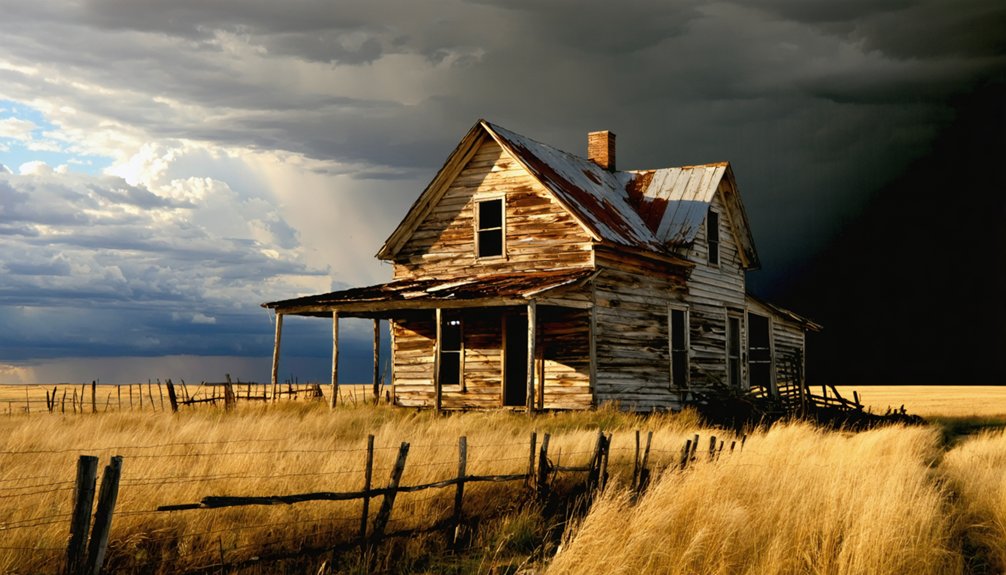
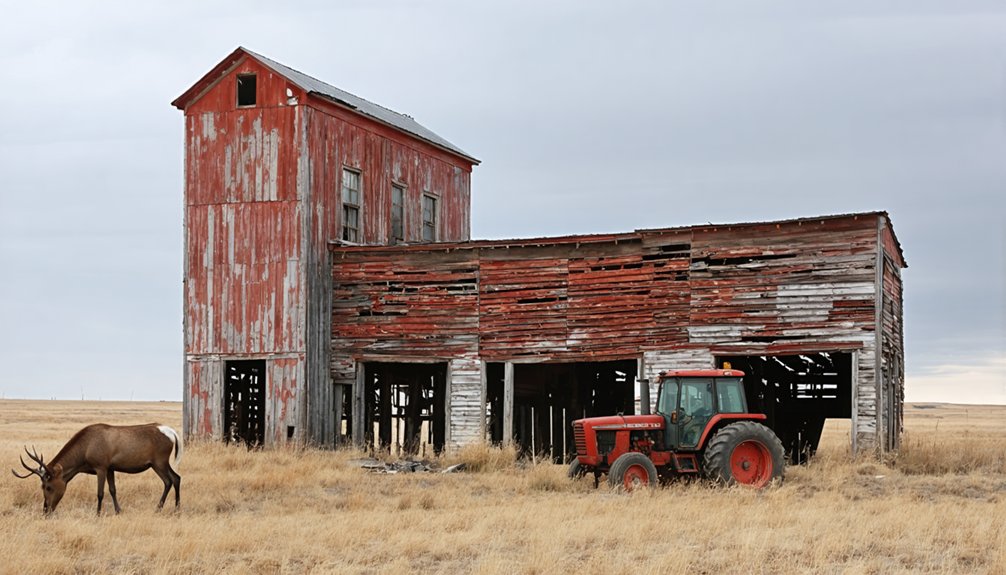
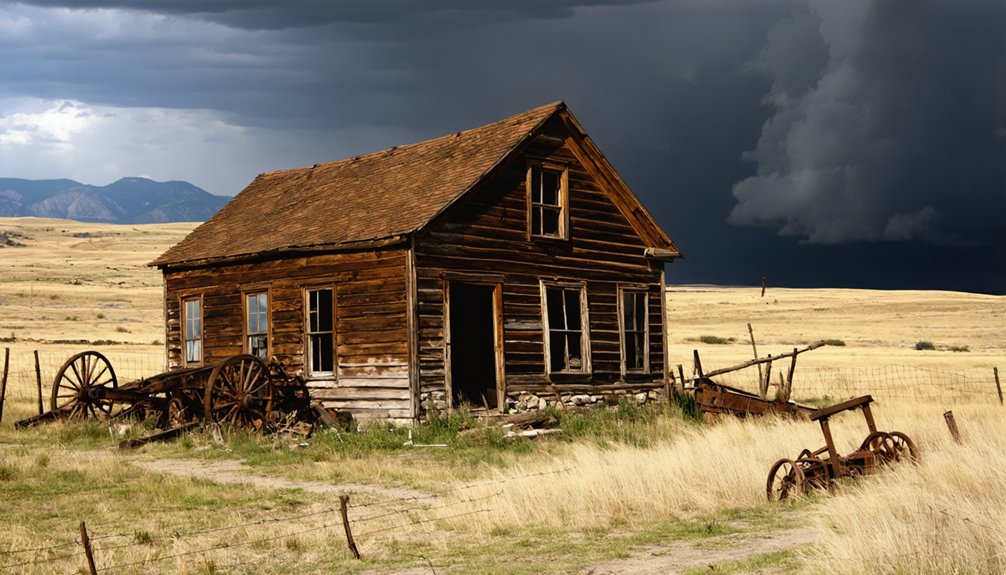
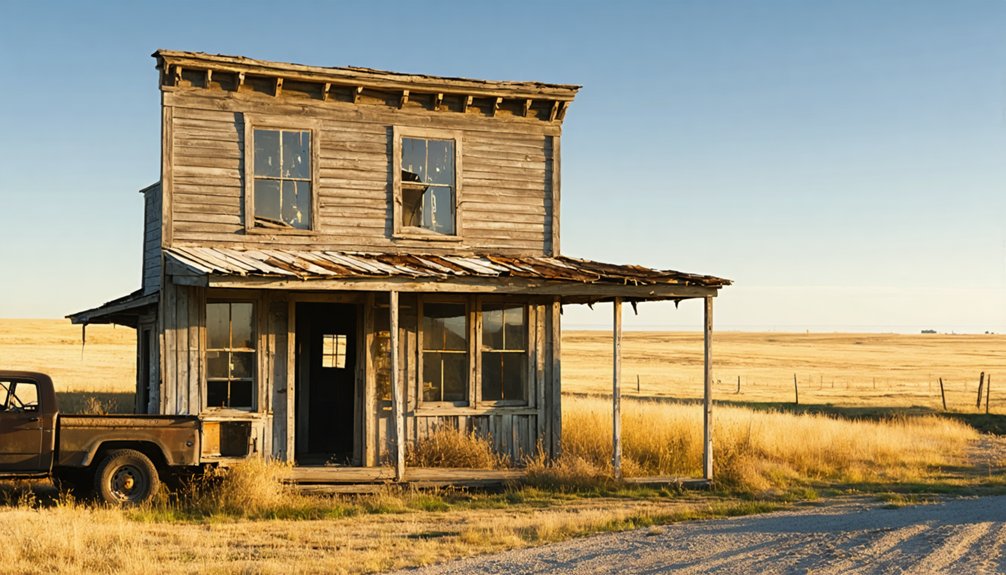
When you arrive at Astoria today, you’ll find a handful of weathered buildings slowly surrendering to the relentless South Dakota weather.
You’ll walk empty streets where crumbling foundations mark the footprints of structures that no longer stand.
The prairie has quietly reclaimed much of the town, offering you an up-close look at decay that feels both haunting and honest.
Weathered Buildings Standing Today
Stepping into Astoria today feels like walking onto a film set that everyone forgot to tear down.
You’ll find weathered history frozen mid-collapse, with prairie remnants holding their ground against relentless South Dakota winds.
Here’s what you can expect to see standing today:
- Crumbling foundations slowly swallowed by native grasses
- Weathered wooden structures leaning at impossible angles
- Empty window frames framing endless prairie sky
- Scattered debris telling stories without words
- Hollow doorways leading nowhere and everywhere simultaneously
Nobody’s maintaining these structures, which makes your visit feel genuinely raw and unfiltered.
You’re not walking through a curated museum — you’re standing inside actual decay.
Bring your camera, watch your footing around unstable foundations, and let the silence do the talking.
Empty Streets And Foundations
Beyond the leaning structures, the real ghost of Astoria lives in what’s missing — the movement, the noise, the people.
You’ll walk streets that once carried wagon wheels and working boots, now swallowed by prairie grass and silence. Crumbling foundations outline where homes and businesses once stood, giving you a rough map of a forgotten life.
For urban exploration enthusiasts, these remnants carry serious historical significance. Each broken foundation tells you something — the size of a room, the ambition of a settlement, the abrupt end of a dream.
You’re not just looking at decay; you’re reading a collapsed story written in concrete and stone.
Bring sturdy footwear, watch your step near unstable edges, and let the emptiness speak without interrupting it.
Prairie Decay Up Close
What you’ll find at Astoria today isn’t dramatic collapse — it’s slow erasure. Prairie nostalgia hits differently when you’re standing before structures quietly surrendering to wind, weather, and time.
The historical significance isn’t in grand ruins — it’s in the details you’ll notice up close:
- Weathered wood grain stripped raw by decades of South Dakota winters
- Crumbling foundations half-swallowed by prairie grass
- Empty window frames framing endless open sky
- Rusted remnants hinting at tools and lives once active here
- Walls leaning but stubbornly refusing to fully fall
Nobody’s maintaining this place, and that’s exactly the point.
You’re seeing frontier life exactly as time left it — unpolished, unglamorous, and completely honest. Bring your camera and your patience.
Is Astoria the Right Ghost Town for Your Skill Level?
Choosing the right ghost town can make or break your road trip experience, and Astoria sits firmly in the intermediate-to-advanced category. If you’re new to exploring ghost towns, start with accessible sites like Rockerville or Okaton near Interstate 90 before tackling Astoria’s remote prairie roads.
You’ll need a reliable vehicle, solid navigation skills, and realistic expectations about crumbling foundations and zero modern facilities.
But if you’re comfortable with rugged rural conditions and genuinely curious about prairie history, Astoria rewards your effort. There’s no hand-holding here — just weathered structures, empty streets, and raw frontier atmosphere that sanitized tourist stops can’t replicate.
Astoria isn’t built for casual visitors. It’s built for travelers who value authentic discovery over convenience and who respect the fragile history still standing before them.
How to Stay Safe at a Crumbling Ghost Town
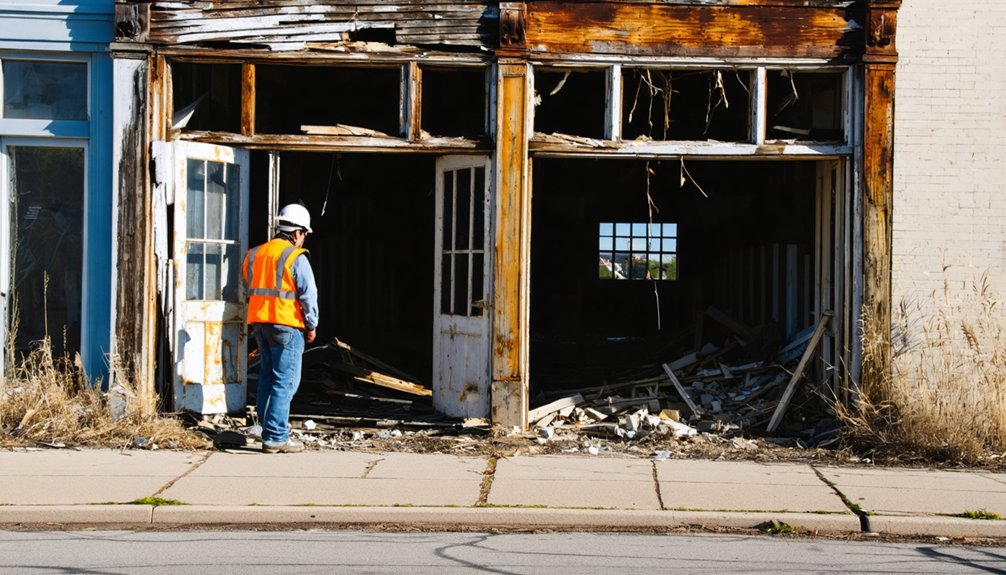
Visiting a crumbling ghost town like Astoria means accepting that every structure you see is one bad step away from collapse.
Smart safety precautions and solid ghost town etiquette keep you exploring freely without ending your trip in an emergency room.
Follow these rules before stepping foot on site:
- Never enter weathered buildings with crumbling foundations
- Wear sturdy boots to navigate uneven, debris-covered ground
- Bring water and a first aid kit since no facilities exist nearby
- Tell someone your exact location and expected return time
- Leave everything untouched so future visitors experience the same raw history
Respecting these boundaries isn’t about restriction — it’s about staying mobile and free to explore South Dakota’s other ghost towns waiting down the road.
What to Pack for a Remote Prairie Ghost Town Visit
Packing smart is just as important as playing it safe when you’re heading somewhere as remote as Astoria. There are no stores, no facilities, and no rescue nearby, so your pack better cover the basics.
Bring plenty of water, snacks, a first aid kit, and sturdy boots for traversing crumbling foundations. Your packing essentials should also include a physical map since cell service is unreliable out here.
For photography tips, shoot during golden hour when the prairie light hits weathered wood beautifully. Bring a wide-angle lens to capture the vast emptiness alongside the structures.
A spare battery matters more than you’d think in cold prairie conditions. Pack light but pack right, and Astoria will reward you with stunning, haunting images worth every mile driven.
South Dakota Ghost Towns to Pair With Your Astoria Visit
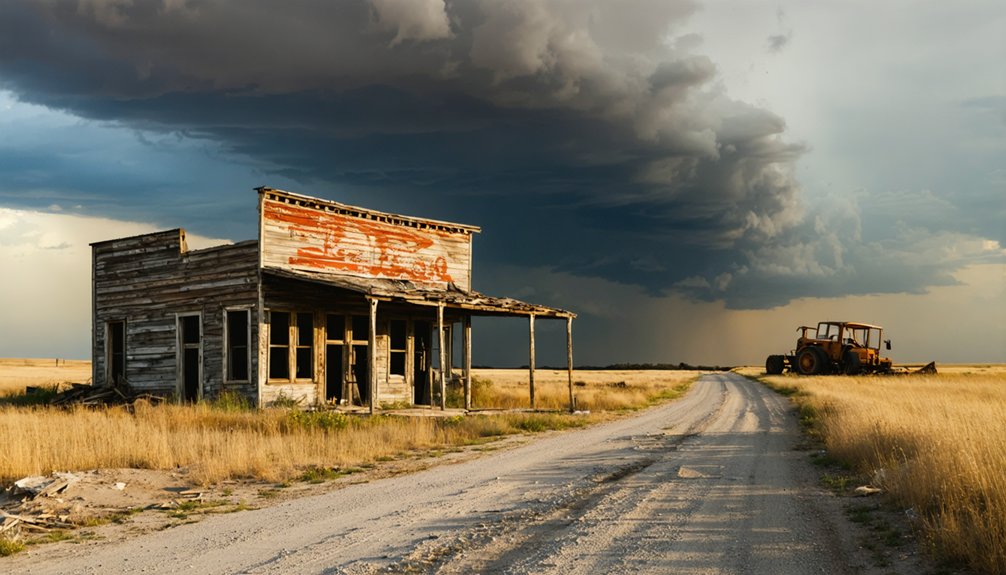
Since you’re already making the drive out to Astoria, it makes sense to stack your itinerary with a few more ghost towns along the way.
South Dakota’s prairie history runs deep, and these stops deliver incredible ghost town photography opportunities without heavy backtracking:
- Rockerville – An easy beginner stop with accessible structures near Rapid City
- Scenic – A visually striking abandoned town perfect for dramatic photography
- Okaton – Conveniently located at Interstate 90 Exit 183 for a quick detour
- Rochford – Reachable via maintained Forest Service Road 17 for remote explorers
- Mystic – Connects directly to the Mickelson Trail, ideal if you’re biking between sites
Each location adds unique texture to your understanding of frontier life without overwhelming your timeline.
Frequently Asked Questions
Can You Camp Overnight Near Astoria in Custer County?
You’ll find freedom beside decay — camping regulations allow overnight stays near Astoria via Custer National Forest sites. Explore nearby attractions like the Mickelson Trail while you’re there, embracing wilderness just miles from abandoned frontier dreams.
Are Guided Ghost Town Tours Available Near Astoria South Dakota?
The knowledge base doesn’t confirm guided tours near Astoria, but you’ll find operators in Custer offering ghost town history experiences rich with local folklore. Explore independently or connect with local visitor centers to discover your perfect adventure.
What Is the Best Season to Visit Astoria South Dakota?
Summer’s your best season to visit Astoria — and coincidentally, it’s when the best activities and seasonal events nearby align perfectly, letting you freely explore weathered prairie structures without harsh winter roads blocking your adventurous spirit.
Is Astoria South Dakota Accessible During Winter Road Conditions?
Winter driving to Astoria gets risky since you’re traversing remote rural roads with no active maintenance. You’ll want to prioritize road safety by checking conditions beforehand, packing emergency gear, and embracing the adventure responsibly before heading out.
Are There Entry Fees Required to Visit Astoria South Dakota?
You’ll find Astoria’s doors wide open with no entry requirements standing between you and its historical significance. This forgotten prairie treasure welcomes free spirits freely, letting you explore its weathered, decaying structures without spending a single dollar.
References
- https://www.youtube.com/watch?v=kpkBy_2SxlA
- https://en.wikipedia.org/wiki/List_of_ghost_towns_in_South_Dakota
- https://www.youtube.com/watch?v=7zKYq52nY5o
- https://www.youtube.com/watch?v=CgAngtZwhTI
- https://baselocal.com/sd/a/best-ghost-towns-in-south-dakota-maps-access-safety-tips/
- https://www.ghosttowns.com/states/sd/sd.html
- https://www.powderhouselodge.com/black-hills-attractions/fun-attractions/ghost-towns-of-western-south-dakota/?2021_TAG
- https://thetravelersway.com/road-trip-south-dakotas-quirky-roadside-attractions/
- https://www.tripadvisor.ca/Attraction_Review-g54799-d22999414-Reviews-Scenic_Ghost_Town-Scenic_South_Dakota.html
- https://everafterinthewoods.com/deserted-ghost-towns-in-south-dakota-that-history-buffs-still-visit/