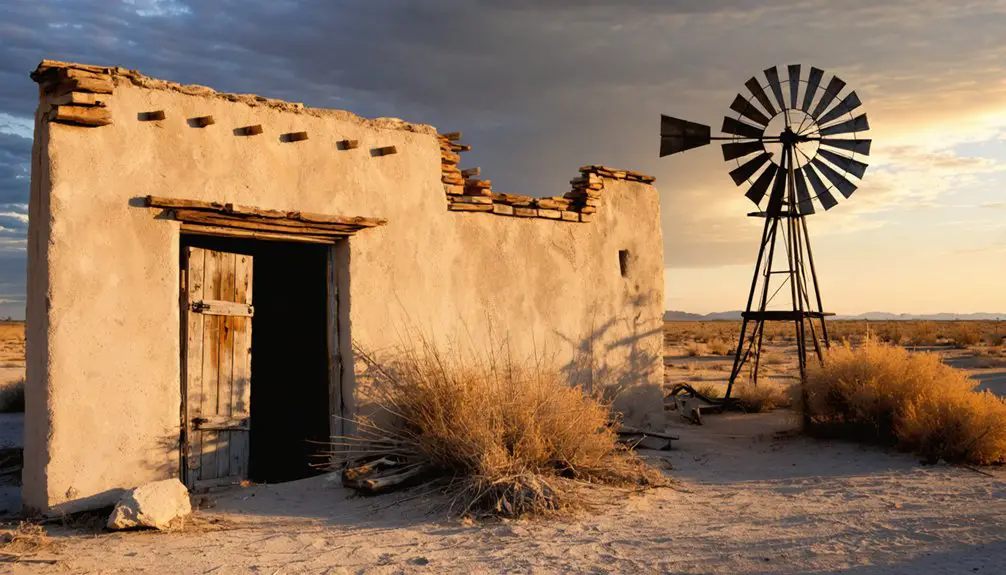
Planning a ghost town road trip to Auburn, Texas means embracing raw, unfiltered history scattered across Ellis County’s rural landscape. You won’t find tourist signs or preserved storefronts here — just a surviving cemetery connecting you to the 1850s settlement era and authentic emptiness that curious travelers seek. Drive roughly 1-2 hours from DFW via I-35E and State Highway 34, and bring a high-clearance vehicle. There’s far more to discover about making this unforgettable journey worthwhile.
Key Takeaways
- Auburn, Texas, sits roughly 1-2 hours from Dallas; take I-35E south to State Highway 34, stopping in Waxahachie for fuel and food.
- Auburn’s surviving cemetery is the main attraction, offering a direct connection to the town’s 1850s settlement era.
- No tourist infrastructure exists, so download offline maps and prepare for self-directed exploration across rural, unmarked roads.
- High-clearance vehicles are recommended, as unpaved roads become impassable during wet or seasonal weather conditions.
- Nearby ghost towns Alton, Aurora, and Audubon can be added to create a fuller Texas frontier history driving loop.
What’s Left to See at Auburn, Texas Today?

What remains of Auburn, Texas today is honest in its emptiness. You won’t find dramatic ruins or preserved storefronts here — just scattered residences quietly holding their ground across the rural landscape.
That stripped-down reality is exactly what makes this place worth visiting.
That stripped-down reality is precisely what draws the curious traveler — authenticity rarely arrives polished or pre-packaged.
Your best opportunity for cemetery exploration lies at the town’s surviving burial ground, which stands as Auburn’s most significant remaining feature. Walking those grounds connects you directly to the people who built this community during the 1850s settlement era.
Don’t expect signage or tourist infrastructure — Auburn demands that you arrive curious and self-directed. Its historical significance isn’t packaged for convenience; it’s embedded in the soil itself.
For travelers who value raw, unfiltered history over polished attractions, Auburn delivers something genuinely rare.
Which Ghost Towns Near Auburn Are Worth Adding to Your Route?
Once you’ve absorbed Auburn’s quiet emptiness, several nearby ghost towns reward the extra miles. Each destination adds a distinct layer to your Texas frontier story.
- Alton (Denton County): Explore the Old Alton Bridge and Alton cemetery, where headstones whisper stories from an 1848 settlement abandoned just eight years later.
- Aurora (Jefferson County): Immerse yourself in Aurora history, tracing a platted 1837 community that hurricanes erased by 1895, leaving only silence where ambition once stood.
- Audubon (Wise County): Discover how a railroad bypass quietly killed this 1865 settlement, leaving barren land as its only testimony.
String these stops together on a single driving loop, and you’ll experience Texas’s ghost town landscape as a living, breathing historical document worth every mile.
How to Get to Auburn, Texas From the DFW Area
Planning the ghost town loop above sets you up perfectly for the drive to Auburn itself. From the DFW area, you’re looking at roughly 1-2 hours heading south toward Ellis County.
This directions overview keeps it simple: take I-35E south from Dallas, then connect to State Highway 34 out of Waxahachie, which funnels you into Auburn’s rural landscape. From there, rural roads lead you to the scattered residences and cemetery.
For travel tips, check road conditions before you leave, especially after heavy rain, since unpaved stretches can get rough.
Waxahachie sits nearby, offering fuel and food before you venture into the quieter backroads. No tourist signage marks Auburn, so download offline maps and embrace the freedom of traversing open Texas countryside on your own terms.
Road Conditions, Access Rules, and What to Expect on Rural Ellis County Roads
Traversing rural Ellis County roads to Auburn means trading smooth pavement for unpaved stretches that shift dramatically with the weather. Seasonal conditions turn dirt paths muddy and impassable after rain, so timing your visit matters.
Apply these rural driving tips before heading out:
- Check recent rainfall data — wet conditions make low-lying Ellis County roads dangerously soft and potentially inaccessible.
- Drive a high-clearance vehicle — standard sedans struggle on rutted, uneven terrain surrounding the cemetery and scattered residences.
- Respect private property boundaries — Auburn’s remaining land belongs to private owners, so stay on public roads unless you’ve secured permission.
You’re free to explore, but preparation keeps that freedom intact. Arriving informed means you’ll spend your time discovering Auburn’s quiet history rather than recovering a stuck vehicle.
How to Plan a Full Ellis County Ghost Town Loop
A single well-planned loop through Ellis County lets you combine Auburn’s quiet cemetery with Waxahachie’s historic district and the rural stretches connecting them, maximizing your drive time without backtracking.
Start in Waxahachie, head south along State Highway 34, then branch onto rural roads toward Auburn’s scattered residences and cemetery. You’ll absorb genuine ghost town history without fighting crowds or rigid schedules.
After Auburn, circle back through Ennis to close your loop efficiently. Rural exploration rewards the prepared traveler, so download offline maps before you lose cell service on back roads.
Budget two to three hours total, keep your tank full, and pack water. This self-directed route gives you complete freedom to linger where history feels strongest and move on when you’re ready.
Frequently Asked Questions
When Was Auburn, Texas Originally Settled and by Whom?
You’ll discover Auburn’s settlement history dates to the 1850s, when pioneer families carved out this Ellis County community during Texas’s bold frontier expansion, embracing the freedom of untamed land and boundless opportunity.
What Caused Auburn to Become a Ghost Town Over Time?
Over 80% of Texas ghost towns share Auburn’s abandonment reasons: economic shifts drained life from the settlement. You’ll find its historical significance preserved mainly in the cemetery, reflecting a common frontier decline pattern.
Are There Any Annual Events or Gatherings Held at Auburn?
You won’t find annual festivals or community gatherings at Auburn—it’s too semi-abandoned for organized events. Your best bet is exploring its cemetery independently, embracing the freedom of uncrowded, self-guided discovery on your ghost town road trip.
Is the Auburn Cemetery Still Actively Maintained by Anyone?
Want to explore history’s remnants? The Auburn cemetery’s maintenance status isn’t clearly documented, but its historical significance keeps it relevant. You’ll likely find cemetery maintenance handled by local residents or volunteers who cherish preserving this ghost town’s lasting legacy.
What County Jurisdiction Oversees Auburn’s Remaining Historical Features?
Ellis County’s local governance oversees Auburn’s remaining historical features, including its cemetery. You’ll find that historical preservation efforts fall under this jurisdiction, giving you the freedom to explore this semi-abandoned gem with county-level oversight supporting its remnants.
References
- https://blogs.baylor.edu/texascollection/category/texas-cities-and-counties/ghost-towns/
- https://www.tshaonline.org/handbook/entries/aurora-tx-jefferson-county
- https://en.wikipedia.org/wiki/List_of_ghost_towns_in_Texas
- https://www.geotab.com/ghost-towns/
- https://texashillcountry.com/abnormally-named-ghost-towns-texas-hill-country/
- https://authentictexas.com/texas-ghost-towns/
- https://texashighways.com/travel/the-quest-to-resurrect-a-ghost-town/