Audra, Texas, once a promising agricultural settlement in Taylor County, lost its future when the railroad chose Bradshaw instead. Today, it’s a windswept stretch of West Texas flatlands where silence tells the whole story. To plan your visit, base yourself in Abilene, head east on Highway 84, and bring water, offline maps, and a vehicle with decent clearance. There’s more to this ghost town‘s story than empty land suggests.
Key Takeaways
- Audra, a ghost town in Taylor County, sits roughly 30 to 40 miles east of Abilene via Highway 84.
- Visit during spring or fall for comfortable temperatures, as summer heat can dangerously exceed 100°F.
- Download offline maps before leaving Abilene, since cell service is sparse and roads may be unpaved.
- Carry water, inform someone of your route, and arrive early for the safest and most rewarding experience.
- Nearby ghost towns Terlingua and Lobo can be combined with Audra for a broader Taylor County circuit.
What Is Audra, Texas: and What’s Left of It Today?
Audra, Texas was once a thriving agricultural and ranching community in Taylor County, but today it’s little more than a memory etched into the West Texas landscape. Established before 1900, the town flourished briefly until the railroad bypassed it, sealing its fate.
Audra thrived briefly as a West Texas ranching haven — until the railroad looked the other way.
When nearby Bradshaw emerged as the regional hub, residents packed up and left, leaving behind one of Texas’s quieter ghost towns.
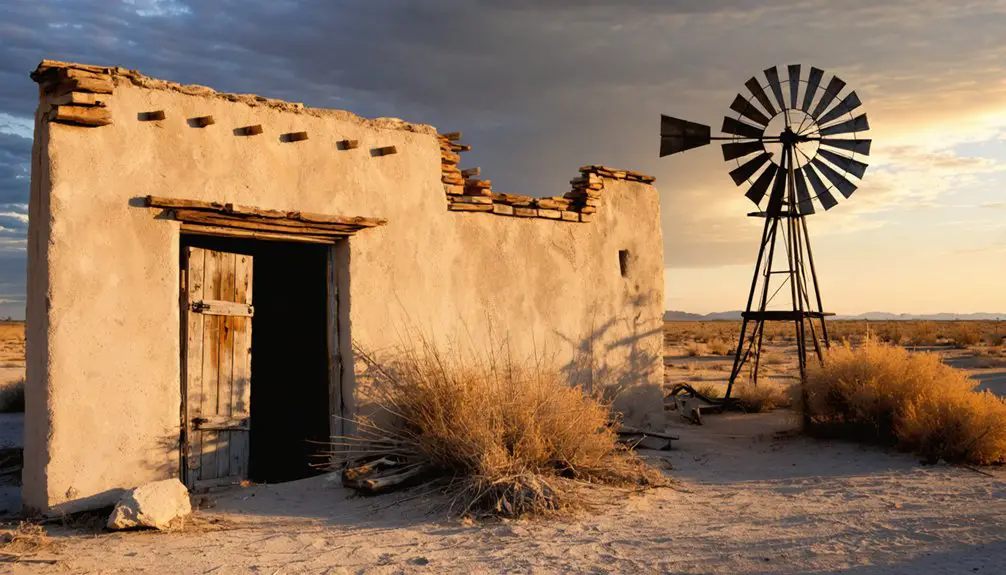
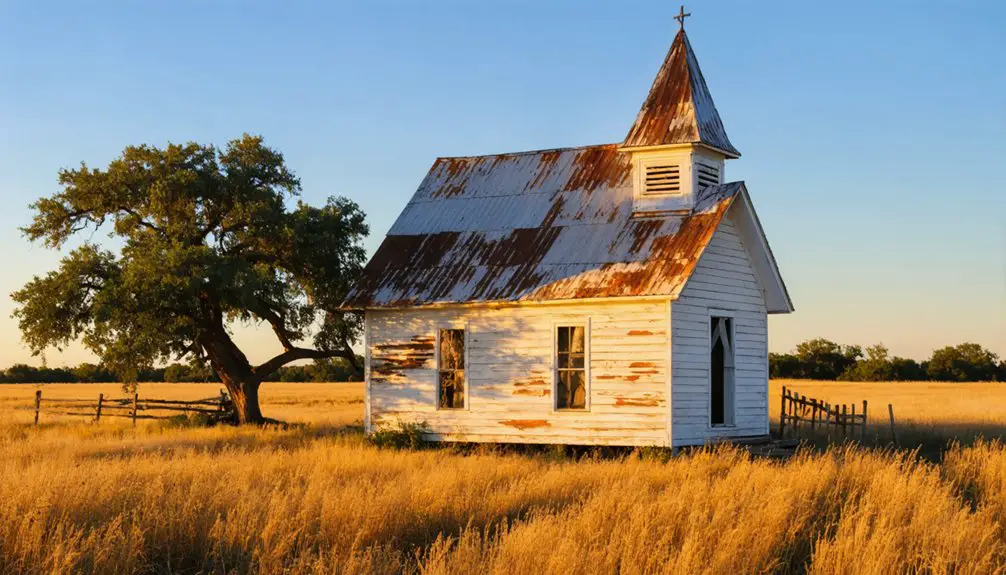
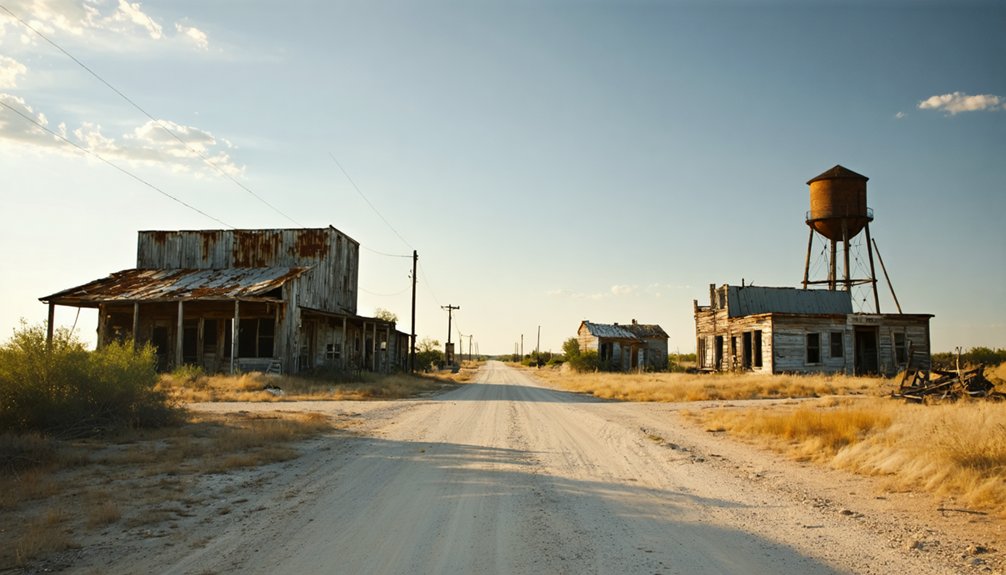
What you’ll find today is largely barren terrain with minimal historical ruins standing. The sparse remains won’t rival more dramatic ghost towns elsewhere in the state, but the site carries a quiet, haunting weight.
A cemetery may still hold markers from the settlement era, offering your clearest window into the lives of those who once called Audra home.
Why the Railroad Killed Audra and How Bradshaw Took Its Place
When the railroad surveyors drew their lines across Taylor County in the early 1900s, they didn’t just choose a route — they chose winners and losers. Audra lost. The railroad impact reshaped everything, triggering economic shifts that drained the town of its lifeblood almost overnight.
Bradshaw emerged as the beneficiary, pulling residents, commerce, and ambition away from Audra with magnetic force. What once thrived quietly on ranching and agriculture simply couldn’t compete with a town that had rail access.
The consequences were swift and unforgiving:
- Businesses relocated toward Bradshaw’s growing economy
- Families followed opportunity, abandoning established homesteads
- Agricultural networks collapsed without efficient shipping infrastructure
You can still feel that absence standing on Audra’s empty land — the silence of a community that never got to choose its own fate.
How to Get to Audra, Texas From Abilene
Getting to Audra takes you roughly 30 to 40 miles east of Abilene, following Highway 84 through the quiet, sun-bleached stretch of Taylor County where small towns once competed fiercely for survival — and most lost.
From Abilene, head east on Highway 84 and watch the landscape open into wide ranchland that hasn’t changed much since Audra’s final residents packed up and moved on.
Local roads branch off the highway, some unpaved, leading you deeper into rural exploration territory where cell service fades and the past feels closer.
You won’t find signs pointing the way, so download offline maps before you leave Abilene.
That independence is part of the experience — charting your course toward ghost town history on your own terms, without guardrails or guided tours telling you what to feel.
When Is the Best Time to Visit Audra, Texas?
Spring and fall offer the most comfortable temperatures for wandering Audra’s sparse, sun-baked landscape, sparing you from the brutal West Texas summer heat that once tested the resolve of the town’s early settlers.
You’ll want to time your visit during daylight hours, as the site has no lighting infrastructure and the surrounding rural roads can be treacherous after dark.
Plan to arrive mid-morning, giving yourself enough natural light to explore the remnants of what was once a thriving agricultural community before the railroad sealed its fate.
Ideal Visiting Seasons
Though Audra’s scattered remnants don’t demand much of a visitor’s time, the season you choose to make the drive through Taylor County can shape the experience considerably. West Texas weather dictates your freedom on these open roads.
- Spring (March–May): Mild temperatures and softer light favor ghost town photography, revealing subtle details in weathered structures.
- Fall (September–November): Cooler air and golden afternoon light create ideal conditions for historical preservation documentation and unhurried exploration.
- Winter (December–February): Sparse crowds and stark landscapes amplify Audra’s haunting atmosphere, though unpaved roads may become impassable after rain.
Avoid summer heat; triple-digit temperatures make extended outdoor exploration genuinely dangerous.
Whatever season calls you westward, arrive during daylight hours and carry water for this unforgiving stretch of Taylor County landscape.
Weather Considerations for Travelers
When you stand where Audra once stood, the West Texas sky becomes as much a part of the experience as the ghost town itself. Weather patterns here don’t negotiate — they command.
Spring and fall offer the most forgiving conditions, with mild temperatures letting you wander freely across the sparse landscape. Summer’s brutal heat mirrors the hardship that once drove residents away, temperatures regularly exceeding 100°F. Winter brings sharp, unpredictable winds across open terrain.
Seasonal variations matter practically, too. Spring rains can render unpaved local roads impassable, while autumn delivers clear skies and comfortable temperatures ideal for photography.
Whatever season calls you here, pack water, check forecasts before departing Abilene, and respect the unfiltered Texas wilderness that ultimately reclaimed Audra long ago.
Daylight and Safety Hours
Daylight is your most valuable resource at Audra — arrive early and let the morning light do what it does best across open West Texas terrain.
The site rewards those who respect its rhythms. Extending your daylight hours wisely means you’ll navigate safely through this largely barren, unmarked landscape without relying on unreliable cell service.
Keep these safety tips in mind before you go:
- Arrive before noon to maximize visibility across the sparse, open grounds
- Leave before dusk — rural Taylor County roads become disorienting after dark
- Tell someone your route since cell service remains unpredictable throughout the area
Those who once called Audra home understood the land’s demands.
Honor that understanding by moving through it while the sun still leads the way.
What You’ll Actually See When You Arrive at Audra
Arriving at Audra, you’ll find a landscape that speaks more through absence than presence. The barren terrain stretches wide, offering little beyond scattered remnants of what once bustled with ranching life and agricultural ambition.
A cemetery may reward your exploration, its weathered markers quietly honoring settlers who built something here before the railroad decided otherwise.
For ghost town photography, lean into the emptiness — it’s the story. Sparse structures and open skies communicate more honestly than any crowded landmark.
Historic preservation feels almost irrelevant here; time and economics stripped Audra down to raw earth long ago.
What remains is atmosphere — the particular silence of a place that was genuinely alive, then genuinely abandoned.
You’re standing inside that gap, and that experience alone justifies the detour.
What to Know Before You Drive Out to Audra, Texas
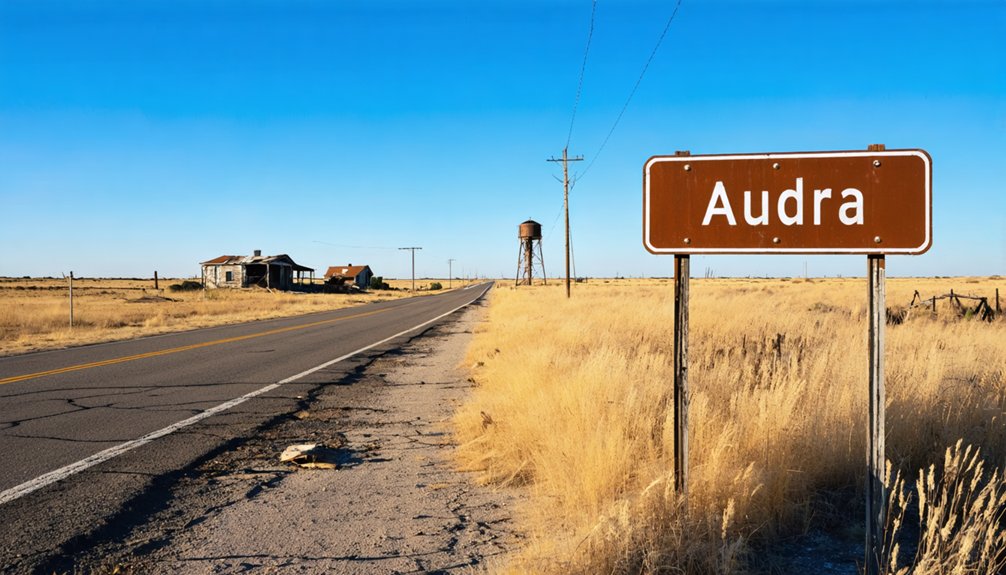
Before you head out to Audra, know that you’re driving into genuinely remote Taylor County terrain where cell service fades and paved roads give way to rough caliche tracks.
There’s nothing waiting for you at the site — no signs, no facilities, no welcome center — just the quiet remnants of a community that time and the railroad erased.
Some of this land is privately owned, so respect posted boundaries and, when in doubt, seek permission before stepping off the road.
Remote Location Considerations
Planning a visit to Audra means venturing into the kind of silence that once hummed with the activity of a thriving ranching community—and you’ll want to prepare accordingly.
This remote area rewards the prepared traveler, so keep these travel tips in mind before you head out:
- Cell service is sparse across rural Taylor County, so download offline maps before leaving Abilene.
- Local roads may be unpaved or poorly maintained; a vehicle with decent clearance handles them better.
- Private land boundaries exist near the site, so respect posted signage and seek permission when needed.
Daytime visits offer the safest, most rewarding experience.
Abilene, roughly 30-40 miles away, serves as your best base for fuel, food, and lodging before you chase this forgotten piece of Texas history.
No Visitor Amenities Available
Audra offers no gift shops, no interpretive signs, no restrooms—just the open land and whatever history the wind hasn’t scattered.
Ghost town preservation here is entirely informal; nobody’s curating your experience. You’ll carry the responsibility of local history in your own hands, which means arriving prepared.
Pack water, fuel up near Abilene, and download offline maps before you lose cell service. Bring your own context—read about Audra’s railroad bypassing before you arrive, so the silence means something when you’re standing in it. The land doesn’t explain itself.
That absence is honest, though. You’re not walking through a museum; you’re walking through an actual consequence of forgotten decisions. Nobody’s softened it for you.
That freedom is exactly the point.
Private Land Access Rules
Much of the land around Audra is privately owned, so you’ll want to secure permission before wandering off any public road or right-of-way.
Land ownership here runs deep — these parcels have passed through generations of Texas ranch families since the settlement’s quiet collapse. Respecting access permissions isn’t just legal courtesy; it honors that history.
Before you drive out, keep these rules in mind:
- Contact local county offices to identify public versus private boundaries before your visit
- Seek written or verbal permission from property owners before crossing fence lines or entering fields
- Never assume abandonment means open access — ghost towns sit on active private land
Freedom to explore starts with respecting the people still rooted to this forgotten ground.
Which Ghost Towns Near Audra, Texas Are Worth the Detour?
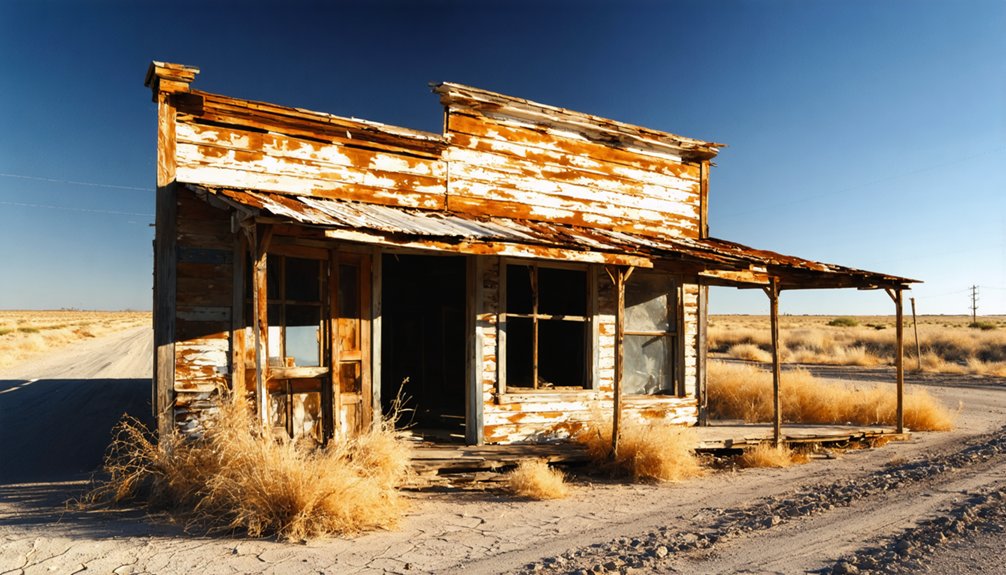
While Audra’s sparse remains might leave you wanting more, the surrounding region rewards curiosity with ghost towns that wear their histories more visibly.
Terlingua carries genuine ghost town legends — its crumbling adobe walls and abandoned structures speak to a mercury mining era that both built and broke entire communities.
Lobo offers a similarly haunting stillness, where collapsed buildings frame West Texas skies with quiet drama.
Both destinations deliver what Audra largely can’t: tangible evidence of lives interrupted.
Weave these stops into a broader Taylor County circuit, and you’ll transform a modest detour into a genuinely compelling journey through Texas’s forgotten landscapes.
Plan your fuel stops around Abilene, keep your schedule loose, and let each site reveal its own particular kind of silence.
Where to Stay and Eat Before Visiting Audra
Abilene anchors your ghost town expedition with the practical comforts that rural Taylor County simply won’t provide. Before heading into the sparse landscape where Audra once stood, stock up here.
Accommodation options range from budget motels along Interstate 20 to mid-range hotels near downtown’s historic district. Dining recommendations lean toward local Texas staples—barbecue joints and diners that echo the frontier spirit these vanished towns once embodied.
Fuel your journey properly before departing civilization:
- Fuel tanks should be completely filled; rural roads offer no second chances
- Water and provisions matter when cell service disappears miles from anywhere
- Photography equipment deserves fresh batteries before you reach the barren site
Abilene sits roughly 30-40 miles from Audra—close enough for comfort, far enough to feel the freedom of open West Texas country.
How to Plan a Taylor County Ghost Town Road Trip Around Audra
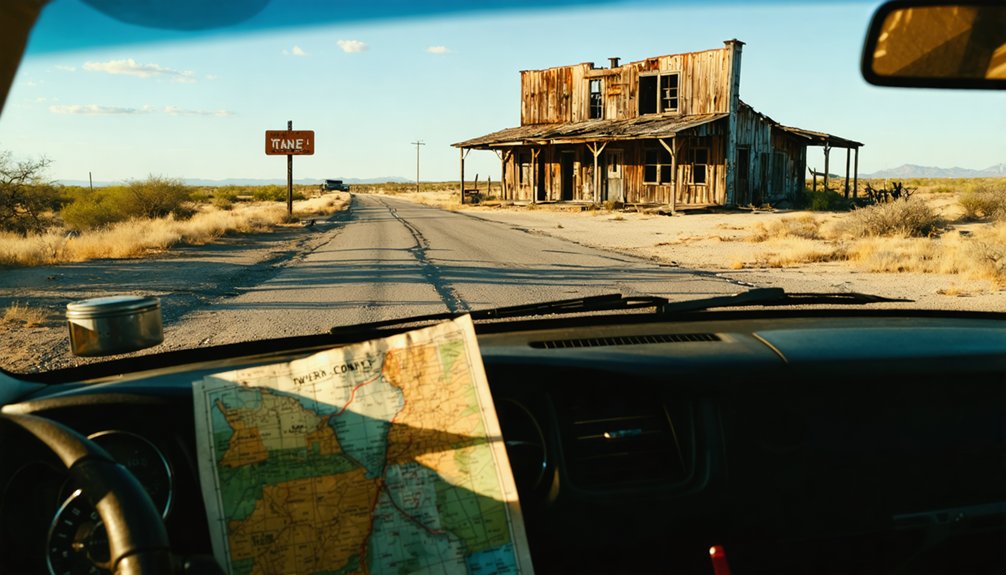
Because Audra can’t sustain a full day’s exploration on its own, you’ll want to build a broader circuit through Taylor County’s ghost town landscape.
Pair your visit with nearby Bradshaw, the town that effectively absorbed Audra’s population after the railroad bypassed the settlement. Together, they tell a complete story of economic abandonment and historical preservation rarely found elsewhere in West Texas.
From Abilene, map a loose triangle incorporating both communities, then push west toward more substantial ghost town exploration sites like Terlingua or Lobo if your schedule allows.
Keep your itinerary flexible — rural roads shift with weather and seasons. Carry water, fuel up in Abilene, and budget thirty to sixty minutes per stop.
The freedom of this route lies in its unhurried, self-directed pace through forgotten Texas history.
Frequently Asked Questions
Is There Cell Service Available Near Audra, Texas?
You’ll likely find limited cell coverage near Audra, as most network providers struggle in rural Taylor County. Like the town itself, connectivity’s faded here — embrace the freedom of wandering untethered through this forgotten slice of Texas history.
Do Visitors Need Permission to Access Private Land at Audra?
Imagine wandering freely where settlers once homesteaded — you’ll need permission for land access on private property. Respecting visitor etiquette honors Audra’s forgotten souls and keeps exploration rights alive for every freedom-seeking traveler after you.
Are There Entrance Fees Required to Visit Audra, Texas?
You won’t pay any entrance costs to walk Audra’s forgotten soil. There are no visiting hours binding your freedom here — just open land whispering stories of a vanished community that once thrived beneath Texas’ endless sky.
Does Audra Have a Cemetery With Historical Markers Worth Visiting?
Audra’s cemetery may hold historical significance, offering grave markers that connect you to vanished lives and local folklore. You’ll wander among weathered stones, feeling freedom in uncovering the nostalgic, quietly haunting stories these forgotten settlers left behind.
How Long Should Visitors Plan to Spend Exploring Audra, Texas?
You’ll want to set aside 30-60 minutes wandering Audra’s sparse remains, soaking in its historical significance. Pair it with nearby local attractions to truly capture the freedom of West Texas ghost town exploration.
References
- https://www.youtube.com/watch?v=IECzqQ-jIEM
- https://forum.expeditionportal.com/threads/north-texas-ghost-town-tour-daycation.172505/
- https://www.traveltexas.com/articles/post/spooky-roadtrip/
- https://www.click2houston.com/news/texas/2020/06/18/the-ghost-towns-of-texas-5-abandoned-texas-towns-to-check-out-on-your-next-road-trip/
- https://texplorevibe.com/road-trip/weird-road-trip-from-austin/
- https://www.onlyinyourstate.com/trip-ideas/texas/ghost-town-road-trip-tx
- https://en.wikipedia.org/wiki/List_of_ghost_towns_in_Texas