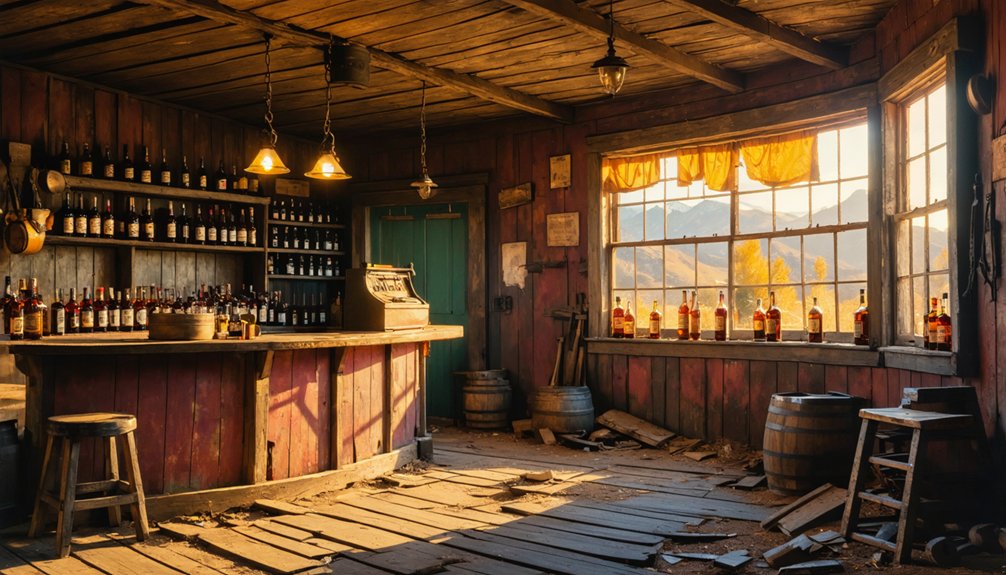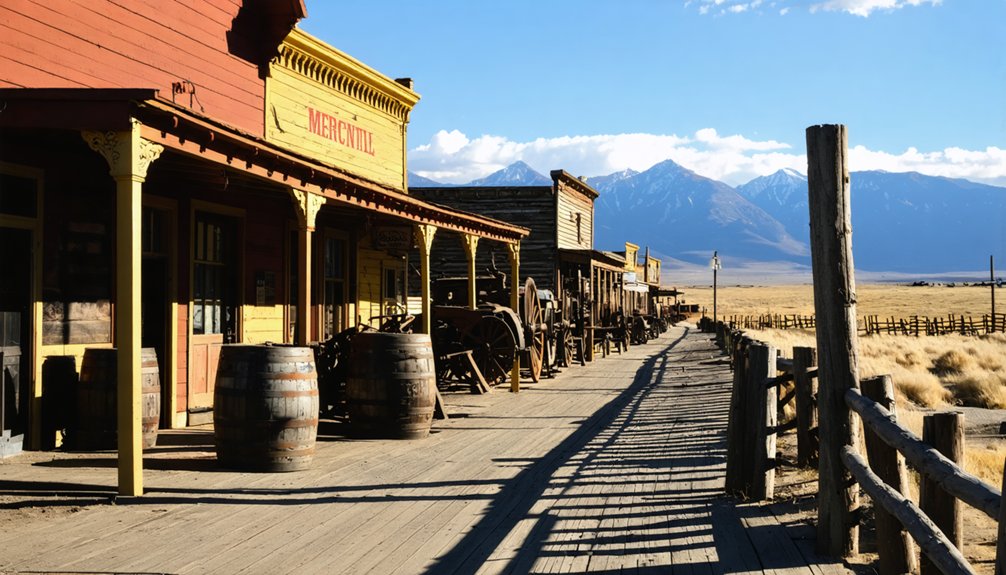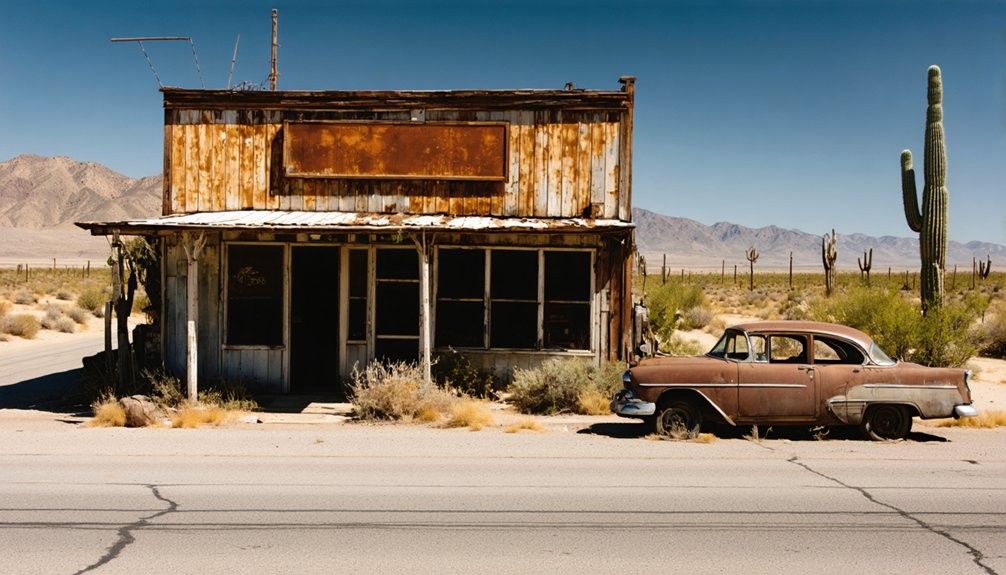
Planning a ghost town road trip to Avena, California means chasing echoes of a community that vanished by 1885. Tucked in Inyo County between Bishop and Round Valley, Avena once relied on Santa Fe Railroad commerce to survive. Today, you’ll find scattered foundations and faded rail traces where a post office and general store once stood. It’s a place built on memory rather than monuments — and its story runs deeper than it first appears.
Key Takeaways
- Avena, California, is a ghost town in Inyo County, located between Bishop and Round Valley, with minimal physical remains from its 1880–1885 existence.
- The site features scattered foundation outlines, faded rail corridor traces, and unmarked ground where the post office and general store once stood.
- Visit in late spring or early fall, particularly September and October, for manageable crowds, crisp air, and ideal road conditions.
- Avena connects to nearby ghost towns including Bodie, Calico, Cerro Gordo, Darwin, and Masonic, making it ideal for a broader road trip route.
- Unlike Bodie and Calico, Avena lacks preserved structures and visitor facilities, requiring advance research, a detailed map, and checked road conditions.
What Was Avena, California?
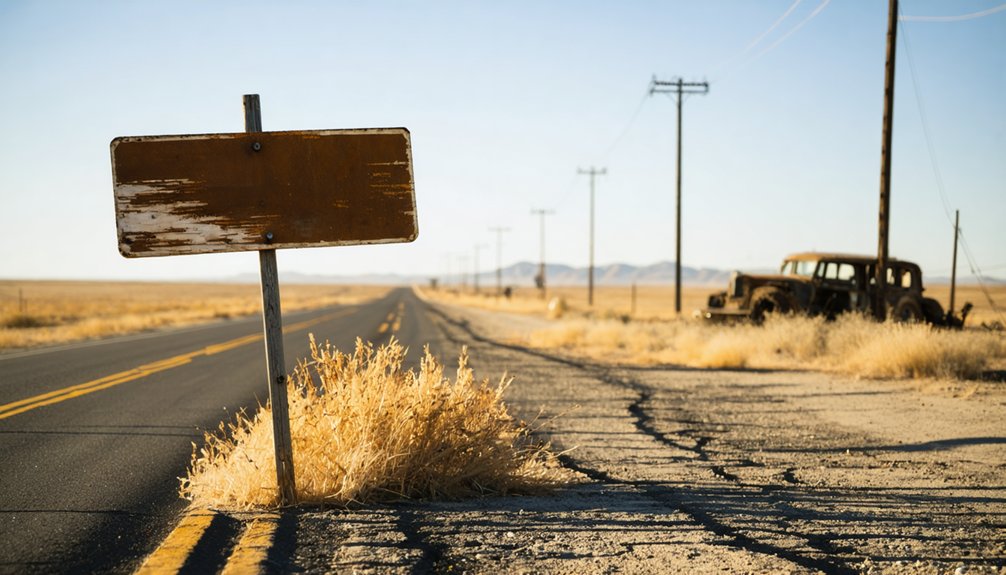
Although it never grew into much, Avena, California once held enough life to warrant its own post office, a general store, a train station, and a handful of other buildings clustered along the Santa Fe railroad in Inyo County.
Its post office ran from 1880 to 1885, and that five-year window tells you nearly everything about Avena demographics — a small, transient population that couldn’t sustain long-term growth.
The Avena economy leaned on rail traffic and whatever commerce passed through, but once that momentum faded, so did the settlement itself.
Sitting roughly halfway between Bishop and Round Valley, Avena represents the kind of frontier community that flickered briefly during California’s expansion era before quietly disappearing into the desert landscape you’ll cross on your way there.
Where Exactly Is Avena Located?
You’ll find Avena tucked into Inyo County, California, roughly halfway between Bishop and Round Valley along the eastern Sierra corridor.
That placement once made it a practical stop for travelers and freight moving through a landscape shaped more by railroad schedules than by settlement ambitions.
Today, that same geography makes it a natural waypoint on any road trip tracing the region’s abandoned frontier history.
Inyo County Geographic Position
Sitting roughly halfway between Bishop and Round Valley, Avena occupies a quiet stretch of Inyo County’s desert-eastern Sierra corridor — a landscape where the mountains rise abruptly to the west and the high desert flattens out toward the valley floor.
The elevation profile here shifts dramatically within short distances, shaping both the desert climate and the local wildlife you’ll encounter along the route. That geographic tension between altitude and arid basin defines Inyo County’s regional history and explains why settlements like Avena emerged where they did — positioned along natural travel corridors.
The area’s historical significance runs deep, and its tourism potential remains largely untapped compared to flashier California destinations. For travelers craving open roads and forgotten stories, Avena’s geographic features make it a compelling and rewarding detour.
Between Bishop And Round Valley
Knowing the county’s geography is one thing — pinpointing Avena within it’s another. Avena sits roughly halfway between Bishop and Round Valley, a stretch of eastern Sierra terrain that rewards the curious traveler willing to look past paved convenience.
That midpoint placement isn’t accidental — it reflects Avena history rooted in rail-era logistics, where settlements emerged wherever stops made economic sense.
You’re threading through open desert here, wide sky above and sparse scrub below, the kind of landscape that shaped ghost town culture across California’s frontier period.
Bishop offers modern supplies and orientation before you head out; Round Valley marks your general target zone.
Study your maps closely, because Avena won’t announce itself — you’ll need to seek it deliberately.
Avena’s Railroad Past and Why It Matters
When you dig into Avena’s history, you’ll find that the Santa Fe Railroad shaped nearly everything about its brief existence, turning a sparse desert stretch between Bishop and Round Valley into a functioning, if modest, rail stop.
You can still trace the ghost of that infrastructure in what remains — a general store that doubled as a train station, flanked by a handful of other buildings that once served travelers and locals moving through the region.
Ironically, the same railroad that gave Avena life likely contributed to its decline, as shifting routes and changing economic priorities left small stops like this one without a reason to survive.
Avena’s Santa Fe Connection
Though little remains of Avena today, its origins trace directly to the Santa Fe Railroad, which once stitched together dozens of small California communities along its desert corridors.
Rail transport didn’t just move goods — it defined settlement dynamics, pulling people westward with promises of frontier spirit and economic opportunity.
Avena’s historical significance lies precisely in that fragile connection. When Santa Fe’s route brought commerce through, community life briefly flourished — a general store, a station, neighbors sharing a remote stretch of California desert.
Then the boom bust cycle did what it always does, severing economic ties and silencing the post office by 1885.
You’re not just visiting a ghost town when you stop here. You’re tracing cultural heritage carved by iron rails and restless ambition.
Rail Stop Infrastructure Remains
What survives at Avena isn’t much — a ghost of a rail stop rather than a preserved landmark — but the infrastructure that once anchored it tells a sharper story than empty desert alone.
The general store doubled as a train station, a practical combination that defined the settlement’s rail stop significance. Supporting structures clustered nearby, giving Avena just enough ghost town infrastructure to function as a working waypoint along the Santa Fe line.
When you stand where those buildings once rose, you’re reading the bones of a system — freight, supplies, passengers moving through a corridor that shaped eastern California’s early economy.
The Santa Fe moved on, and Avena moved with it into history. That quiet disappearance is exactly what makes the site worth tracking down.
Railroad’s Role In Decline
Railroads built Avena, and railroads erased it. When the Santa Fe line pushed through Inyo County, it created instant settlement patterns along its route, dropping small communities wherever logistics demanded. Avena emerged as one of those utilitarian stops — a general store, a station, a handful of buildings serving passing trains and travelers.
But rail impact cuts both ways. When routes shifted or traffic thinned, those same settlements lost their reason to exist. Avena’s post office closed in 1885, just five years after opening — a quiet signal that the railroad no longer needed it.
You’re now tracing that story through what remains. Understanding why Avena disappeared matters as much as knowing it existed. The railroad didn’t just pass through; it decided Avena’s fate entirely.
What Remains at the Avena Site Today?
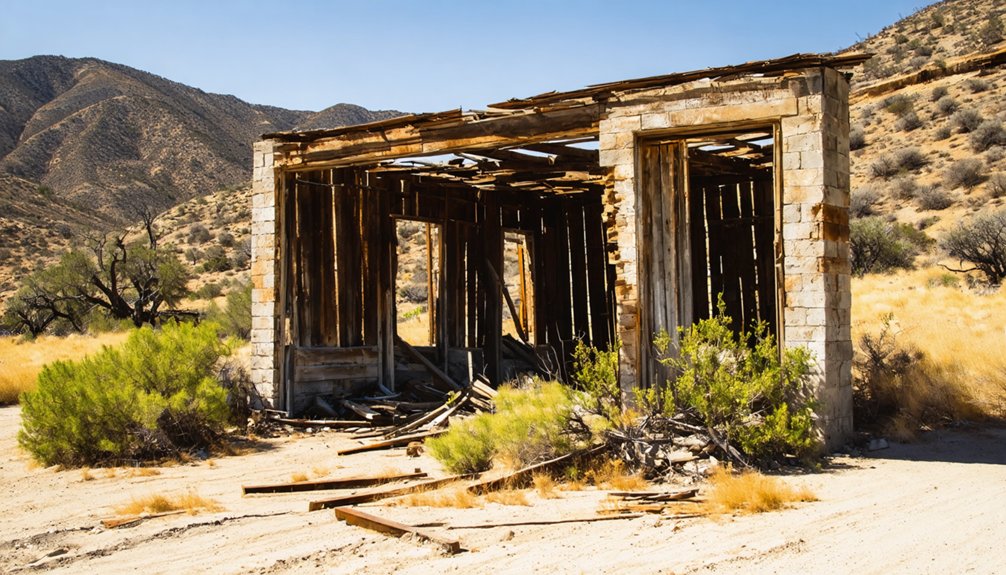
Because Avena never grew into a major settlement, it left behind only the faintest physical traces—and today, visitors who make the drive between Bishop and Round Valley will find little more than open desert where the general store and train station once stood.
The Avena remnants are minimal, yet their historical significance quietly echoes across the landscape. Before you arrive, know what you’re searching for:
- Scattered foundation outlines from former buildings
- Faded rail corridor traces along the Santa Fe route
- Unmarked ground where the post office once operated
- Sparse structural debris from the general store site
- Open terrain reflecting decades of abandonment since 1885
You’re chasing history here, not a museum. Bring research, a detailed map, and a genuine appetite for solitude.
Is Avena Worth Visiting or Just a Historical Footnote?
Knowing what little remains at Avena raises a fair question: is the drive actually worth it, or does this forgotten rail stop belong only in a footnote of California history books?
The answer depends on what you’re chasing. If you need preserved buildings and guided tours, head to Bodie instead.
But if ghost town memories and open desert roads stir something in you, Avena’s significance runs deeper than its ruins. You’re standing where a small community briefly thrived, operated a post office, and then quietly disappeared within five years. That kind of raw, unpolished history carries its own weight.
Avena won’t hand you a postcard moment. It’ll hand you silence, context, and the rare freedom of discovering a place most travelers completely overlook.
Ghost Towns Near Avena Worth the Detour
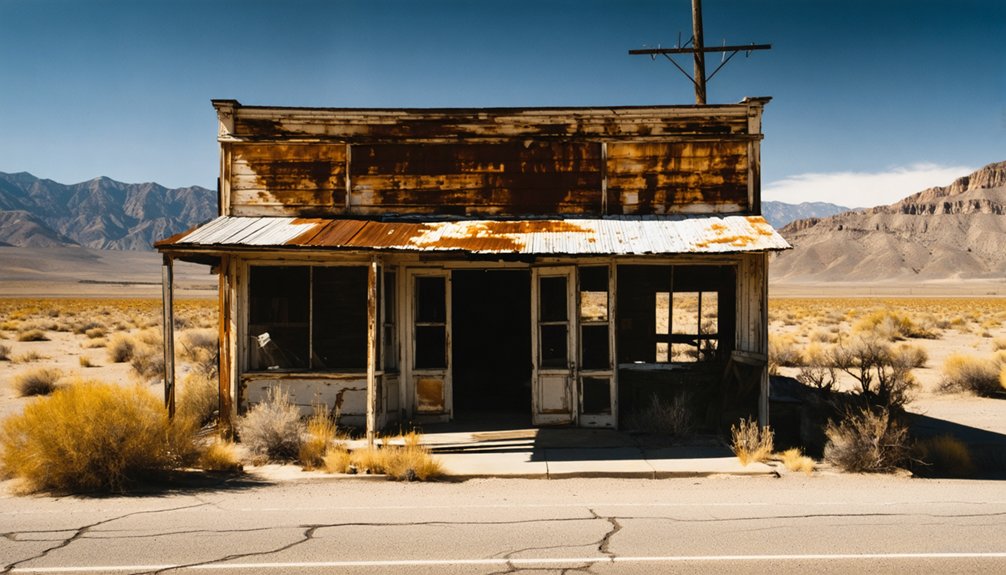
Once you’ve absorbed the silence at Avena, the eastern Sierra and Mojave corridor open into a broader trail of abandoned places worth chasing.
Ghost stories and local legends saturate this entire region, pulling curious travelers deeper into California’s forgotten past.
Ghost stories and forgotten legends haunt every mile of this region, drawing travelers deeper into California’s buried past.
Detour toward these nearby sites:
- Bodie – A preserved mining ghost town carrying genuine frontier atmosphere and documented hauntings
- Calico – A silver-mining relic with restored structures and layered local legends
- Cerro Gordo – A remote silver camp above Owens Valley with a haunted reputation
- Darwin – A quiet Inyo County mining remnant still holding scattered ruins
- Masonic – A lesser-known Mono County site surrounded by open high-desert silence
Each stop deepens your understanding of why California’s boom-and-bust era left so many places behind.
Where Avena Fits on a California Ghost Town Route
Tucked roughly halfway between Bishop and Round Valley, Avena slots naturally into a California ghost town route that follows the eastern Sierra south toward the Mojave. Its Avena significance isn’t scale—it’s sequence.
You’re tracing a corridor where railroads once dictated survival, and this former rail stop confirms that pattern mile by mile.
Ghost town culture rewards the traveler who reads landscapes like timelines, and Avena hands you a quiet but precise chapter. It operated from 1880 to 1885, peaked with a general store and train station, then faded when the momentum moved elsewhere.
Pair it with Bodie to the north or Calico farther south, and you’ll feel the full arc—boom, drift, silence. Avena connects those bigger stories with honest, unhurried truth.
What Bodie and Calico Offer That Avena Doesn’t
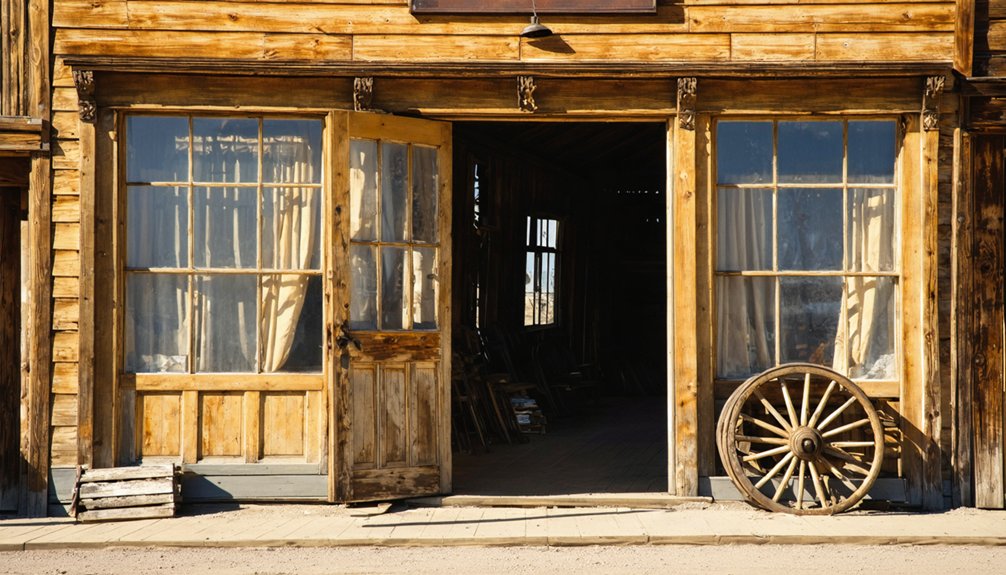
Bodie and Calico don’t just exist on the same road trip map as Avena—they occupy a different category entirely.
These destinations offer preserved infrastructure that Avena simply can’t match.
Bodie attractions and Calico features include:
- Hundreds of standing structures frozen in authenticated decay
- State and county park designation with ranger-led interpretation
- Established parking, trails, and visitor facilities
- Museum-quality artifacts displayed in original context
- Reliable road access and published visiting hours
Avena offers none of that.
Avena offers none of that. No rangers, no trails, no tidy narrative. Just the place itself.
What you’ll find there is rawer, quieter, and more honest in its abandonment.
If Bodie and Calico satisfy your need for curated history, Avena rewards a different instinct—the one that pulls you toward unmarked places where the past hasn’t been packaged for anyone’s convenience.
Best Time to Visit Avena and Eastern Sierra Ghost Towns
Timing your visit to Avena and the surrounding eastern Sierra ghost towns changes what you’ll find there—and how much of it you can actually reach. Among the best seasons, late spring and early fall stand out. You’ll avoid brutal summer heat and the snow that closes desert mountain roads in winter.
September and October deliver crisp air, golden light, and manageable crowds. Spring thaws open access roads while wildflowers quietly reclaim forgotten foundations.
These travel tips matter practically: check road conditions before you leave, because remote Inyo County sites don’t maintain tourist-friendly infrastructure. Weekdays give you solitude that weekends steal.
Visit Avena as part of a longer eastern Sierra sweep—Bishop, Round Valley, and nearby historical stops reward travelers who move unhurried through land that once hummed with forgotten ambition.
Frequently Asked Questions
Did Avena Have a School or Church During Its Active Years?
Like a whisper lost to wind, Avena’s community records don’t confirm a school or church. The Avena history you’ll uncover reveals only a rail stop and general store during its brief active years.
Are There Any Historical Photographs of Avena Still in Existence?
No confirmed photographic archives of Avena exist yet, but you’ll want to dig through Inyo County historical collections. Chasing its historical significance through old records lets you reclaim forgotten freedom hiding in California’s vanishing past.
Is the Avena Site on Public or Private Land Today?
The land ownership of this ghost town isn’t clearly documented here, so you’ll want to research it before visiting. Contact Inyo County or local historical societies—they’ll guide your freedom-seeking exploration responsibly.
What Was the Population of Avena at Its Peak?
Precise population peaks aren’t preserved, but you’re exploring a ghost town with slim settlement roots — Avena’s mining history and brief five-year post office suggest just a handful of frontier souls called this forgotten California community home.
Are There Guided Tours Available for the Avena Site?
You won’t find formal guided tours at Avena, but you can research local legends and ghost stories through Inyo County historical societies, which’ll deepen your nostalgic, freewheeling journey through California’s forgotten frontier past.
References
- https://www.youtube.com/watch?v=S2jSK614SNQ
- https://californiathroughmylens.com/calico-ghost-town/
- https://kids.kiddle.co/Avena
- https://www.instagram.com/p/DTX7ckZDmN3/
- https://dornsife.usc.edu/magazine/echoes-in-the-dust/
- https://parks.sbcounty.gov/opinion-beyers-byways-a-brief-history-of-calico-ghost-town/
- https://www.uer.ca/locations/show.asp?locid=24224
- https://www.facebook.com/groups/americansouthwest/posts/1406580753304728/
- https://www.snowcreekresort.com/blog/bone-chilling-history-bodie-ghost-town/
- https://www.visitmammoth.com/blogs/history-and-geology-bodie-ghost-town/