Coolidge, Kansas sits near the Colorado border along U.S. Highway 50, and it’s a rewarding stop for ghost town enthusiasts. Once a booming Santa Fe Railroad division point with nearly 1,800 residents, it collapsed after the railroad left in 1890. Today, you’ll find surviving stone buildings, including the Old City Hall, that tell the town’s dramatic story. Pack supplies before you go, since services are scarce — and there’s much more to this frontier tale worth uncovering.
Key Takeaways
- Coolidge, Kansas, sits along U.S. Highway 50 in Hamilton County, near the Colorado border, making it an accessible ghost town road trip destination.
- The town’s historic stone buildings, including Old City Hall, offer a self-guided walking tour completable in approximately one hour.
- Nearby ghost towns, including Trail City, Colorado, and Syracuse, Kansas, can be paired with Coolidge for a fuller regional exploration.
- Limited services require advance preparation; fill your gas tank and stock up on food in larger towns before arriving.
- Download maps and research historic structures beforehand, as Coolidge lacks a visitor center and requires self-guided exploration.
Where Is Coolidge, Kansas?
Tucked into the far southwestern corner of Kansas, Coolidge sits in Hamilton County just a stone’s throw from the Colorado border.
You’ll find it hugging U.S. Highway 50 through the Arkansas River valley, positioned where Coolidge history intersects railroad significance, ghost town origins, and hard-won frontier survival.
The town’s railroad significance once made it a thriving division point along the Santa Fe line, drawing merchants, settlers, and opportunity seekers westward. Economic decline followed swiftly after the railroad relocated its operations in 1890, stripping the town of its lifeblood.
Today, Coolidge’s architectural heritage quietly tells that story through surviving stone buildings that refused to disappear.
When you roll through, you’re not just passing through a small town — you’re crossing into living frontier history.
How Coolidge Went From Railroad Boomtown to Ghost Town
When the Santa Fe Railroad planted its division point in Coolidge in 1881, it didn’t just build a train stop — it ignited a frontier boomtown. By 1887, the population had surged to around 1,800, fueled by merchants, hotels, and railroad history in the making.
Then the bottom fell out.
Then the bottom fell out — and it fell fast, pulling an entire boomtown down with it.
Coolidge lost the county-seat fight to Syracuse in 1888. That same year, fire destroyed the newly built opera house.
By 1890, the railroad pulled its division point — taking roughly 500 workers with it. The economic decline hit hard and fast. Fires tore through nearly six blocks during the 1890s.
What Coolidge Looked Like at Its Peak
At its height in 1886–1887, Coolidge wasn’t just a railroad stop — it was a functioning frontier town humming with commerce and ambition.
Railroad expansion fueled rapid economic growth, pushing the population to nearly 1,800 residents. You’d have walked streets lined with lumber yards, dry goods stores, grocery shops, and eating establishments.
An opera house stood as a symbol of civic pride, signaling that Coolidge had serious long-term aspirations. Telegraph and telephone services connected the town to the wider world, while a weekly newspaper kept residents informed.
A public school reflected a community investing in its own future. For a brief window, Coolidge represented everything a determined frontier settlement could become — built fast, built bold, and full of possibility.
What Survives in Coolidge’s Ghost Town Today
When you walk through Coolidge today, you’ll find that a handful of historic stone buildings still stand as quiet witnesses to the town’s booming past.
The most striking stop is the Trail City Bed & Breakfast, housed in a renovated saloon and gambling hall that originally stood in Trail City, Colorado, before being relocated to Coolidge around 1887.
These surviving structures give you a tangible connection to the frontier era that once made this small Kansas town a regional hub.
Standing Historic Stone Buildings
Despite decades of fires, population loss, and economic abandonment, Coolidge still holds onto a handful of historic stone buildings that tell the story of its brief but intense boom years.
Walk through what remains of the downtown district and you’ll notice the architectural significance of these masonry structures immediately. They weren’t built to be temporary — they were built by people who believed Coolidge would last.
Old City Hall stands as one of the most recognizable examples of historic preservation in town, its stone walls outlasting the wooden structures that burned and crumbled around it.
These buildings give you a tangible connection to the 1880s boom era that no photograph fully captures. Take your time, look closely, and let the stonework speak for itself.
Trail City Saloon Legacy
One of Coolidge’s most surprising survivals is the Trail City Bed & Breakfast, a building with a past far more colorful than its quiet current role suggests.
Originally a saloon and gambling hall rooted in Trail City, Colorado’s wild frontier culture, it was physically relocated to Coolidge around 1887, carrying its local legends and historical significance with it.
Here’s what makes this stop worth your time:
- Architectural Heritage: The structure itself is a rare, tangible relic of raw frontier saloon history.
- Cultural Roots: It represents the lawless, freewheeling spirit that defined Trail City’s brief, notorious existence.
- Living History: Today it welcomes overnight guests, letting you sleep inside a genuine piece of the American West’s untamed past.
How to Walk Through Coolidge’s Historic Downtown
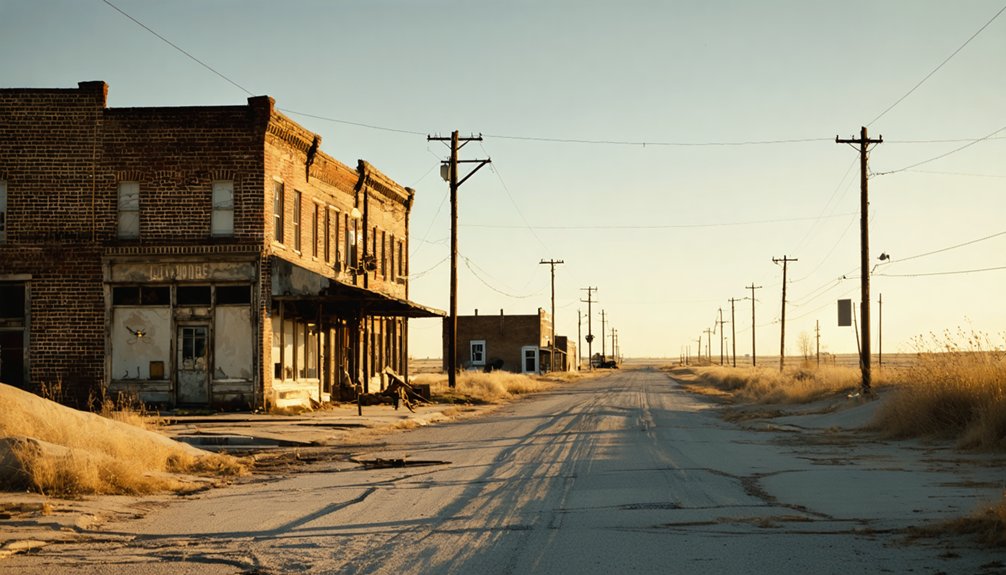
Walking through Coolidge’s historic downtown takes only a short time, but you’ll want to slow down and take it all in. The surviving stone buildings carry real architectural significance, standing as quiet proof of what this town once was during its railroad boom years.
Move at your own pace along the main street, pausing at historic landmarks like the old City Hall and the remaining commercial structures. These masonry buildings outlasted the fires and exodus that emptied this place, and they reward a closer look.
You won’t need a guide or a schedule. Just park, walk, and observe. Read the details in the stonework, imagine the 1,800 residents who once filled these blocks, and let the history speak for itself.
Making Coolidge Part of a Bigger Ghost Town Trip
Coolidge pairs naturally with other southwest Kansas ghost towns, so you’ll want to map out a route that strings together several historic stops along U.S. Highway 50 and the surrounding Hamilton County area.
Plan your drive in advance, since small-town services are scarce and you’ll need to sort out fuel, food, and lodging before you hit the road.
Keep your schedule flexible enough to allow short stops for exterior views and a few longer pauses at the most historically rich sites along the way.
Nearby Ghost Town Stops
Since Coolidge sits in the heart of southwest Kansas ghost-town country, it makes a natural anchor for a longer road trip through the region’s abandoned and near-forgotten communities.
You’ll find abandoned structures and local legends scattered across Hamilton County and beyond, each stop adding another layer to the frontier story you’re chasing.
Consider adding these nearby highlights to your route:
- Syracuse, Kansas – The county seat that won the bitter 1888 fight against Coolidge, offering historical contrast and context.
- Trail City, Colorado – Just across the border, this vanished cattle town once supplied Coolidge’s famous saloon building.
- Old Santa Fe Trail corridor – Stretches through the region, connecting multiple ghost towns along a historically rich path.
Plan fuel and food stops before you head out — services are scarce out here.
Planning Your Route
Whether you’re spending a weekend or mapping out a full week on the road, Coolidge fits naturally into a longer southwest Kansas ghost-town loop that stretches across Hamilton County and into the Colorado border country.
Build your travel itineraries around U.S. Highway 50, which connects several railroad and cattle-era sites within easy driving distance. Route highlights include Hamilton County’s historic landmarks, nearby agricultural ghost towns, and the Arkansas River valley corridor that shaped the entire region’s frontier history.
Since Coolidge offers limited services, plan fuel stops, meals, and lodging before you arrive. A self-guided exterior tour of Coolidge takes roughly an hour, making it an efficient stop within a broader loop.
Move at your own pace, follow the history where it leads, and let the road decide the rest.
Essential Travel Tips
Packing a visit to Coolidge into a wider ghost-town itinerary takes a little planning, but the payoff is worth it. Southwest Kansas rewards travelers who come prepared, so stock up on travel essentials before hitting the open road.
- Fuel and food: Services in Coolidge are extremely limited, so fill your tank and grab supplies in larger nearby towns.
- Local attractions: Pair Coolidge with other Hamilton County sites and nearby frontier-history stops to maximize your route.
- Self-guided freedom: There’s no visitor center here, so download maps and research historic structures before you arrive.
You’re driving through wide-open country with real frontier history underneath your wheels.
Respect the remaining buildings, move at your own pace, and let the landscape tell its story.
Ghost Towns Near Coolidge Worth a Detour
While Coolidge makes a rewarding stop on its own, the surrounding southwest Kansas region offers several ghost towns worth folding into your route. Hamilton County and its neighboring counties hold pockets of abandoned structures that carry real historical significance, each tied to the same waves of railroad expansion, cattle drives, and farming settlement that shaped Coolidge itself.
Syracuse, once Coolidge’s bitter rival in the county-seat war, sits just east along U.S. Highway 50 and offers a contrasting look at how one town survived while another faded.
Exploring these communities together gives you a fuller picture of how the frontier West rose and collapsed across this stretch of Kansas. Plan your stops in advance, keep your tank full, and let the landscape tell the story.
Frequently Asked Questions
Is Coolidge, Kansas, Safe to Visit for Solo Travelers?
You’ll find Coolidge generally safe for solo activities. Take standard safety precautions, explore historic stone buildings at your own pace, and embrace the open frontier freedom this quiet, remote southwest Kansas ghost town offers independent travelers.
What Is the Best Time of Year to Visit Coolidge?
Spring and fall offer the best weather for your Coolidge adventure, when the skies smile kindly and the air’s crisp. You’ll dodge the harsh extremes and catch local events celebrating the region’s frontier spirit.
Are There Any Guided Tours Available in Coolidge, Kansas?
Coolidge doesn’t offer formal guided tours, but you’ll love the freedom of guided exploration at your own pace. Wander the historic stone buildings, soak in local history, and uncover fascinating frontier stories independently.
Can Visitors Stay Overnight in Coolidge, Kansas?
You’ll absolutely love the ghost town accommodations at Trail City Bed & Breakfast, a renovated historic saloon! It’s your ultimate freedom base. Pack your own food, though — local dining options are nearly nonexistent in this fascinating, remote Kansas frontier town.
Is There an Entrance Fee to Explore Coolidge’s Historic Areas?
You don’t pay an entrance fee to explore Coolidge’s historic areas! You’re free to roam local attractions at your own pace, admiring historic preservation efforts through self-guided exterior views of surviving stone buildings and downtown frontier remnants.
References
- https://www.youtube.com/watch?v=YHbTh5p0Vkk
- https://www.facebook.com/LegendsOfKansasLOK/posts/-coolidge-kansas-from-railroad-glory-to-quiet-farming-communitynestled-along-the/1429999279131215/
- https://legendsofkansas.com/coolidge-kansas/
- http://kansasghosttowns.blogspot.com/2011/03/kansascolorado-ghost-town-trail-city.html
- https://www.waymarking.com/waymarks/WM90YV_Coolidge_Kansas
- https://fhsuguides.fhsu.edu/kansasheritage/hamiltoncounty
- https://www.hutchnews.com/story/news/local/2014/04/18/wicked-ghost-town-saloon-turned/20894933007/
- https://www.trailcitybb.com/about-our-b-b/
- https://www.pinterest.com/pin/coolidge-kansas-ghost-towns-on-waymarkingcom–422212533787354451/
- https://en.wikipedia.org/wiki/Coolidge