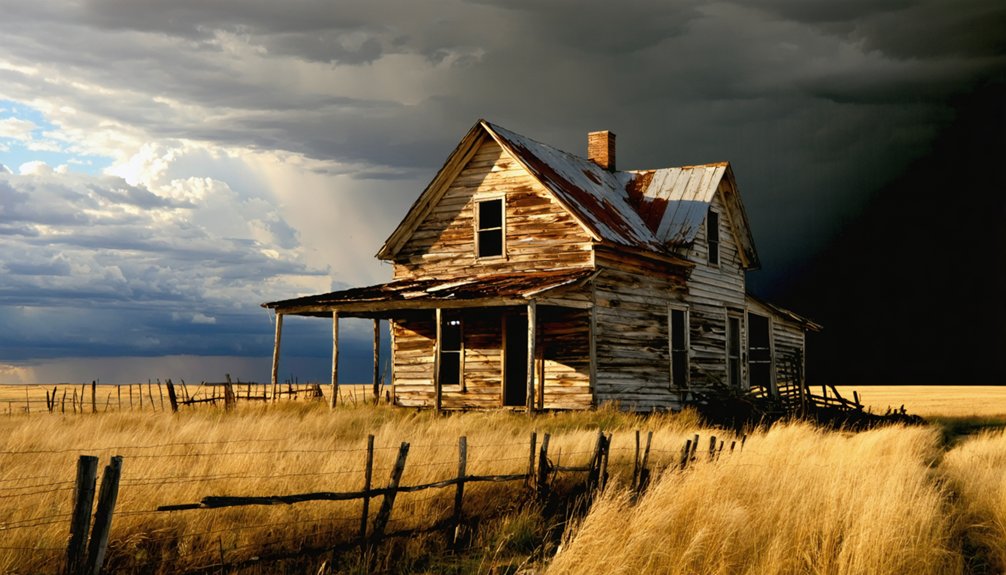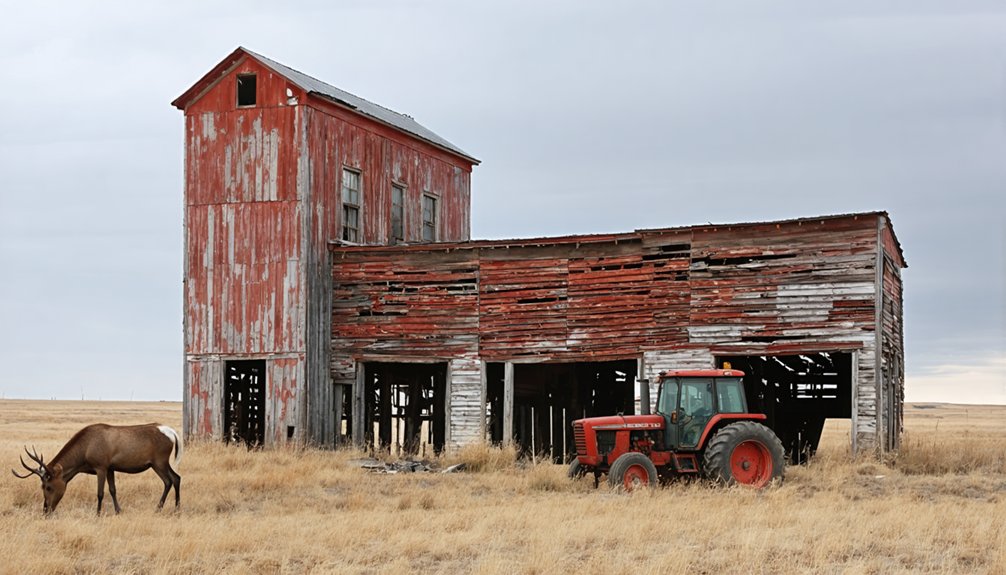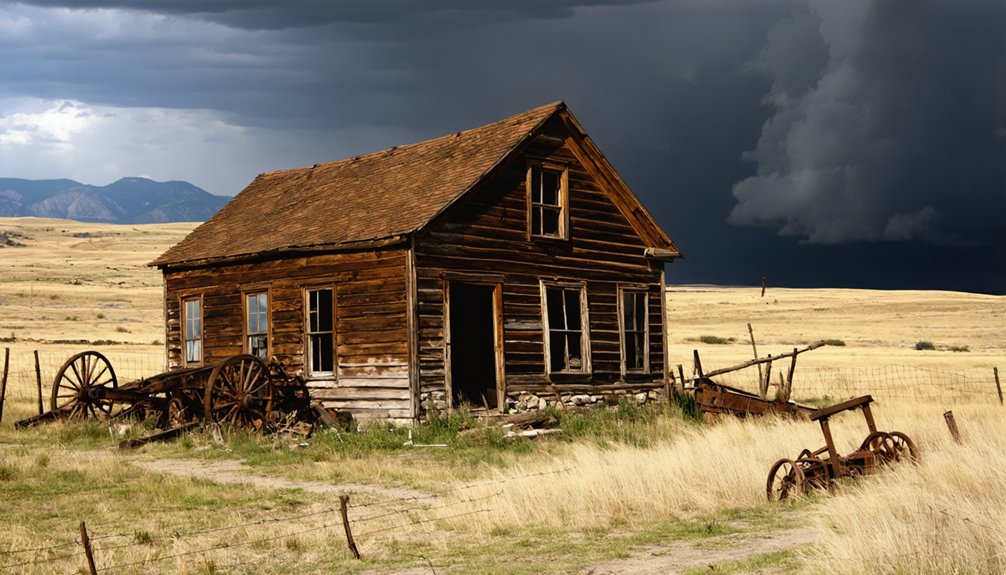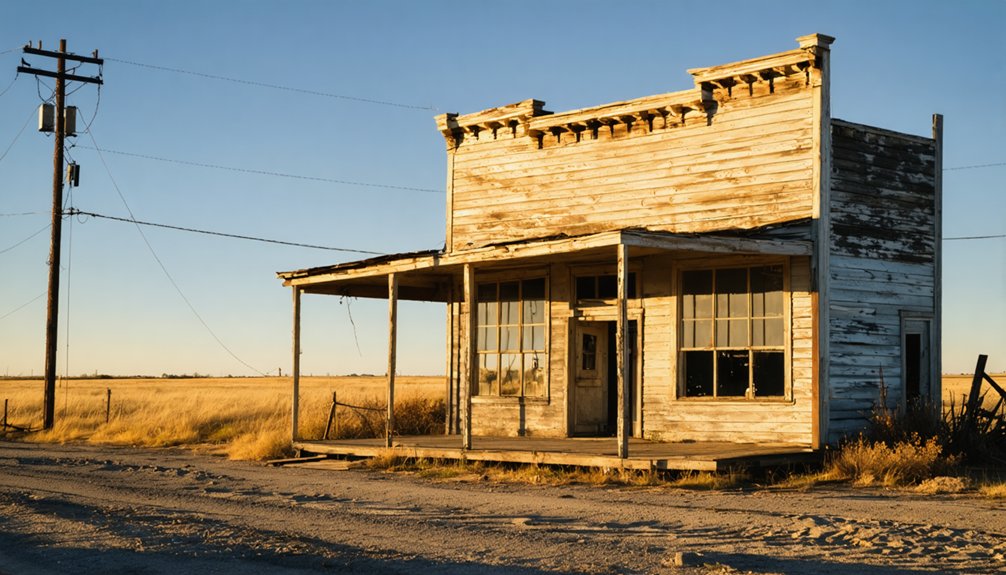
Ball, South Dakota is a forgotten Black Hills ghost town where Danish and Norwegian settlers once built a thriving mining community in 1875. You’ll need a high-clearance vehicle, offline maps, and solid navigation skills to reach it via Forest Service Road 330. Weathered storefronts, a crumbling schoolhouse, and scattered ruins tell the story of a community that gold built and abandoned. Keep exploring to uncover everything this haunting road trip has to offer.
Key Takeaways
- Ball, South Dakota, founded in 1875 during the Black Hills gold rush, was abandoned after gold deposits depleted and commodity prices declined.
- From Rapid City, drive southeast on Highway 44 for 50 miles, then take Forest Service Road 330 near Spokane Creek to reach Ball.
- A high-clearance vehicle is essential due to rough terrain; download offline maps as cell service is unreliable along the route.
- Visible structures include a general store, schoolhouse, barns, and ruins of a post office and church; bring sturdy footwear and a flashlight.
- Visit late spring through early fall, packing water, snacks, layered clothing, and a first-aid kit for a safe exploration experience.
What Is the History Behind Ball, South Dakota’s Ghost Town?
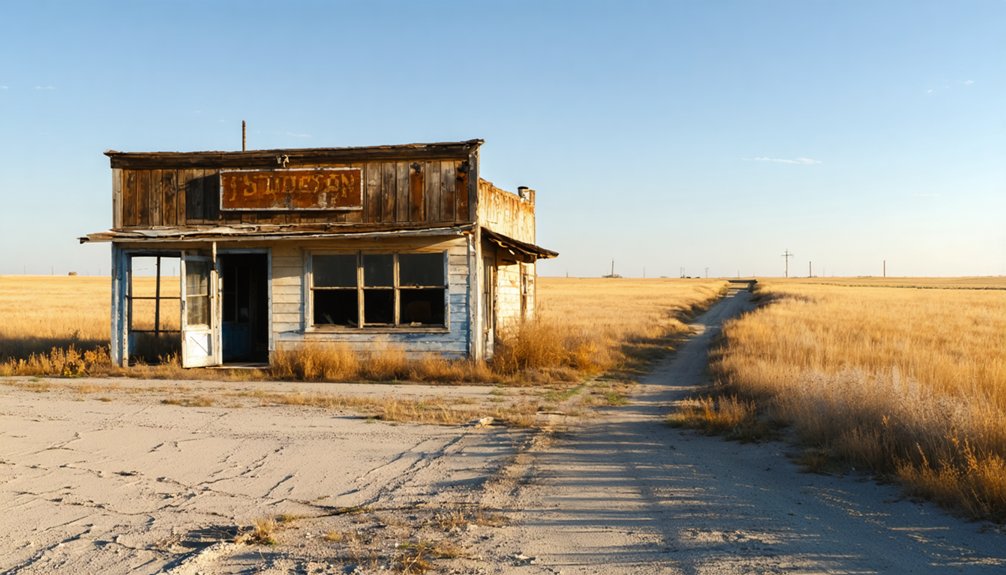
Ball, South Dakota tells a story that’s equal parts ambition and ruin. Founded in 1875 during the Black Hills gold rush, Ball’s origins trace back to prospectors chasing fortune through rugged frontier terrain. Danish and Norwegian immigrants carved out a community here, building a general store, schoolhouse, church, and post office from the ground up.
But the dream didn’t hold. Ball’s Mining Collapse came swiftly once gold deposits depleted and the town failed to rival the legendary Homestake Mine’s productivity. Declining commodity prices sealed its fate, driving settlers away and leaving structures to weather the Dakota elements.
What remains today are silent ruins that speak volumes about determination, risk, and loss — exactly the kind of history that pulls free-spirited road trippers off the beaten path.
How Do You Get To Ball, South Dakota?
If you’re starting from Rapid City, head southeast on Highway 44 for about 50 miles until you reach the Black Hills backcountry.
From there, you’ll navigate Forest Service Road 330 near Spokane Creek, where the terrain gets rough and the pavement disappears fast.
You’ll need a reliable, high-clearance vehicle to handle the isolated roads safely, so leave the sedan at home.
Starting From Rapid City
Getting to Ball, South Dakota starts with a straightforward 50-mile drive southeast of Rapid City along Highway 44.
You’ll feel the landscape shift as the Black Hills rise around you, signaling that you’re entering territory steeped in mining heritage and frontier stories.
Once you’ve traveled Highway 44, navigate onto Forest Service Road 330 near Spokane Creek.
The road demands a reliable vehicle, so don’t attempt this stretch in anything underpowered or low-clearance.
Watch for the coordinates N43.84, W103.37 to confirm you’re closing in on the site.
The isolation you’ll encounter isn’t a drawback — it’s part of the experience.
Ball’s ghost town legends feel more vivid precisely because reaching it requires genuine effort, rewarding curious travelers who value discovery over convenience.
Navigating Forest Service Roads
Once you’ve left Highway 44 behind, Forest Service Road 330 near Spokane Creek becomes your guide into Ball’s remote terrain.
Forest navigation here demands focus — the road winds through rugged Black Hills landscape, and conditions shift without warning. Ruts, loose gravel, and downed branches aren’t uncommon, so road safety means keeping your speed low and your eyes sharp.
You’ll want a reliable, high-clearance vehicle for this stretch.
Don’t assume cell service will bail you out if you get turned around — download offline maps before you leave Rapid City. The coordinates N43.84, W103.37 give you a precise target.
Stay on marked routes, respect posted Forest Service signage, and you’ll roll into Ball ready to explore one of South Dakota’s most authentically preserved ghost towns.
Essential Vehicle Requirements
Reaching Ball, South Dakota puts real demands on your vehicle — Forest Service Road 330 doesn’t forgive underpowered or low-clearance rides.
You’ll encounter rutted dirt, loose gravel, and seasonal washouts that punish sedans and compact cars without mercy. The road conditions shift dramatically after rainfall, turning manageable tracks into muddy obstacles.
Your best vehicle types for this run are high-clearance 4WDs and capable AWD trucks or SUVs with solid ground clearance.
You’ll want good tires — all-terrain or mud-terrain treads give you the grip this terrain demands. Check your spare before leaving Rapid City, because cell service disappears fast out here.
Freedom means making smart choices before you go, not getting stranded fifty miles from help on a forgotten Forest Service road.
What Structures Still Stand at Ball Ghost Town?
Weathered but standing, Ball’s remaining structures tell the story of a frontier community that once buzzed with prospectors and settlers.
You’ll find the general store still holding its ground, its wooden walls carrying decades of Dakota Territory history. The schoolhouse stands nearby, quietly preserving the lives of families who built something real in this remote corner of the Black Hills.
Scattered barns dot the landscape, while the post office and church ruins round out these abandoned structures that define Ball’s character.
Historical preservation isn’t perfect here — nature has claimed its share — but enough survives to paint a vivid picture.
Bring sturdy footwear, because the terrain’s uneven and exploration demands respect. These ruins reward curious visitors who appreciate raw, unfiltered American frontier history.
Is Ball, South Dakota Haunted?
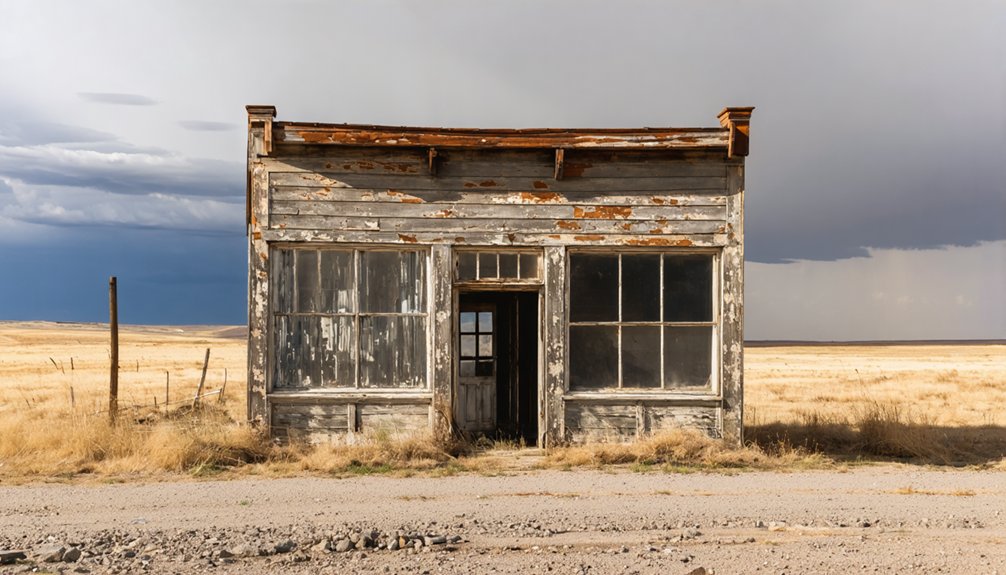
You won’t find any documented ghost sightings or verified supernatural encounters at Ball, but the Black Hills region has a long history of paranormal activity tied to its mining past.
The frontier legends surrounding Dakota Territory mining camps carry a haunting weight, and Ball’s isolation and decay make it easy to let your imagination run wild.
Whether you’re a skeptic or a believer, the town’s eerie silence and weathered ruins tell their own kind of ghost story.
No Documented Ghost Sightings
While Ball, South Dakota carries the eerie atmosphere of an abandoned frontier settlement, there’s no documented evidence of ghost sightings or verified supernatural encounters at this site.
Unlike other Black Hills mining camps with reported paranormal activity, Ball remains free of haunted legends.
That doesn’t diminish your ghost town exploration experience, though. The weathered structures, silent streets, and decayed remnants speak volumes about lives once lived here.
You’ll feel the weight of historical significance in every rotting timber and collapsed doorframe.
Ball’s real haunting comes from its story — prospectors chasing fortune, immigrant families building community, and an entire settlement slowly surrendering to time.
You don’t need supernatural encounters to feel something powerful when you’re standing in the ruins of someone’s forgotten world.
Black Hills Paranormal History
Though Ball itself sits outside the paranormal spotlight, the broader Black Hills region carries a rich history of reported supernatural activity that puts ghost town exploration here in a different context.
The area’s paranormal folklore stretches back centuries, blending Native American spiritual traditions with the desperate energy of gold rush–era miners who lived and died chasing fortunes.
Ghostly encounters have been reported across nearby abandoned mining camps, where restless spirits allegedly linger in collapsed shafts and decayed bunkhouses.
When you walk Ball’s weathered grounds, you’re stepping into a landscape steeped in that same turbulent past.
Even without verified sightings, the Black Hills’ supernatural reputation makes every creaking floorboard and shifting shadow feel charged with something you can’t quite explain away.
Frontier Legends And Lore
Ball, South Dakota doesn’t carry a verified haunted reputation, yet the frontier legends woven into its history make the question worth asking. Danish and Norwegian miners chased gold through these hills, built a community, then watched it collapse. That kind of human struggle breeds frontier myths naturally.
No documented ghost tales tie directly to Ball’s crumbling store or weathered schoolhouse. However, you can’t walk through abandoned Dakota Territory structures without feeling history pressing against you. The silence speaks loudly here.
What Ball offers isn’t a haunted destination — it’s something more grounded and arguably more powerful. You’re standing where real people risked everything and lost. That weight lingers in the decaying wood and rusted hinges, stirring your imagination without needing supernatural embellishment.
When Is the Best Time To Visit Ball Ghost Town?
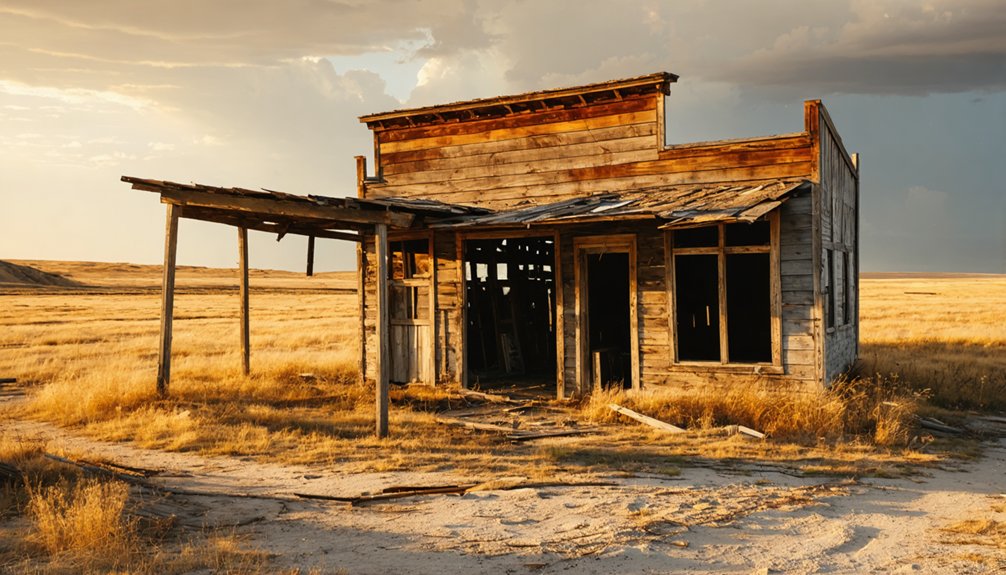
When you visit Ball ghost town can make all the difference in your experience. The best seasons to explore this Black Hills relic are late spring through early fall, when roads remain passable and daylight hours stretch long enough for thorough exploration.
Summer offers warm temperatures and dry conditions, making it ideal for traversing uneven terrain around the weathered structures. However, you’ll want to avoid peak summer weekends if you prefer solitude among the ruins.
Fall delivers stunning foliage against the weathered Dakota Territory buildings, creating remarkable photography opportunities.
Check local events in nearby Rapid City before planning your trip, as regional festivals can impact traffic along Highway 44.
Winter and early spring bring harsh conditions that make Forest Service Road 330 nearly inaccessible.
What To Pack for a Ghost Town Road Trip
Packing smart for Ball ghost town means balancing safety gear with comfort essentials. Your packing essentials should include sturdy, ankle-supporting footwear for the uneven terrain scattered across the site.
Bring a reliable flashlight or headlamp if you’re stepping inside dark interiors of the old general store or church ruins. Layer your clothing since Black Hills weather shifts quickly, especially at elevation.
For exploration tips, carry a rugged camera bag to protect your gear while documenting weathered structures. Pack plenty of water, snacks, and a first-aid kit since you’re 50 miles from Rapid City.
Don’t forget to secure access permissions before arriving. A detailed trail map and fully charged phone round out your kit, keeping your adventure both thrilling and responsible.
Which Other Black Hills Ghost Towns Are Worth the Drive?
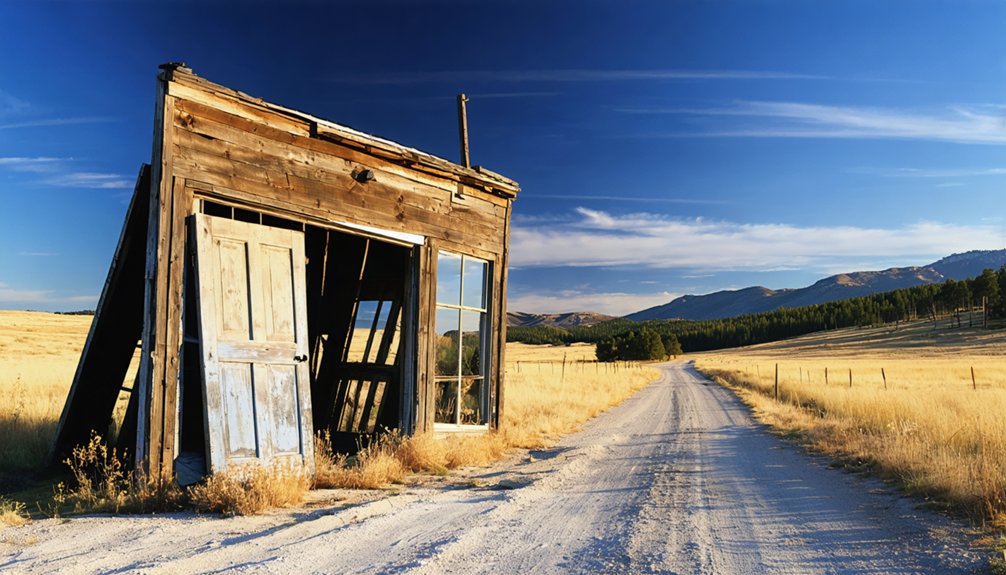
Once you’ve soaked in Ball’s frontier atmosphere, why stop there? The Black Hills region rewards curious road trippers with several ghost towns worth exploring.
Rockerville, just northwest of Rapid City, delivered significant placer gold in the 1870s and still whispers of its mining heritage through preserved structures.
Mystic sits deeper in the hills, offering dense forest backdrops alongside its crumbling remnants.
Galena, once a thriving silver camp, lets you walk streets where ambitious prospectors once hustled. Each town tells a distinct chapter of Dakota Territory’s boom-and-bust story.
Pack your camera, fuel your tank, and connect these stops into a single unforgettable loop. The Black Hills don’t run out of stories — you just have to keep driving to find them.
Frequently Asked Questions
Are There Any Guided Tours Available at Ball, South Dakota?
No official guided tours exist at Ball, but you’ll uncover guided history and local legends on your own terms. Grab access permissions, pack your gear, and explore this frontier ghost town freely at your pace!
Can You Camp Overnight Near the Ball Ghost Town Site?
Coincidentally, you’ll find camping regulations vary by season, but you can camp near Ball’s ghost town amenities via Forest Service Road 330. Check with Black Hills National Forest beforehand to secure proper access permissions for your overnight adventure.
Is Ball, South Dakota Accessible for Visitors With Mobility Challenges?
Ball’s rugged terrain and uneven ground make wheelchair accessibility quite limited, so you’ll want sturdy mobility aids. Parking options exist along Forest Service Road 330, but you’ll navigate challenging, unpaved paths throughout this wild, untamed ghost town.
Are Pets Allowed When Visiting Ball Ghost Town Ruins?
Pet policies aren’t explicitly documented for Ball, but you’ll want to practice proper ghost town etiquette by keeping your four-legged companions leashed, respecting the terrain, and securing access permissions before you explore freely.
What Photography Permits Are Required for Visiting Ball, South Dakota?
You’ll need to secure access permissions before shooting Ball’s weathered ruins. Respect photography regulations that protect the site’s historical significance, ensuring these frontier relics remain preserved for fellow freedom-seeking explorers who cherish Dakota Territory’s authentic, untouched story.
References
- https://en.wikipedia.org/wiki/List_of_ghost_towns_in_South_Dakota
- https://www.youtube.com/watch?v=kpkBy_2SxlA
- https://www.roadsideamerica.com/tip/55850
- https://www.roadsideamerica.com/tip/19325
- https://www.youtube.com/watch?v=XXpnRGKIGDs
- https://baselocal.com/sd/a/best-ghost-towns-in-south-dakota-maps-access-safety-tips/
- https://myxoadventures.com/the-ghost-town-of-spokane-south-dakota/
- https://www.youtube.com/watch?v=7zKYq52nY5o
- https://www.youtube.com/watch?v=CgAngtZwhTI
- https://rvshare.com/blog/rv-trips/south-dakota/