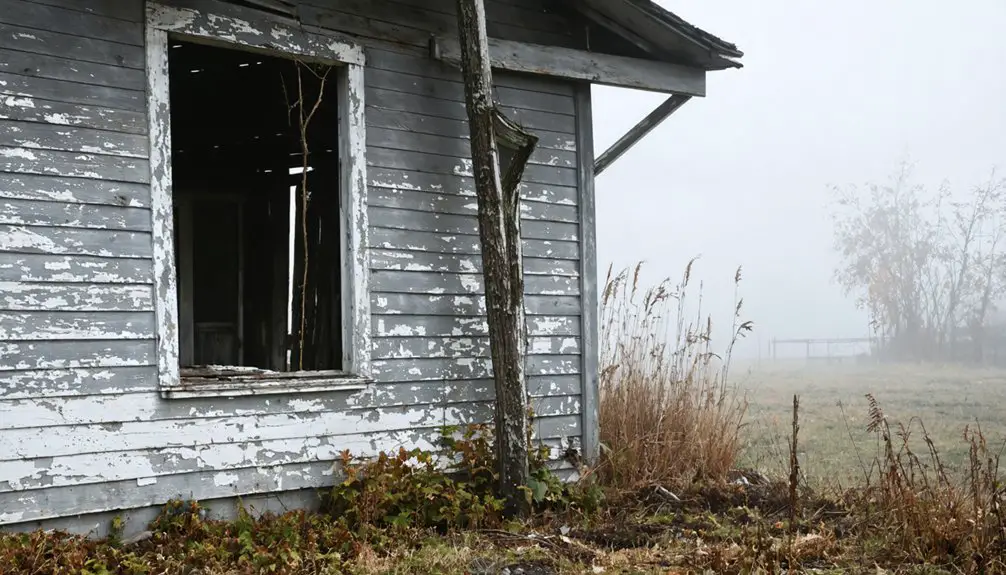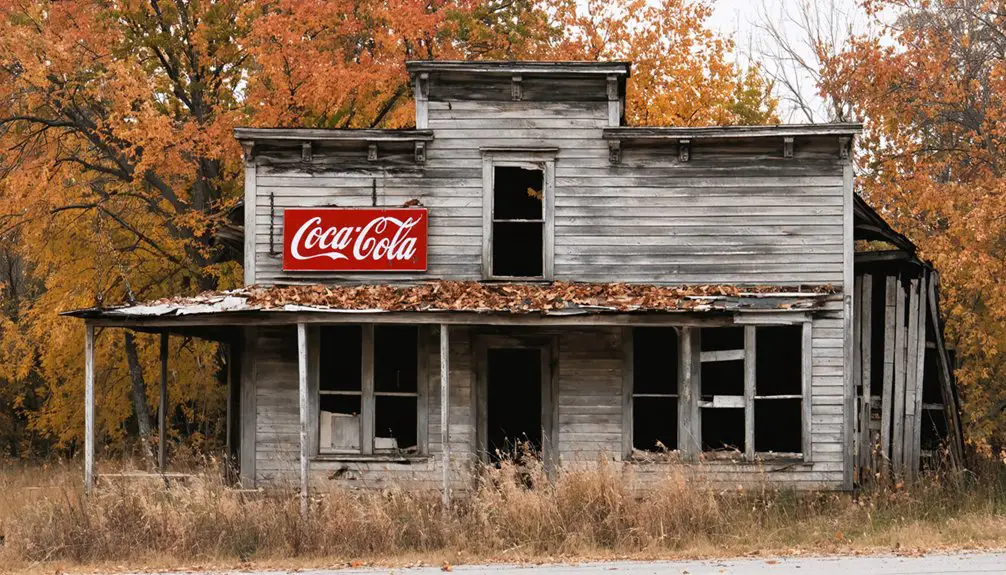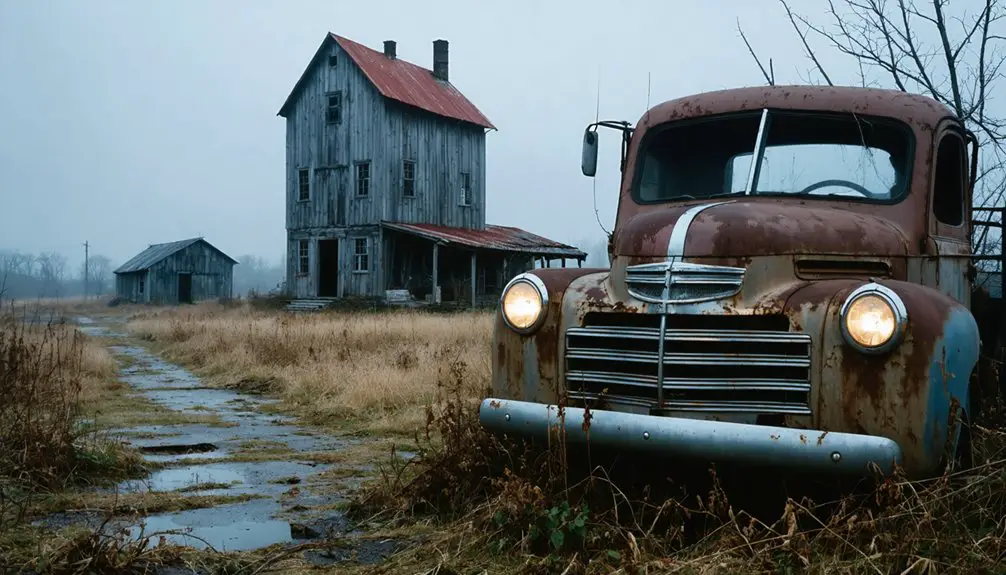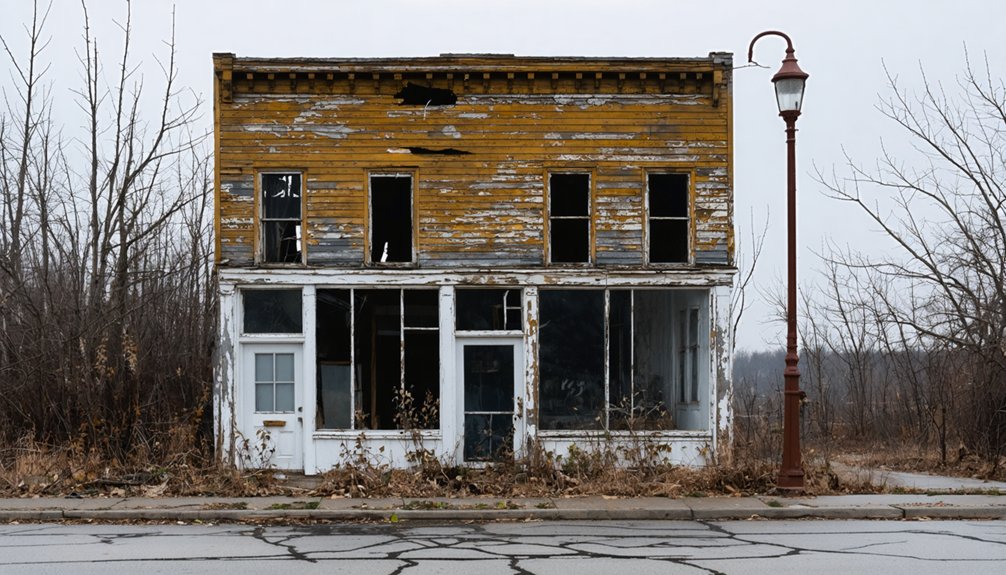
Planning a ghost town road trip to Baltic, Michigan means stepping into the ruins of a once-thriving copper mining community that housed 3,000 residents at its peak. You’ll find collapsed engine houses, century-old shaft heads, and copper shards still scattered across the ground. From Houghton, it’s just a quick 6-mile drive southwest on Highway 41. Pack sturdy boots, weather-appropriate layers, and your camera — there’s far more to this forgotten town than first meets the eye.
Key Takeaways
- Baltic is located 6 miles southwest of Houghton via Highway 41, making it an easy, under-15-minute drive.
- Pack sturdy boots, weather layers, gloves, navigation tools, photography gear, a first aid kit, and a portable battery pack.
- Visit mid-late summer to early-mid fall for ideal temperatures, longer daylight, and stunning fall foliage for photography.
- Explore massive mining ruins, including collapsed engine houses and shafts descending 3,839 feet, with copper shards still scattered throughout.
- Nearby ghost towns Clifton, Central, and Mandan offer additional historical layers to enrich your overall road trip experience.
What Was Baltic, Michigan Before the Mine Closed?
Before the copper ran dry and the workers packed up and left, Baltic, Michigan was a thriving industrial community that few would’ve recognized as the ghost town it’s today.
At its peak in 1918, you’d have found 3,000 residents, six active mines, and a railroad line connecting the town to the wider world. The mining community supported schools, businesses, and even a bowling alley.
Its historical significance runs deep — the Baltic Mining Company extracted an extraordinary 276 million pounds of copper over 34 years, with shafts plunging nearly 3,839 feet underground.
Named after the Baltic Sea by settler descendants, this town wasn’t just surviving; it was genuinely thriving.
Then came the Great Depression, and by New Year’s Eve 1931, it was all over.
How to Reach Baltic, Michigan From Houghton
Getting to Baltic, Michigan from Houghton is a straightforward 6-mile drive southwest that’ll take you under 15 minutes.
Head out on Highway 41 and connect to Highway 141 south, and you’ll find this historic mining ghost town waiting quietly on the north side of the road.
You’ll pass Atlantic Mine on the opposite side of Highway 141 just before arriving, which serves as a useful landmark.
The drive itself winds through Michigan’s Upper Peninsula landscape, giving you a feel for the remote, rugged terrain that once drew thousands of copper miners here.
There’s no complex navigation required — just open road leading you toward crumbling structures and echoes of a forgotten era.
Pack your curiosity and go explore what remains of Baltic’s remarkable industrial past.
The Mining Ruins, Shafts, and Structures Still Standing in Baltic
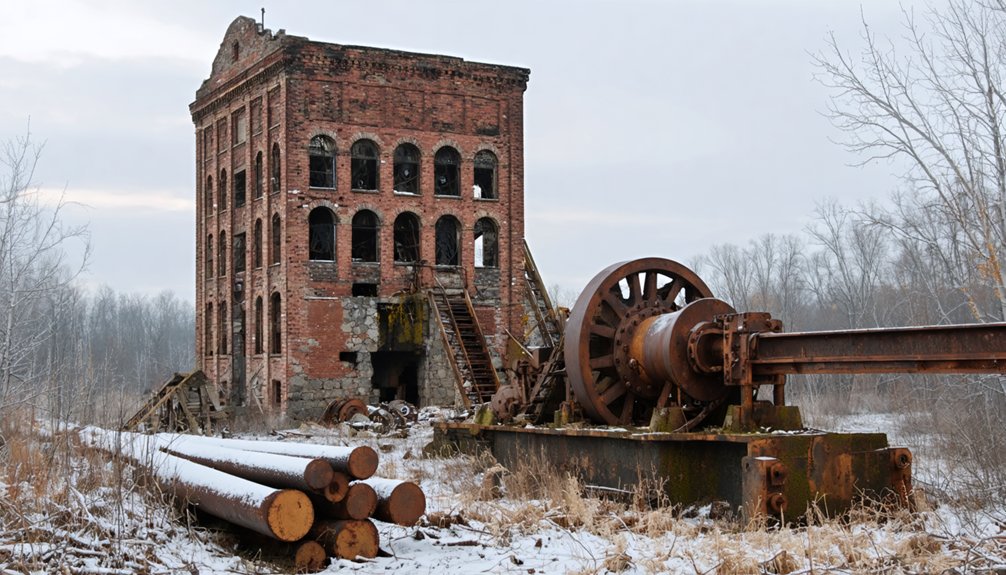
Once you’ve made that short drive from Houghton and pulled off Highway 141, the ruins announce themselves immediately. Massive mining structures rise from the tree line, weathered but standing, silent proof of Baltic’s mining heritage.
You’ll spot collapsed engine houses, deteriorating shaft heads, and debris fields scattered across the landscape like frozen industrial wreckage.
The deepest shaft once plunged 3,839 feet underground — stand near its remnants and let that scale sink in. Copper shards still litter the ground beneath your feet, tangible fragments of 276 million pounds of total production.
At 3,839 feet deep, the shaft descends far beyond imagination — and the copper shards underfoot prove it was real.
Each crumbling wall carries historical significance, telling the story of a community that boomed, peaked, and vanished within decades. Walk the site slowly — there’s more to discover the longer you look.
When Is the Best Time to Visit Baltic’s Ghost Town Ruins?
When you visit Baltic matters almost as much as the visit itself. The best visiting season falls between mid-late summer and early-mid fall, when conditions align perfectly for exploration and ghost town photography.
During these months, you’ll enjoy manageable temperatures, longer daylight hours, and softer natural lighting that makes crumbling structures and overgrown ruins genuinely striking on camera.
Avoid visiting during winter or early spring when snow, ice, and muddy terrain make traversing the site hazardous and unpleasant. Heavy snowfall can obscure ruins entirely, robbing you of the full visual experience.
Fall offers a particular advantage — surrounding foliage bursts into color, framing Baltic’s decayed structures in vivid contrast.
If you want dramatic, story-rich photographs of a forgotten copper town, early October delivers exactly that.
What to Pack for a Baltic Ghost Town Visit
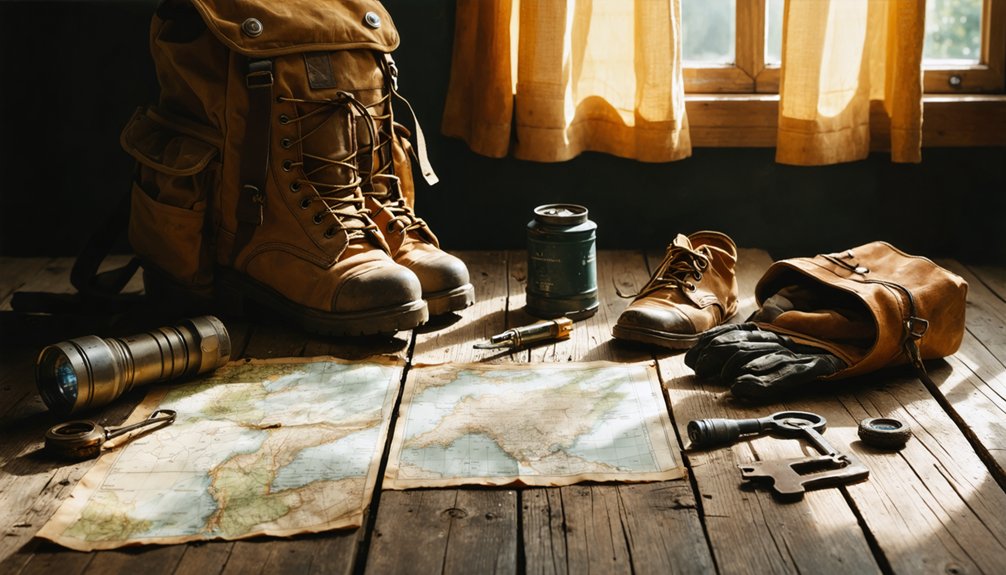
Before you head out to Baltic’s crumbling ruins, you’ll want to pack smart for a safe and rewarding experience.
Sturdy boots, weather-appropriate layers, and work gloves protect you as you navigate uneven terrain and jagged debris scattered across the old mining site.
Bring a compass or GPS device, a detailed trail map, and a camera with extra batteries to document the haunting industrial remnants that tell Baltic’s story.
Essential Gear and Clothing
Exploring Baltic’s ruins means traversing uneven terrain, overgrown vegetation, and weathered industrial debris, so you’ll want to pack smart before hitting the road.
Wear sturdy, ankle-supporting hiking boots to navigate crumbling foundations and scattered copper remnants that reflect the site’s mining legacy. Long pants and sleeves protect against brush and sharp debris while you investigate structures carrying deep historical significance. Bring work gloves for handling anything around the ruins safely.
Pack layers, since Upper Peninsula weather shifts quickly, especially during mid-late summer and early fall visits. A backpack should carry plenty of water, snacks, a first aid kit, and a fully charged phone loaded with the Keweenaw Time Traveler App.
Sunscreen and insect repellent are non-negotiables when you’re spending hours outdoors among overgrown industrial ruins.
Navigation and Safety Tools
Traversing Baltic’s overgrown ruins requires more than a good sense of direction, so pack tools that keep you oriented and safe throughout your visit.
Download navigation apps like the Keweenaw Time Traveler before arriving, since cell service can be unreliable in this remote Upper Peninsula location. A physical map of Houghton County serves as a reliable backup when technology fails you.
For safety tips, carry a fully charged portable battery pack, a flashlight for exploring darker structural remnants, and a basic first aid kit.
The uneven terrain and deteriorating infrastructure demand sturdy footing and constant awareness. Share your itinerary with someone before heading out, and always bring a whistle for emergencies.
Preparation separates a memorable ghost town adventure from a dangerous one.
Photography and Documentation Supplies
Once your safety gear is packed and your navigation tools are ready, don’t overlook the supplies that’ll help you capture and document Baltic’s haunting remnants.
Strong photography tips and smart documentation techniques transform your visit into a lasting record of this forgotten copper town.
Pack these essentials before hitting the road:
- Camera or smartphone with extra batteries — Baltic’s towering mining structures and scattered copper shards demand sharp, detailed shots.
- Notebook or voice recorder — jot or speak observations about ruins, dimensions, and locations for accurate documentation techniques.
- Wide-angle and macro lenses — capture sweeping industrial decay and close-up textures that tell Baltic’s full story.
Natural lighting peaks mid-morning and late afternoon, so time your exploration accordingly.
These photography tips guarantee you leave with compelling visual proof of Baltic’s remarkable, rugged history.
How the Keweenaw Time Traveler App Enhances Your Baltic Visit
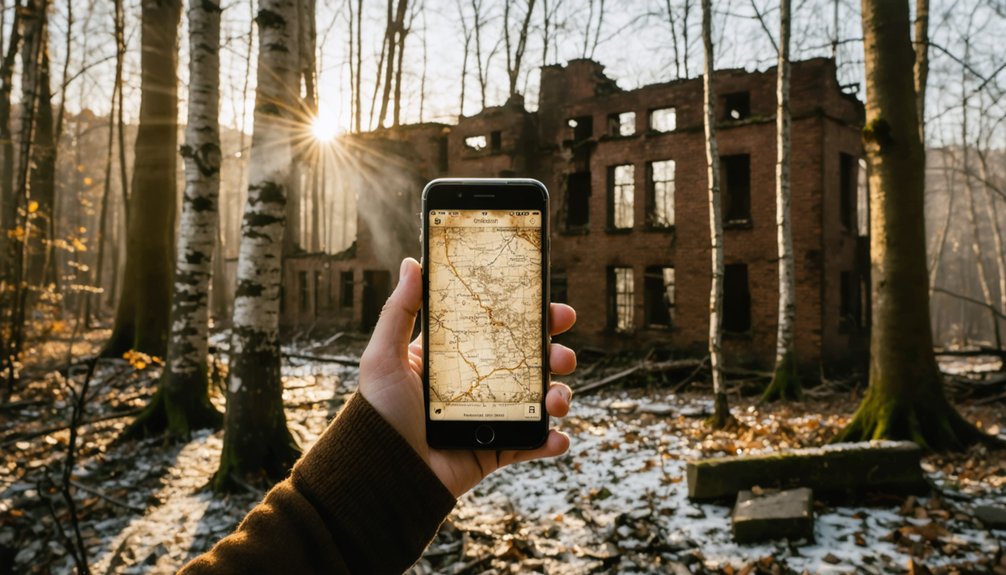
Before you set foot among Baltic’s crumbling ruins, download the Keweenaw Time Traveler App to transform your visit into a richly layered historical experience.
The app overlays archival photos, maps, and historical data onto present-day locations, letting you visualize what each site looked like during the town’s copper boom peak.
You’ll access a digital guided tour of Baltic specifically, walking you through the remnants of a community that once housed 3,000 residents and supported six active mines.
App Features For Visitors
One app transforms your Baltic ghost town visit from a quiet walk through ruins into a fully guided historical experience — the Keweenaw Time Traveler. It layers the historical significance of Baltic’s copper mining past directly onto your surroundings, helping you see beyond crumbling structures.
Here’s what the app delivers:
- Interactive digital tours that guide you through Baltic and surrounding ghost towns at your own pace.
- Historical overlays that reveal what buildings, mines, and streets looked like during Baltic’s peak years.
- Location-based storytelling that activates as you physically move through the site.
You’re not just wandering ruins — you’re revealing a vanished world.
Download it before you arrive, and you’ll experience Baltic’s forgotten era with context, clarity, and complete freedom to explore.
Digital Tours Of Baltic
Few apps redefine a ghost town visit the way the Keweenaw Time Traveler does. Through digital storytelling, it transforms Baltic’s crumbling ruins into layered historical narratives you can access directly from your phone.
You’re not just wandering abandoned structures — you’re uncovering the lives of miners, families, and a community that once thrived here.
The app’s virtual exploration features let you cross-reference what you’re seeing with archival maps, photographs, and historical records tied to specific locations throughout Baltic.
You control the pace, the direction, and the depth of your experience. No guided tour schedule, no crowds — just you and the raw history of a forgotten copper town.
Download it before your visit and arrive prepared to see Baltic’s past through an entirely different lens.
Which Other Ghost Towns Near Baltic Are Worth Adding to Your Route?
While you’re exploring Baltic, why not extend your trip to discover the other ghost towns scattered across Michigan’s Upper Peninsula?
The region’s rich mining history created dozens of abandoned communities, each with its own story waiting for you to uncover.
Here are three ghost town exploration stops worth adding to your route:
- Clifton – A former copper mining village with eerily preserved stone foundations and overgrown mill ruins.
- Central – Once a thriving settlement, this site features crumbling engine houses and a historic cemetery tucked into the woods.
- Mandan – A quiet, forgotten outpost offering scattered structural remnants and an authentic sense of isolation.
Each destination adds a unique layer to your Upper Peninsula adventure, making your road trip a truly immersive historical experience.
Frequently Asked Questions
How Deep Did the Baltic Mining Company’s Deepest Shaft Reach Underground?
You’d be amazed — the Baltic Mining Company’s deepest shaft depth plunged an incredible 3,839 feet underground! Their advanced mining techniques drove workers deeper than most dare imagine, revealing copper riches buried far beneath Michigan’s rugged Upper Peninsula surface.
What Was the Total Amount of Copper Produced During Baltic’s Mining Operations?
Centuries of copper mining culminated in a colossal 276 million pounds produced! You’ll feel the economic impact of Baltic’s mighty mining era as you explore the remnants of this once-thriving, free-spirited community’s industrial legacy.
When Did the Baltic Mining Company First Begin Its Copper Mining Operations?
You’ll discover that the Baltic Mining Company kicked off its copper extraction journey in 1882, employing revolutionary mining techniques that would shape the region’s future and ignite an extraordinary industrial boom you can still explore today!
How Many Active Mines Did Baltic Support During Its Peak Population Era?
At its peak, you’d find six active mines buzzing with life in Baltic! This ghost town’s remarkable mining history once supported a thriving population of 3,000 residents, making it a powerhouse of copper production.
Where Can Visitors Find Historical Records Documenting Baltic’s Mining Town History?
You’ll find historical archives and local museums in Houghton and Lake Linden documenting Baltic’s fascinating mining town history. These treasure troves hold records that’ll transport you back to the town’s remarkable copper-boom era.
References
- https://99wfmk.com/baltic-michigan/
- https://www.ghosttowns.com/states/mi/baltic.html
- https://gandernewsroom.com/2022/01/18/7-michigan-ghost-towns-you-might-not-find-on-your-map/
- https://99wfmk.com/palatka-michigan/
- https://www.awesomemitten.com/ghost-towns-in-michigan/
- https://travelswithabandon.com/2018/08/22/adventure-9-cliffs-shaft-baltic-atlantic-mine-boston/
- https://en.wikipedia.org/wiki/List_of_ghost_towns_in_Michigan
- https://urbexunderground.com/ghost-towns-in-michigan/
- https://everafterinthewoods.com/these-forgotten-michigan-ghost-towns-that-still-feel-mysterious-today/
- http://news-archive.plymouthlibrary.org/Media/Observer/Page/2015/2015-12-27_013-PO.pdf