To road trip Balm, Florida, head south on Highway 301, then east on County Road 672 before turning right onto Balm Road. You won’t find a welcome sign or historic marker — just open farmland, thick vegetation, and silence. Pack sturdy shoes, water, insect repellent, and an offline map since cell service is spotty. Visit between November and March for the best conditions. There’s far more hiding in Balm’s overgrown landscape than most people expect.
Key Takeaways
- Balm, Florida, is a historic ghost town in eastern Hillsborough County, accessible via Highway 301 south, County Road 672 east, and Balm Road.
- Visit between November and March for cooler weather and better visibility of hidden remnants like old brick chimneys and deteriorating structures.
- Pack essentials including sturdy footwear, water, insect repellent, a first-aid kit, offline maps, and a roadside emergency kit for safety.
- Expect no welcome signs or historic markers; the landscape features farmland, thick vegetation, and silence, rewarding patient and careful exploration.
- Nearby ghost towns like Homeland, Phosphoria, and Fort Dade on Egmont Key can be combined for a full day of exploration.
What’s Left of Balm, Florida’s Forgotten Ghost Town
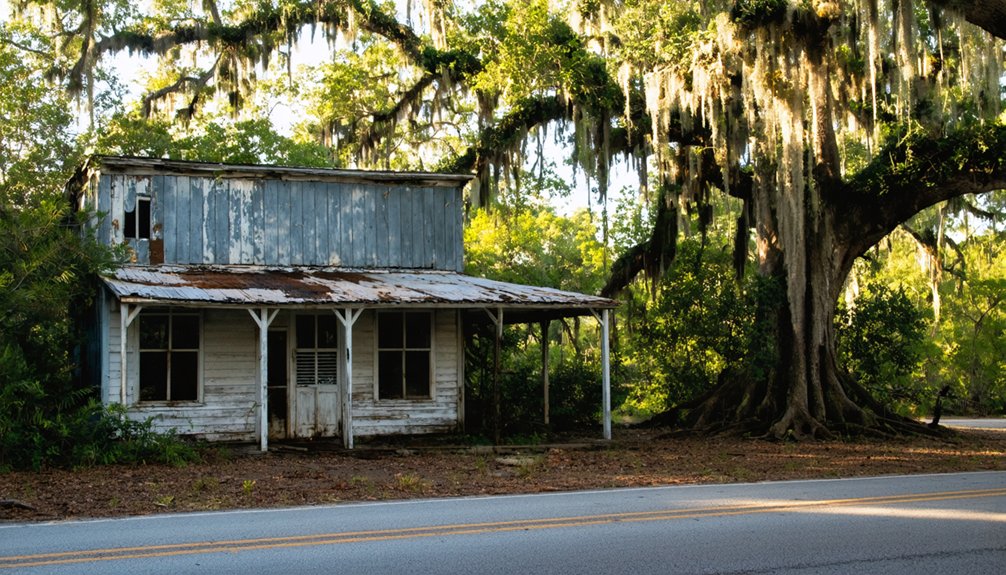
Few traces remain of Balm, Florida, a once-thriving farming community that’s quietly vanished into the rural landscape of eastern Hillsborough County.
Few traces remain of Balm, Florida — a once-thriving farming community that has quietly vanished into history.
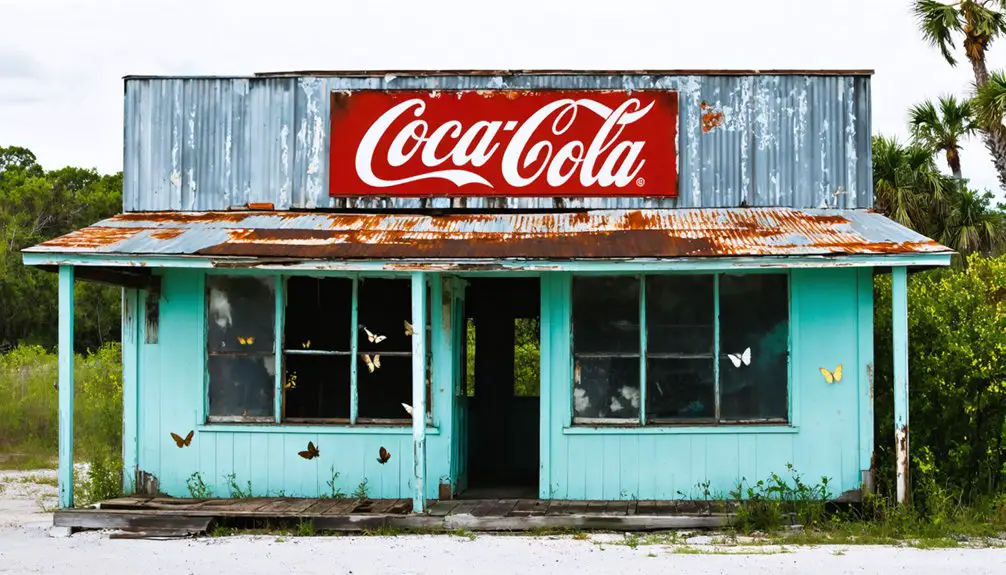
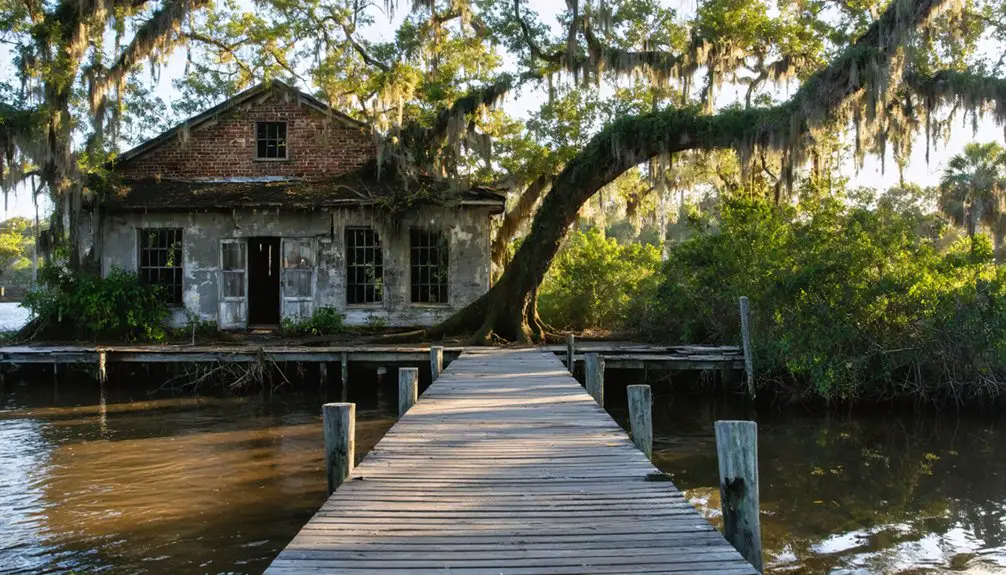
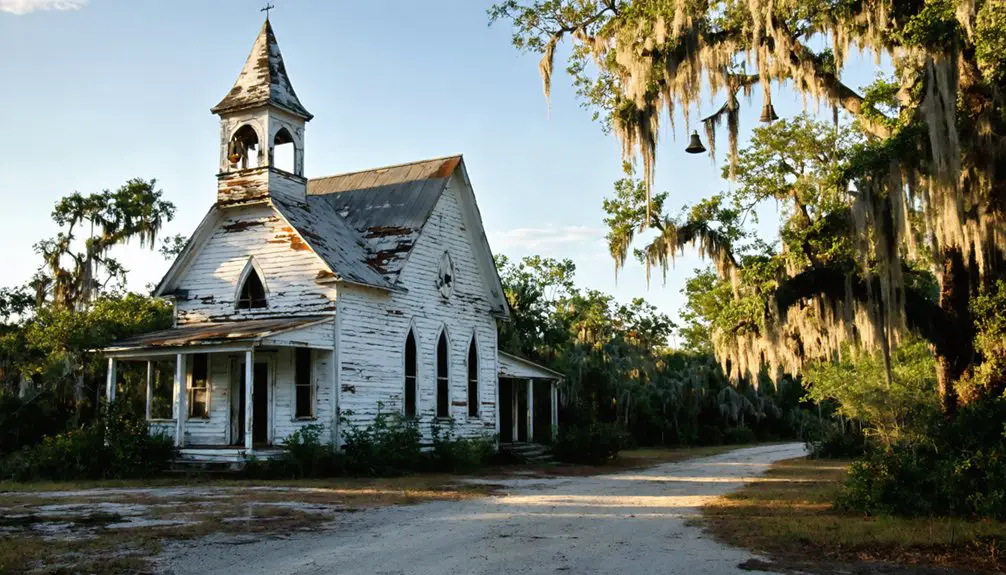
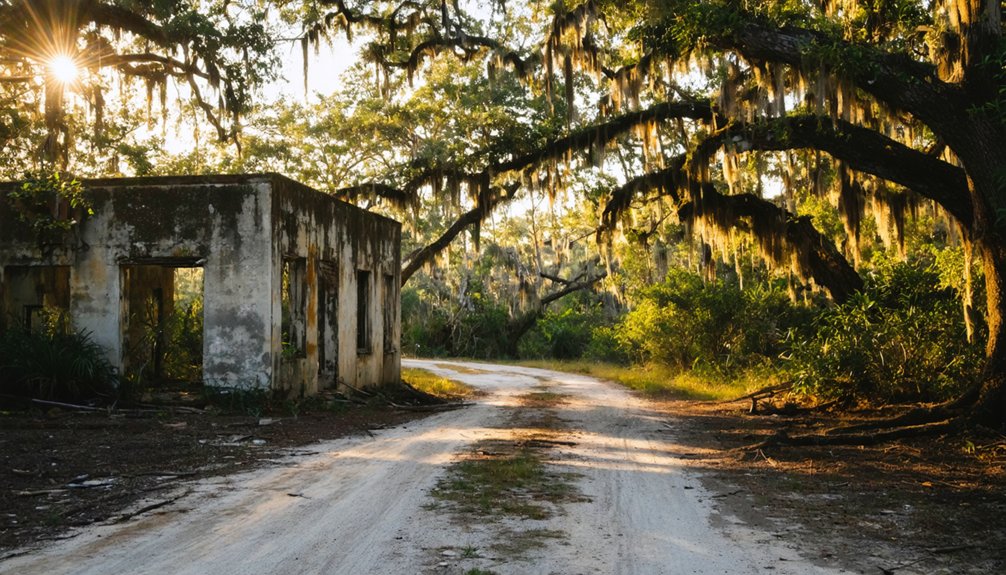
When you visit today, you’ll find nature has aggressively reclaimed what pioneers once built. Old brick chimneys still stand among the abandoned structures, though thick vines nearly swallow them whole. Florida’s harsh climate accelerates the deterioration, making each visit potentially your last chance to witness these remnants firsthand.
The town’s historical significance runs deep — settlers arrived as early as 1902, establishing farms and a functioning post office that served the railroad mail route.
As you explore the overgrown county roads cutting through this forgotten landscape, you’re walking through layers of early Florida pioneer history that most travelers never discover.
How Balm Went From Farming Community to Abandoned Ghost Town
What began as a promising agricultural settlement in the early 1900s, Balm followed a trajectory familiar to dozens of Florida’s forgotten communities — a slow, quiet fade driven by rural depopulation and economic stagnation.
Farming practices that once sustained pioneer families like the Sweats and Hicks couldn’t compete with modernizing agricultural economies elsewhere. The railroad mail hook, once a lifeline connecting Balm to the outside world, couldn’t offset the community decline that accelerated as younger generations left for urban opportunities.
Without industrial development or economic diversification, the settlement had no anchor. Buildings deteriorated, families scattered, and the land gradually reclaimed what people had built.
Today, Balm stands as a reflection of how quickly ambition yields to abandonment when the economic foundation crumbles beneath a community’s feet.
How to Get to Balm, Florida From US-301
Getting to Balm takes only a handful of turns, but the route feels like a gradual unwinding from the modern world. Head south on Highway 301, then turn east onto County Road 672. Follow it until you reach Balm Road, then turn right. That’s basically it.
As the pavement narrows and farmland stretches out on both sides, you’ll sense the Balm history quietly surfacing around you. The roads here haven’t changed much from the days when pioneer families like the Sweats and Hicks worked this land.
No highway noise, no chain restaurants, just open terrain and the occasional rural structure breaking the horizon. The simplicity of the drive mirrors the simplicity of what Balm once was — a self-reliant community carved from Florida’s interior wilderness.
What to Know Before You Drive Balm Road’s Isolated County Routes
Driving Balm Road and its surrounding county routes rewards preparation over spontaneity. These isolated rural roads cut through active farmland, so expect minimal services, no gas stations, and spotty cell coverage.
Balm Road rewards preparation over spontaneity — expect no gas stations, minimal services, and unreliable cell coverage.
Fill your tank before leaving US-301 behind. Bring water, a paper map or downloaded offline route, and a charged phone. The terrain is flat and navigable by standard vehicle, but narrow county roads demand attentive driving, especially when farm equipment shares the pavement.
You won’t find signage pointing toward the ghost town — locals know where they’re going, and you’ll need to. Note that thick Florida vegetation reclaims everything quickly here, so overgrown turnoffs are easy to miss.
Visit during daylight hours, and let someone know your planned route before heading out.
What You’ll Actually See When You Arrive in Balm
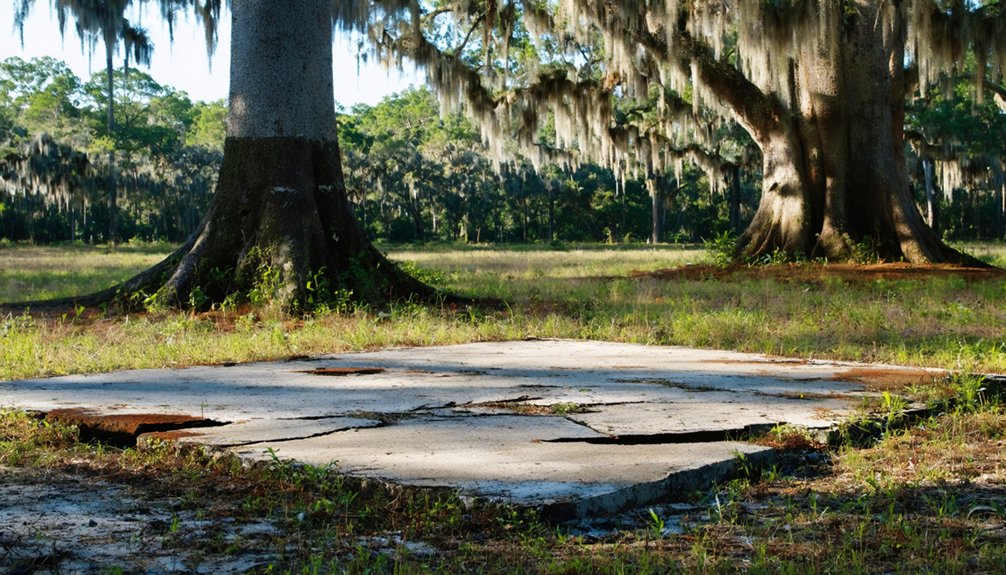
Arriving in Balm, you’ll notice the absence before you notice anything else — no welcome sign, no historic marker, no obvious landmark announcing you’ve reached your destination. What greets you instead is farmland, thick vegetation, and silence.
Look carefully, though, because Balm rewards patient eyes. Old brick chimneys rise unexpectedly from tangled vines, half-swallowed by Florida’s relentless growth. These hidden treasures speak louder than any roadside placard ever could.
Local legends reference pioneer families like the Sweats and Hicks who once worked this land, built these chimneys, and collected mail from passing trains. Remnants of that post office may still exist nearby.
You’re standing inside a living piece of Florida’s forgotten agricultural past — no admission fee, no crowds, just raw history reclaiming itself on its own terms.
When’s the Best Time to Visit Before Vegetation Takes Over?
Florida’s brutal summer heat and explosive vegetation growth make timing everything when you’re planning a trip to Balm. The best visiting months fall between November and March, when cooler seasonal weather tames the aggressive plant growth that swallows whatever structures remain standing.
During summer, thick vines reclaim everything faster than you can photograph it, and humidity turns a simple walk into exhausting work.
Summer vines swallow Balm whole, reclaiming ruins before your camera can keep up.
Winter months give you clearer sightlines through the undergrowth, making those crumbling brick chimneys far easier to spot. You’ll also avoid the relentless mosquito populations that thrive in Florida’s wet season.
Arrive mid-morning once the fog burns off but before afternoon temperatures climb. Pack water regardless of season, wear long pants, and bring good boots for traversing overgrown terrain along those rural county roads.
What to Pack for a Day Trip to Balm’s Rural Back Roads
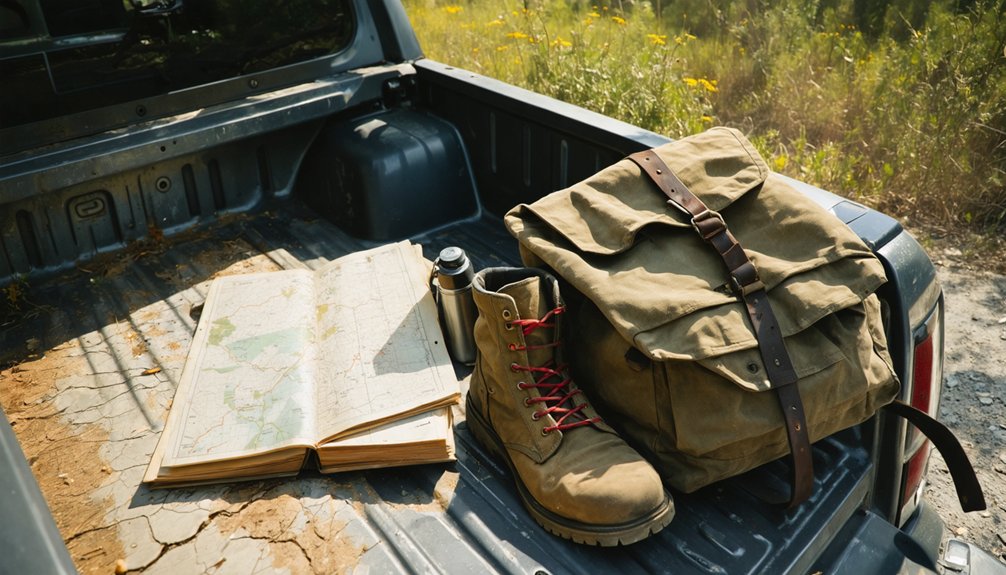
Before you head out on Balm’s rural back roads, you’ll want to pack smart since services are scarce and the terrain is unforgiving.
Bring sturdy footwear, water, insect repellent, a first-aid kit, and a fully charged phone with offline maps loaded, because cell coverage can drop in the remote stretches east of US-301.
Don’t leave your camera or a quality lens behind either, as the weathered brick chimneys and vine-choked remnants of pioneer life reward careful documentation.
Essential Gear and Supplies
Packing smart separates a rewarding ghost town adventure from a miserable one, especially on Balm’s unforgiving rural back roads. Follow these exploration tips to stay comfortable and prepared.
Carry at least two liters of water per person since Florida’s heat drains you faster than you’d expect. Pack insect repellent, sunscreen, and sturdy closed-toe shoes to navigate overgrown terrain safely. A detailed paper map supplements your phone’s GPS, which loses signal on remote county roads.
Safety precautions matter here — bring a first aid kit, a charged portable battery, and a flashlight for exploring darkened deteriorating structures. Snacks sustain your energy during long stretches between stops. A camera captures atmospheric details that your memory won’t hold.
These essentials transform your Balm road trip from risky gamble into confident, self-sufficient exploration.
Navigation and Safety Tools
Traversing Balm’s rural back roads demands more than a smartphone and good intentions. County Road 39 and County Road 672 wind through isolated farmland where cell signals vanish without warning.
Pack these essential navigation and safety precautions before you roll out:
- Offline navigation apps like Maps.me or Google Maps downloaded locally — you’ll lose connectivity fast once you head east of US-301.
- A physical county road map of Hillsborough County — old-school backup when technology fails you completely.
- A roadside emergency kit — jumper cables, a spare tire, and basic tools are non-negotiable on unpaved stretches nobody else travels.
Freedom means self-sufficiency out here. The land doesn’t wait for you to figure things out, so arrive prepared.
Photography and Documentation Equipment
Balm’s crumbling chimneys and vine-strangled ruins won’t document themselves, so you’ll want a camera setup that handles both harsh Florida sunlight and deep shadow without making you haul a photography studio down a dirt road.
A mirrorless camera with a versatile 24-70mm lens covers most photographic techniques you’ll need, from wide environmental shots to tight architectural details.
Pack a polarizing filter to cut glare off overgrown surfaces and a lightweight tripod for low-light interior compositions.
Your equipment essentials should also include extra batteries, since rural locations offer zero charging options.
A smartphone works as a solid backup and handles GPS photo tagging effortlessly.
Bring a small notebook to record structure locations and historical context, creating documentation that outlasts any single photograph.
How to Photograph Balm’s Overgrown Ruins in Florida’s Harsh Light
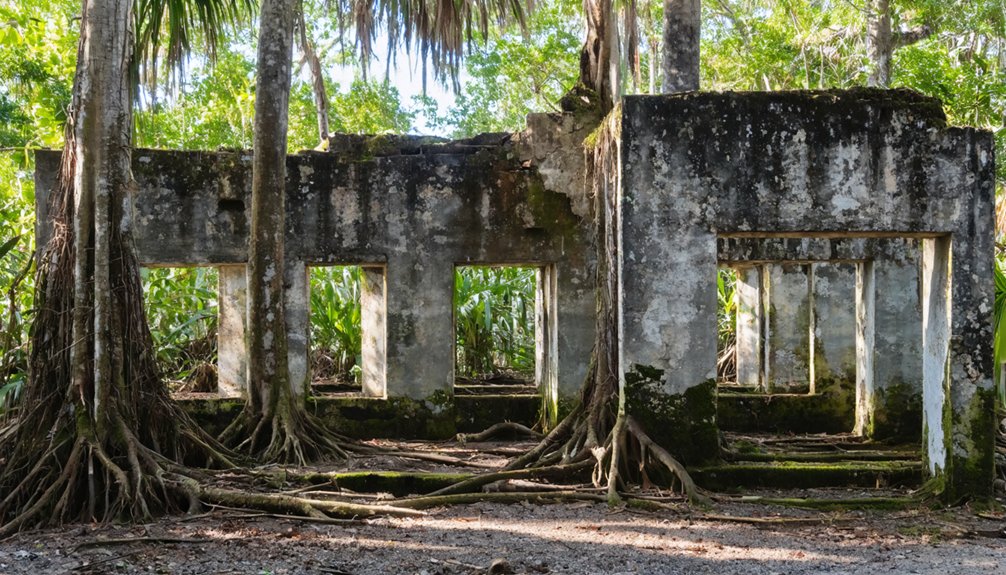
Florida’s midday sun turns Balm’s ruins into a photographer’s nightmare, washing out detail and flattening the very textures that make these crumbling chimneys and vine-choked walls so compelling.
You’ll capture far richer shots by arriving at golden hour, when low-angle light rakes across deteriorating brick and tangled vegetation, pulling out shadow and depth that harsh overhead sun destroys.
Get close to overgrown surfaces and shoot at a slight angle to emphasize the layered textures of moss, cracked mortar, and strangling vines that tell Balm’s slow, quiet story of abandonment.
Managing Harsh Sunlight
Harsh midday sun can be your worst enemy when photographing Balm’s overgrown ruins, washing out the subtle textures of weathered brick and turning tangled vines into a blown-out mess of highlights.
Smart light adjustment and sun protection strategies will transform your shots dramatically.
Work these three techniques into your exploration:
- Shoot during golden hour — arrive at sunrise or stay until dusk, when warm, angled light carves shadow and depth into deteriorating chimneys.
- Use overcast conditions strategically — Florida’s afternoon cloud cover acts as a natural diffuser, softening contrast across vine-choked structures.
- Position yourself deliberately — let dense tree canopy backlight your subject, creating atmospheric, moody frames that capture Balm’s haunting, reclaimed character.
You’ll capture images that genuinely honor this forgotten pioneer settlement.
Capturing Overgrown Textures
Overgrown textures are where Balm’s ruins truly come alive photographically, demanding a close, deliberate eye rather than sweeping wide-angle compositions. Move in tight on crumbling brick chimneys where vines have carved their way through mortar, revealing layers of decay that tell decades of abandonment.
Florida’s overgrown landscapes offer extraordinary texture exploration if you’re willing to crouch, kneel, and reposition constantly. Look for contrasts between rough, weathered brick and soft, trailing vegetation. Shoot during golden hour when raking light dramatizes surface irregularities rather than flattening them.
Macro or close-focus lenses reward patient shooters here. You’ll discover peeling wood, rust-streaked metal, and moss-covered stone competing beautifully for your frame. Let natural reclamation guide your compositions rather than fighting it.
Other Florida Ghost Towns Close Enough to Make It a Day Trip
While you’re already venturing into eastern Hillsborough County to explore Balm, you might as well make a full day of it by hitting a few other ghost towns scattered across central Florida.
Rural exploration rewards the curious, and Florida ghost towns each tell a uniquely different story of settlement and abandonment.
Rural exploration rewards the bold — Florida’s forgotten towns whisper stories of settlement, survival, and eventual abandonment.
- Homeland, Florida – Southeast of Bartow, this small Polk County community features a historic cemetery and deteriorating structures tucked among citrus country backroads.
- Phosphoria, Florida – A mining-era ghost town near Mulberry where phosphate industry remnants still haunt the landscape.
- Fort Dade, Florida – Located on Egmont Key near Tampa Bay, accessible by ferry, offering military ruins overtaken by subtropical vegetation.
Pack water, charge your camera, and hit the road early.
More Historic Communities in Eastern Hillsborough County Worth the Detour
Eastern Hillsborough County holds more than just Balm if you’re already out on the rural roads. This region carries deep rural heritage stretching back to the early settler era, and several historic landmarks dot the landscape if you know where to look.
Communities that once thrived on agriculture and railroad commerce share Balm’s story of gradual fading, each leaving behind fragments worth discovering. You’ll find old homestead sites, forgotten cemeteries, and weathered structures tucked along county roads that most drivers pass without a second glance.
Bringing a detailed county map gives you the freedom to wander deliberately rather than stumble accidentally. Every turn through this corner of Florida reveals another layer of pioneer history waiting quietly beneath the overgrowth.
Frequently Asked Questions
Is There an Admission Fee or Permit Required to Visit Balm?
Ironically, ghost town history asks nothing of you — no admission requirements stand between your curiosity and Balm’s forgotten roads. You’re free to simply drive through this atmospheric, vine-swallowed relic of early Florida pioneer life.
Are Restroom Facilities Available Anywhere Near the Balm Ghost Town?
You won’t find restroom locations or visitor amenities at Balm’s remote ghost town site. Plan ahead by stopping at nearby gas stations along Highway 301 before venturing down those rural county roads toward your abandoned adventure.
Can You Legally Enter or Explore Structures Still Standing in Balm?
You’ll want to exercise caution with urban exploration at Balm — most standing structures are on private land. Respect historical preservation laws, always seek landowner permission before entering, and you’re legally protected while enjoying your adventure responsibly.
Is Balm, Florida Accessible to Visitors With Mobility Limitations?
Balm’s rural roads offer real mobility options, even if it seems remote. You’ll drive right through the ghost town’s core, though accessibility features are limited — uneven terrain makes wheelchair navigation challenging beyond your vehicle.
Are Guided Tours of Balm or Surrounding Ghost Towns Available?
No formal guided tours exist, but you’ll discover freedom exploring independently! Seek out local legends through self-guided drives along rural county roads, where ghost stories linger among overgrown ruins and Florida’s atmospheric, vine-covered abandoned landscapes await your adventure.
References
- https://www.florida-backroads-travel.com/florida-ghost-towns.html
- https://www.ghosttowns.com/states/fl/balm.html
- https://www.youtube.com/watch?v=bNjqcQ5SMwg
- http://www.shrimpnfishflorida.com/forums/threads/lake-county-fl-ghost-towns.5641/