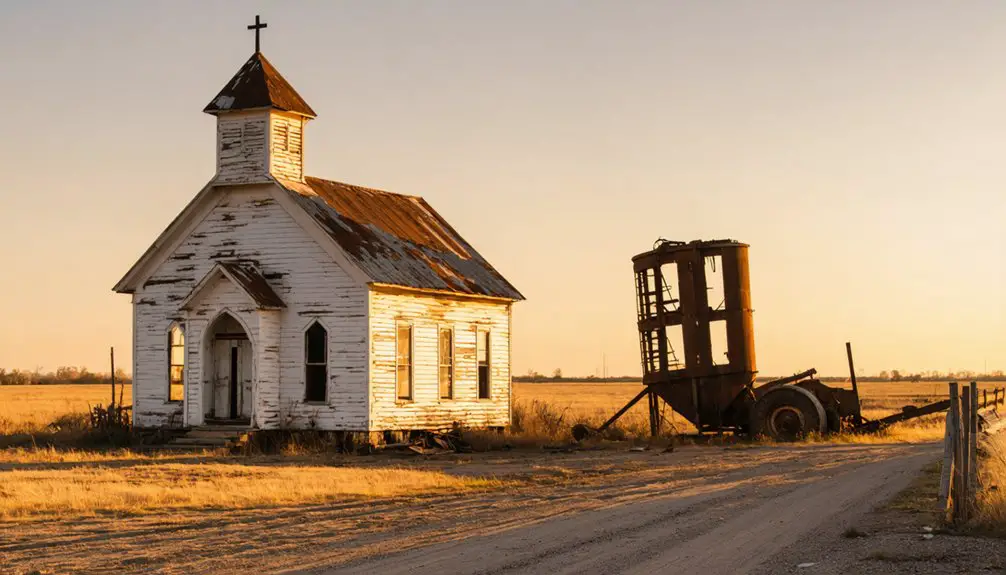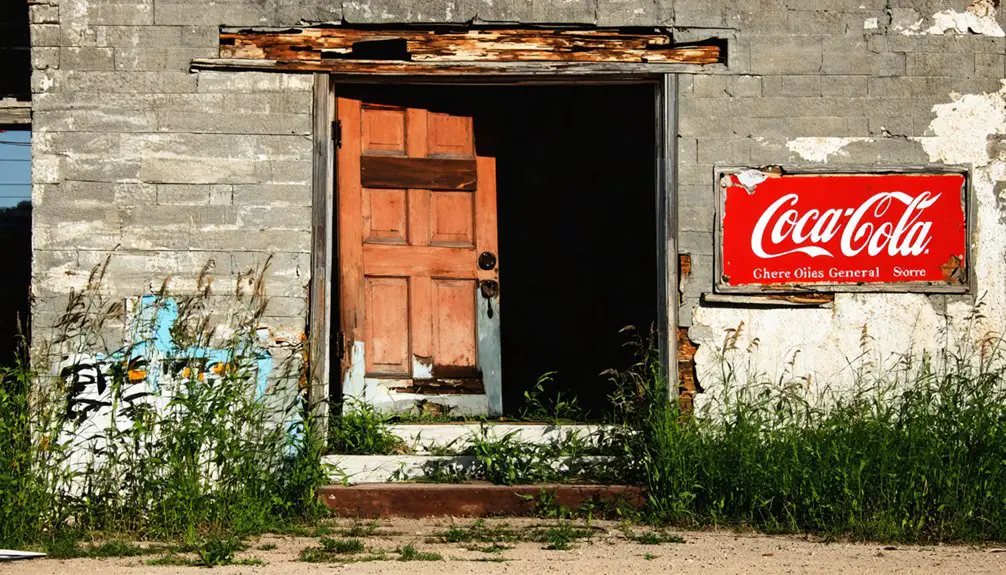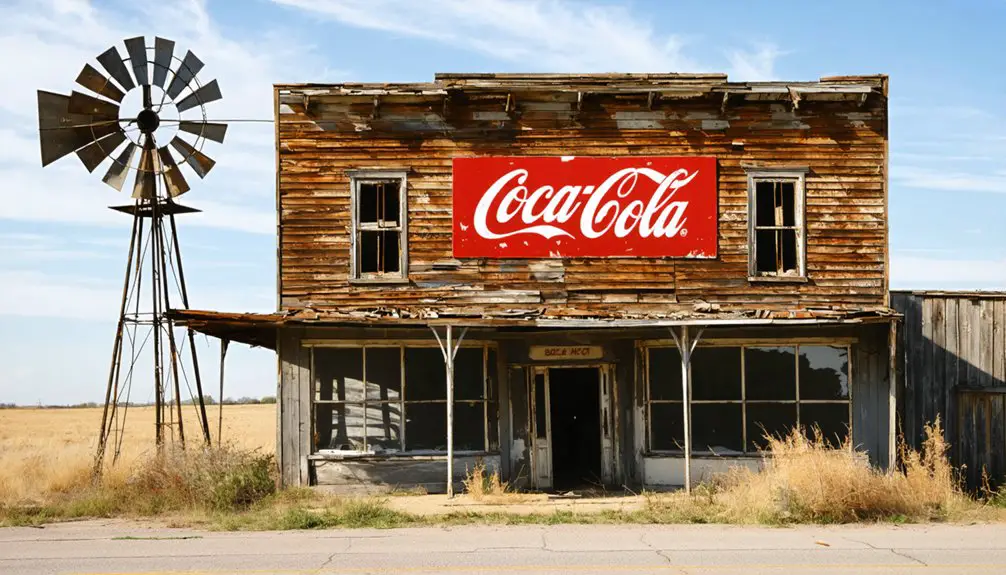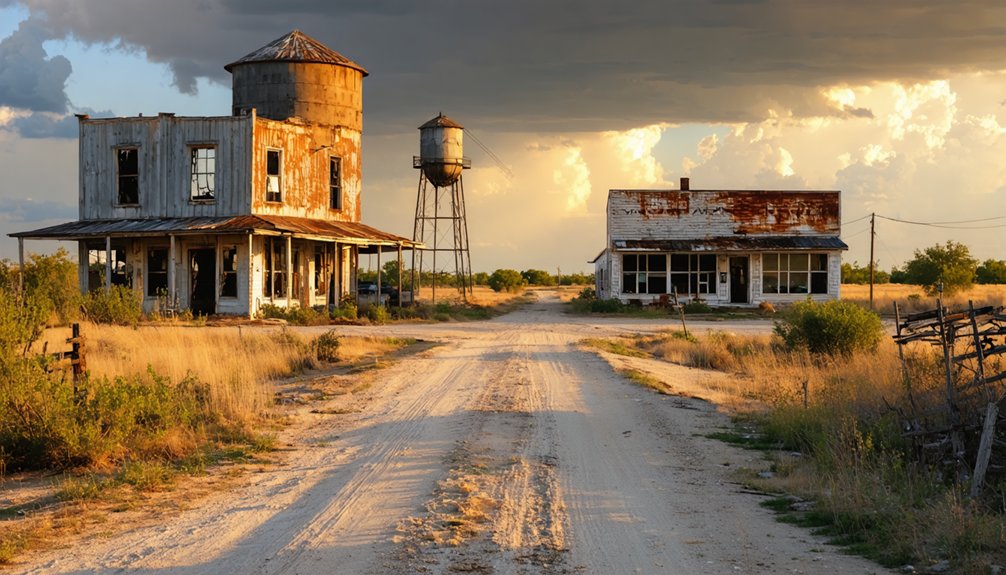
Planning a ghost town road trip to Empire City, Oklahoma starts with heading to Duncan in Stephens County, where this forgotten oil boom relic quietly waits. You’ll explore weathered signs, crumbling foundations, and an abandoned cemetery that whisper stories of the 1910s boom-bust era. Pack sturdy boots, a camera, and offline maps since cell service is spotty out here. There’s far more to discover about Empire City and Oklahoma’s haunting ghost town trail ahead.
Key Takeaways
- Empire City, near Duncan in Stephens County, Oklahoma, emerged during the late 1910s oil boom and nearly reached 1,000 residents.
- Pack navigation tools for offline maps, sun protection, sturdy boots, a camera with extra batteries, and a reliable water supply.
- Visit the abandoned cemetery to explore weathered markers revealing stories of families and individuals from Empire City’s boom era.
- Nearby ghost towns like Slick and Picher offer additional exploration opportunities, illustrating Oklahoma’s boom-bust cycle across different industries.
- Plan visits during early morning or late afternoon for optimal photography lighting, and time trips to avoid extreme weather conditions.
Why Empire City Is One of Oklahoma’s Forgotten Oil Boom Ghost Towns
When Oklahoma’s oil boom roared through the early 20th century, it left behind dozens of towns that flared up overnight and vanished just as fast — and Empire City is one of them.
Sprouting near Duncan in Stephens County during the late 1910s, it rode the wave of oil history hard, growing fast before the bust stripped it bare.
You’ll recognize the pattern immediately — economic cycles of boom and collapse shaped nearly every settlement across southern Oklahoma.
Empire City followed that same brutal rhythm, shrinking dramatically through the mid-20th century before a modest 1980s revival pushed its population toward 1,000 by 2010.
Empire City shrank hard through the mid-20th century, then clawed back modestly — nearly reaching 1,000 residents by 2010.
It’s not fully abandoned, but it carries the unmistakable weight of a town that fortune nearly forgot.
That tension makes it worth your time.
How Empire Went From Oil Boom to Ghost Town
The oil that built Empire City is the same oil that wrecked it. When the oil boom hit southern Oklahoma in the late 1910s, Empire City exploded overnight. Workers flooded in, businesses opened, and the town hummed with possibility.
Then the wells dried up.
By the 1920s and 1930s, town decline hit hard and fast. Workers chased the next strike elsewhere, businesses shuttered, and buildings began their slow surrender to Oklahoma weather.
Empire followed a brutal but familiar pattern you’ll recognize across the state — boom, bust, silence.
What you’ll find today are the bones of ambition: faded signs, crumbling foundations, and a quiet that speaks louder than any history book.
The land remembers everything the people left behind.
What You’ll Actually See When You Get There
When you roll into Empire, you’ll spot weather-worn signs and crumbling stone foundations that hint at the town’s oil-rich past.
Wander the abandoned cemetery, and you’ll find names and dates that tell the human story behind the boom-and-bust cycle.
Keep your eyes open for scattered oil era remnants along the rural roads — they’re easy to miss but worth the slow drive.
Faded Signs And Foundations
Stepping into Empire City feels like flipping through a half-finished history book — some pages are there, others are torn out entirely.
You’ll spot faded foundations where buildings once buzzed with oil workers spending freshly earned cash. Stone outlines mark storefronts, homes, and gathering places that thrived during the boom years, then quietly surrendered to time.
Historical signage, weathered and barely legible, hints at what Empire City once promised ambitious settlers.
Run your fingers along crumbling concrete edges and you’re touching the actual bones of Oklahoma’s oil rush era. Nothing’s been sanitized or packaged for tourists here — it’s raw, honest, and completely yours to interpret.
That unfiltered authenticity is exactly what makes Empire worth the detour off the main road.
Abandoned Cemetery Exploration
Scattered among overgrown grasses and crooked fence posts, Empire City’s abandoned cemetery offers some of the most quietly powerful storytelling you’ll find on any ghost town road trip.
Walk slowly through it. Read the abandoned markers carefully — names, dates, and short inscriptions reveal who built this oil boom town and who watched it fade.
Cemetery stories here compress entire lifetimes into weathered stone. You’ll spot families who arrived chasing black gold, children who never saw adulthood, and elders who outlived the town itself.
Some markers lean heavily, others have collapsed entirely, reclaimed by Oklahoma soil. Bring a notebook. Photograph what you find.
These graves represent real human ambition, real loss — the kind of unfiltered history no museum exhibit can replicate.
Oil Boom Era Remnants
Beyond the cemetery fence, the physical remnants of Empire City’s oil boom era come into sharper focus — and they’re humbler than you might expect.
Like most Oklahoma boom towns, Empire City exploded after oil discovery and contracted just as fast. What remains tells that story quietly.
You’ll spot weathered stone foundations half-swallowed by grass, faded signage barely legible against sun-bleached wood, and empty lots where businesses once crowded together during frenzied drilling years.
No dramatic ruins, no Hollywood decay — just honest remnants of ordinary people who chased opportunity and moved on when the wells ran dry.
Walk slowly, look closely, and let the landscape speak. These scattered fragments reward the patient traveler willing to read between the weeds.
Other Oklahoma Ghost Towns Worth Adding to Your Route
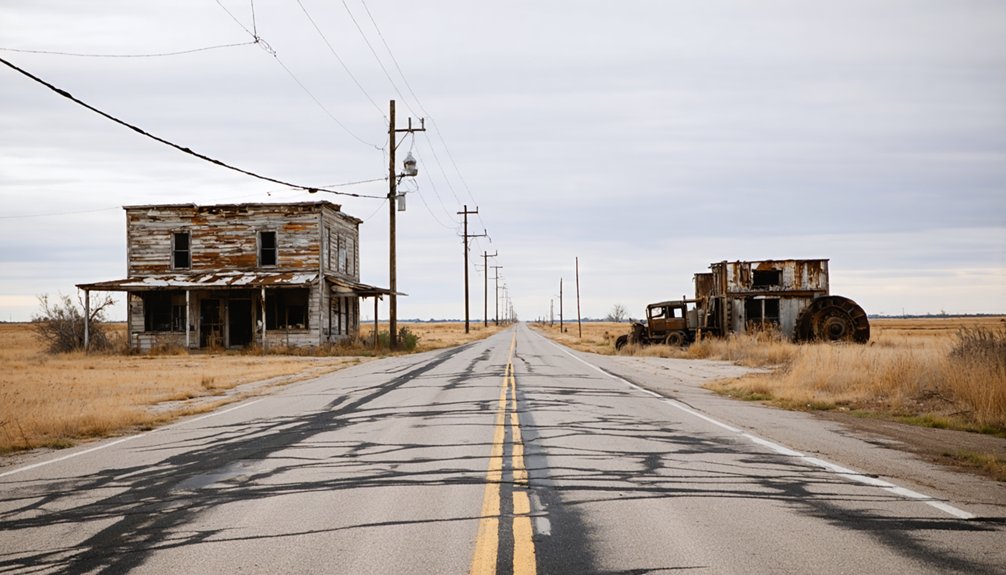
While you’re exploring Empire City, you’ll find that Oklahoma’s ghost town trail rewards those who venture a little further down the road.
Add Slick, near Bristow in Creek County, to your route — it once packed in 5,000 residents during the 1920s oil rush before crashing to under 500 by 1930, making Empire’s story feel almost familiar.
For a starker contrast, head northeast to Picher, a former mining boomtown so contaminated by lead and zinc waste that the state dis-incorporated it in 2009, leaving fewer than 20 residents behind by 2010.
Nearby Towns Worth Visiting
Oklahoma’s ghost town landscape stretches far beyond Empire City, and if you’re already making the drive through Stephens County, you’d be doing yourself a disservice by not extending the route.
Head northeast toward Creek County to find Slick, one of Oklahoma’s most compelling hidden gems. It exploded to 5,000 residents during the 1920s oil boom, then collapsed to under 500 within a decade after the railroad abandoned it.
If you’re chasing local legends and toxic history, the Picher area in Ottawa County delivers something darker. Lead and zinc mining contaminated the entire town, forcing evacuation and official dis-incorporation in 2009. By 2010, only 20 people remained.
Each stop adds essential context to Empire’s story, painting a fuller picture of Oklahoma’s brutal boom-and-bust cycle.
Comparing Ghost Town Histories
Each ghost town you add to your Oklahoma route tells a sharply different story, and those differences are what make the comparison worthwhile. Ghost town comparisons reveal how differently communities collapsed — Empire faded gradually through oil bust cycles, while Picher faced forced evacuation after lead and zinc mining poisoned the ground beneath residents’ feet.
By 2010, Picher’s population had dropped from 1,640 to just 20 people.
Adding historical context sharpens your understanding of each site. Slick, near Bristow, once held 5,000 residents during the 1920s oil rush before railroad abandonment gutted it. Empire, by contrast, revived somewhat in the 1980s, reaching nearly 1,000 people by 2010.
Visiting multiple towns lets you see Oklahoma’s boom-bust pattern playing out across different landscapes, industries, and timelines.
How to Get to Empire City From Duncan
Getting to Empire City from Duncan takes just a few minutes, as this former oil boom town sits practically in Duncan’s backyard in Stephens County, southern Oklahoma.
Head out from Duncan’s main roads and follow the rural routes connecting this oil-rich corridor. Your driving directions won’t require much planning — Empire City is close enough to make it a quick detour from your broader Oklahoma road trip.
While you’re exploring local attractions in the Duncan area, watch for weathered signs and stone foundations marking Empire City’s former streets.
The surrounding landscape still whispers stories of the 1920s oil boom that built and then abandoned this community.
Pack your camera, keep your eyes open, and let Oklahoma’s open roads guide you straight into living history.
What to Pack for Exploring Oklahoma Ghost Towns
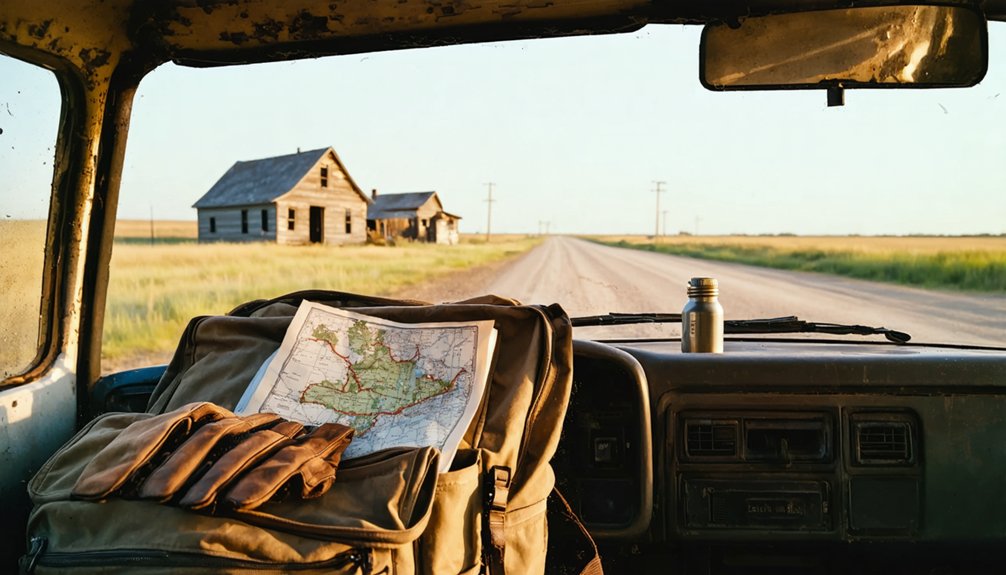
Before you head out to explore Empire City or any Oklahoma ghost town, packing the right gear makes the difference between a frustrating trip and a memorable one.
Your ghost town essentials keep you safe, comfortable, and ready to document everything you discover.
Use this packing checklist before hitting the road:
- Navigation tools – Download offline maps since rural Stephens County offers spotty cell service.
- Sun and weather protection – Oklahoma’s open terrain means brutal heat, sudden storms, and zero shade near crumbling foundations.
- Camera and extra batteries – Faded signs, stone ruins, and abandoned cemeteries deserve proper documentation.
Sturdy boots protect your feet from debris, while a water supply keeps you moving through remote sites without cutting the adventure short.
Frequently Asked Questions
Are There Any Guided Ghost Town Tours Available Near Duncan, Oklahoma?
The knowledge doesn’t confirm guided tours near Duncan, but you’ll discover local history’s whispered secrets by exploring Empire City’s faded remnants independently. Chart your own course — freedom-seekers like you don’t need guided tours to uncover the past!
What Is the Best Time of Year to Visit Empire City?
Spring and fall offer you the best seasonal activities for exploring Empire City’s ruins. You’ll dodge summer’s brutal heat and winter’s cold, and you might catch local events in nearby Duncan that enrich your adventure!
Is It Legal to Take Artifacts or Souvenirs From Ghost Town Sites?
With 2,000 Oklahoma ghost towns at stake, you shouldn’t take artifacts. Artifact preservation laws carry serious legal implications — removing items from historic sites is federally prohibited. Respect the ruins; they’re everyone’s shared history to enjoy.
Are Empire City’s Roads Accessible for Standard Vehicles or Only Four-Wheel Drive?
You’ll find Empire City’s road conditions manageable in a standard vehicle, as it’s accessible via Duncan’s main roads. We’d still recommend vehicle recommendations lean toward higher clearance for exploring rougher, unpaved rural ghost town trails nearby.
Are There Nearby Campgrounds or Overnight Accommodations Close to Empire City?
You’ll find campgrounds near Duncan offering great camping tips and local wildlife encounters. Explore state parks and rural sites where you can sleep under Oklahoma’s vast skies, feeling completely free after your ghost town adventure.
References
- https://www.okhistory.org/publications/enc/entry?entry=GH002
- https://okmag.com/blog/a-ghostly-site/
- https://en.wikipedia.org/wiki/Picher
- https://www.youtube.com/watch?v=0KnAr4swnT8