Planning a ghost town road trip to Beck, Oklahoma starts with heading east on Highway 69 from Checotah toward McIntosh County’s forgotten past. You’ll find a weathered church, an old cemetery, and remnants of a community that quietly faded in the early 1900s. Bring water, visit during dry weather, and pair Beck with nearby ghost towns like Stidham and Onapa for a full day of exploration. There’s far more to this hidden corner of Oklahoma than you’d expect.
Key Takeaways
- Beck, Oklahoma, located in McIntosh County near Checotah, features a historic church, cemetery, and old house worth exploring.
- Travel east on Highway 69 from Checotah, turning near the Highway 69 and 31 intersection onto unpaved roads leading to Beck.
- Visit during spring or fall for comfortable weather; avoid trips after heavy rainfall due to muddy, unpaved roads.
- Nearby ghost towns like Stidham, Wybark, and Onapa can be combined with Beck for a fuller road trip experience.
- Document findings carefully, respect private property, and confirm dry weather before visiting to ensure safe, responsible exploration.
What Is Beck, Oklahoma’s Ghost Town Story?
Beck, Oklahoma, is a ghost town tucked away in McIntosh County, a few miles southeast of Rentiesville and east of Checotah.
You’ll find it near the intersection of R18E and Shady Grove, accessible via Highway 69.
Beck history traces back to the early 1900s, when the land originally belonged to a Mr. Combs.
By 1910, the town had established itself as a small but active community.
Like many ghost town legends across Oklahoma, Beck’s story is one of gradual abandonment, leaving behind only fragments of its former life.
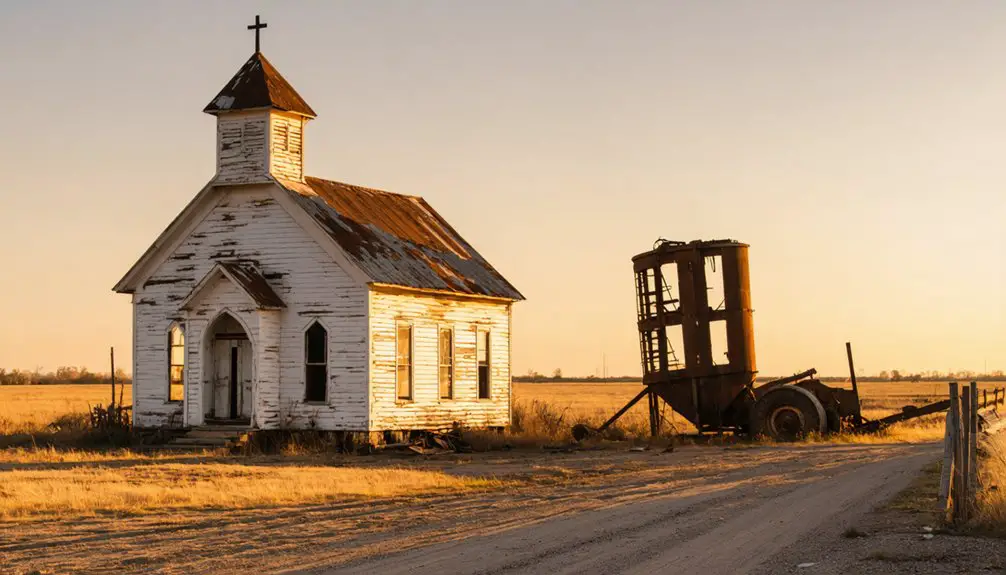
Today, a church, a cemetery, and an old house are all that remain.
These quiet remnants invite you to piece together the story of a community that once thrived and then simply faded away.
How to Get to Beck From Checotah
Getting to Beck from Checotah takes just a few simple steps. Head east on Highway 69, your main route for reaching this forgotten ghost town.
Keep your directions map handy, as the turn toward Beck sits near the intersection of Highway 69 and 31, just a few miles southeast of Rentiesville.
Have your map ready — the turn to Beck lies near the Highway 69 and 31 intersection, southeast of Rentiesville.
A few solid travel tips will make your trip smoother. First, stick to dry weather visits since the unpaved roads leading to the site can get muddy and unforgiving after rain.
Fortunately, you’ll only need a standard 2WD vehicle to reach the location. Once you arrive near R18E and Shady Grove, you’ll spot the remaining church, cemetery, and old house that mark Beck’s quiet, weathered presence on the Oklahoma landscape.
What’s Still Standing at Beck Today?
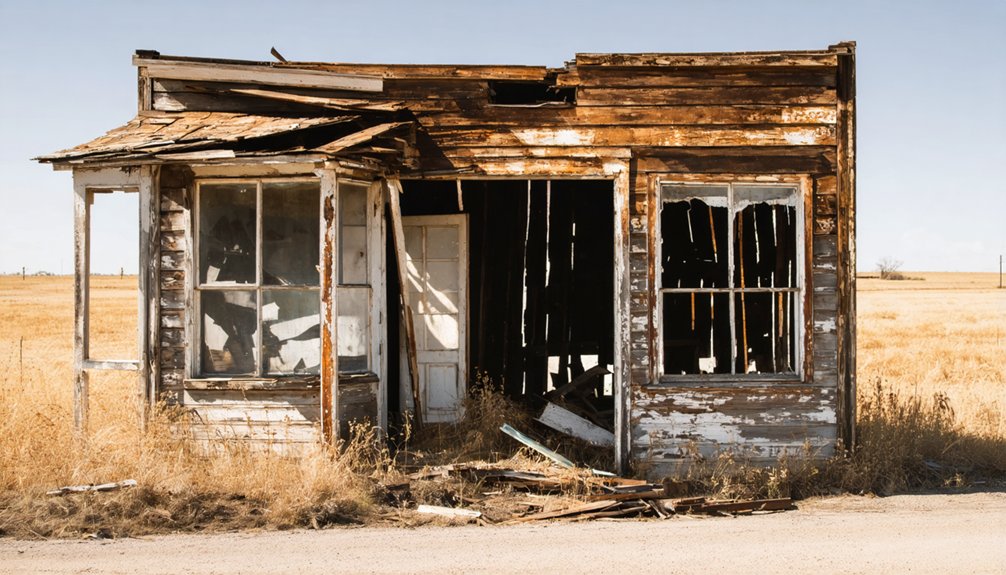
Once you pull up to Beck, don’t expect a bustling streetscape or crumbling storefronts—what’s left is modest but quietly moving. The remaining structures include a weathered church, an old house nearby, and a cemetery that holds generations of stories beneath its soil. These aren’t dramatic ruins, but they carry weight.
The cemetery is worth your time. Walk through it slowly, read the names, and you’ll sense the local legends that once shaped this community. Families built lives here, and those graves are proof.
The church still stands, silent but sturdy, offering a rare tangible connection to Beck’s early 20th-century roots.
Beyond these three elements, the land is largely open. What remains is enough to spark your imagination and honor what once was.
What Makes Beck’s Terrain Worth Preparing For?
Though Beck doesn’t demand a rugged 4×4 or off-road expertise, you’ll still want to prepare for what the terrain quietly throws at you. A standard 2WD vehicle handles the route well, but the terrain features surrounding this site can shift quickly depending on the season.
Wet conditions turn dirt paths muddy and unpredictable, so dry weather visits are your best bet.
Spring offers gorgeous conditions, while summer brings intense heat that makes exploration uncomfortable without water and sun protection.
Fall cools things down, but winter can get genuinely cold.
Beck’s historical significance deserves your full attention when you arrive, not distracted scrambling over difficult ground.
Dress practically, check the forecast, and give yourself the freedom to explore the church, cemetery, and remaining structures at a comfortable pace.
Best Time of Year to Visit Beck Ghost Town?
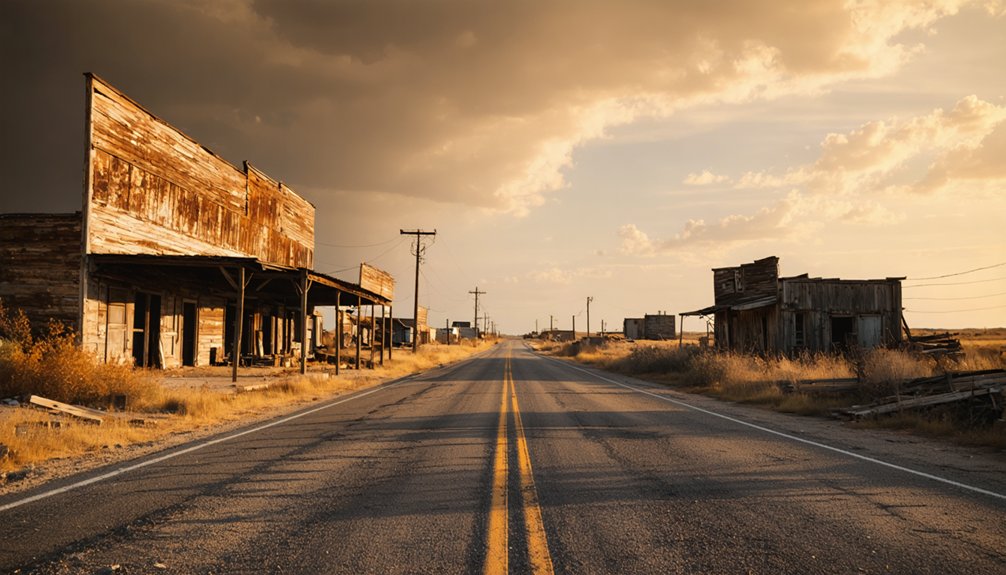
If you’re planning a trip to Beck, you’ll find spring to be the most rewarding season, as the area transforms into a gorgeous landscape perfect for exploring the remnants of this ghost town.
You should avoid visiting after heavy rainfall, since wet conditions can make the terrain difficult to navigate even with a 2WD vehicle.
Summers run hot, so if you can’t make it in spring, plan your fall visit before temperatures drop into the cold winter range.
Ideal Visiting Seasons
Spring transforms Beck into its most gorgeous version of itself, making it the ideal time to explore this quiet McIntosh County ghost town.
The seasonal highlights shift dramatically throughout the year, so plan accordingly with these visiting tips:
- Spring: Cool, beautiful weather perfect for exploring the cemetery and church
- Summer: Expect hot temperatures; bring water and start early
- Fall: Cool, crisp air makes for comfortable walks around the site
- Winter: Cold conditions can limit your experience considerably
- Year-round: Always visit during dry weather since wet conditions make access difficult
You’ll get the most freedom to roam the grounds comfortably during spring and fall.
Avoid summer midday heat if possible.
Dry conditions are non-negotiable regardless of season.
Weather Considerations For Visitors
Weather shapes your entire Beck experience, so knowing what to expect across the seasons goes beyond simply picking a comfortable day to visit. Understanding weather patterns and seasonal variations helps you move freely through this historic site without nature working against you.
Spring delivers gorgeous conditions — mild temperatures and vivid surroundings make it the standout choice.
Summer turns brutally hot, draining your energy fast and limiting comfortable exploration time.
Fall cools things down nicely, though winters push into genuinely cold territory.
One critical factor regardless of season: visit during dry weather. The road leading to Beck becomes problematic when wet, potentially trapping your vehicle.
Since a standard 2WD vehicle handles the terrain fine under dry conditions, checking forecasts before departure isn’t optional — it’s essential planning.
What Other Ghost Towns Are Near Beck?
If you’re already making the trip to Beck, you’ll find that McIntosh County rewards the curious explorer with several other forgotten towns worth tracking down.
Highway 69 serves as your backbone for discovery, connecting a string of abandoned communities that once thrived across this stretch of Oklahoma.
You can also extend your road trip eastward to tap into Route 66’s rich collection of ghost towns and deserted sites that echo the region’s boom-and-bust past.
Nearby McIntosh County Towns
Beck isn’t the only ghost town worth exploring in McIntosh County. The region is rich with local attractions that carry deep historical significance, making it a prime destination for those craving open-road freedom and authentic history.
While you’re out exploring, consider adding these nearby ghost towns to your McIntosh County route:
- Rentiesville – Located just northwest of Beck, it’s a historically significant African American community.
- Checotah – A nearby hub with deep historical roots along Highway 69.
- Stidham – A quiet, forgotten settlement worth discovering.
- Wybark – Another small ghost town tucked into the county.
- Onapa – A remote stop with lingering remnants of early Oklahoma settlement.
Each site adds another layer to your road trip, painting a fuller picture of McIntosh County’s forgotten past.
Ghost Towns Along Highway 69
Highway 69 strings together several ghost towns worth adding to your McIntosh County itinerary, making it one of Oklahoma’s most rewarding routes for history-minded road trippers.
Beyond Beck, you’ll find scattered remnants of communities that once thrived during Oklahoma’s early statehood era. Each stop offers distinct opportunities for ghost town photography, from crumbling foundations to weathered structures reclaimed by the landscape.
You’re free to move at your own pace, exploring at whatever depth suits you. These sites aren’t heavily regulated or crowded, giving you genuine access to unfiltered history.
Historical preservation efforts vary across locations, so document what you find carefully — some structures won’t survive another decade.
Highway 69 fundamentally functions as a living timeline, connecting you directly to McIntosh County’s forgotten but fascinatingly layered past.
Route 66 Abandoned Sites
While Beck makes a compelling anchor for your McIntosh County ghost town tour, the surrounding region connects you to a broader network of abandoned sites tied to Route 66’s storied corridor.
Each ghost town carries its own historical significance, local legends, and abandoned buildings worth exploring.
Pack these exploration tips before heading out:
- Confirm dry weather before visiting unpaved sites
- Use Highway 69 as your primary navigation spine
- Research local legends beforehand to enrich each stop
- Bring a camera to document abandoned buildings
- Respect private property boundaries throughout your Route 66 journey
You’ll find that McIntosh County rewards curious travelers willing to dig deeper.
Beck isn’t an isolated relic — it’s your gateway into Oklahoma’s forgotten communities scattered across this historically rich landscape.
Before You Go: Safety at Abandoned Sites
Ghost town structures have stood without maintenance for decades. Floors, stairs and roof timbers fail without warning, and a building that looks solid from outside may not hold your weight. Stay out of standing structures unless the site is actively maintained and open to visitors.
Mine workings are the more serious hazard. Vertical shafts can be hundreds of feet deep, are often unfenced, and may be hidden by brush or capped with rotted boards. Never enter an adit, tunnel or shaft: abandoned workings can hold oxygen-poor or toxic air that gives no warning before you lose consciousness.
Enclosed spaces with rodent droppings carry a risk of hantavirus, which is contracted by breathing contaminated dust. Do not sweep or stir up dust inside old cabins and outbuildings.
Cell coverage at these sites is usually poor or absent. Tell someone your route and expected return time, and carry more water than you think you need.
Frequently Asked Questions
Who Originally Owned the Land Where Beck Was Established?
Dig into the roots — Mr. Combs originally held the land ownership of Beck’s grounds. You’ll find this historical significance fascinating as you explore this ghost town’s past, connecting you to Oklahoma’s early 20th-century heritage.
What Type of Vehicle Do I Need to Visit Beck?
You’ll need a 2WD vehicle for your adventure — it’s one of those essential vehicle recommendations and road trip essentials that’ll keep you rolling smoothly toward Beck’s haunting, historic grounds without any trouble!
Does Beck Hold Significance for Local Family Histories?
Like roots anchoring an old oak, Beck holds deep significance for local family histories. You’ll discover family legacies intertwined with local folklore, connecting you to ancestors who once called this remarkable, freedom-filled Oklahoma ghost town home.
Is Beck Listed in Any Official Oklahoma Tourism Guides?
You’ll find Beck recognized in Oklahoma tourism guides, where its tourism impact and historical significance shine. It’s listed among the state’s ghost towns, inviting you to explore its rich, untamed past freely.
What Is the Grid Number Associated With Beck’s Location?
“Know before you go!” Beck’s grid number is 1 — a road trip essential you’ll want to note for its historical significance. It’ll help you navigate freely to this fascinating ghost town destination.
References
- https://www.youtube.com/watch?v=LNAm0sZuNyw
- https://www.ghosttowns.com/states/ok/beck.html
- https://en.wikipedia.org/wiki/Beck
- https://www.onlyinyourstate.com/trip-ideas/oklahoma/ghost-towns-road-trip-ok
- https://www.youtube.com/watch?v=u2AnzRLriq8
- http://sites.rootsweb.com/~oktttp/ghost_towns/ghost_towns.htm
- https://www.travelok.com/articles/oklahomaghosttowns
- https://www.youtube.com/watch?v=bpb3rpk8V-U
- https://www.rideok.com/category/destinations/ghost-towns/
- https://www.reddit.com/r/route66/comments/1rznw5o/best_ghost_towns_in_oklahoma/