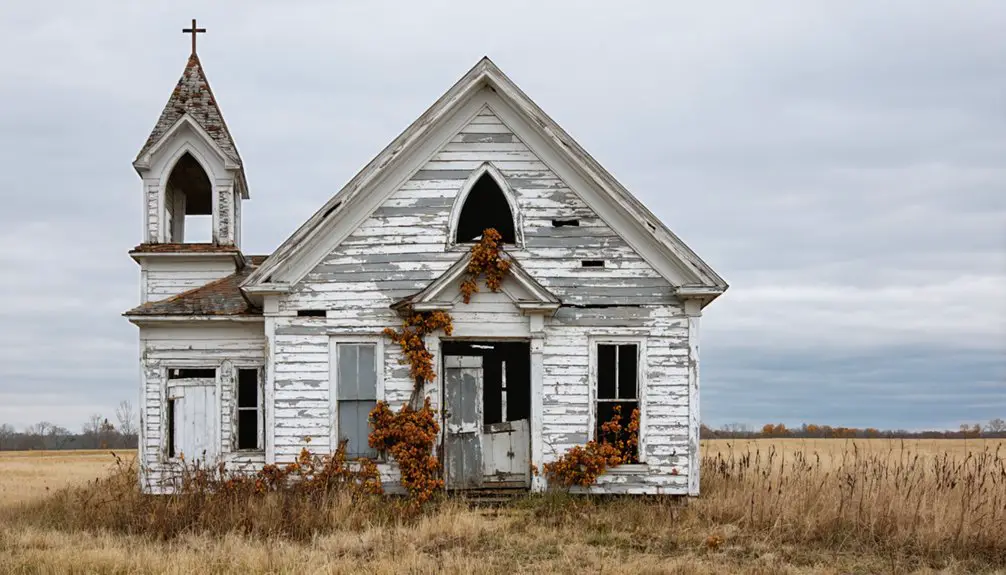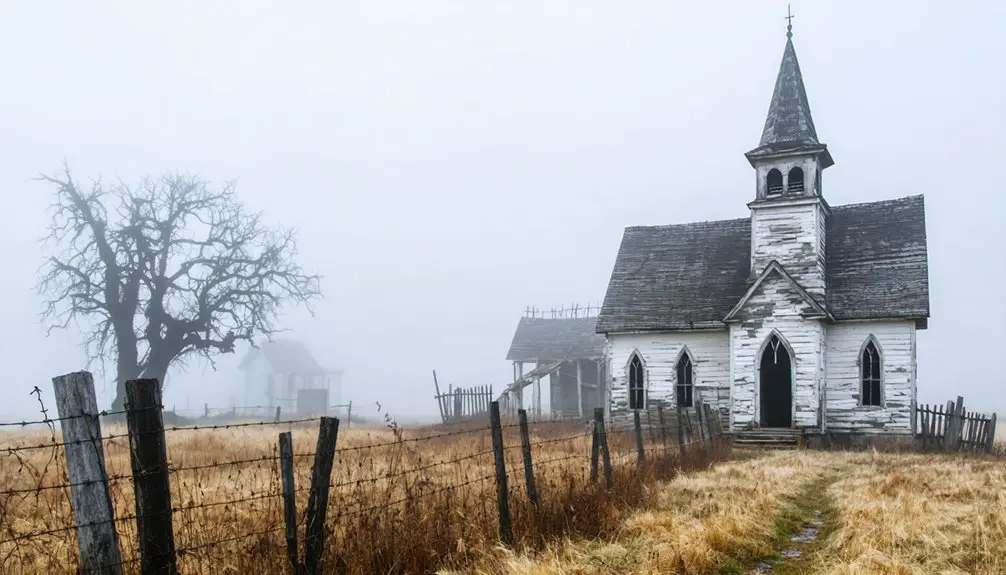
Your Bloodland ghost town adventure begins at Fort Leonard Wood’s Visitor Center off I-44 exit 161, where you’ll need government-issued ID and advance registration to access the fenced cemetery near Range #11. Explore crumbling foundations along Iowa Avenue, scattered among forty vanished buildings where German settlers once thrived before military expansion erased their community. Extend your journey to nearby Cookville, Pulaskifield, and Devils Elbow, where folklore and frontier history intertwine across Missouri’s haunted Ozark landscape with stories that refuse to fade.
Key Takeaways
- Pre-register up to 24 hours before arrival and bring state or federally-issued photo ID for Fort Leonard Wood access.
- Enter via I-44 exit 161, merging left toward 2624 Missouri Avenue to reach the Main Gate Visitor Center.
- Visit Bloodland Cemetery near Range #11 and search for broken foundations along Iowa Avenue marking the lost settlement.
- Explore the WWII Commemorative Community’s twelve restored structures and military museums showcasing regional history.
- Extend your trip to nearby ghost towns including Cookville, Pulaskifield, Devils Elbow, Arlington, and Doolittle.
The Rise and Fall of Bloodland: From Frontier Settlement to Military Ground
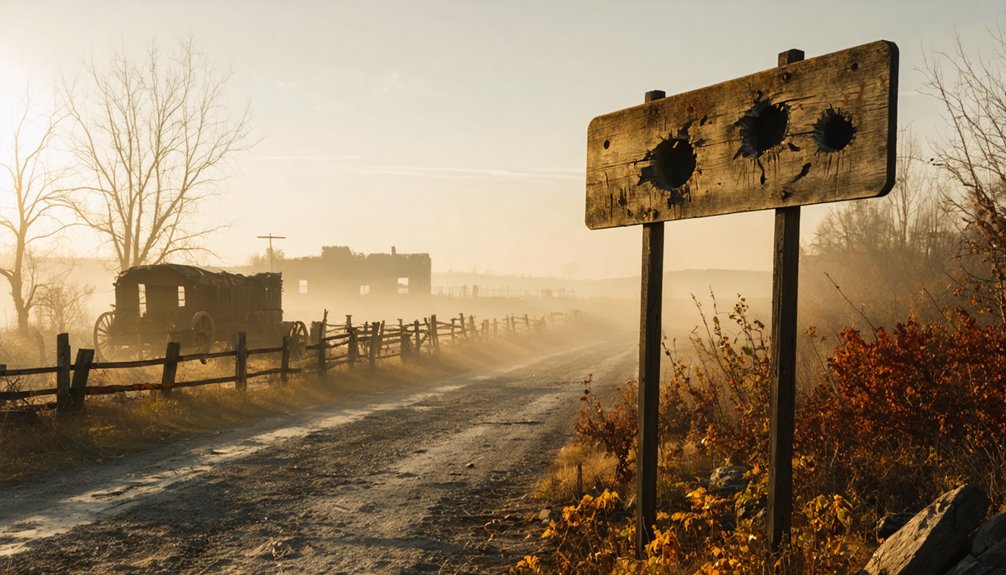
When the Robinson and Musgrave families carved their homesteads from the Missouri wilderness in the 1820s, they couldn’t have imagined their settlement would vanish as completely as the morning fog rising from Blood Spring.
You’ll find their legacy buried beneath Fort Leonard Wood’s military grounds, where Bloodland once thrived despite early agricultural challenges on Pulaski County’s stubborn upland soils.
What Remains: Cemetery, Ruins, and Historic Landmarks You Can Visit Today
Though Fort Leonard Wood‘s sprawling military ranges have consumed most of Bloodland’s physical footprint, you can still trace the settlement’s ghostly outline if you know where to look. The tiny Bloodland Cemetery stands fenced near Range #11, offering descendants a quiet connection to their lost community.
Along Iowa Avenue, you’ll spot broken foundations and poured concrete steps emerging from brush-covered earth—remnants of homes, stores, and the old Methodist church. Scattered bottles and iron stove parts mark where forty buildings once housed German-descended settlers.
Fort Leonard Wood’s preservation efforts shine at the John B. Mahaffey Museum Complex and U.S. Army Engineer Museum, which feature interpretive displays chronicling the fort’s history. The 25-acre WWII Commemorative Community—with twelve restored structures—attracts 100,000 annual visitors exploring this frozen-in-time military landscape.
The Haunting Tales That Made Bloodland Infamous
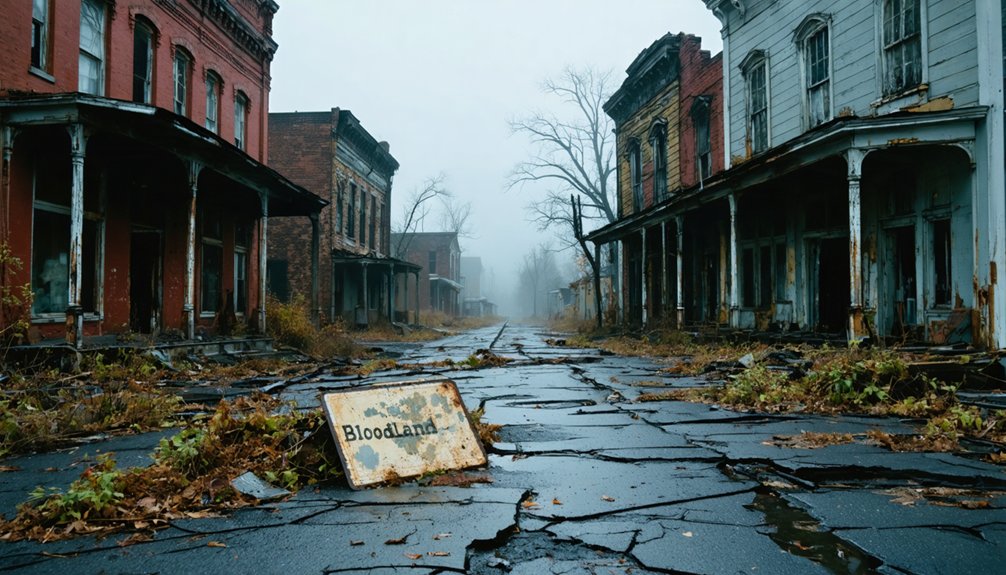
While its dark name stemmed from a simple landowner’s surname rather than frontier violence, Bloodland eventually earned a sinister reputation through spine-tingling tales whispered among Fort Leonard Wood’s military ranks.
Despite its innocent origins, Bloodland’s name became synonymous with eerie military legends that still echo through Fort Leonard Wood today.
You’ll hear stories of displaced residents’ ghosts kidnapping soldiers, forcing them to drink hard cider through straws—a bizarre punishment reflecting their anger over government land seizure motives that destroyed their community overnight.
The legend began when a drunk 1940s soldier claimed spectral abduction, but incidents persisted through 1974, when three servicemen reported similar encounters.
These resident displacement stories transformed Bloodland from forgotten hamlet into military folklore. Whether you believe the paranormal accounts or dismiss them as barracks tales, they’ve immortalized the town’s tragic erasure, keeping its memory alive through supernatural revenge.
The spectral legends may draw you to Bloodland’s story, but reaching this ghost town requires traversing one of America’s most secure military installations. Fort Leonard Wood’s 62,000 acres demand respect for strict protocols while you chase abandoned dreams.
Your essential navigation checklist:
- Pre-registration process: Submit requests at https://vcc1.icmvcc.com/im3500/Registration.aspx up to 24 hours before arrival
- Identification requirements: Bring state or federally-issued photo ID if you’re 18+; drivers need current licenses and insurance
- Main Gate access: Exit I-44 at 161, merge into far-left lanes approaching 2624 Missouri Ave
- Visitor Center hours: 5 a.m. to 9 p.m. daily for pass issuance after background screening
- Traffic reality: You’ll join 28,600 daily vehicles undergoing 100% ID checks
Patience grants access to forgotten places.
Exploring Nearby Ghost Towns: Your Extended Pulaski County Adventure
Beyond Bloodland’s shadowy past, Pulaski County conceals an entire constellation of forgotten settlements waiting to amplify your ghost town expedition. Cookville stands mere miles away, its living conditions in abandoned towns offering stark contrast to once-thriving homesteads. You’ll discover Pulaskifield’s Polish pioneer heritage etched into weathered foundations, while the local folklore surrounding ghost towns intensifies near Colley Holler’s mysterious hollows.
Venture beyond county lines to Arlington and Doolittle in neighboring Phelps County, where crumbling structures whisper untold stories. Don’t miss Devils Elbow—though partially preserved along Route 66, its 1870s lumberjack origins reveal authentic frontier grit. Each stop peels back another layer of Missouri’s Ozark wilderness, where independence-seeking settlers carved out existence against unforgiving terrain. Your extended adventure transforms into an archaeological treasure hunt through America’s forgotten heartland.
Frequently Asked Questions
What Should I Bring or Wear When Visiting Bloodland’s Cemetery and Ruins?
Wear weather-appropriate clothing in breathable layers and comfortable walking shoes with sturdy traction. You’ll need long pants, insect repellent, water, and a flashlight to navigate Bloodland’s overgrown trails, crumbling foundations, and shadowy cemetery safely.
Are There Guided Tours Available at Fort Leonard Wood’s Open Air Museum?
Fort Leonard Wood’s Open Air Museum doesn’t offer guided tours availability, but you’ll discover freedom exploring museum exhibits details at your own pace. Wander among historic tanks, military vehicles, and outdoor displays independently, creating your own adventure through military history.
Can I Take Photographs or Videos at the Cemetery and Historic Sites?
You can photograph these haunting sites, but respect cultural norms and avoid disturbing residents or mourners. Tread lightly through weathered headstones, capture crumbling architecture respectfully, and honor those who walked these forgotten paths before you.
What Are the Best Times of Year to Visit Bloodland and Nearby Ghost Towns?
Visit during fall’s comfortable 40-65°F temperatures when colorful foliage frames eerie ruins perfectly. Spring offers mild weather and wildflower blooms, though check local event schedules and military training calendars. Seasonal weather conditions make summer’s heat and winter’s ice less ideal.
Are There Hotels or Camping Options Near Fort Leonard Wood for Overnight Stays?
Your basecamp awaits with nearby lodging options including Comfort Inn, Hampton Inn, and on-post Candlewood Suites near Fort Leonard Wood. You’ll find pet-friendly rooms, free breakfast, and easy access to local attractions and events throughout your ghost town adventure.