Planning a ghost town road trip to Bolton, Michigan puts you 12 miles northwest of Alpena, deep in the quiet woods of Maple Ridge Township. Once a thriving cedar lumber community of 250 residents, Bolton’s weathered foundations and scattered artifacts are all that remain after the timber ran out. There’s no fee, no crowds, and no guided tours—just open exploration waiting for you. Stick around to uncover everything this forgotten settlement still has to offer.
Key Takeaways
- Bolton is located approximately 12 miles northwest of Alpena, accessible via Maple Ridge Township’s road network and railway tracks.
- The site is free to explore with no gates, fees, or crowds, making it ideal for independent adventurers.
- Bring a camera, sturdy boots, and expect weathered foundations, scattered artifacts, and two surviving historical structures.
- Capture dramatic photography during golden hour, focusing on abandoned structures, weathered wood, and forest reclaiming the land.
- Extend your road trip by visiting nearby ghost towns Curran, Metz, and Nicholson, sharing similar timber-boom histories along the railway.
Bolton’s Rise and Fall as a Cedar Lumber Town
Bolton got its name from Henry Bolton, a businessman who opened a general store in Alpena in 1866 before turning his sights toward the timber-rich land to the northwest.
By 1871, he’d partnered with Donal McRae to run a leading cedar lumbering operation, complete with a sawmill, shingle mill, and general store.
The town thrived, reaching 250 residents by 1905. Local legends say it buzzed with the kind of raw, industrious energy that defined frontier commerce.
But when the cedar ran out, so did the people.
By 1910, the population had dropped to 150, and the decline continued until Bolton became the ghost town you can explore today.
Historical preservation efforts are minimal here, leaving the weathered foundations and scattered artifacts to tell the story themselves.
What’s Left to See at Bolton Ghost Town?
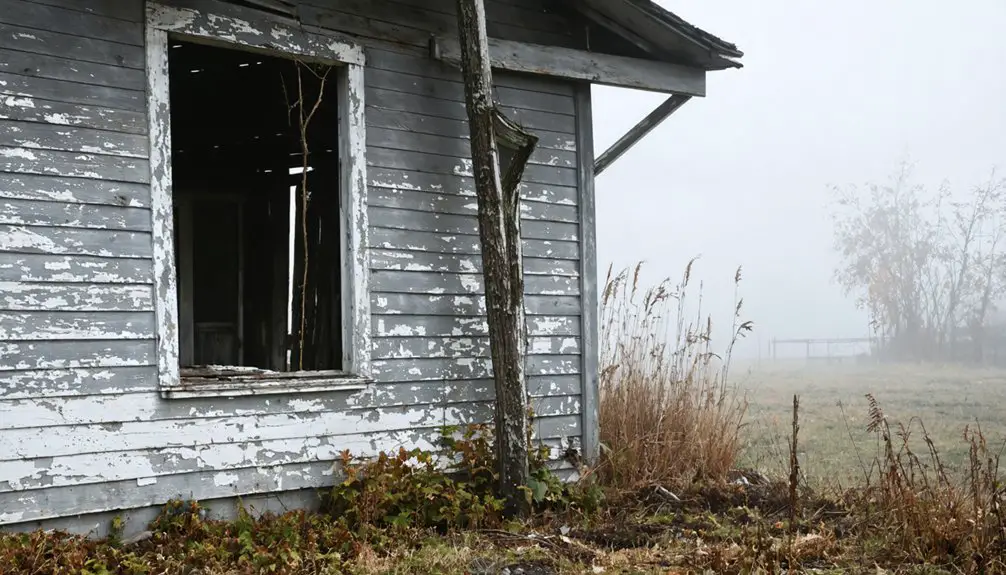
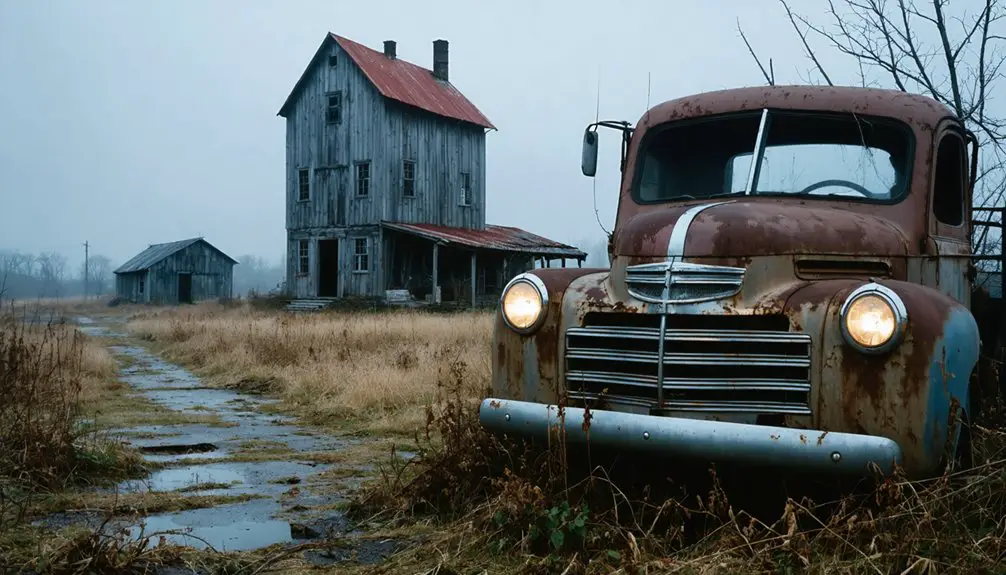
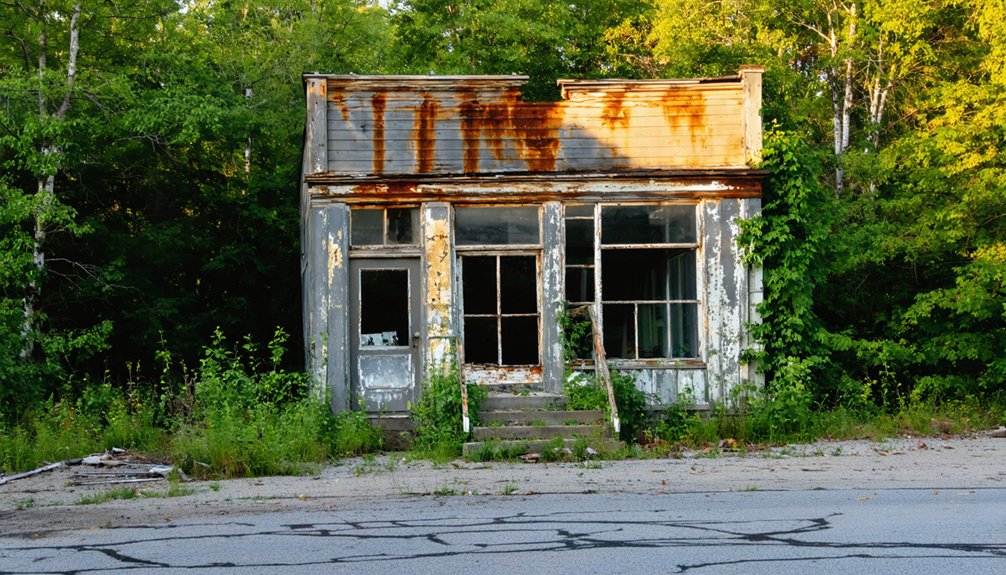
Although Bolton’s glory days are long gone, a handful of remnants still whisper the town’s story to those willing to seek them out. You’ll find weathered foundations peeking through the overgrowth, abandoned artifacts scattered across the landscape, and two surviving structures standing as stubborn witnesses to a once-thriving cedar empire.
The partially abandoned Detroit & Mackinac Railway tracks slice through the area, grounding Bolton’s hidden histories in something tangible and raw. Don’t expect polished exhibits or guided tours — this place rewards the curious explorer, not the casual tourist.
Bring your camera, wear sturdy boots, and let the silence do the talking. No admission fee stands between you and one of Michigan’s most authentically forgotten communities.
How to Reach Bolton From Alpena
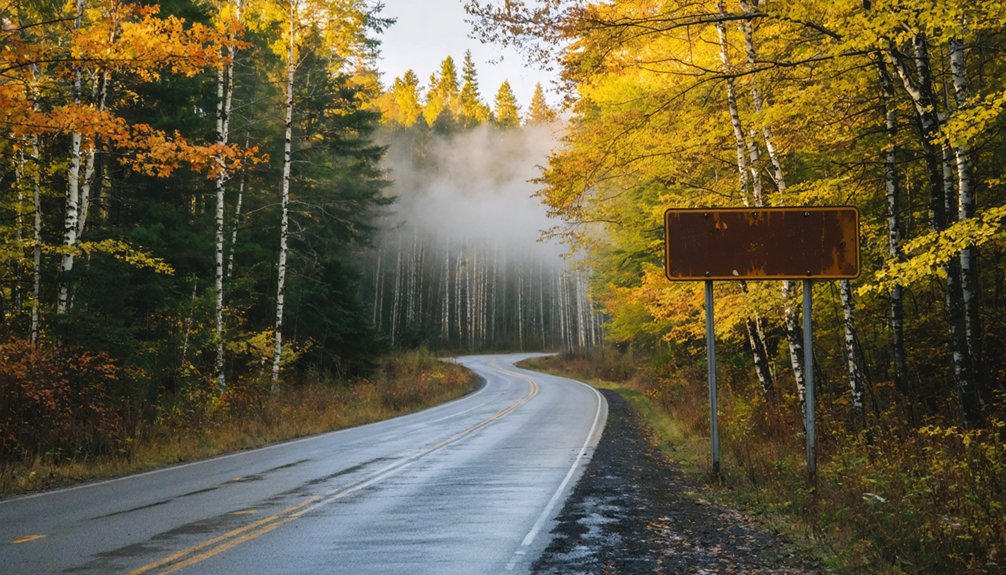
Getting to Bolton is straightforward once you’ve finished poking around its ruins and you’re ready to plan your route. Head northwest out of Alpena for roughly 12 miles through Maple Ridge Township, and you’ll find yourself tracing the same corridor that once fed Bolton’s cedar lumber economy.
The drive itself rewards curious travelers, since the landscape quietly hints at local legends tied to Henry Bolton’s ambitious 19th-century enterprise.
You won’t need a formal visitor center or guided tour. Follow the road network near Alpena, keep your eyes open for the partially abandoned Detroit & Mackinac Railway tracks, and you’ve fundamentally arrived.
No gates, no fees, no crowds — just open road and genuine historical preservation through your own exploration of what this forgotten Michigan community left behind.
What to Photograph at a Michigan Ghost Town?
When you arrive at Bolton, your camera becomes your most valuable tool for preserving what little remains of this vanished lumber community. Focus your lens on the abandoned structures still standing, capturing weathered wood, crumbling foundations, and rusted remnants that tell a century-old story.
Natural light works beautifully against aged timber, so arrive during golden hour for dramatic contrast.
Don’t overlook the historical artifacts scattered across the grounds. Broken machinery parts, eroded mill sites, and railway track remnants offer compelling close-up compositions.
Frame your shots to include surrounding forest growth reclaiming the land — nature overtaking industry creates powerful imagery.
The partially intact buildings provide striking architectural details worth documenting. You’re fundamentally photographing living history before it disappears completely, so shoot freely and document everything.
Other Ghost Towns Along the Detroit and Mackinac Railway
Bolton isn’t the only ghost town haunting the Detroit and Mackinac Railway corridor — the line practically served as a lifeline for dozens of lumber settlements that boomed and collapsed alongside Michigan’s timber industry.
As you drive the corridor, you’ll discover forgotten communities scattered like historical artifacts across the northern Michigan landscape. Towns like Curran, Metz, and Nicholson share Bolton‘s familiar story — rapid timber-driven growth followed by swift abandonment.
Each site carries its own local legends, whispered stories of families who built lives among the pines before disappearing when the lumber ran out. You’re free to explore these corridors at your own pace, connecting the dots between settlements and piecing together Michigan’s raw, unfiltered industrial past without a tour guide telling you where to look.
Frequently Asked Questions
When Did Bolton’s Post Office Permanently Close Its Operations?
Bolton’s post office permanently closed in March 1955, marking the end of an era. You’ll notice it’s one of the town’s historical landmarks, though preservation efforts couldn’t save this once-vital hub from inevitable abandonment.
What Were Bolton’s Peak and Declining Population Numbers Historically?
You’ll find Bolton’s historical population trends peaked at 250 residents in 1905, then demographic shifts drove numbers down to 150 by 1910, as dwindling lumber resources pushed residents to seek opportunities elsewhere.
Who Was Henry Bolton’s Business Partner in the Cedar Lumbering Company?
You’ll find that Henry Bolton’s business partnership with Donal McRae in 1871 drove the lumber industry forward, making their cedar lumbering company one of the region’s most influential and thriving commercial ventures.
Is There an Admission Fee Required to Visit Bolton Ghost Town?
Ready to explore without spending a dime? You don’t need to pay any admission fee to visit Bolton’s ghost town, where haunted legends and local stories await you freely among weathered ruins.
What Are the Geographic Coordinates for Locating Bolton, Michigan?
You’ll find Bolton, Michigan’s historic landmarks at 45°10’53″N, 83°35’23″W. These coordinates drop you into a world of local legends, weathered foundations, and ghostly remnants of a once-thriving cedar lumber community waiting for your exploration.
References
- https://99wfmk.com/boltonmi/
- http://focusingontravel.blogspot.com/2018/03/fayette-every-ghost-town-has-story.html
- https://nationaltoday.com/us/mi/alpena/news/2026/03/23/michigan-ghost-town-of-bolton-faded-away-over-a-century/
- https://boltoncthistory.org/ghosts-of-bolton-past-and-present/
- https://en.wikipedia.org/wiki/List_of_ghost_towns_in_Michigan