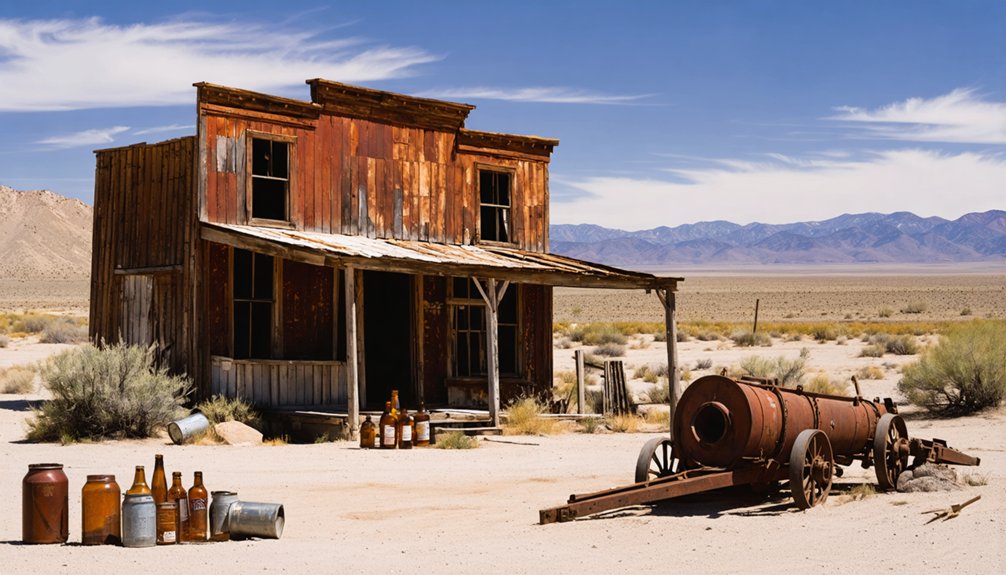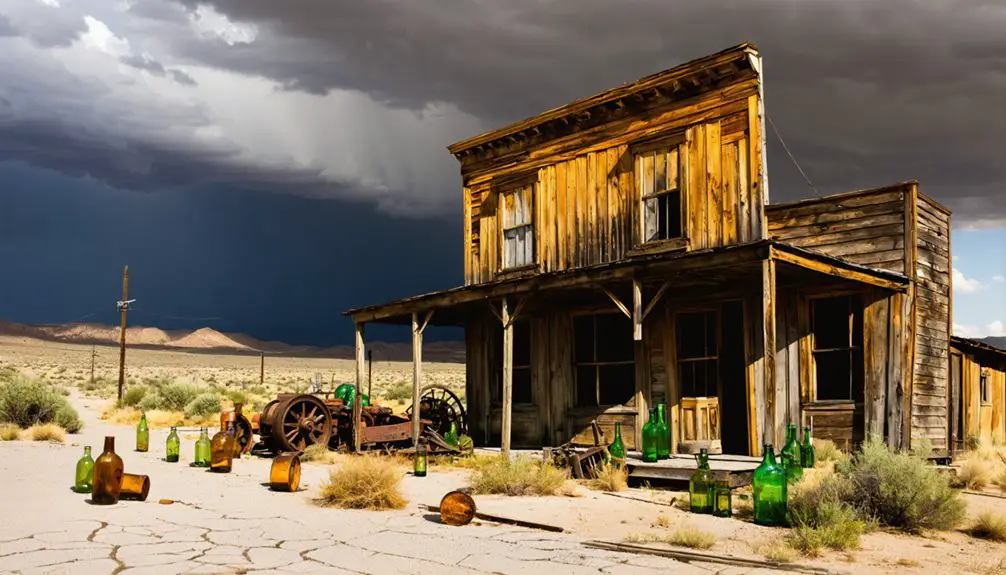
To reach Bristol, Nevada, drive 13.5 miles north of Pioche on U.S. Highway 93, then turn west onto a graded dirt road for 6 miles. You’ll find three intact stone kilns, a surviving stone house, and visible aerial tram lines connecting Bristol and Jackrabbit mines. Spring and fall offer the best road conditions for standard vehicles. There’s far more to this forgotten silver town than its quiet desert setting suggests.
Key Takeaways
- From Pioche, take U.S. Highway 93 north for 13.5 miles, then turn west onto a graded dirt road for 6 miles.
- Standard two-wheel drive vehicles work in dry conditions, but wet weather requires a high-clearance, four-wheel-drive vehicle.
- Spring and fall offer the best visiting conditions, with mild temperatures and firm, manageable roads.
- Bristol features three intact stone kilns, a lone stone house, smelter tailings, and visible aerial tram lines.
- Nearby Pioche and Caliente offer historic courthouses, cemeteries, and scenic landmarks, making an efficient ghost town circuit.
How to Get to Bristol, Nevada From Pioche
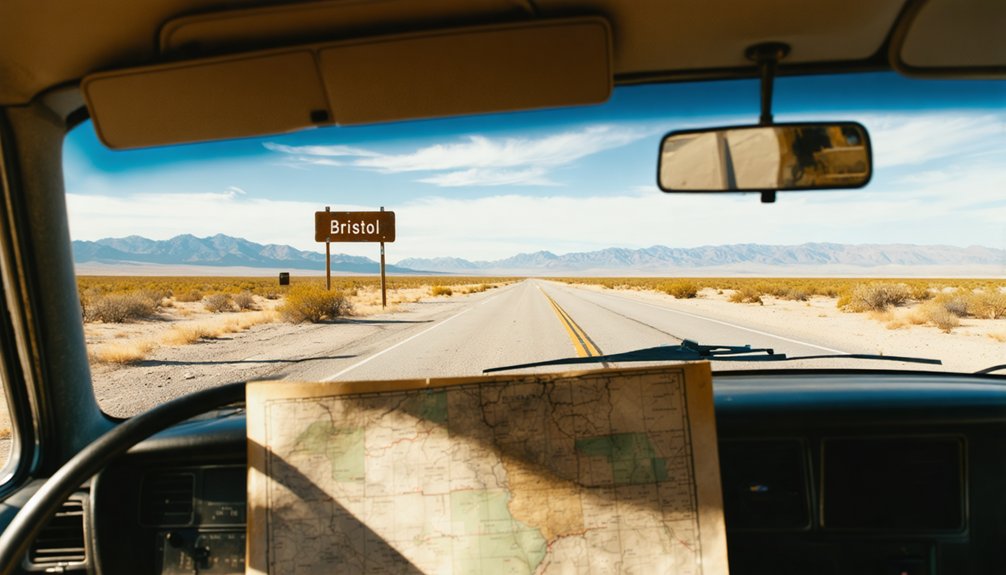
Getting to Bristol, Nevada from Pioche is straightforward once you know the two key turns. Head north on U.S. Highway 93 for 13.5 miles, then watch for the “Bristol Wells” sign at mile 16. From there, turn west onto a graded dirt road and follow it approximately 6 miles to the town site.
Head north on U.S. Highway 93, turn west at the Bristol Wells sign, and follow the dirt road six miles.
In dry conditions, a standard two-wheel drive vehicle handles the road comfortably, making it accessible for most travelers. If you’re visiting during wet weather, bring a high-clearance vehicle to avoid getting stuck.
The November trail conditions were reported as excellent, so fall is a smart window for ghost town photography.
Once you arrive, you’ll find historical artifacts, stone kilns, and ruins waiting to tell their story.
Road Conditions on the Way to Bristol
You’ll take U.S. Highway 93 as your primary route before turning onto a 6-mile graded dirt road that leads directly to the town site.
In dry conditions, the road is manageable for a standard two-wheel drive vehicle, making Bristol reasonably accessible for most travelers.
If you’re visiting during wet weather, though, you’ll want a high-clearance vehicle to handle the rougher road conditions safely.
Primary Highway Access Route
To reach Bristol, you’ll start on U.S. Highway 93, your gateway to this forgotten silver mining camp. This Bristol access route cuts through Eastern Nevada’s rugged landscape, rewarding you with scenic views at every turn.
Here’s what to expect on Highway 93:
- Drive 13.5 miles north of Pioche to locate the turn-off toward Bristol.
- Watch for the marked “Bristol Wells” sign appearing at mile 16 north of Pioche.
- Turn west onto a graded dirt road stretching approximately 6 miles toward the town site.
- Expect smooth travel in dry conditions — wet weather demands a high-clearance vehicle.
The highway delivers you through open Nevada terrain before shifting into the rugged mountain roads leading directly to Bristol’s stone ruins.
Graded Dirt Road Conditions
Once you leave Highway 93 and head west, a graded dirt road carries you the final 6 miles to Bristol’s ruins.
In dry conditions, graded road safety isn’t a major concern — a standard two-wheel drive vehicle handles the route without trouble. But don’t underestimate the terrain when weather turns. Rain transforms this stretch into a muddy, rutted challenge where high-clearance vehicle recommendations aren’t just suggestions — they’re smart survival strategy.
A November 2020 visitor confirmed the trail from the Pioche side was in excellent shape, so timing your trip matters.
As you roll toward the site, keep your eyes open — massive tree stumps and old wood-cutting areas line the road, offering an early preview of the industrial history waiting ahead.
Wet Weather Driving Challenges
When rain hits the Bristol access road, everything changes. That manageable graded dirt transforms into slick, unpredictable terrain that’ll challenge even confident drivers.
Wet weather turns this 6-mile stretch into a serious commitment, so you’ll want to prepare before you go.
Follow these wet weather driving tips before heading out:
- Switch to a high-clearance, four-wheel-drive vehicle — it’s non-negotiable in poor conditions.
- Check forecasts for Lincoln County the night before your departure.
- Reduce your speed considerably — mud hides ruts and sharp drops.
- Pack recovery gear, including a tow strap and shovel, just in case.
Respecting these conditions isn’t timid — it’s smart.
The road rewards prepared travelers with access to one of Nevada’s most remarkable ghost town experiences.
The History Behind Bristol’s Rise and Fall
When you explore Bristol’s past, you’ll find its story began in 1870 when Mormon settlers discovered silver at the site, prompting the founding of National City in 1871.
At its peak, the town bustled with 700 residents, complete with stores, saloons, hotels, and a barber shop.
But by the late 1880s, the boom had faded, the post office closed in 1887, and the town eventually surrendered to silence, leaving only stone ruins behind.
Bristol’s Silver Discovery Origins
Silver’s discovery at Bristol in 1870 brought Mormon settlers rushing to the rugged slopes of Bristol Mountain. Within a year, they’d established a camp called National City. This silver mining settlement grew fast, fueled by ambition and rich ore deposits.
Here’s what shaped Bristol’s early identity:
- 1870 – Mormon settlers discovered silver, sparking immediate settlement activity.
- 1871 – Founders officially established the camp as National City.
- Peak population – The town swelled to roughly 700 independent-minded residents.
- 1882 – Bristol supported stores, saloons, hotels, a barber shop, and a butcher.
You’re looking at a community that carved itself out of Nevada’s wilderness through sheer determination.
Bristol’s early years reflect the raw, unfiltered spirit of frontier freedom.
Town’s Decline And Abandonment
Bristol’s boom didn’t last. By the late 1880s, economic decline had already tightened its grip on the town. The post office closed in April 1887, a clear sign that Bristol’s best days were behind it. Population dwindled as ore yields dropped and miners moved on to more promising strikes elsewhere.
Yet Bristol’s mining legacy refused to die quietly. Operations pushed forward into the 20th century, and in 1913, the Bristol and Jackrabbit mines merged, linking the two sites with an aerial tramway.
That union extended Bristol’s productive life, but it couldn’t resurrect the town itself. Residents eventually left for good, abandoning the stores, saloons, and hotels that once defined daily life here.
What remained were stone kilns, tailings, and silence.
Stone Houses, Kilns, and Tram Lines: What Survives at Bristol
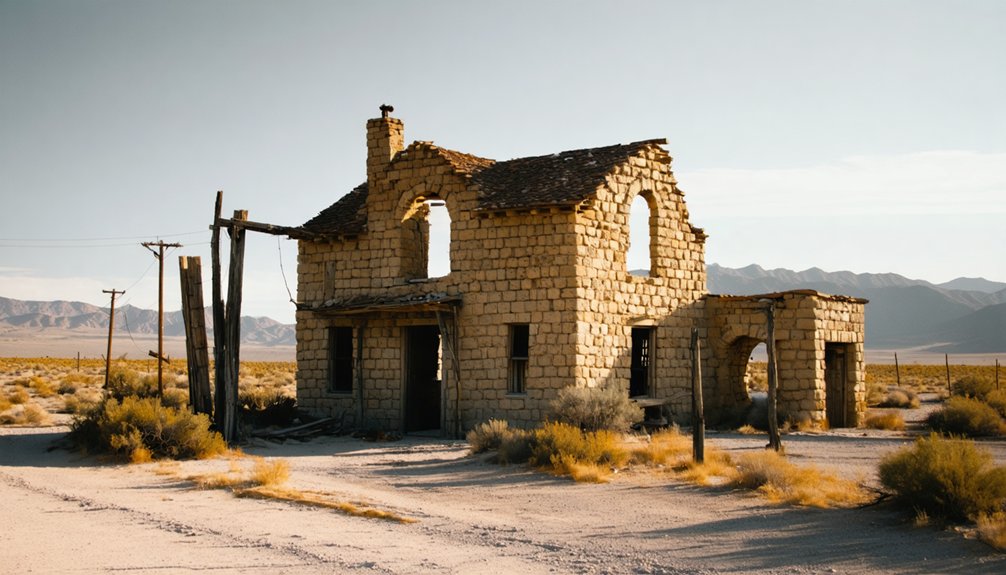
Ruins don’t always crumble into nothing, and Bristol proves that. You’ll find real, tangible pieces of mining heritage still standing, waiting to be explored. Here’s what survives:
- Three stone kilns – Built in the 1870s from native stone, these charcoal kilns remain impressively intact.
- A lone stone house – The only surviving building from the original camp, still holding its ground.
- Smelter tailings – Scattered remnants that reveal how intensely this land was worked.
- Aerial tram lines – Stretching over the mountain peak, the cables linking Bristol and Jackrabbit mines are still visible overhead.
These stone structures aren’t just rubble—they’re a direct connection to Bristol’s industrial past.
These stones aren’t ruins—they’re remnants of real work, real lives, and an industry that shaped the land.
Walk the site, and you’ll feel history beneath your boots.
Bristol’s Charcoal Kilns and Why They Mattered
Those three stone kilns standing at the edge of Bristol’s ruins weren’t just architectural curiosities—they were the industrial backbone of the entire mining operation.
Built in the 1870s from native stone, they powered charcoal production by burning juniper and pinion wood harvested from the surrounding forests.
That charcoal didn’t just disappear into thin air. Miners fed it directly into smelters to process silver ore and kept blacksmith shops running throughout the camp’s peak years.
You can still spot massive tree stumps near the kilns today—silent proof of how heavily workers stripped the landscape.
Understanding their historical significance changes how you see Bristol entirely.
These kilns transformed raw timber into the fuel that made an entire silver economy possible. They’re worth every minute of your attention.
When Should You Actually Visit Bristol?
Timing your visit to Bristol can make or break the entire experience. The best seasons to explore this ghost town are spring and fall, when temperatures stay manageable and the dirt road remains dry.
Avoid winter and monsoon months — wet conditions turn that 6-mile graded road into a high-clearance-only challenge.
Here’s what shapes a smarter visit:
- Spring (March–May): Mild temps, firm roads, and clear skies for photography.
- Fall (September–November): A November 2020 visit confirmed excellent trail conditions from Pioche.
- Summer: Doable but hot — plan early morning arrivals.
- Winter/Wet Season: High-clearance vehicles only; road conditions deteriorate fast.
Check local events in Pioche before heading out — combining stops maximizes your freedom to explore Eastern Nevada efficiently.
Other Ghost Towns Near Bristol Worth Visiting
Bristol sits at the center of a broader ghost town circuit in Eastern Nevada that rewards curious explorers.
Pioche, just 21 miles southeast, delivers some of the region’s richest ghost town attractions, including a historic courthouse and boot hill cemetery packed with historical artifacts from Lincoln County’s violent silver rush era.
Caliente anchors the southern end of your road trip with its striking Spanish Colonial railroad depot and surrounding canyon scenery.
Together, these towns create a natural loop you can drive without backtracking unnecessarily.
Each stop layers a different chapter of Nevada’s mining history onto your experience.
You’ll leave understanding not just Bristol’s story, but the broader economic forces that built, exhausted, and ultimately abandoned these communities across the high desert landscape.
Frequently Asked Questions
Is There a Fee to Access Bristol Ghost Town?
Like the open frontier itself, Bristol’s ruins belong to everyone. You’ll find no fee blocking your path to Bristol history — just drive in, explore freely, and enjoy ghost town photography of Nevada’s untamed, timeless past.
Are Overnight Camping Stays Permitted at the Bristol Site?
The knowledge doesn’t confirm overnight camping regulations for Bristol’s ghost town amenities. You’ll want to contact Lincoln County or Nevada BLM directly to get accurate, current permission details before planning your stay under those wide-open desert skies!
Can Visitors Legally Remove Artifacts or Stones From Bristol?
Preserving precious pieces protects Bristol’s historical significance. You shouldn’t remove artifacts or stones, as legal implications under local regulations make it prohibited. Respect artifact preservation — it’s your responsibility to keep this freedom-loving explorer’s haven intact for future adventurers.
Is There Cell Phone Service Available Near Bristol, Nevada?
Don’t count on cell coverage at Bristol, Nevada! You’re venturing into remote Lincoln County desert, where signal strength drops dramatically. Embrace the freedom of true disconnection as you explore this rugged, breathtaking ghost town completely off the grid.
Are Pets Allowed When Visiting the Bristol Ghost Town Ruins?
With 700 residents once calling it home, this ghost town’s silent ruins are yours to explore freely! You can bring your pets along for pet travel adventures — no restrictions are mentioned for visiting Bristol’s historic site.
References
- https://www.youtube.com/watch?v=Z6Kvea9s3uI
- http://www.youtube.com/watch?v=wjoPznSLFa0
- http://www.nv-landmarks.com/towns-ab/bristolwell.htm
- https://www.youtube.com/watch?v=_o3FZdH_DOo
- https://en.wikipedia.org/wiki/List_of_ghost_towns_in_Nevada
- https://lincolncountynevada.com/exploring/wild-westing/ghost-towns/bristol-well-2/
- https://www.nevadaghosttownsandmininghistory.com/portfolio-2/bristol-well
- https://www.youtube.com/watch?v=PI7gqits6FY
- https://travelzone.bestwestern.com/southwest-ghost-towns-road-trip/
- https://forgottennevada.org/sites/bristol.html