Planning a ghost town road trip to Mormon Mill, Texas means heading to Burnet County via Texas Highway 281, then turning onto Mormon Mills Road. You’ll find a cemetery, historical marker #9733, and mill foundations where 250 Mormon settlers built a thriving community in 1851—only to abandon it by 1853. Before you go, visit Fort Croghan Museum in Burnet to see the original millstone. Keep exploring to uncover the full story behind this forgotten Texas colony.
Key Takeaways
- Mormon Mill, founded in 1851 by Lyman Wight, is accessible via Texas Highway 281 from Marble Falls, turning onto Mormon Mills Road.
- Only a cemetery and Texas Historic Landmark marker number 9733 remain at the site, as no standing structures exist.
- Fort Croghan Museum at 703 Buchanan Drive, Burnet, houses the original millstone and opens April through October, Thursday to Saturday.
- Visit during spring or fall for cooler temperatures, scenic wildflowers, and autumn colors throughout the Texas Hill Country landscape.
- Combine your trip with nearby ghost towns Bluffton and Tow, both flooded communities that occasionally surface during droughts.
What Was Mormon Mill, Texas?
Mormon Mill was a short-lived colony founded in 1851 by Lyman Wight and roughly 250 Mormon settlers who established their community along Hamilton Creek in Burnet County, Texas, about five miles north of Marble Falls.
This wasn’t their first stop — the Mormon migration began in 1845 following Joseph Smith’s death, pushing these families through multiple early settlements before they finally planted roots in the Texas Hill Country.
Once settled, they built a gristmill and sawmill, constructing a self-sufficient community from the ground up.
They built a gristmill and sawmill, turning raw land into a fully self-sufficient community.
However, mounting debt forced them to abandon the site by 1853, relocating to Bandera County.
When leader Lyman Wight died in 1858, the colony dissolved entirely, leaving behind little more than a cemetery, a historic marker, and an irresistible ghost town story.
The Gristmill, Sawmill, and Colony That Disappeared
When the Mormon Mill colonists settled on Hamilton Creek in 1851, they wasted no time building both a gristmill and a sawmill, creating the economic backbone of their community.
But debt piled up faster than timber, and by 1853 financial pressures forced the entire colony to pack up and relocate to Bandera County.
Today you won’t find a single standing structure at the original site — the mills, the homes, and the colony itself have completely vanished.
Mills That Built Community
Tucked into the hills along Hamilton Creek, the Mormon Mill colony didn’t just build homes — they built an economy. Their gristmill processed grain into flour, feeding the community through harsh Texas seasons.
Their sawmill converted local timber into lumber, giving raw wilderness a functional shape. These weren’t vanity projects — they were survival infrastructure, representing the community resilience of roughly 250 settlers who carved purpose out of isolation.
You can still feel the historical significance of these operations when you stand near the site today. The mills attracted trade, sustained families, and gave the colony its identity.
Without them, there’d be no reason to settle Hamilton Creek at all. The mills didn’t just serve the colony — they *were* the colony.
Debt Doomed The Colony
Despite their resourcefulness, the colonists couldn’t outrun their finances. Settler challenges mounted quickly as mill maintenance, housing construction, and daily survival drained their resources faster than income arrived.
Agricultural production fell short, trade with neighboring communities remained minimal, and economic decline became inevitable.
By 1853, crushing debt forced the colony to abandon Hamilton Creek entirely. They relocated to Bandera County, hoping a fresh start would reverse their fortunes.
It didn’t. The same financial pressures followed them westward, slowly eroding what remained of their communal strength.
When Lyman Wight died in 1858, the colony had no succession plan and no financial foundation to stand on. The group dissolved completely.
Today, you’ll find no buildings standing — only the land, the creek, and the silence they left behind.
Nothing Remains Today
Where the colony once hummed with the rhythm of turning millstones and falling timber, there’s nothing left to see. The gristmill is gone. The sawmill has vanished. The small homes that sheltered 250 settlers during this remarkable Mormon Migration have completely disappeared into the Texas Hill Country landscape.
You’ll find no standing structures when you visit the site on Mormon Mills Road. Only the cemetery remains, quietly marking the graves of those who gambled everything on a fresh start in Burnet County.
Yet the historical significance of this place endures. The Recorded Texas Historic Landmark marker number 9733 stands at the site, and Fort Croghan Museum in Burnet preserves the original millstone.
The colony disappeared, but its story refuses to.
How to Get to Mormon Mill Road in Burnet County
If you’re heading to Mormon Mill Road from Marble Falls, you’ll want to drive north on Texas Highway 281 for approximately five miles into the heart of Burnet County.
Once you spot the Mormon Mills Road signage, you’ll turn onto the road that leads directly to the historic colony site on Hamilton Creek.
The drive’s straightforward, and the rolling Hill Country landscape makes the journey as rewarding as the destination itself.
Driving Directions From Marble Falls
Reaching Mormon Mill Road from Marble Falls takes only a few minutes, making it an easy side trip through the Texas Hill Country. Head north on US-281 from Marble Falls, and you’ll cover the five miles quickly.
Watch for Mormon Mill Road on your left, named after the early settlers whose religious motivations and migration patterns brought them here from Missouri in 1851.
The route itself tells a quiet story of community resilience and economic challenges faced by those determined colonists. You’re driving through land where Mormon Mill, Texas, once hummed with gristmill and sawmill activity.
The legacy preservation of this site depends on curious travelers like you seeking its historical significance. It’s a short drive with a surprisingly deep reward waiting at the end.
Navigating Mormon Mills Road
Once you’ve turned onto Mormon Mills Road, the Hill Country landscape opens up around you, rolling hills and creek valleys framing the path toward one of Texas’s quietest ghost town sites.
The road itself carries the weight of history, named after the colony that arrived here following a long Mormon Migration from Missouri through the Southwest.
As you drive, you’re retracing the same ground where 250 settlers once carved out a life, only to surrender it under Economic Challenges that proved too great to overcome.
Watch for the Recorded Texas Historic Landmark marker numbered 9733, your clearest signal that you’ve arrived.
The cemetery and mill foundations nearby mark what remains of a community that briefly thrived, then quietly disappeared into the Texas Hill Country.
What Remains at the Mormon Mill Ghost Town Site?
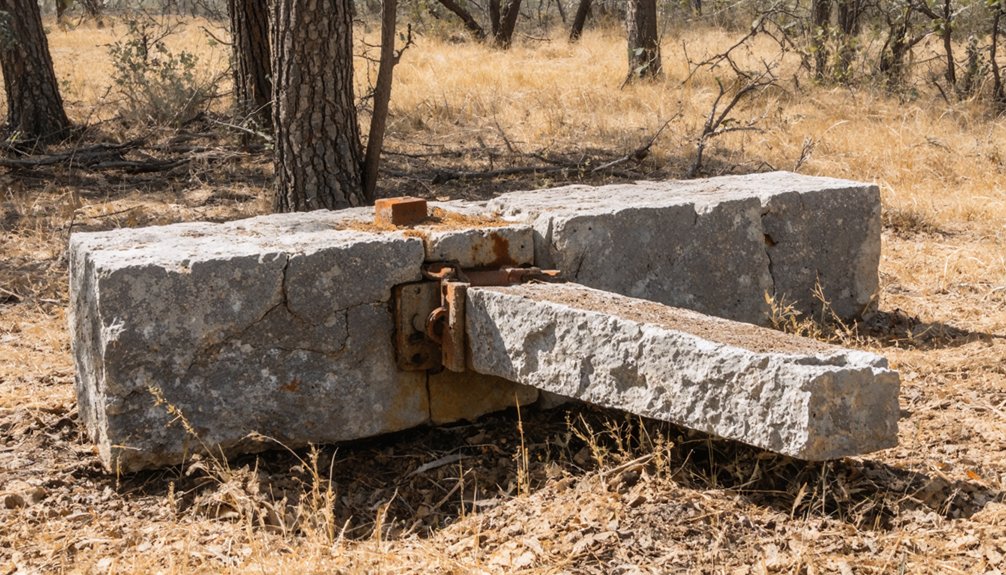
Today, very little remains of the Mormon Mill colony that once bustled with families, mills, and homes along Hamilton Creek. When you visit this ghost town, you’ll find the landscape has reclaimed most of what once stood here.
The gristmill and sawmill foundations hint at the community legacy these determined settlers built from scratch.
The Mormon Mill cemetery remains the most tangible connection to the site’s historical significance, with graves marking where original colonists rest. A Recorded Texas Historic Landmark marker, number 9733, stands as an official acknowledgment of what happened here.
You won’t find standing buildings, but that absence tells its own powerful story.
For preserved artifacts, head to Fort Croghan Museum in Burnet, where the original millstone waits to complete your understanding of this vanished community.
Who Is Buried at Mormon Mill Cemetery?
Who actually rests beneath the soil of Mormon Mill Cemetery remains somewhat of a historical mystery. The graves mark burial sites of original colony members who followed Lyman Wight from Missouri to Texas, but specific names and stories have largely faded with time.
You’re walking among historical figures who built mills, raised families, and carved a community out of the Texas Hill Country, only to watch it collapse under debt and loss.
The cemetery significance extends beyond simple grave markers. It represents the human cost of a failed dream, real people who sacrificed everything for a colony that wouldn’t survive.
When you visit, you’re standing on ground that holds the only permanent residents of Mormon Mill, those who never relocated to Bandera County.
Fort Croghan Museum Holds the Last Mormon Mill Artifacts
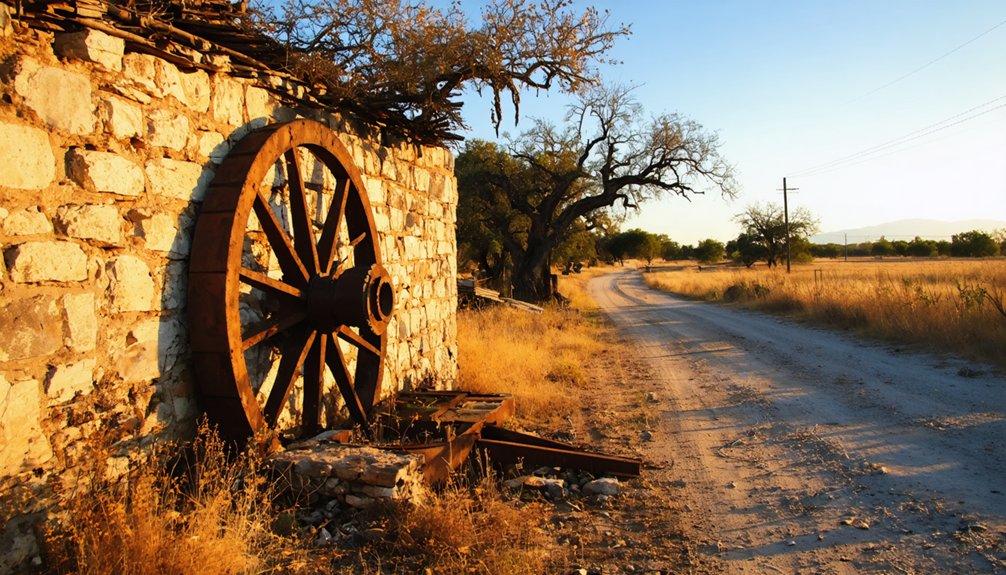
While the cemetery holds the colony’s permanent residents, Fort Croghan Museum in Burnet keeps their story alive through physical artifacts.
You’ll find the original millstone there — a tangible piece of Mormon Mill history that survived long after the colony itself disappeared.
The museum sits at 703 Buchanan Drive and opens April through October, Thursdays through Saturdays, from 10 a.m. to 5 p.m.
That’s a narrow window, so plan accordingly before you hit the road.
The millstone connects you directly to the settlers’ daily labor — the grinding, the building, the constant effort to survive in the Texas Hill Country.
For artifact hunters and history seekers, this stop transforms Mormon Mill from an abstract ghost town into something real and touchable.
Check their Facebook page @fortcroghan before visiting.
When the Museum Is Open and How to Plan Your Visit
Planning ahead makes or breaks a Fort Croghan Museum visit — the museum runs on a tight schedule, opening only Thursdays through Saturdays from 10 a.m. to 5 p.m., April through October.
Plan your Fort Croghan Museum visit carefully — it’s only open Thursdays through Saturdays, April through October.
Miss that window, and you’ll miss your best chance to connect with Mormon Mill history up close.
Head to 703 Buchanan Drive in Burnet, Texas, and you’ll find artifacts that bring Lyman Wight’s legacy into sharp focus, including the original millstone his colony hauled across Texas.
Before you go, check their Facebook page at @fortcroghan for updates or closures.
Pair your museum stop with a drive along Mormon Mills Road to see the actual site. Together, both locations deliver a complete picture of this vanished colony’s remarkable, turbulent story.
Spring and Fall Visits Beat the Texas Heat at Mormon Mill
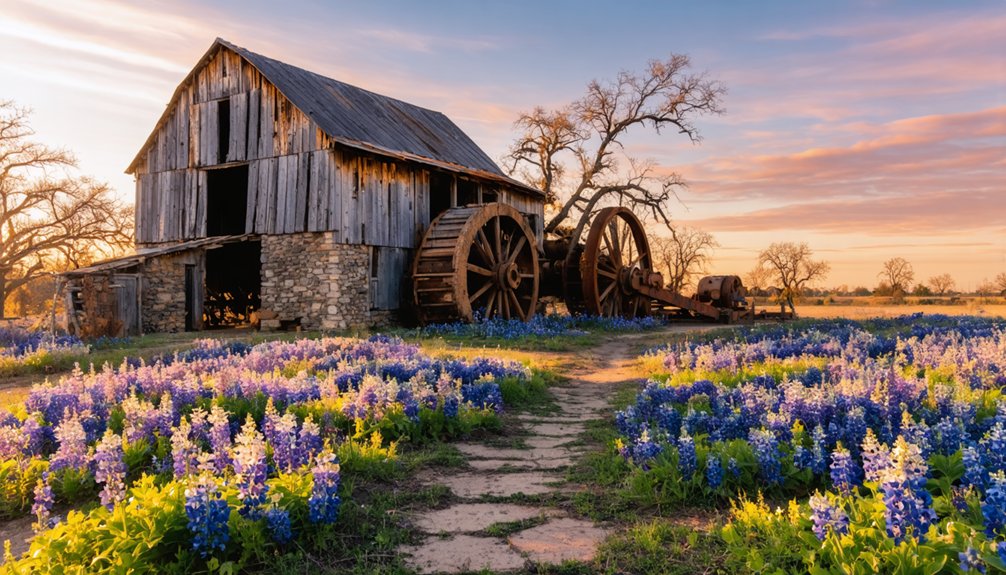
Timing your trip to Mormon Mill makes a real difference — spring and fall offer cooler temperatures that make exploring the Hamilton Creek site far more enjoyable than battling the brutal Texas summer heat.
In spring, wildflowers and spring blooms transform the Hill Country landscape into something worth the drive alone, giving the abandoned colony grounds an almost peaceful contrast to their turbulent history.
Come fall, autumn colors sweep across the creek valley, painting the surrounding terrain in warm golds and reds.
Both seasons keep temperatures manageable, letting you walk Mormon Mill Road, explore the cemetery, and soak in the site’s history without the punishing summer sun draining your energy.
Plan accordingly, and you’ll get the most out of this forgotten corner of Texas.
Other Ghost Towns Near Marble Falls Worth the Drive
Mormon Mill isn’t the only ghost town worth chasing in the Marble Falls area — the Hill Country is scattered with abandoned settlements that reward curious travelers willing to explore a few extra miles.
Bluffton, now submerged beneath Lake Lyndon B. Johnson, surfaces during droughts, revealing old foundations and streets. Tow, another flooded community nearby, carries similar historical significance as a casualty of progress.
Burnet County’s rural backroads hide forgotten communities that predate statehood, each with stories rivaling the Mormon migration narrative in drama and resilience.
You can string several stops together into a single day trip, moving between crumbling structures and historical markers without much backtracking.
Pack water, download offline maps, and give yourself permission to wander — the Hill Country rewards the unhurried explorer.
Frequently Asked Questions
Is Mormon Mill Road Paved or a Rough Dirt Road to Drive?
The knowledge base doesn’t specify road conditions for Mormon Mill Road. You’ll want to check locally before driving out there. Expect potential rough patches, so driving tips suggest you’d take a high-clearance vehicle for safer travels.
Can You Camp Overnight Near the Mormon Mill Ghost Town Site?
You won’t find official camping directly at the ghost town site, so check nearby campsites and their camping regulations. Inks Lake State Park offers you a fantastic, freedom-filled overnight adventure just a short drive away!
Are There Guided Tours Available at the Mormon Mill Historical Site?
No formal guided tours exist at Mormon Mill, but you’ll discover its historical significance through self-guided exploration. Visit Fort Croghan Museum in Burnet for artifacts, then freely roam Mormon Mills Road uncovering the ghost town’s fascinating past yourself.
Is the Mormon Mill Cemetery Open to the Public Year-Round?
Like an open book of Mormon Mill history, the cemetery’s accessibility welcomes you year-round, no gates bar your path. You’re free to wander, reflect, and connect with the whispers of those pioneering souls anytime.
What Is the Best Time of Day to Photograph Mormon Mill?
Visit Mormon Mill during golden hour—just after sunrise or before sunset—for the most dramatic shots. You’ll capture warm, glowing light on the historic ruins and cemetery, making these photography tips essential for your ghost town adventure!
References
- https://www.ghosttowns.com/states/tx/mormonmill.html
- https://www.tshaonline.org/handbook/entries/mormon-mill-colony
- https://en.wikipedia.org/wiki/Mormon_Mill
- https://www.ghosttowns.com/states/tx/tx.html
- https://kids.kiddle.co/List_of_ghost_towns_in_Texas
- http://www.texasescapes.com/CentralTexasTownsNorth/Morgan-Mill-Texas.htm
- https://www.txgenwebcounties.com/burnet/MormonMill.html
- https://www.deseret.com/2016/11/2/20599564/picturing-history-mormon-mill-cemetery-burnet-county-texas/
- https://www.texasescapes.com/TOWNS/Texas-Ghost-Towns-3-Hill-Country.htm
- https://101highlandlakes.com/mormon-mill-road-in-marble-falls/