Planning a ghost town road trip to Butler Junction, Pennsylvania means stepping into a hauntingly beautiful relic of the coal era. You’ll find weathered timber frames, rusted steel, and a crumbling coal tipple frozen since operations ceased in 1952. Tucked along the Allegheny River near Freeport, this atmospheric site whispers stories of Pennsylvania’s industrial boom and inevitable decline. From ghost lore to safe exploration tips, there’s far more to uncover about this forgotten corner of coal country.
Key Takeaways
- Butler Junction, near Freeport along the Allegheny River, is accessible from Pittsburgh via Route 28 north, making it an easy day trip.
- The site features coal tipple ruins, rusted steel frames, and decayed timber from operations active between 1905 and 1952.
- Local ghost stories, unexplained sounds, and the “Black Cross” legends add haunting atmosphere to the abandoned industrial ruins.
- Many ruins sit on private property, so research ownership beforehand and obtain permission to avoid legal issues.
- Wear sturdy boots, bring a charged phone, explore with a companion, and avoid entering any structurally unstable buildings.
What Is Butler Junction, Pennsylvania?
Tucked along the Allegheny River near Freeport, Butler Junction, Pennsylvania, was once a working coal-era rail and mining site in Harrison Township, where a coal tipple loaded extracted coal onto waiting trains. The mine started in 1905 and reportedly kept running through 1952, leaving behind ruins that now draw travelers drawn to industrial archaeology and the quiet weight of forgotten places.
You won’t find a preserved main street or a restored town square here. What you’ll find instead is a landscape shaped by industrial decline — raw, honest, and worth exploring. For those who value heritage preservation and the freedom to wander off the beaten path, Butler Junction offers something rarer than a polished tourist stop: an unfiltered glimpse into Pennsylvania’s coal-boom past.
Butler Junction’s Coal Mining History From 1905 to Decline
When the Butler Junction mine opened in 1905, it joined a western Pennsylvania landscape already humming with coal extraction, rail lines, and the industrial ambition of a region mid-boom. Operations reportedly continued into 1952, leaving behind a timeline worth tracing:
- 1905 – Mine established during western Pennsylvania’s coal boom peak
- Mid-century – Operations sustained through decades of extraction and rail loading
- Post-1952 – Gradual decline left mining equipment and rail artifacts slowly surrendering to rust and overgrowth
You’re walking into a place where ambition hardened into infrastructure, then softened back into ruin. The coal tipple stood at the center of it all, connecting raw extraction to moving rail cars.
That machinery once drove entire communities forward before silence finally won.
The Coal Tipple Ruins You’ll Actually Find On-Site
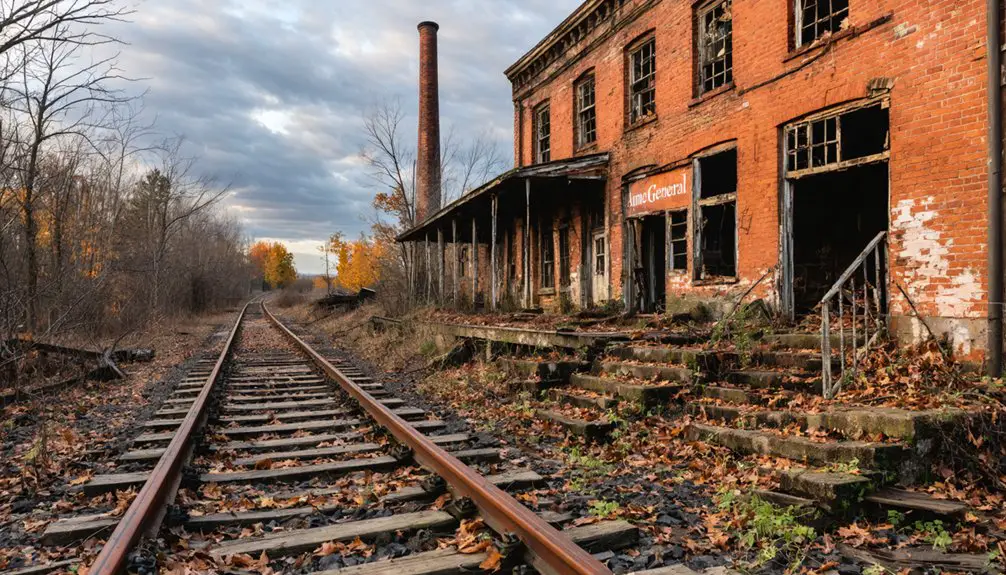
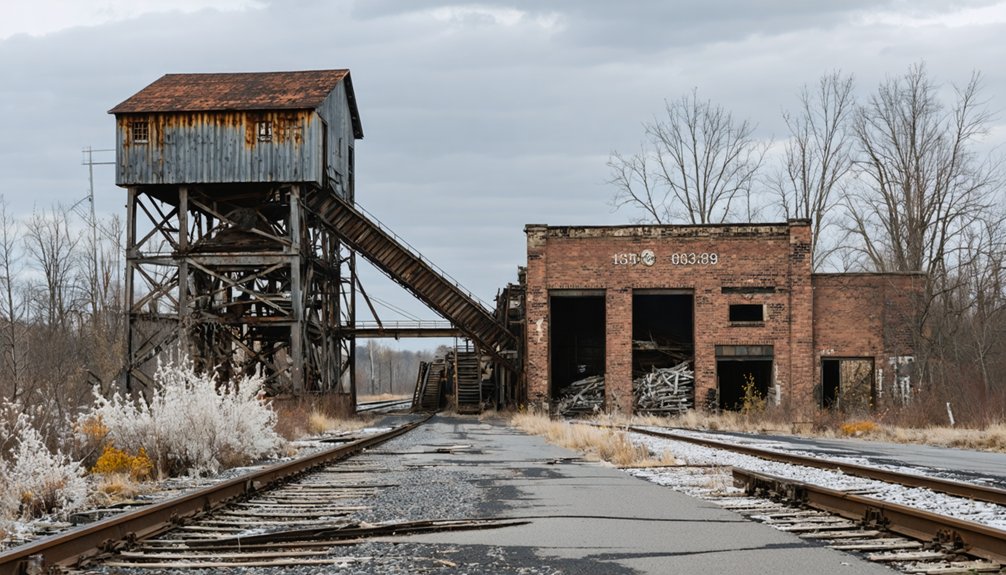
When you arrive at Butler Junction, the coal tipple’s weathered frame is the first thing you’ll notice — a skeletal structure of aging timber and rusted steel that once directed tons of coal into waiting rail cars.
You can still make out the remnants of the coal loading dock, where miners and machinery worked in constant rhythm during the site’s busiest decades.
Running your hand along the worn beams, you’ll feel the weight of an industrial past that quietly peaked and faded before most of us were born.
Tipple Structure Still Standing
What’s left standing at Butler Junction tells the whole story without saying a word. The coal tipple structure that once drove this site’s entire purpose still rises from the landscape, weathered but recognizable. You’re looking at the bones of a working coal mine that ran from 1905 into the 1950s.
Three things make this structure worth stopping for:
- Scale — the tipple’s frame reveals how aggressively rail freight once dominated this riverside corridor
- Integrity — enough original structure survives to read its function clearly
- Context — the Allegheny River sits right there, reminding you exactly how coal moved out of here
You don’t need a guided tour. The ruins speak directly, and that unfiltered access is exactly the kind of freedom this road trip delivers.
Coal Loading Dock Remnants
Closer to ground level, the coal loading dock remnants anchor what you’re actually walking through when you visit Butler Junction. These deteriorating platforms and structural supports once connected the tipple directly to the rail infrastructure below, creating a seamless flow from extracted coal to loaded rail car.
You’re standing where mining equipment operated daily from 1905 through at least 1952, moving raw material out of western Pennsylvania and into a national energy network.
The dock remnants give the site its grounded, tactile quality — this isn’t a museum recreation, it’s the actual machinery of industrial Pennsylvania slowly returning to the earth. Running your hand along weathered timber or concrete here connects you to a working landscape that time gradually swallowed, leaving only honest ruins behind.
Weathered Timber And Steel
The coal tipple ruins at Butler Junction deliver weathered timber and rusted steel in roughly the proportions you’d expect from a structure that operated from 1905 through at least 1952 before surrendering to decades of exposure.
Walking the site, you’ll notice three defining features:
- Decayed structural beams — original mining equipment frameworks now silvered and split from freeze-thaw cycles
- Corroded metal fittings — hardware that once connected railroad history to daily coal shipments along the Allegheny
- Collapsed loading angles — tilted remnants revealing how gravity-fed chutes directed coal into waiting rail cars
Each element tells a specific story about industrial function rather than romantic decay. You’re reading a working site’s honest biography here — no restoration, no interpretation signs, just raw material left where operations finally stopped.
Ghost Stories and Local Lore Around Butler Junction
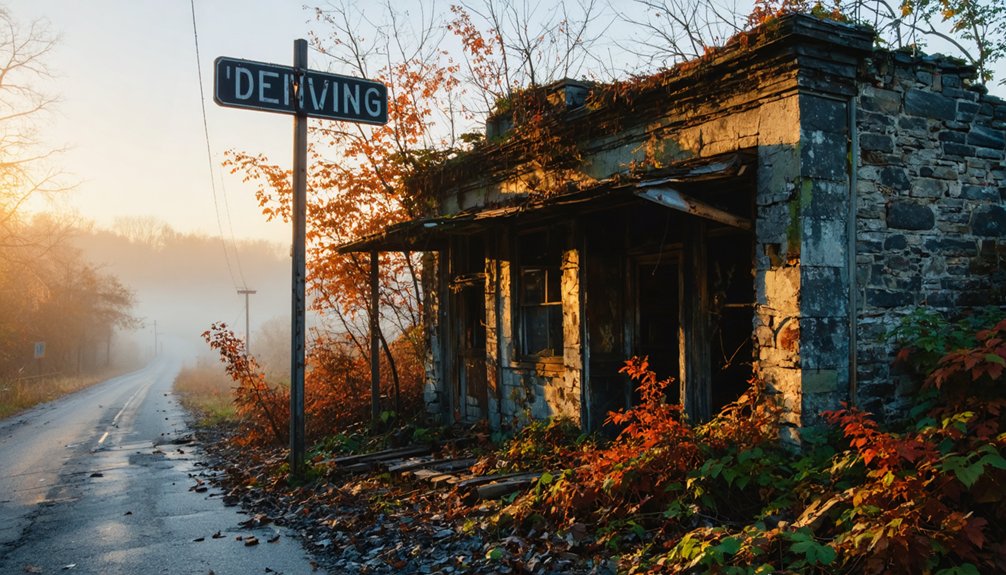
No ghost town road trip feels complete without a few eerie stories trailing behind it, and Butler Junction delivers on that front. The broader Butler County area carries haunted legends tied to a site known as the “Black Cross,” where visitors have reported strange auditory experiences — unexplained sounds drifting through otherwise quiet surroundings.
Ghost sightings and paranormal accounts add a compelling layer to what’s already an atmospheric destination. While documented evidence doesn’t pin specific hauntings directly to Butler Junction’s coal tipple ruins, the industrial decay and isolation naturally feed local lore.
You’re standing where workers once hauled coal in 1905; decades of silence have a way of sparking imagination. Pair the ruins with nearby legend stops, and you’ve built a road trip worth remembering.
How to Reach Butler Junction Near Freeport
Once you’ve soaked in the ghost stories, getting to Butler Junction is straightforward enough to fit naturally into a western Pennsylvania day trip. The site sits near Freeport along the Allegheny River, placing it within easy reach of Pittsburgh’s northern corridors.
Plan your approach using these three reference points:
- Follow Route 28 north from Pittsburgh toward Freeport, hugging the Allegheny River’s industrial architecture corridor.
- Use Freeport as your anchor town for fuel, food, and final navigation before heading toward the junction ruins.
- Note the rail transport heritage along your route — former rail lines shaped this entire landscape and still mark the terrain.
Travel light, keep your map handy, and embrace the open road leading toward one of Pennsylvania’s most quietly haunting coal-era remnants.
Building Your Western Pennsylvania Coal-Country Road Trip
Butler Junction works best as one piece of a longer coal-country puzzle, so consider threading it into a broader Allegheny River route that connects abandoned tipples, rail corridors, and weathered mining communities across western Pennsylvania.
Follow the river’s bends where industrial architecture still surfaces through the tree line — crumbling stone foundations, rusted ironwork, and forgotten loading structures that once kept the region’s economy moving.
Railroad history runs deep here, and you’ll notice the old rail grades cutting through hillsides long after the trains stopped running.
Pair Butler Junction with the Ghost Town Trail and other nearby mining remnants to build a route that rewards curiosity rather than comfort.
This isn’t a polished heritage drive — it’s raw, honest, and entirely worth the detour.
How to Visit Industrial Ruins Safely and Responsibly
Visiting a site like Butler Junction means stepping into a landscape that’s genuinely unstable — old coal tipples and deteriorating structures carry real risks that nostalgia can quietly overshadow. Industrial preservation matters here, and so do your safety precautions before you arrive.
Keep these three practices in mind:
- Stay outside collapsed structures — weakened timber and rusted metal shift without warning.
- Research access rules beforehand — some ruins sit on private or restricted land requiring permission.
- Bring proper gear — sturdy boots, a charged phone, and a companion improve your odds considerably.
You’re walking through living history when you visit Butler Junction, but that history doesn’t owe you safety. Respect the ruins, and they’ll reward you with a rawer, more honest connection to Pennsylvania’s coal past.
Frequently Asked Questions
Is There an Admission Fee to Visit Butler Junction Ruins?
You’ll find no admission fee to explore Butler Junction’s raw ruins. You’re free to wander among historical artifacts and soak in local legends where coal heritage breathes through every crumbling beam and forgotten rail.
Are Pets Allowed When Exploring the Butler Junction Site?
No confirmed pet policies exist for Butler Junction’s ruins. You’re exploring open industrial remnants, so animal accommodations aren’t formally defined—but leash your companion, respect the historic grounds, and let the coal-era echoes guide you both freely.
What Is the Best Season to Visit Butler Junction?
Fall’s your best season — you’ll find stunning seasonal foliage framing the old coal tipple ruins, and wildlife sightings add unexpected life to the decay. It’s like nature reclaims history just as you arrive to witness it.
Is Butler Junction Accessible for Visitors With Mobility Limitations?
Butler Junction’s rugged industrial ruins don’t offer formal accessibility features or mobility assistance, so you’ll find uneven terrain ahead. If freedom calls you here, you’ll want sturdy footing to explore this hauntingly beautiful, coal-scarred landscape independently.
Can You Camp Overnight Near Butler Junction Along the Allegheny?
You’ll find campground options along the Allegheny River near Freeport, where the water hums with old industry’s memory. Follow basic safety tips—stay aware of your surroundings and embrace the wild freedom of riverside nights.
References
- https://www.youtube.com/watch?v=1Wbo3RiDUyA
- https://www.youtube.com/watch?v=hf3ybOzoRto
- https://www.youtube.com/watch?v=isRTfPKPsNo
- https://en.wikipedia.org/wiki/Ghost_Town_Trail