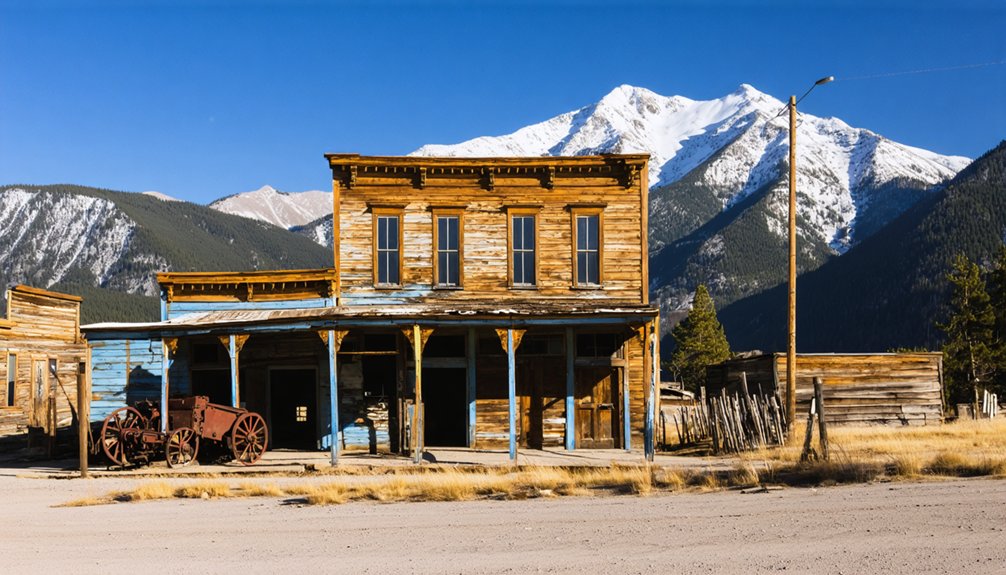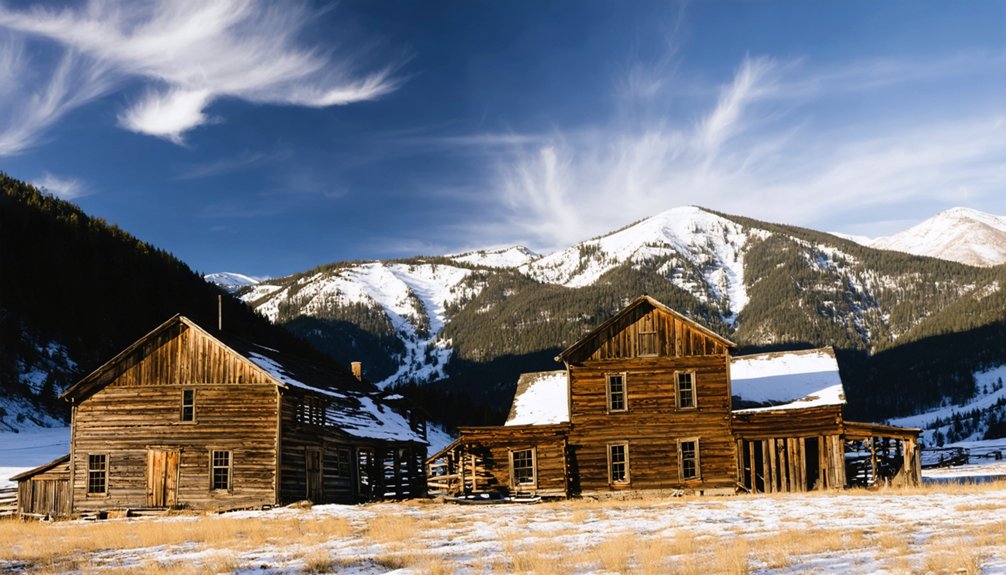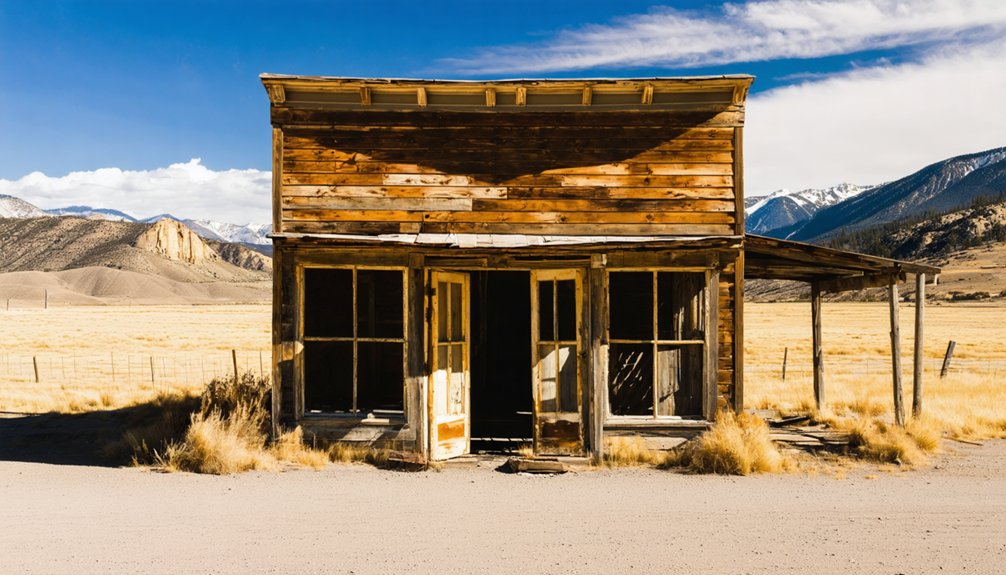
Planning a ghost town road trip to Decatur, Colorado means committing to the back roads, the silence, and the stories written in weathered timber. You’ll start from Buena Vista or Salida, wind through mountain corridors on US 285, and trade cell service for offline maps. It’s a place less circled in guidebooks but richer for it — scattered remnants, open skies, and boom-era legends still hanging in the thin mountain air. Keep scrolling, and you’ll uncover everything you need to get there and beyond.
Key Takeaways
- Start your drive from Buena Vista or Salida via US 285 and county roads, downloading offline maps before losing cell service.
- Use a high-clearance vehicle, verify road conditions the morning of travel, and prepare for sudden seasonal closures or muddy terrain.
- Pack sturdy boots, layered clothing, sunscreen, ample water, and a basic first-aid kit for high-elevation exploration.
- Combine Decatur with nearby ghost towns like St. Elmo, Animas Forks, and Ironton to maximize your route’s historical value.
- Respect fragile structures by avoiding leaning on walls, and watch for wildlife like elk and mule deer crossing mountain roads.
Where Is Decatur, Colorado, and What’s Left There?
Though it doesn’t dominate the ghost-town guidebooks the way St. Elmo or Animas Forks does, Decatur, Colorado carries its own quiet weight. Tucked into central Colorado’s mining corridors, it represents the kind of place that rewards curious, independent travelers willing to seek it out.
Decatur won’t find you — but if you go looking, it’ll give you something real.
What’s left there leans heavily on historical preservation efforts and scattered structural remnants — foundations, timber frames, and the occasional rusted artifact that anchors you to another era.
Local legends thread through Decatur’s past, whispering about boom-era fortunes and sudden abandonment. You won’t find polished interpretive signs or gift shops here. Instead, you’ll find raw, unfiltered history sitting under an open sky.
Come prepared, move carefully, and let the silence tell you what the guidebooks won’t.
How to Reach Decatur, Colorado on a Colorado Road Trip
Reaching Decatur means committing to the kind of drive that feels deliberate — no interstate shortcuts, no obvious highway signs pointing the way. You’re threading through central Colorado’s mountain corridors, where the historical background of mining ambition still shapes the landscape.
Start from Buena Vista or Salida, moving through terrain that rewards patience over speed. US 285 and connecting county roads form your framework, though conditions shift seasonally, so verify road access before departure. Offline maps matter here — cell service disappears fast.
Local attractions along the way, including Florissant Fossil Beds and South Park’s open rangelands, give the drive texture beyond the destination itself. Decatur doesn’t announce itself. You find it because you chose to look, and that distinction makes arriving feel genuinely earned.
Road Conditions and Seasonal Access Near Decatur, Colorado
Seasonal timing shapes every decision you’ll make once you commit to roads near Decatur. Mountain passes close without warning, and early snowfall can strand you on shelf roads that demand respect rather than speed. Summer opens the most access, but afternoon storms roll in fast, turning dirt routes into muddy obstacles within minutes.
Commit to these roads on summer’s terms — passes close fast, and storms don’t wait for second guesses.
You’ll want a high-clearance vehicle and offline maps downloaded before you leave cell range behind. Check conditions the morning you depart — not the night before.
Wildlife safety matters out here too, where elk and mule deer cross without hesitation. Slow down, stay alert, and carry water.
Historical preservation also depends on cautious travelers who protect fragile remnants by staying on established paths rather than cutting new ones.
Best Ghost Towns to Combine With Decatur on Your Route
Once you’ve factored Decatur into your route, the surrounding region rewards you with ghost towns that stack history mile by mile. St. Elmo preserves a rare, nearly intact townsite where Colorado’s mining history feels immediate rather than imagined.
Push further west toward Crested Butte, and Gothic Road delivers weathered structures framed by dramatic peaks and scenic overlooks that stop you cold. Independence Pass adds another layer — park at the pullout, hike in, and let the ruins speak.
Southwest, Animas Forks and Ironton anchor a Silverton-area loop dense with collapsed headframes and ore-wagon silence. Each stop compounds the last, building a cumulative portrait of boom-era Colorado that no single town could carry alone.
Plan the sequence deliberately, and the road does the rest.
What to Bring for Decatur’s Remote Terrain and Elevation
Knowing where to go is only half the work — what you carry into Decatur’s remote, high-elevation terrain determines how long you stay comfortable and how safely you get back out. Pack essential gear that matches the mountain’s demands: sturdy boots for uneven ground, sunscreen, a wide-brimmed hat, and more water than you think you’ll need.
Elevation drains you faster than flatland ever will. Your safety essentials should include offline maps downloaded before you lose cell service, a basic first-aid kit, and layers for temperature swings that shift without warning.
Respect the silence of unstable structures — don’t lean on walls that have outlasted everyone who built them. Freedom out here isn’t reckless; it’s prepared, deliberate, and deeply aware of where you stand.
Frequently Asked Questions
Is There an Entrance Fee or Permit Required to Visit Decatur?
Like a door left open by time, you don’t need an entrance fee or permit to explore Decatur’s ghost town history—just respect visitor safety, tread carefully, and let your adventurous spirit roam freely.
Are Guided Ghost Town Tours Available Near Decatur, Colorado?
Guided tours aren’t widely confirmed near Decatur, but you’ll find operators in Silverton and Crested Butte who’ll walk you through historical artifacts and open photography opportunities that’ll stir your soul with nostalgic, wide-open freedom.
Can You Camp Overnight Near the Decatur Ghost Town Site?
Ironically, the ghost town’s long-abandoned freedom now requires you to follow modern camping regulations. You’ll want to verify nearby dispersed camping rules, pack safety tips, and breathe in that nostalgic mountain air—where the past still whispers.
What Is the Best Time of Year to Visit Decatur?
You’ll want to visit in summer, when clear skies reveal Decatur’s forgotten streets. Warm months honor historical preservation best, letting you chase local legends through sun-drenched ruins that whisper of restless, free-spirited souls long gone.
Are Pets Allowed When Exploring the Decatur Ghost Town Area?
Coincidentally, pet policies at Colorado ghost towns often mirror the wild freedom they embody — you can typically bring leashed pets, though animal restrictions vary by land jurisdiction, so you’ll want to verify local rules before heading out.
References
- https://999thepoint.com/the-ultimate-ghost-town-road-trip-through-colorado/
- https://tranquiltrekker.com/central-colorado-ghost-towns-independence-pass/
- https://www.nationalgeographic.com/travel/article/ghost-towns-colorado-road-trip
- https://www.4x4explore.com/dest/dest_ghst.htm
- https://www.uncovercolorado.com/ghost-towns/