You’re not heading to Kansas — Cain City is a forgotten railroad town tucked into the Texas Hill Country of Gillespie County, and the road trip there tells a story most maps no longer bother to show. What was once a thriving Catholic school community rose and fell with the railroads, leaving behind weathered remnants and generational memories along quiet back roads. Stick around, and you’ll uncover everything this overlooked piece of central Texas history still has to offer.
Key Takeaways
- Cain City is actually located in Gillespie County, Texas, not Kansas, so adjust your road trip plans accordingly.
- Use Fredericksburg, Texas, as your base, offering local dining and independent guesthouses for convenient access to Cain City.
- Key sites include Cain City Road and the former Catholic school, which reflect the town’s railroad-era history.
- Respect private land boundaries, confirm ownership before exploring off-road, and carry water, fuel, and a paper map.
- Combine your visit with nearby ghost towns like Doss, Rheingold, Luckenbach, and Tivydale for a fuller regional experience.
Why Cain City Texas Deserves a Place on Your Ghost Town List
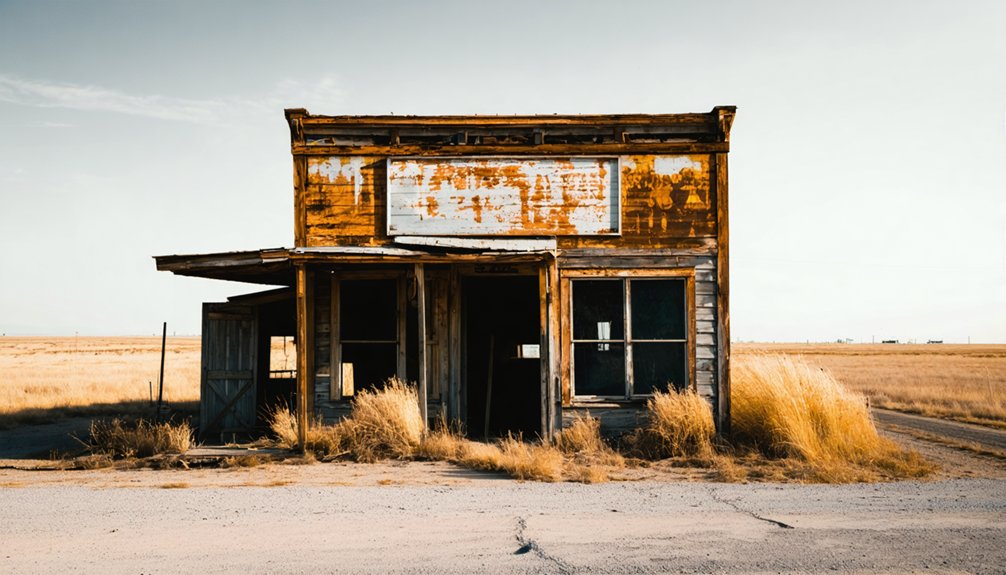
Although the article title mentions Kansas, Cain City is actually a ghost town in Gillespie County, Texas, and that small geographic correction opens up a more compelling story.
You’re looking at a place whose ghost town significance stretches well beyond a name on a faded map. Cain City once held real community life — a Catholic school, working families, and a railroad-era pulse that kept it breathing.
Its collapse mirrors broader rural settlement patterns across central Texas, where shifting transportation routes quietly erased towns that once mattered.
When you chase this kind of history, you’re not just sightseeing; you’re reading the land itself.
Cain City rewards the historically curious traveler who values freedom of exploration over curated tourist trails.
How the Railroad Built : and Abandoned : Cain City
When you trace Cain City’s rise, you find the railroad at the center of everything — it drew settlers, commerce, and promise to this small central Texas community.
Once those rail priorities shifted and transportation routes changed, the town lost the economic lifeline it had depended on, and residents gradually moved on.
You’re looking at a story that played out across dozens of Texas communities, but Cain City makes it feel personal and close.
Railroad Arrival Fueled Growth
Like so many small Texas towns, Cain City didn’t grow by accident — it grew because the railroad made it worth growing. When rail lines pushed through Gillespie County, they carried more than freight. They carried possibility. Settlers followed the tracks, businesses took root, and a real community began to take shape just four miles southeast of Fredericksburg.
That railroad impact transformed raw Texas land into a functioning town with residents, commerce, and even a Catholic school. People built lives here because the railroad made connection possible — connection to markets, to neighbors, to something larger than isolation.
You can trace this ghost town evolution in the silence that replaced that early energy. The railroad gave Cain City its heartbeat. When the routes shifted, so did everything else.
Shifting Routes Caused Decline
Railroad towns live and die by decisions made far from their borders. When railroad companies rerouted lines or shifted their priorities, communities like Cain City had no say in the outcome. Those route changes weren’t just logistical adjustments — they were quiet death sentences for towns that had built everything around rail access.
Merchants lost customers. Families relocated. The steady rhythm of arriving trains became silence.
You can feel that absence when you visit today. Community decline here wasn’t dramatic or sudden; it was gradual, like a fire burning down to embers.
What once supported a school and local institutions slowly emptied out. The railroad built Cain City, and the railroad — by simply moving on — abandoned it. That’s a story the land still tells.
The Catholic School That Outlasted the Town
Though the town itself faded quietly into memory, the Catholic school at Cain City stood as one of the last tangible signs that a real community had once taken root here.
While businesses closed and families moved on, this institution carried the school legacy forward longer than most expected.
When you visit today, you’re looking at architectural remnants that speak louder than any written record.
The building reminds you that people here weren’t just passing through — they were building something meant to last.
They invested in their children’s futures even as the railroad’s promise began to hollow out.
Standing near what remains, you feel the weight of that quiet determination.
It’s the kind of history that doesn’t shout; it simply endures.
What You’ll Actually See When You Get There
Knowing what to expect before you arrive saves you from the disappointment of misread expectations. Cain City offers atmosphere over spectacle, making it perfect for ghost town photography and collecting local folklore from the landscape itself.
Cain City rewards those who arrive expecting atmosphere, not spectacle — and leave richer for the difference.
Here’s what you’ll encounter:
- Cain City Road, your navigational anchor through quiet central Texas terrain
- The former Catholic School site, the most historically grounded structure remaining
- Weathered roadside details worth framing through your camera lens
- Open land that whispers the outline of what streets and storefronts once claimed
- Locals who occasionally carry generational stories about the community’s railroad past
You won’t find gift shops or guided tours.
What you’ll find is honest, unpolished history standing quietly under a wide Texas sky.
How to Drive From Fredericksburg to Cain City Road
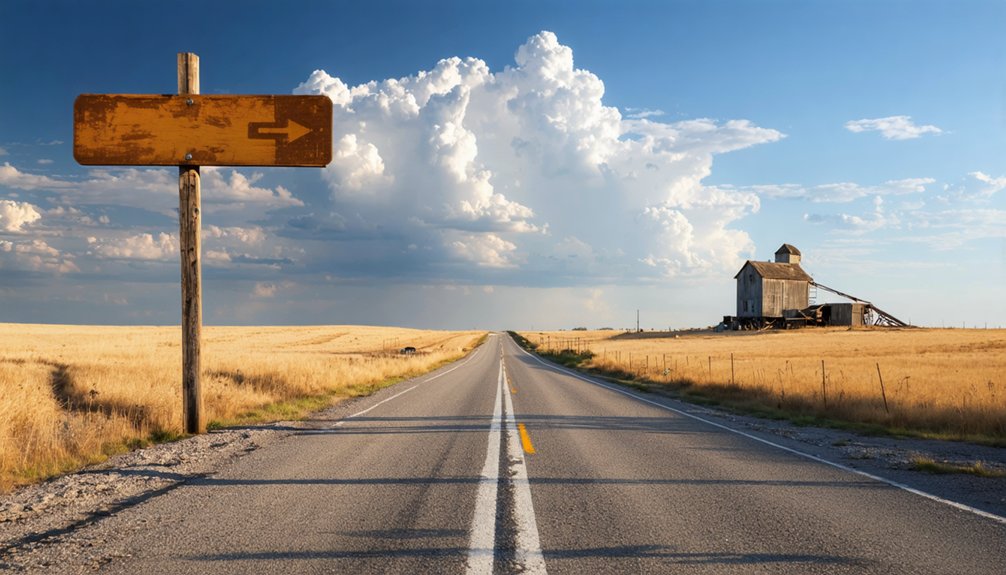
Fredericksburg sets you up perfectly as a launching point—fuel the car, grab a coffee on Main Street, and head southeast on the local roads that thread through Gillespie County’s quiet hill country.
About four miles out, Cain City Road appears, pulling you toward one of Texas’s understated ghost town attractions. The drive itself feels like peeling back time—open pastures replace storefronts, and the landscape grows quieter with each mile.
You’re not chasing neon signs here; you’re following a route that once meant something to families who built a school and called this place home. That commitment to historical preservation is what gives the journey weight.
Keep your eyes open, drive slowly, and let the road tell you what the maps won’t.
What to Know Before You Visit Any Texas Ghost Town
Before you chase any Texas ghost town, understand that these sites sit at the edge of private land, faded memory, and legal boundaries you don’t want to cross.
Respect ghost town preservation by treating what’s left as living Texas heritage, not a backdrop for reckless adventure.
Treat what remains as living heritage — not a setting for the reckless, but a site demanding your restraint.
- Confirm land ownership before stepping off the road
- Photograph freely, but never remove artifacts or materials
- Check county road conditions, especially after heavy rain
- Carry water, fuel, and a paper map as backup
- Tell someone your route before heading out alone
These places survived drought, abandonment, and time. You owe them restraint.
Tread lightly, research deeply, and let the silence of somewhere like Cain City speak without your interference making it louder.
Where to Eat, Sleep, and Refuel Near Cain City
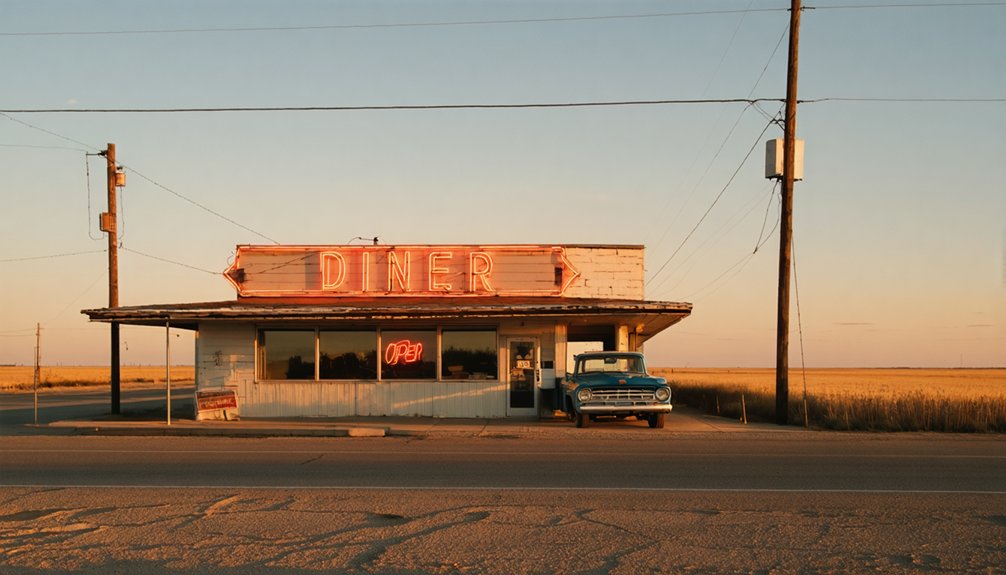
Once you’ve done right by Cain City, Fredericksburg pulls you back in like it always has—a Hill Country town that’s fed and sheltered travelers since the German settlers planted it in 1846.
Its local cuisine still carries that Old World backbone: sausage, schnitzel, fresh-baked bread. You’ll find no shortage of spots along Main Street to refuel your body after the dusty detour.
For sleep, independent guesthouses and historic inns outnumber the chain hotels here, and that’s exactly how it should be. Fill your tank before heading out toward Cain City Road—services thin quickly once you leave town.
These travel tips keep the trip honest: go early, eat well, and let Fredericksburg’s unhurried pace remind you why roads like these still matter.
Other Gillespie County Ghost Towns Worth Adding to Your Route
While you’re already out exploring Cain City‘s quiet remnants, it makes sense to push a little further into Gillespie County, where other forgotten communities wait along back roads few travelers ever take.
The region’s railroad past left behind more than one abandoned townsite, and pairing Cain City with nearby historic stops turns a brief detour into a richer picture of central Texas’s lost settlement patterns.
You’ll find that each site adds another layer to the same story — a boom built on rail lines, then a slow fade when the routes moved on.
Nearby Abandoned Texas Communities
Cain City doesn’t have to be your only ghost town stop in Gillespie County — the region is quietly dotted with other abandoned communities that once hummed with the same railroad-era ambition before the modern world passed them by.
Explore these forgotten histories and abandoned landmarks nearby:
- Doss – a quiet rural settlement with deep German-Texan roots
- Rheingold – a vanished farming community reflecting immigrant heritage
- Cave Creek – once a small but essential rural crossroads
- Luckenbach – partially preserved, still echoing its frontier past
- Tivydale – a lesser-known community swallowed by shifting settlement patterns
Each stop adds texture to your route, layering one faded story upon another as you trace what central Texas once was — and what time quietly erased.
Gillespie County Historic Sites
Gillespie County holds more ghost town history than a single road trip can exhaust, and the communities scattered beyond Cain City deserve a spot on your itinerary.
Each site you discover adds another layer to the region’s railroad-era story, revealing how ambition once shaped Central Texas and how quickly fortune could reverse. Ghost town tourism here isn’t simply about ruins — it’s about understanding what settlers sacrificed and built.
You’ll find that historic preservation efforts, though uneven across the county, have kept enough context alive to make exploration genuinely rewarding. Pull over where old roads fork unexpectedly, read every marker you encounter, and let the landscape speak.
Fredericksburg remains your practical anchor, but the real discoveries wait on the quieter roads branching outward into Gillespie County’s forgotten corners.
Frequently Asked Questions
Is Cain City Road Paved or Suitable for Standard Passenger Vehicles?
Like dusty echoes of a forgotten era, Cain City Road’s road conditions remain rural. You’ll find vehicle suitability reasonable for standard passenger cars, but verify current conditions before you chase Texas history down this historic stretch.
Are There Any Annual Events or Ghost Town Tours Organized Near Cain City?
No dedicated annual festivals or ghost town tours are currently organized near Cain City, Texas. You’ll discover its haunting, rail-era silence independently, letting history speak freely as you wander remnants of this once-thriving Gillespie County community.
Can Visitors Legally Access the Former Catholic School Property Today?
You can’t freely roam the former Catholic school — property ownership determines your access. Check safety regulations before visiting, and you’ll coincidentally find locals who cherish this nostalgic Texas landmark often share valuable insights about lawful entry.
Has Cain City Ever Been Featured in Any Texas Ghost Town Documentaries?
No confirmed records show Cain City appearing in Texas documentaries, but its ghost town history quietly echoes through regional heritage archives. You’ll find its forgotten railroad soul woven into broader Texas lost-community narratives, waiting to be rediscovered.
Is There Cell Phone Coverage Available Along Cain City Road?
Over 20% of rural Texas roads have spotty coverage. You’ll find cell service reliability unpredictable along Cain City Road, so download offline maps before traversing remote areas — echoing how early settlers once journeyed these Central Texas backroads without modern guidance.
References
- https://www.facebook.com/groups/ForgottenOregon/posts/2643762365891685/
- http://kansastowns.us/hdkt/townc.html
- https://www.facebook.com/100057130702980/posts/did-you-know-that-ellsworth-county-has-many-ghost-towns-the-attached-photo-shows/1048426010405079/
- https://legendsofkansas.com/every-place-in-kansas-c/
- https://www.tiktok.com/@thekirkhams19/video/7633637406385671454
- https://www.instagram.com/p/DVz3_hLDDlN/
- https://www.tshaonline.org/handbook/entries/cain-city-tx
- https://www.reddit.com/r/AskReddit/comments/95bsre/seriouseerie_towns_disappearing_diners_and_creepy/
- https://www.instagram.com/p/DM4OTbKO7jX/
- https://en.wikipedia.org/wiki/Category:C-Class_Ghost_town_articles