You’ll find Callahan City‘s haunting remains about 3 miles south of Interstate 20 on Farm Road 2228, just southeast of Baird. Take Exit 300 from I-20, drive through town, and head southeast—the 1977 Historical Marker #4737 marks where weathered courthouse foundations and crumbling county buildings surrender to prairie grass. There’s no admission fee to explore this authentic 1870s ghost town that collapsed after the Texas and Pacific Railway bypassed it in 1881, and the full story reveals even more abandoned frontier settlements nearby.
Key Takeaways
- From Abilene, take Interstate 20 east to Baird, then turn southeast on Farm Road 2228 for approximately 3 miles.
- Visit Historical Marker #4737 to see weathered county building ruins, crumbling foundations, and the old courthouse footprint.
- Explore Belle Plain Cemetery, featuring pioneer graves from 1878 and the sole preserved remnant of the frontier town.
- View Belle Plain College ruins with crumbling stone walls and a 1969 historical plaque commemorating the 1881 Methodist institution.
- The site requires no fees or reservations and offers open landscape exploration along Farm Road 2228 southeast of Baird.
The Rise and Fall of a Frontier Settlement
The story of Callahan City begins with blood and soil—a familiar refrain across the Texas frontier. You’re standing where Comanche warriors once ruled until the 1870s, making challenges of permanent settlement nearly impossible.
James Dulan’s 1859 cattle shelter marked the first white presence, but sustained occupation didn’t happen until after 1865.
How the Railroad Sealed Callahan City’s Fate
Everything changed when the Texas and Pacific Railway laid its tracks across Callahan County in 1880–1881. Railroad routing decisions bypassed Callahan City entirely, choosing instead to establish stations at Putnam, Baird, and Clyde. Without rail access or county seat status, your once-promising settlement faced inevitable collapse.
Belle Plain, six miles from the new line, suffered the same fate. Residents had anticipated prosperity, swelling the population to nearly 300 by 1880. Instead, they watched Baird claim the railroad’s division point, complete with roundhouse and repair shops.
What Remains at the Site Today
You’ll find Callahan City’s remains scattered along Farm Road 2228, where weathered ruins of county buildings still mark the spot where two towns battled for supremacy. The site preserves fragments of its contentious past—crumbling foundations, a cemetery, and the ghostly footprint of a courthouse that once symbolized the town’s brief moment of authority.
Access is straightforward from Baird, just four miles northeast, making this an easily reachable stop for anyone tracing the forgotten rivalries of frontier Texas.
Historical Marker and Access
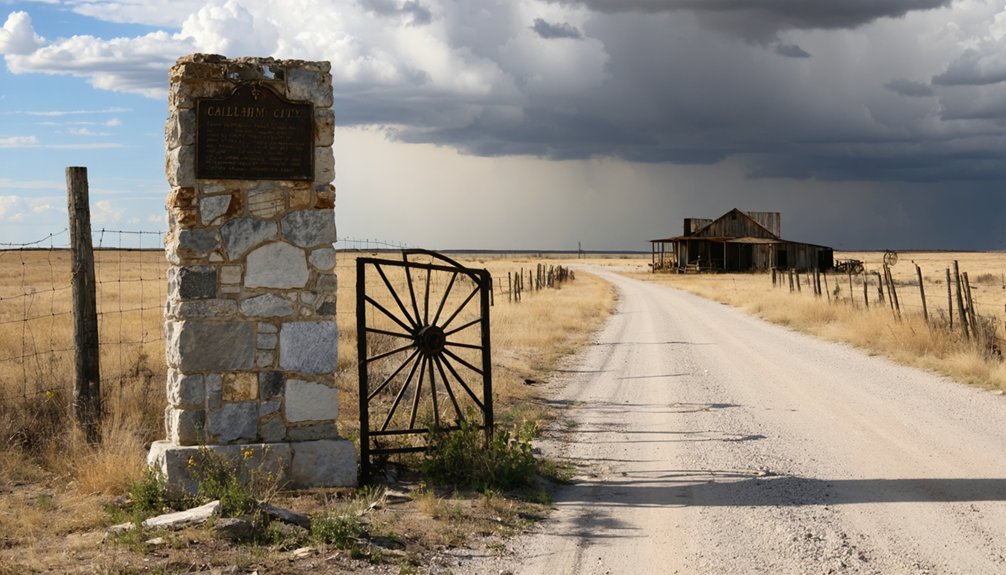
Today, marker number 4737 stands as the sole witness to Callahan City’s brief existence along Farm Road 2228. You’ll find this aluminum monument erected in 1977, replacing the original marker materials of cement that once documented this vanished settlement. The site honors notable historical figures like Ranger James H. Callahan, whose legacy shaped county history.
Reaching this remote location requires:
- Driving FM 2228 southeast from Baird approximately 8.5 miles
- Following US 80 East about four miles before turning south
- Traversing three miles south of Interstate 20
- Traveling standard rural roads accessible by any vehicle
You won’t encounter fees or restrictions—just open Texas landscape where freedom-seekers can explore at will. The marker commemorates that pivotal July 30, 1877 commissioners court meeting before post office relocation ended Callahan City’s hopes.
Cemetery and Scattered Ruins
Where Callahan City once bustled with frontier ambition, the cemetery now stands as the settlement’s most substantial surviving remnant. You’ll find at least 19 unmarked graves scattered across this burial ground, most identified only by simple rock markers rather than traditional gravestone material types like marble or granite.
A few partial headstones remain, weathered testimonies to pioneers who shaped Callahan County before 1877. The cemetery gate still welcomes visitors, with flag markers dotting the landscape where ranchers and early settlers rest. While relocation of marked graves occurred throughout Texas history, these burials stayed anchored to their original ground. County maps continue documenting this site, ensuring you can navigate to this tangible connection with frontier heritage near Admiral.
Getting to the Ghost Town From Abilene and Baird
Your journey to Callahan City begins in Abilene, the nearest major hub roughly 40 minutes away, where you’ll head east toward Baird along Interstate 20.
From Baird—the current Callahan County seat—you’ll navigate 8.5 miles southeast on FM 2228, a farm-to-market road that cuts through the North Central Texas landscape. The ghost town sits on accessible land just three miles south of the interstate, marked by a well-maintained Texas Historical Commission marker at the original settlement site.
Driving From Abilene
Heading west from Abilene on Interstate 20, you’ll find yourself crossing into Callahan County within 20-25 miles—a quick 30-minute drive that carries you deeper into West Texas terrain where oil derricks punctuate the Rolling Plains horizon. The route cuts through rugged country where scenic views stretch endlessly beneath big skies, and weather conditions shift with that constant West Texas wind.
Before reaching Callahan City’s ruins near Baird, you’ll pass several waypoints:
- Clyde Rest Stop – stretch your legs and prepare for exploration
- Love’s Travel Stop – fuel up and grab supplies
- Callahan County Westbound Rest Area – clean facilities in open country
- Abilene State Park turnoff – alternative outdoor destination on the Callahan Divide
Check real-time traffic updates before departing, though congestion rarely troubles these open highways.
Route From Baird
The actual turnoff to Callahan City’s ghostly remains comes at Baird, where FM 2228 branches southeast from the town center. This primary route cuts through open West Texas countryside for 8.5 miles, leading you directly to the historical marker that stands guard over the abandoned settlement. You’ll navigate typical rural road conditions—straightforward Farm to Market pavement without complications or private property barriers blocking your way.
As you continue your journey through the desolate landscape, you might want to consider visiting some of the ghost towns of Texas to explore. Each site reveals stories of the past, with remnants of buildings and faded memories echoing the lives once lived there. Keep your camera ready, as the unique architecture and eerie beauty of these towns offer stunning photo opportunities and a glimpse into the state’s rich history.
The marker itself, an 18″ x 28″ monument erected in 1977, sits approximately 3 miles south of Interstate 20’s junction with FM 2228. You’re looking at a quick, unobstructed drive that covers the 4-mile southwest distance from Baird’s modern amenities to Callahan City’s silent past, where crumbling foundations whisper stories of West Texas settlement dreams.
Exploring the Belle Plain Cemetery and Pioneer Graves
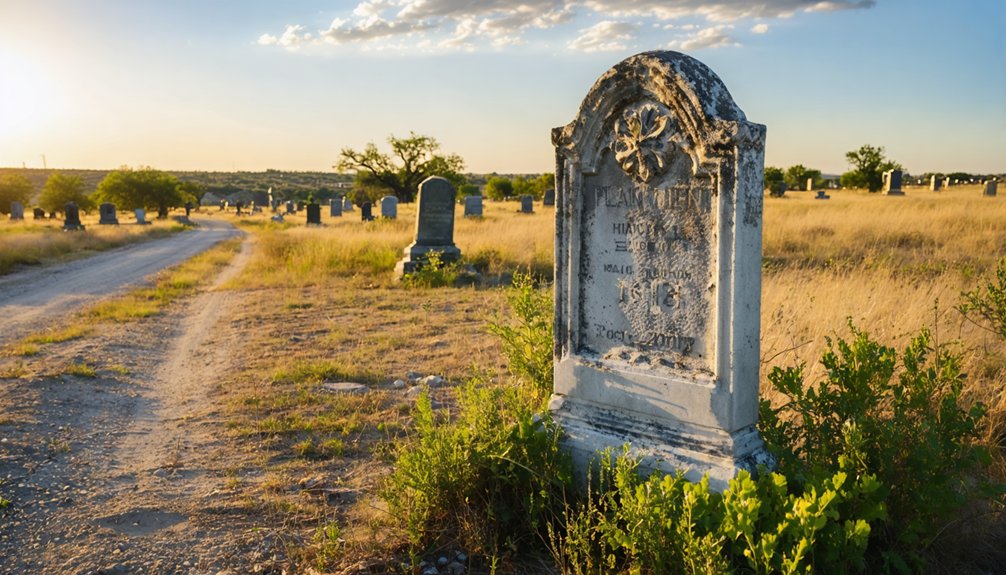
Standing six miles southeast of Baird in Callahan County, Belle Plain Cemetery serves as the sole preserved remnant of a frontier town that flourished briefly in the 1870s and vanished within a generation. You’ll discover pioneer graves dating back to 1878, marking the final resting places of settlers who carved civilization from untamed territory. The Texas Historical Commission maintains records of this site, where prominent historical figures from Belle Plain’s founding era lie buried.
While exploring weathered headstones, you’ll encounter numerous reports of unexplained paranormal occurrences:
- Gates swinging open and shut without physical intervention
- Temperature drops of 20-30 degrees upon entering
- Unidentified animal sounds echoing through empty grounds
- Mysterious gatherings around alleged witch’s grave
The cemetery outlasted the town itself, continuing burials long after Belle Plain’s 1905 post office closure sealed its ghost town fate.
Belle Plain College Ruins and Historic Structures
Just beyond the cemetery grounds, crumbling stone walls rise from the prairie grass where Belle Plain College once dominated the cultural landscape of this frontier settlement. You’ll discover the rectangular stone structure that housed a remarkable institution founded by Methodists in 1881.
Those hollow walls once echoed with music from fifteen pianos, a brass band, and a full orchestra that drew students across the region. The college mortgaged everything—including classroom furnishings and its legendary musical instrument collection—to fuel its ambitions. But when railroads bypassed Belle Plain entirely, the town’s economy collapsed. By 1889, foreclosure sealed the college’s fate.
Today, you can explore these weathered ruins marked by a 1969 Texas Historical Commission plaque, memorial to frontier dreams that couldn’t outlast geography’s harsh verdict.
Indian Raids and the Formation of the Minute Men
Long before Belle Plain’s college opened its doors, settlers in Callahan County faced a far more immediate concern than education—survival against mounted raiders who struck without warning from the open prairie. Captain M.W. Hall organized the Minute Men in 1873, creating frontier protection when government forces proved inadequate. You’ll find their legacy etched into every creek and canyon where they rode.
These volunteer rangers embodied border security through direct action:
- Tracked stolen horses from Sipe Springs after Gass Evans reported Indian theft
- Responded to the 1873 raid on Mr. Justice and Cal Watkins
- Pursued raiders through Callahan County until horses were recovered
- Maintained vigilance until Colonel Mackenzie’s 1874 Palo Duro Canyon victory ended Comanche resistance
Their self-reliant spirit defined frontier justice.
Best Time to Visit and What to Bring
The ghost towns of Callahan County reveal themselves best during spring and fall, when temperatures hover in the comfortable 70-85°F range and the harsh extremes of Texas weather retreat. You’ll find three months annually offering this sweet spot, typically bracketing the growing season that runs from late March through early November.
Pack layers for unpredictable weather patterns—spring mornings can dip to 51°F while afternoons reach 64°F. Summer exploration means battling 96°F highs and oppressive humidity.
Winter’s mild, with January lows around 31°F, though tornadoes threaten year-round in Callahan County.
Bring sturdy boots for uneven terrain, sun protection, and rain gear—precipitation chances exceed 20% several days weekly. These temperature extremes and sudden storms shaped the settlers who built these abandoned communities you’re exploring.
Combining Your Trip With Nearby Baird Attractions
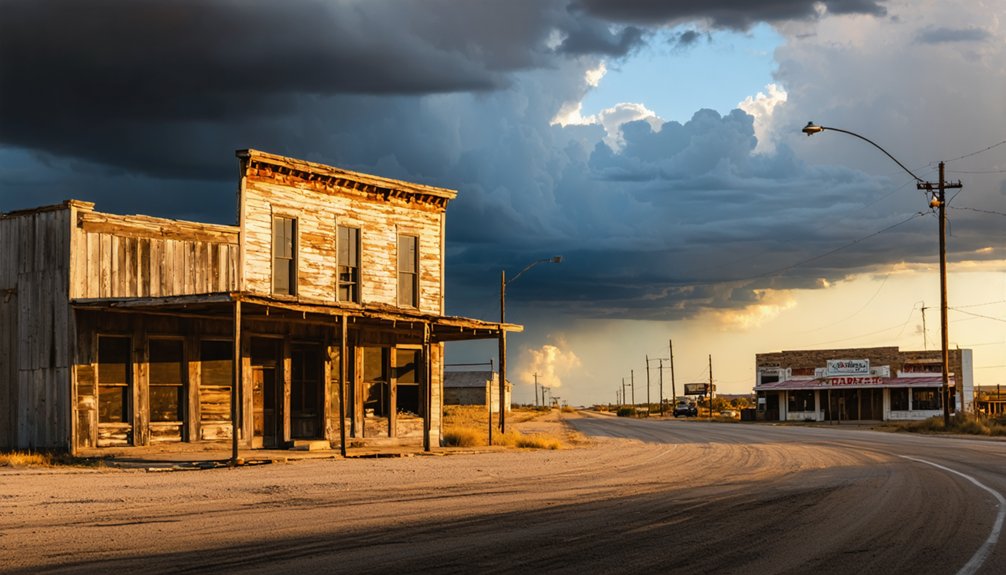
After exploring weathered homesteads and crumbling storefronts, you’ll want a base camp that offers modern comforts alongside historical depth. Baird delivers perfectly, sitting just minutes from Callahan City’s ruins.
Your adventure expands with these strategic stops:
- T&P Railroad Depot Museum – Trace the iron rails that once connected frontier outposts
- Primal Brewing Company – Refresh with craft beer after dusty trail explorations
- Antiques District – Browse two dozen shops across the courthouse square for authentic cowboy relics
- Shady Oaks Golf Course – Unwind with open fairway views
The town’s antique capital reputation means serious local antique shopping opportunities, especially during June’s market. Nearby dining experiences at establishments near the depot complement your historical immersion. You’ll discover Baird’s heritage mirrors Callahan City’s story—just with modern conveniences intact.
Frequently Asked Questions
Are There Any Fees to Visit Callahan City or Belle Plain?
You’ll be absolutely thrilled—there are zero fees to explore these abandoned ghost towns! They’re completely free to roam. Just check parking availability near the sites and note that local business hours don’t apply to these unrestricted, forgotten ruins.
Is the Site Safe for Children and Accessible for Visitors?
You’ll find basic accessibility features for visitors like drive-through access and dirt roads, though rough terrain exists. Safety precautions for families include supervising children near ruins and uneven ground, as these isolated sites lack formal facilities or guardrails.
Can You Camp Overnight Near the Ghost Town Ruins?
While you can’t pitch a tent at the ruins themselves, you’ll find excellent overnight camping options just 20-40 minutes away. Starry Night campsite and Lake Cisco Campground offer nearby lodging alternatives for your ghost town adventure.
Are There Restrooms or Facilities Available at the Site?
No restroom availability or on-site amenities exist at Callahan City’s ruins. You’ll need to plan ahead and use facilities in nearby towns before exploring. This remote ghost town remains undeveloped, preserving its authentic, untouched character.
Do You Need Permission to Explore Private Property Around the Ruins?
Yes, you absolutely need landowner permission before exploring the private ruins. Without it, you’ll face unguarded trespassing risks including injury liability and potential legal consequences. Unsanctioned excavation concerns also protect the site’s fragile historical integrity from unauthorized disturbance.