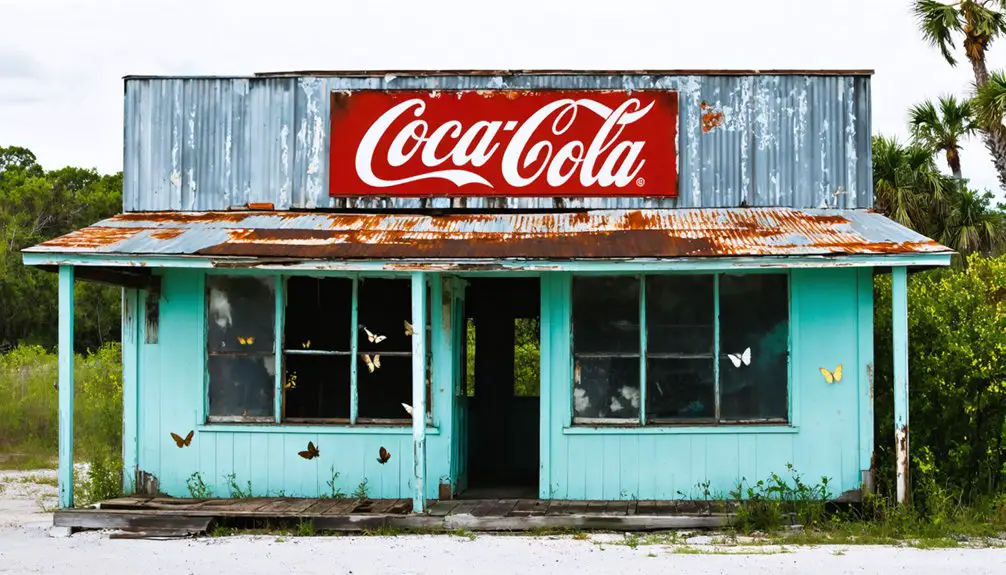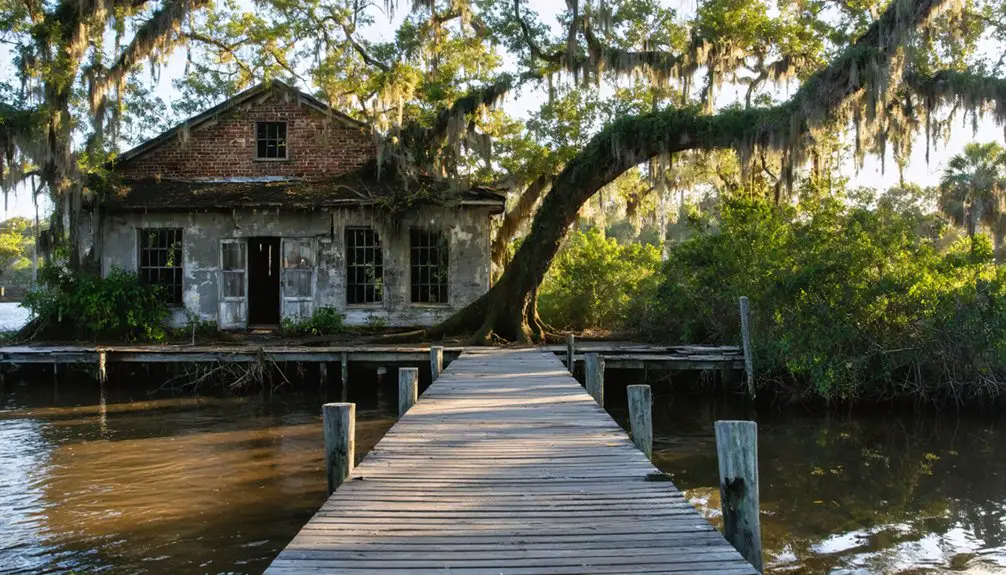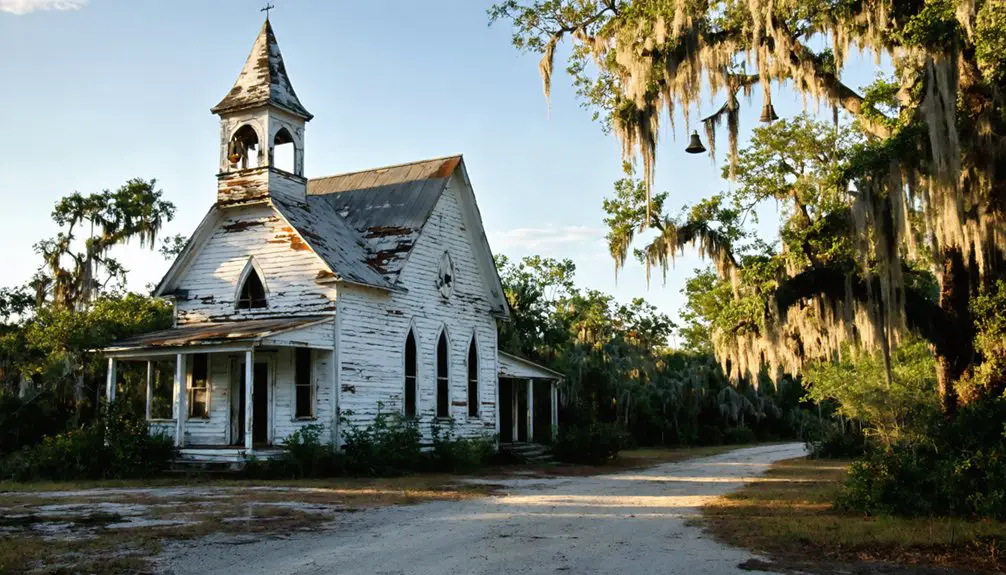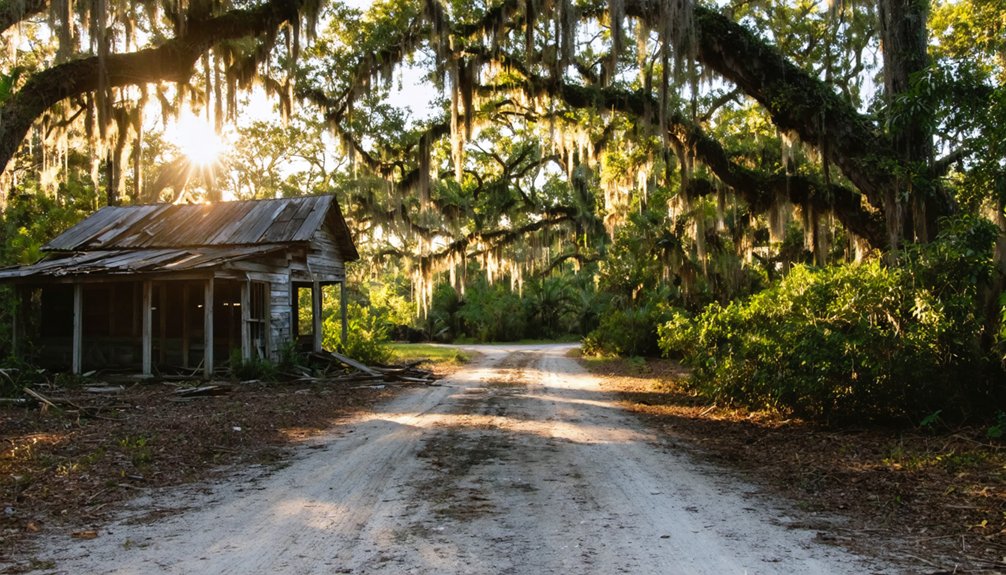
Campville, Florida is one of the easiest ghost town road trips you can make. Drive just a few minutes north of Hawthorne on US-301 and turn at CR-1474 to find what’s left of a once self-sufficient 1800s community. You’ll see a crumbling mansion, standing historic homes, scattered brick debris, and Hope Fellowship Church still on its original ground. There’s no tourist infrastructure here — just raw history waiting to be explored, and the full story runs deeper than it first appears.
Key Takeaways
- Campville is located just north of Hawthorne, Florida, accessible via US-301 at the intersection of CR-1474.
- Key sites include a crumbling mansion, intact 1800s homes, Hope Fellowship Church, and scattered brick factory debris.
- No tourist amenities exist, so arrive self-sufficient and prepared for a flexible, independent exploration experience.
- Wear sturdy boots, avoid exploring alone, and stay alert around unstable rubble and deteriorating structures.
- The town’s decline followed demolition of its brick manufacturing plant, once the community’s primary economic engine.
What’s Left of Campville, Florida?
Everything that remains of Campville tells a fragmented story of what was once a self-sufficient community built on brick and timber.
When you visit, you’ll find abandoned structures that carry real historical significance — a crumbling mansion swallowed by red clay, several intact 1800s homes, and the Hope Fellowship Church still standing on its original ground.
Brick debris scattered across the site marks where the demolished factory once drove the entire local economy. You won’t find tourist amenities here, just raw evidence of a town that thrived and faded.
Walking the area near US-301 and CR-1474, you’re moving through layers of time. What the Camp family built in the mid-1800s now survives only in ruins, remnants, and the memories of descendants still living nearby.
How to Get to Campville From Hawthorne
Getting to Campville from Hawthorne takes only a few minutes, but the drive covers ground that connects two very different chapters of Alachua County history.
Head north on US-301 from Hawthorne, and you’ll reach the CR-1474 intersection where the old settlement once thrived. Your directions options are straightforward — US-301 remains the most direct and accessible route with no detours required.
The roads are public, so you’re free to explore on your own schedule. While you’re passing through, consider pairing the stop with other local attractions in the Hawthorne area before heading out.
No commercial facilities exist at the site, so arrive prepared. The ruins, the church, and the scattered brick debris are waiting quietly off the roadside, ready to tell their story.
What You’ll Actually See at the Campville Site
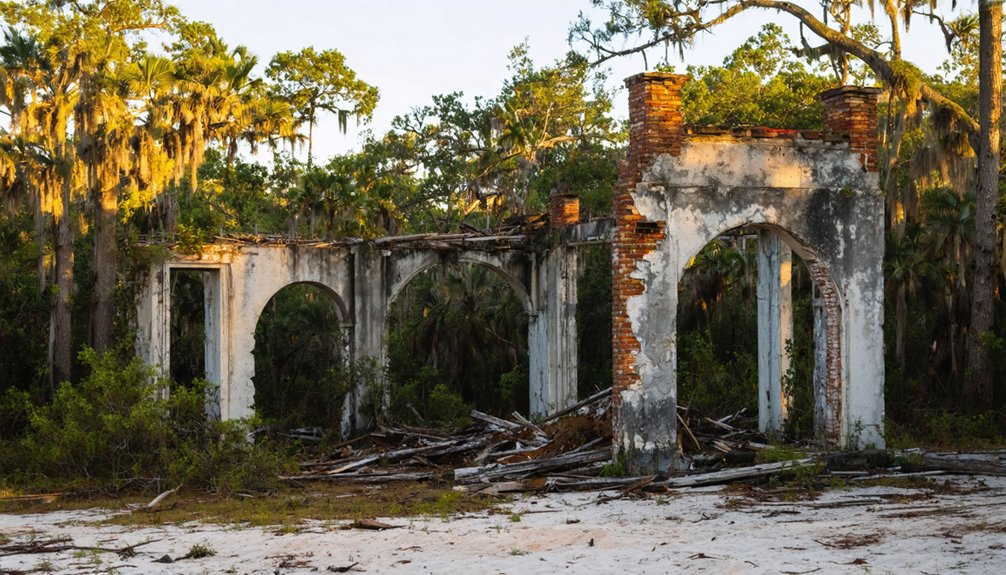
Stepping onto the Campville site, you’ll find a landscape caught between decay and quiet endurance. A crumbling mansion sags into red clay at the wood’s edge, while several 1800s homes still stand nearby, testifying to the town’s historical significance.
Hope Fellowship Church, built in the same era, remains surprisingly intact. Scattered brick debris marks where the demolished factory once drove the entire local economy.
You’ll notice descendants of original workers still living near the site, carrying local legends about the Camp family founders and the town’s former prosperity.
No commercial distractions exist here — just raw history exposed to open sky. Walk carefully; unstable ruins and scattered debris demand your attention.
This place rewards the curious traveler willing to read a landscape honestly.
The Brick Factory That Turned Campville Into a Ghost Town
Behind those standing homes and scattered bricks lies the real engine of Campville’s rise and fall — a massive brick manufacturing plant that once made this small Alachua County settlement matter.
The Camp family built their brick manufacturing operation along the railroad line, giving them direct access to regional markets hungry for building materials. That factory didn’t just employ people — it created the town around it.
When the plant came down, so did Campville’s reason for existing. Town decline followed swiftly after demolition, stripping away the economic foundation that had sustained families, businesses, and community life for decades.
You’ll still find brick debris scattered across the site today, physical remnants of an industry that once defined this place. Those fragments tell the story better than any historical marker ever could.
Safety Warnings Before You Walk the Campville Ruins
Before you set foot on the Campville grounds, you need to know that the crumbling mansion and scattered brick debris from the demolished factory make the terrain genuinely dangerous.
You’ll find unstable rubble underfoot, and the red clay soil shifts unpredictably around deteriorating structures that have stood since the 1800s.
Watch every step you take, stay clear of leaning walls, and treat the ruins with the same respect you’d give any historically fragile site that time and neglect have pushed to the edge of collapse.
Unstable Ruins And Debris
Walking through the ruins of Campville isn’t like visiting a maintained historic site — you’re stepping into genuinely unstable terrain where crumbling 1800s structures, scattered brick debris, and red clay sinkholes can catch you off guard.
Ruin exploration here demands real awareness. The old mansion has collapsed into a red clay mound, and debris hazards from the demolished brick factory litter the surrounding woods.
Bricks shift underfoot without warning, and deteriorating walls from original homes can give way unexpectedly. Watch where you plant every step, especially near the Hope Fellowship Church grounds and former factory site.
Wear sturdy boots, skip open-toed shoes entirely, and never explore alone. Freedom to roam this forgotten Florida town comes with personal responsibility for your own safety.
Navigating Hazardous Ground
Three things will get you hurt at Campville before you ever reach the good ruins: overconfidence, soft-soled shoes, and going alone.
The brick debris scattered across the site demands real hazard assessment before you take a single step forward. Red clay soil shifts unpredictably, especially after rain, and ground stability near the demolished factory footprint is genuinely unreliable.
Wear boots with ankle support. Probe uncertain ground before trusting your weight to it. The crumbling mansion site looks solid until it isn’t. Bring someone who can go for help if something goes wrong.
You’re exploring ground where a nineteenth-century industrial town once operated. That history earned respect.
Walk deliberately, stay aware of what’s overhead and underfoot, and you’ll leave with stories instead of injuries.
Nearby Stops Worth Adding to Your Campville Visit
Since you’re already making the trek out to eastern Alachua County, it’s worth extending your route to take in a few surrounding stops that deepen the region’s layered history.
Hawthorne, sitting just south of Campville along US-301, offers local attractions tied to the same railroad era that once fueled the brick trade. Its small downtown carries genuine historical significance, reflecting the economic rhythms that shaped this corridor throughout the late 1800s.
You’ll also find remnants of old homesteads scattered along CR-1474 that reward curious travelers willing to slow down. Each stop builds a fuller picture of how communities like Campville rose, thrived, and quietly disappeared, leaving only foundations, family stories, and a stretch of Florida backroad connecting it all.
Frequently Asked Questions
Can Visitors Access Campville’s Ruins Year-Round Regardless of Weather Conditions?
You can visit Campville’s ruins year-round, but weather impact affects your experience considerably. Prioritize visitor safety, as Florida’s rains make unstable debris treacherous. You’ll navigate this historically rich, regionally significant site best during drier seasons.
Are There Guided Tours Available for the Campville Ghost Town Site?
No guided tours exist at Campville, but you’ll find guided exploration of its historical significance entirely on your own terms. You can freely access the ruins via public roads, embracing the independence this forgotten Florida ghost town offers.
Did the Camp Family Leave Any Documented Records About Founding Campville?
Since 1850, records remain scarce, but you’ll find Campville history woven into local family legacies. Descendants still living nearby actively preserve the Camp family’s founding story through oral histories and regional archives you can explore firsthand.
What County Was Alachua County Formerly Known as Before 2018?
The knowledge doesn’t specify what county name Alachua County formerly held before 2018, so you’d need additional regional sources to uncover that historic significance and confirm the county name change accurately.
Are Descendants of the Camp Family Still Involved With Preserving the Site?
Countless generations later, you’ll find descendants still breathing life into Campville’s family legacy. While no formal preservation efforts exist, locals actively keep stories alive, connecting you directly to the Camp family’s extraordinary brick-making roots in Florida’s forgotten history.
References
- https://www.ghosttowns.com/states/fl/campville.html
- https://www.geocaching.com/geocache/GC5JVV2
- https://www.youtube.com/watch?v=Uq_xZAzuM2Q
- https://en.wikipedia.org/wiki/List_of_ghost_towns_in_Florida
- https://www.florida-backroads-travel.com/florida-ghost-towns.html
- https://mail.ghosttowns.com/states/fl/fl.html
- https://chazzcreations.com/alachua_county_historic_towns
- https://en.wikipedia.org/wiki/Campville
- https://valdostadailytimes.com/2016/04/28/around-the-banks-of-the-suwannee-17/
- https://freepages.history.rootsweb.com/~gtusa/usa/fl.htm