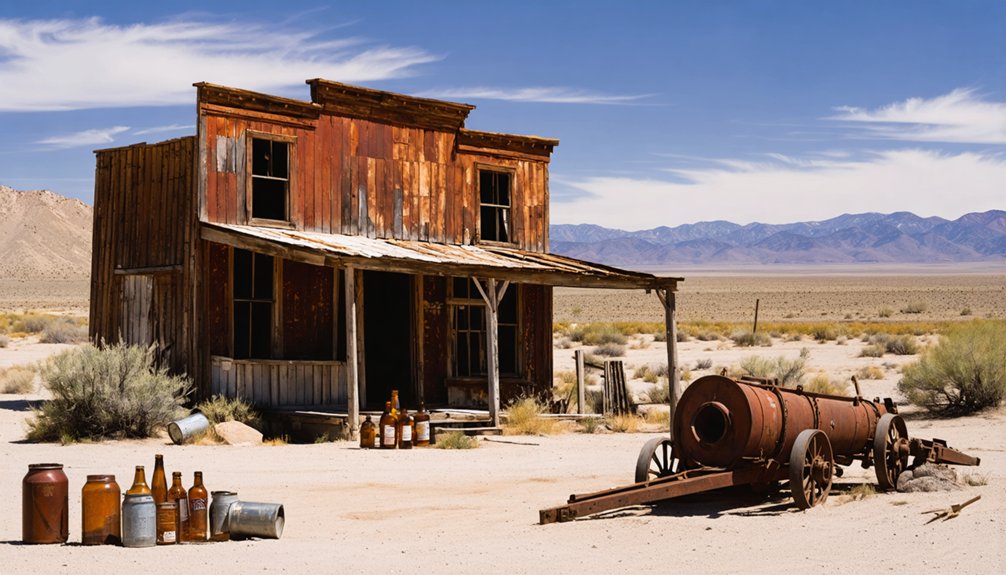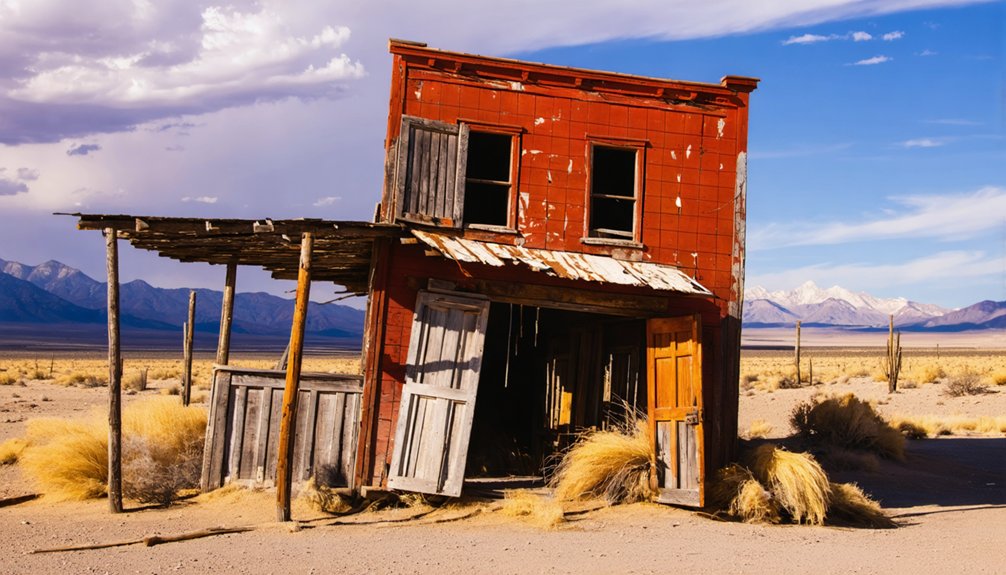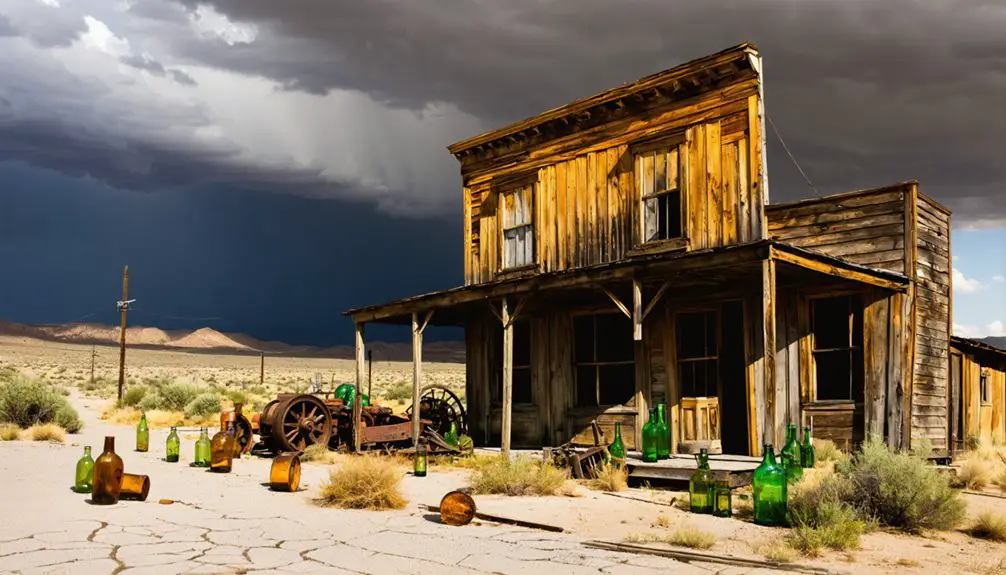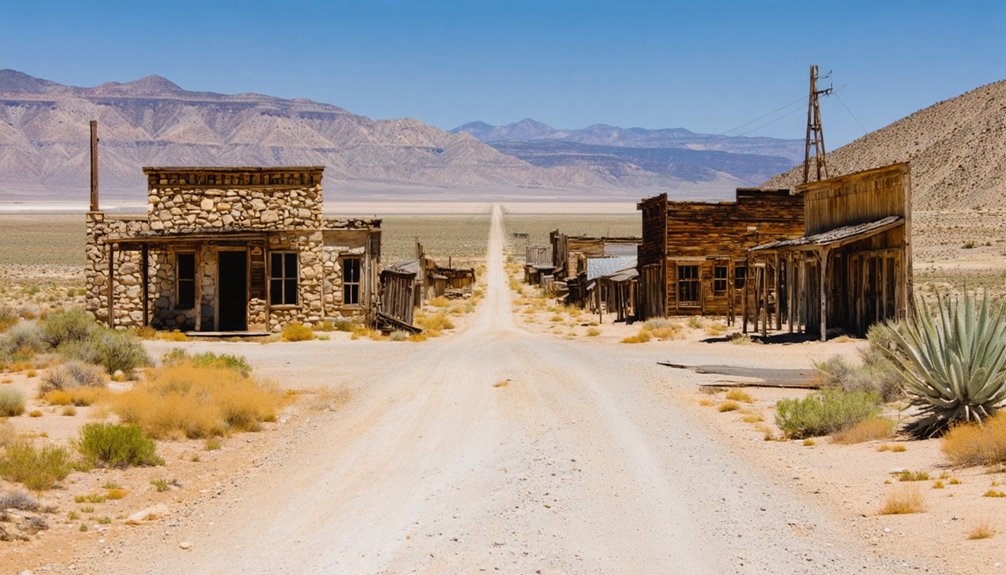
Palisade, Nevada earned its brutal reputation honestly — nearly one violent incident per day between 1876 and 1880 made it the “roughest, toughest town west of Chicago.” Today, it’s a hauntingly quiet ghost town about 10 miles south of Carlin, accessible by rugged desert roads. Visit in spring or fall, pack extra water, and bring offline maps. The ruins hold more stories than you’d expect, and the history runs far deeper than the surface suggests.
Key Takeaways
- Palisade, Nevada, located 10 miles south of Carlin, was once dubbed the “roughest toughest town west of Chicago” before its abandonment by 1910.
- Visit during spring (March–May) or fall (September–October) to avoid extreme summer heat or impassable winter roads.
- Pack essential supplies including extra water, fuel, offline maps, a first aid kit, and a portable battery charger.
- Cell coverage is extremely limited, so download offline maps and inform someone of your route before departing.
- Explore historic ruins like the train station and merchant buildings, which reflect Palisade’s railroad boom and lawless past.
Why Palisade, Nevada Is One of the West’s Most Fascinating Ghost Towns
Few ghost towns in the American West carry the kind of raw, storied history that Palisade, Nevada does. Once dubbed “The roughest toughest town west of Chicago,” this remote desert settlement earned its reputation through sheer, unrelenting chaos.
Between 1876 and 1880, over 1,000 violent incidents rattled its dusty streets — shootouts, bank robberies, and deadly massacres that cemented Palisade legends for generations.
Born as a railroad stop in 1868, the town thrived hard and collapsed fast. By 1910, floods and abandonment had swallowed it whole.
Palisade was born fast, burned bright, and died quiet — swallowed by floodwaters and forgotten by 1910.
What remains today are weathered ruins and ghost town folklore thick enough to feel alive. If you crave wide-open spaces and unfiltered American history, Palisade doesn’t disappoint — it delivers the kind of freedom that only forgotten places can offer.
The Wild History That Made Palisade the Roughest Town in the West
Between 1876 and 1880, over 1,000 violent shootouts, robberies, and massacres rocked this small desert settlement — roughly one incident per day.
A brutal 1878 gang shootout, a three-day bank robbery siege in 1879, and a deadly 1880 mining dispute left bodies and legends in equal measure.
Walking these grounds today, you’re stepping directly into one of the American West’s most unfiltered chapters.
How to Get to Palisade, Nevada
Getting to Palisade means committing to a genuinely remote drive into Elko County, roughly 10 miles south of Carlin, Nevada. This road trip rewards those who prepare honestly for what’s ahead.
Reaching Palisade demands commitment — a remote Elko County drive roughly 10 miles south of Carlin, Nevada.
Before you hit the road, lock in these three essentials for safe Palisade access:
- Water and fuel – No services exist nearby, so tank up and carry extra water before leaving Carlin.
- Navigation tools – Cell coverage disappears fast; download offline maps or bring a physical one.
- Basic repair kit – Desert roads punish unprepared vehicles, so pack a spare tire and emergency supplies.
The drive itself sets the mood perfectly. Sparse desert scrub, open plains, and rocky outcrops frame your approach, pulling you deeper into Nevada’s untamed, railroad-scarred past.
The Best Time of Year to Visit Palisade
Spring and fall are your best bets for exploring Palisade, when temperatures settle into a manageable range and the harsh desert sun won’t drive you back to your car within the hour.
Summer heat in Elko County can be brutal and unforgiving, while winter brings freezing temperatures and the risk of icy, impassable roads to this already remote site.
Plan your visit between April and June or September and October, and you’ll walk the same cracked earth those rough-and-tumble railroad settlers once did, without battling the extremes that defined their hardscrabble existence.
Ideal Seasonal Visiting Windows
When you visit Palisade matters almost as much as how you prepare for it. Nevada’s desert extremes can make or break your experience among these historic ruins.
The best seasonal windows for visitor activities and seasonal attractions align with milder temperatures:
- Spring (March–May): Comfortable temperatures, minimal wind, and clear skies make exploring the ruins rewarding without brutal heat.
- Fall (September–October): Cooling desert air creates ideal conditions for photographing crumbling landmarks and reading historic markers.
- Avoid Summer: Triple-digit heat turns the remote, service-free site into a genuine survival risk.
You’re stepping into a landscape that hasn’t changed much since Palisade’s violent, railroad-driven peak.
Respect the desert’s terms, choose your window wisely, and the ghost town will reveal itself on its own haunting schedule.
Weather Conditions To Expect
Four distinct seasonal personalities shape Palisade’s desert landscape, and knowing which one you’re walking into could be the difference between a memorable ghost town adventure and a dangerous ordeal.
Elko County’s weather patterns are unforgiving and unpredictable, demanding your respect.
Spring delivers mild temperatures but surprise storms.
Summer hits brutally, pushing triple-digit heat across those open plains where outlaws once drew pistols.
Autumn offers the most stable seasonal variations, cooling the desert scrub to comfortable exploration temperatures.
Winter transforms Palisade into an icy, inaccessible ruin, with snow and frozen roads cutting off remote entry points entirely.
You’re not visiting a manicured park — you’re stepping into raw Nevada wilderness.
Dress in layers, carry extra water, and always check regional forecasts before you roll out.
What You’ll See When You Explore Palisade’s Ruins and Landmarks
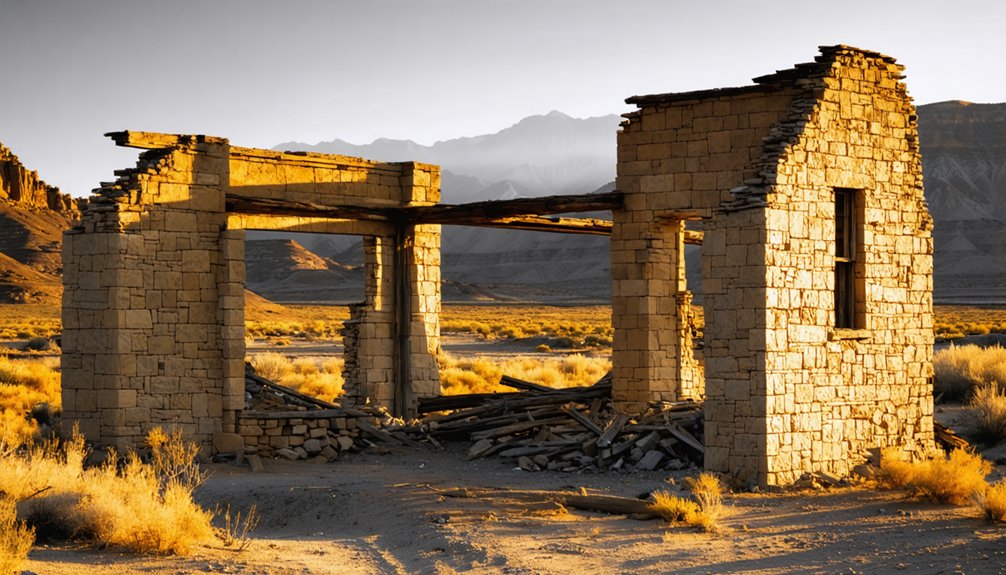
As you wander through Palisade’s skeletal remains, you’ll immediately spot the crumbling train station ruins, a haunting reminder of the railroad’s once-vital role in Nevada’s development.
Scattered merchant building remnants line what were once bustling commercial streets, where outlaws, miners, and railroad workers all crossed paths during the town’s violent peak years.
Historic markers and plaques anchor the chaos to specific events, giving you a vivid sense of just how ruthless life here once was.
Historic Train Station Ruins
Among the most striking remnants you’ll encounter at Palisade is the historic train station, a skeletal structure that once anchored this railroad boomtown to the wider world. Its weathered train station architecture tells a raw, unfiltered story of ambition and collapse.
For ghost town photography enthusiasts, this ruin delivers layers of meaning:
- Collapsed walls reveal the original construction methods used by 1868 railroad crews pushing westward.
- Rusted iron fixtures mark where locomotives once stopped, connecting isolated Nevada to commerce and civilization.
- Crumbling foundations outline the station’s footprint, helping you visualize Palisade at its 500-person peak.
Walk the perimeter carefully, read the historic markers nearby, and let the silence remind you what ambition, violence, and abandonment genuinely look like when nature reclaims what humans left behind.
Merchant Building Remnants
Scattered across Palisade’s dusty floorplan, the merchant building remnants pull you directly into the town’s commercial peak, when over 500 residents needed saloons, general stores, and supply depots to survive the brutal Nevada desert.
You’ll trace crumbling foundation lines and collapsed walls that once defined a thriving merchant history, where goods moved constantly between railroad cars and storefront shelves.
The architectural remnants standing today aren’t polished or restored — they’re raw, wind-scoured, and honest.
Weathered adobe and scattered stone outline structures that fed, supplied, and entertained a rough frontier population.
Run your hand along what’s left of a wall, and you’re touching commerce that once kept a dangerous railroad town alive.
No tour guide filters the experience — just you, open desert, and history exactly as it collapsed.
Historic Markers And Plaques
Planted throughout Palisade’s ruins, the historic markers and plaques give the silence a voice — pointing you toward what stood here, what happened here, and why it mattered.
Though ghost town tours here aren’t guided, these markers keep historic preservation alive without fencing anything off.
Each plaque tells you something worth stopping for:
- Railroad Legacy — How Palisade’s Virginia and Truckee Railroad connection shaped Nevada’s entire transportation backbone.
- Violent Past — The documented incidents between 1876 and 1880 that earned Palisade its ruthless reputation.
- Town’s Collapse — The rerouted railroad, dwindling population, and 1910 flood that erased a once-thriving settlement.
You’re reading history nobody sanitized.
That’s the real freedom of exploring a place like Palisade — the truth stands unfiltered.
What to Pack Before Driving Out to Palisade
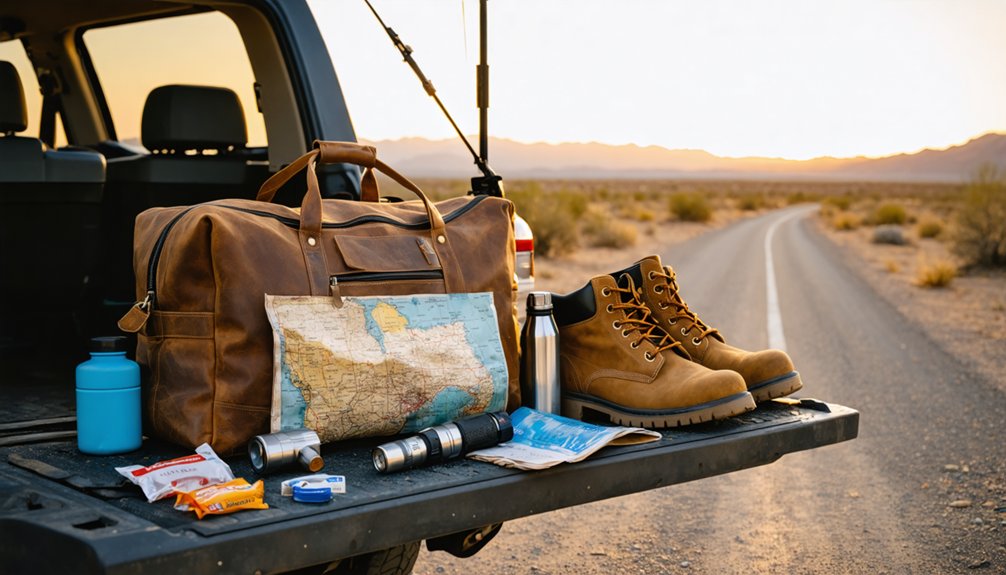
Before you roll out to Palisade, pack these 5 essentials: extra water, a basic car repair kit, weather-appropriate clothing, a paper map, and a fully charged portable battery.
There’s no cell coverage and no services waiting for you out there — just open desert, rocky outcrops, and the bones of a town that once averaged one violent incident per day.
Your travel checklist isn’t optional; it’s survival planning. The arid Elko County landscape punishes the unprepared with brutal temperature swings and zero nearby help.
Treat your packing essentials like a frontier settler would’ve treated their supplies — non-negotiable. Daylight hours are your best ally, so time your drive accordingly.
Palisade rewards the self-reliant, the curious, and the boldly prepared. Don’t show up otherwise.
How to Stay Safe Visiting an Isolated Ghost Town
Visiting an isolated ghost town like Palisade demands the same vigilance the town’s survivors once relied on.
There’s no cell coverage, no services, and no one coming to rescue you if things go sideways. Your emergency preparedness isn’t optional — it’s your lifeline.
No cell service. No rescue team. No second chances. Out here, preparedness isn’t a suggestion — it’s survival.
Follow these safety tips before stepping onto that remote desert ground:
- Tell someone your exact route and expected return time — disappearing into Nevada’s backcountry without a trace isn’t romantic, it’s dangerous.
- Carry enough water for twice your planned stay — Palisade’s arid climate shows no mercy.
- Bring a physical map and basic first aid kit — technology fails where freedom begins.
Palisade rewards the prepared adventurer.
Respect its isolation, and it’ll give you an unforgettable experience worth every dusty mile.
Nevada Ghost Towns Near Palisade Worth Adding to Your Route
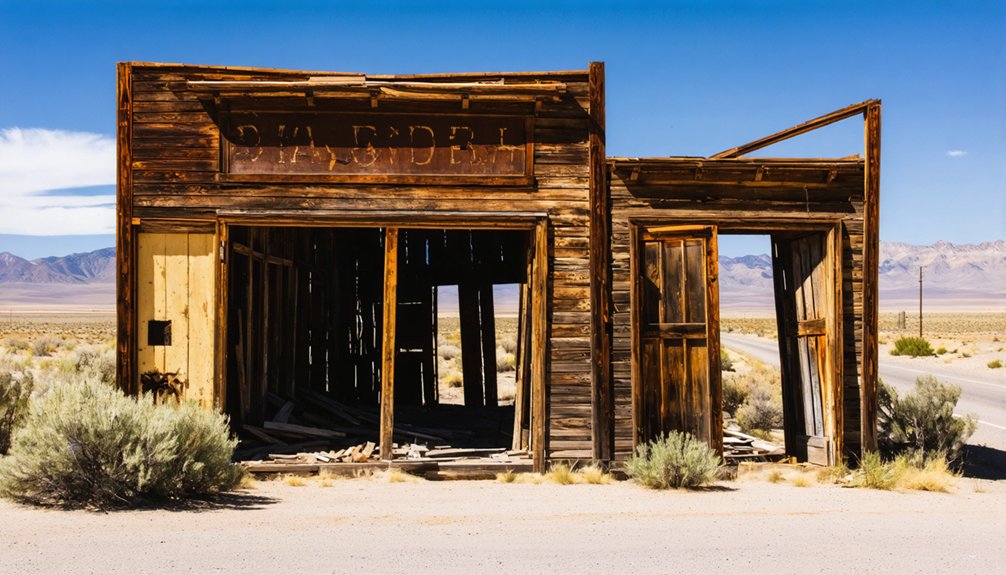
Why stop at Palisade when Nevada’s backcountry is littered with equally compelling ghost towns worth folding into your route?
Nearby mining towns like Cornucopia and Tuscarora offer ghost town attractions that rival Palisade’s raw, abandoned energy. Tuscarora, roughly 50 miles northwest, once pulled silver and gold from the earth during the 1870s boom years, leaving behind crumbling stone buildings and a graveyard that speaks plainly about frontier hardship.
Cornucopia, deeper into Elko County’s open terrain, rewards explorers willing to push down rougher roads. Each site carries its own violent, industrious past — stories written in rusted machinery and collapsed timber.
Chain these stops together, and you’re not just driving Nevada’s backcountry — you’re tracing the full, unfiltered arc of the American West.
Frequently Asked Questions
Is Palisade, Nevada Listed on the National Registry of Historic Sites?
Yes, Palisade’s listed on the National Registry of Historic Sites! You’ll find its historic significance tied to Nevada’s railroad legacy. Though preservation efforts are minimal, you can still explore its untamed, freedom-calling ruins firsthand.
Can Visitors Camp Overnight at the Palisade Ghost Town Site?
The knowledge doesn’t confirm camping regulations for Palisade, but you’ll find zero visitor amenities here. Pack your adventurous spirit, extra water, and supplies — this remote, untamed ghost town rewards only the most self-reliant explorers willing to embrace its wild, forgotten freedom.
Are There Any Guided Tours Available at Palisade, Nevada?
No guided experiences exist at Palisade, but you don’t need one. You’ll roam freely, uncover its historical significance yourself, and let the ruins, the echoes, and the desert wind tell their own untamed story.
Was Palisade Originally Established as a Stop for the Railroad?
Yes, Palisade was established in 1868 as a railroad stop! You’re stepping into rich railroad history when you explore this ghost town, where trains once fueled a wild, untamed community bursting with freedom and frontier spirit.
How Many Violent Incidents Occurred in Palisade Between 1876 and 1880?
When you explore Palisade’s violent past, you’ll discover over 1,000 incidents rocked this town between 1876 and 1880. Palisade history reveals an untamed spirit — averaging one brutal incident daily, proving this wild frontier defied all boundaries.
References
- https://www.youtube.com/watch?v=W7IX89cYLdE
- https://expeditionutah.com/forum/index.php?threads/ghost-town-tour-2020-trip-report.6936/
- https://www.youtube.com/watch?v=eMc3JzSbD6k
- https://nvtami.com/2025/01/16/exploring-elko-county-ghost-towns/
- https://travelnevada.com/ghost-town/
- https://nvtami.com/2024/10/23/palisade-the-roughest-toughest-town-west-of-chicago/
- https://www.visitcalifornia.com/road-trips/ghost-towns/
- https://roadtrippers.com/magazine/dark-skies-and-ghost-towns-stops-on-a-spooky-nevada-road-trip/
- https://www.reddit.com/r/roadtrip/comments/15md7od/western_nevada_and_eastern_california_ghost_town/
- https://www.youtube.com/watch?v=vekC6WPhrsI