Planning a ghost town road trip to Candelaria, Nevada means stepping into 150 years of silver boom history in one of the high desert’s most isolated corners. You’ll explore ruins like the original Wells Fargo building, miners’ cabins, and a historic cemetery. Visit in spring or fall for the best conditions, bring high-clearance vehicles, and pack plenty of water and N95 masks. Everything you need to make this adventure safe and unforgettable is just ahead.
Key Takeaways
- Visit in spring (March–May) or fall (September–November) for the most comfortable temperatures and ideal desert exploration conditions.
- Use a high-clearance vehicle, offline maps, and a GPS device, as Candelaria sits seven miles west of its historical marker.
- Pack at least one gallon of water per person daily, plus two emergency gallons, fuel, dust masks, and safety glasses.
- Explore landmarks including the Wells Fargo building, miners’ cabins, stone mercantile shops, and the historic cemetery revealing mining’s human cost.
- Allow a full day to explore Candelaria and nearby Metallic City, located just three-quarters of a mile south.
What Made Candelaria, Nevada a Boom Town Worth Visiting?
When silver was discovered in Nevada’s rugged Esmeralda County in 1864, Candelaria’s fate as a boomtown was practically sealed. The Northern Belle mine opened in 1873, ultimately generating $15 million in silver — a staggering fortune that transformed this remote desert landscape almost overnight.
By 1882, you’d have found yourself among 1,000 residents, making Candelaria the largest town in Esmeralda County. Its mining history reads like a frontier dream: two hotels, six stores, ten saloons, three doctors, and three lawyers all competing for business.
The Carson and Colorado Railroad arrived that same year, connecting this isolated community to broader commerce.
Candelaria’s cultural significance runs deeper than silver. It represented raw frontier ambition — proof that determined people could build something remarkable in one of America’s most unforgiving landscapes.
What Ruins and Landmarks Can You Still See at Candelaria?
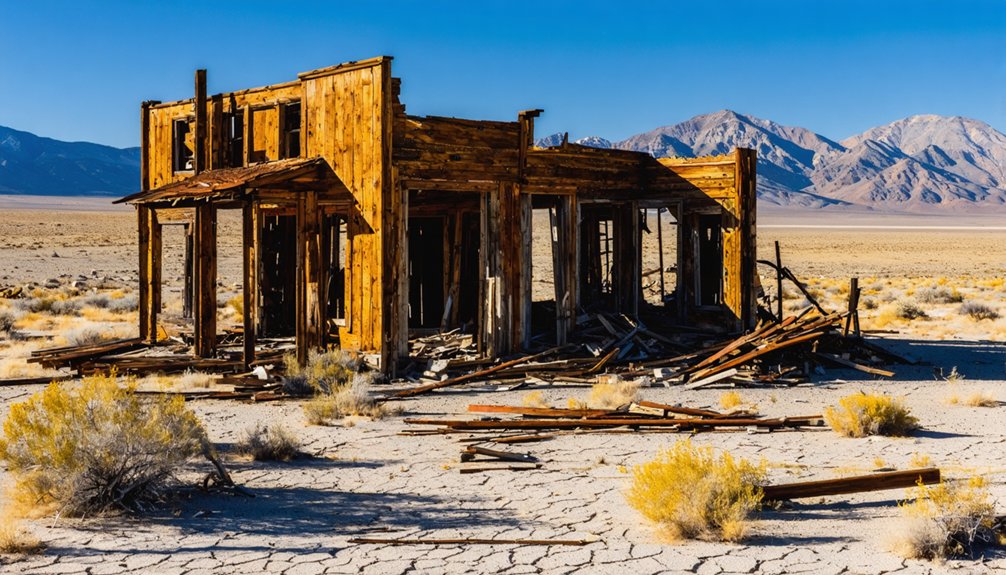
That boomtown ambition didn’t vanish when the silver ran out — it calcified into stone walls and desert-worn ruins that you can still walk through today.
The ambition didn’t die with the silver — it hardened into walls you can still touch today.
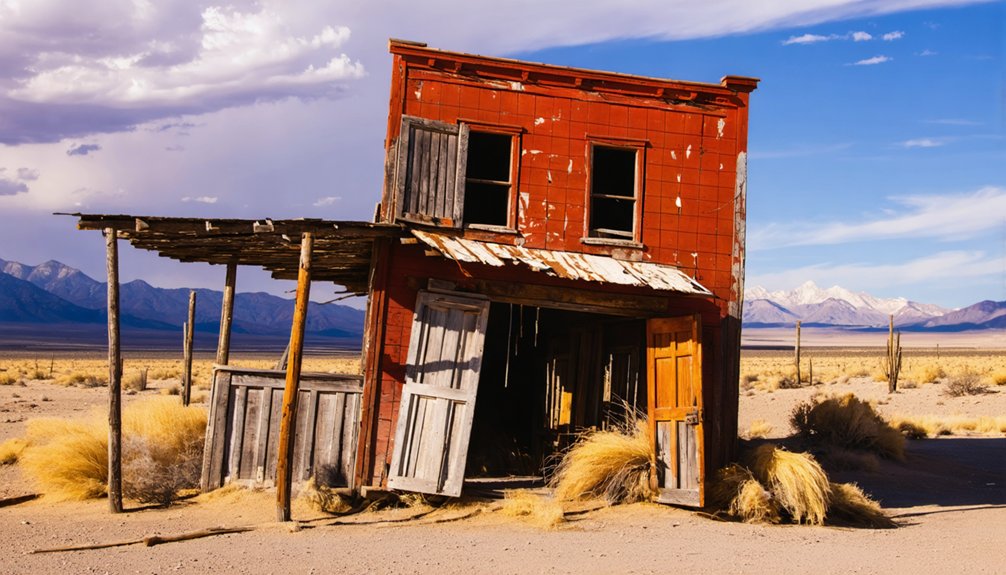
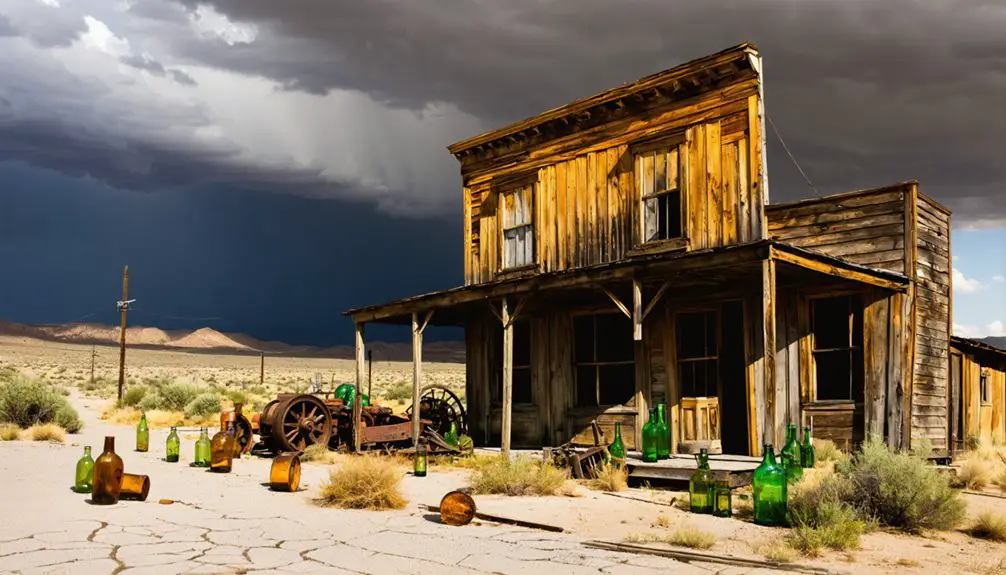
Candelaria history lives in every crumbling facade and hand-stacked terrace you’ll encounter across this windswept site.
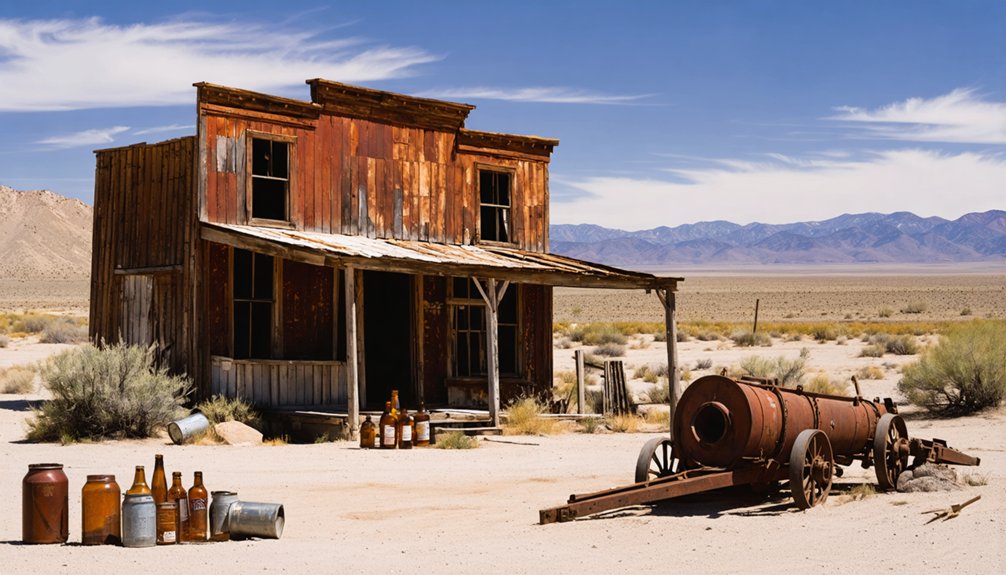
You can explore the original Wells Fargo building, native stone mercantile shops, and miners’ cabins scattered across the hillsides.
The historic cemetery offers a sobering glimpse into the human cost of mining heritage — respiratory disease claimed many who worked these dust-choked operations.
Stone-terraced hillsides reveal how aggressively settlers reshaped this landscape.
Unlike nearby Metallic City, which modern mining completely obliterated, Candelaria’s ruins survived.
The Kinross Gold Candelaria Mine on Mt. Diablo dominates the skyline, reminding you that extraction never truly stops here.
The Best Time of Year to Visit Candelaria, Nevada
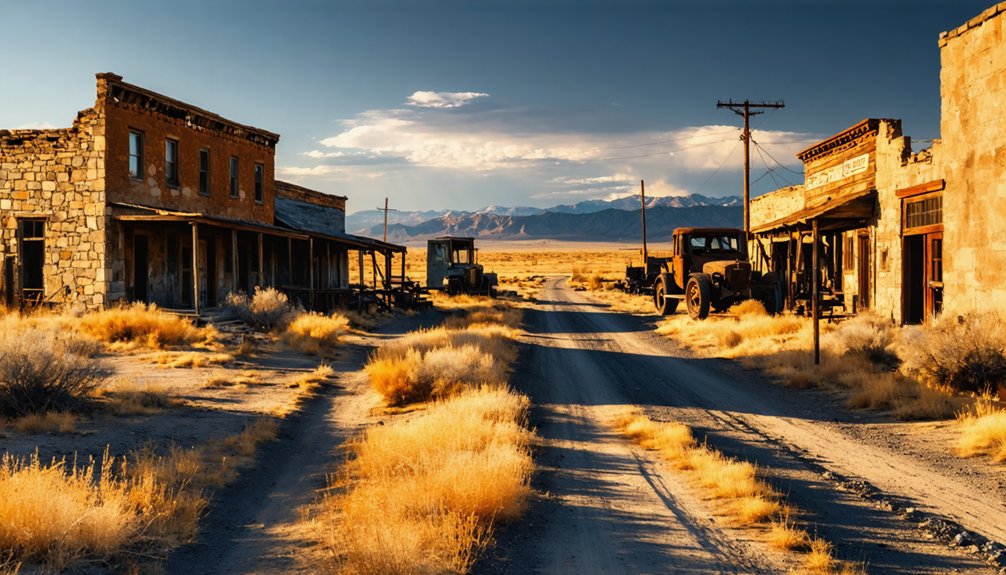
Timing your visit to Candelaria can mean the difference between an unforgettable desert exploration and a miserable slog through extreme heat or impassable roads.
Among the best visiting seasons, spring (March through May) delivers mild temperatures, clear skies, and manageable dirt roads — ideal for photographing ruins and wandering the historic cemetery.
Fall (September through November) offers equally pleasant weather considerations, with cooler afternoons and stunning desert light.
Avoid summer entirely; Nevada’s high desert bakes under brutal triple-digit heat, making outdoor exploration genuinely dangerous.
Winter brings freezing temperatures and occasional snow that can strand you on remote access roads.
You’re visiting an isolated, windswept site seven miles from civilization, so plan accordingly, carry extra water, and always check road conditions before heading out.
How to Get to Candelaria’s Remote Ghost Town Site
Getting to Candelaria means traversing a remote stretch of southwestern Nevada where paved roads give way to rugged desert terrain, so you’ll want a high-clearance vehicle and a detailed map before you leave.
The site sits seven miles west of the historical marker, far from any town, gas station, or cell service, making advance fuel and supply planning non-negotiable.
Once you commit to the route, you’re following the ghost of the old Wadsworth-Columbus Freight Road, a 120-mile lifeline that once connected this silver boomtown to the outside world.
Route Planning Essentials
Reaching Candelaria requires traversing roughly 120 miles of remote Nevada terrain, so you’ll want to plan your route carefully before heading out.
The old Wadsworth-Columbus Freight Route once connected this silver boomtown to the outside world, and traces of that mining legacy still shape modern access roads.
Before you go:
- Map offline routes — Cell service disappears fast in Mineral County’s isolated terrain.
- Fuel up completely — Gas stations are scarce across this stretch of southwestern Nevada.
- Check road conditions — Desert washes flood seasonally, cutting off unpaved access points.
You’re chasing genuine ghost town history here, so respect the remoteness.
Pack extra water, keep your tank full, and embrace the frontier freedom this windswept, largely forgotten corner of Nevada still delivers.
Remote Access Challenges
Once you leave the last paved road behind, Candelaria’s remote location seven miles west of the historical marker site makes every mile feel earned. The remote terrain demands a capable, high-clearance vehicle — this isn’t a Sunday cruise.
You’re following access routes that once carried freight wagons 120 miles from Wadsworth, so expect unforgiving desert conditions: washboard dirt, shifting gravel, and relentless wind.
No gas stations, no cell service, no safety nets exist out here. Carry extra fuel, water, and a spare tire before you commit to the drive.
The isolation that preserved Candelaria’s stone ruins and cemetery from development is the same isolation that’ll strand you if you’re unprepared. Respect the remoteness, plan accordingly, and the frontier rewards you with something rare — genuine solitude.
What to Pack for Candelaria’s Isolated High-Desert Location
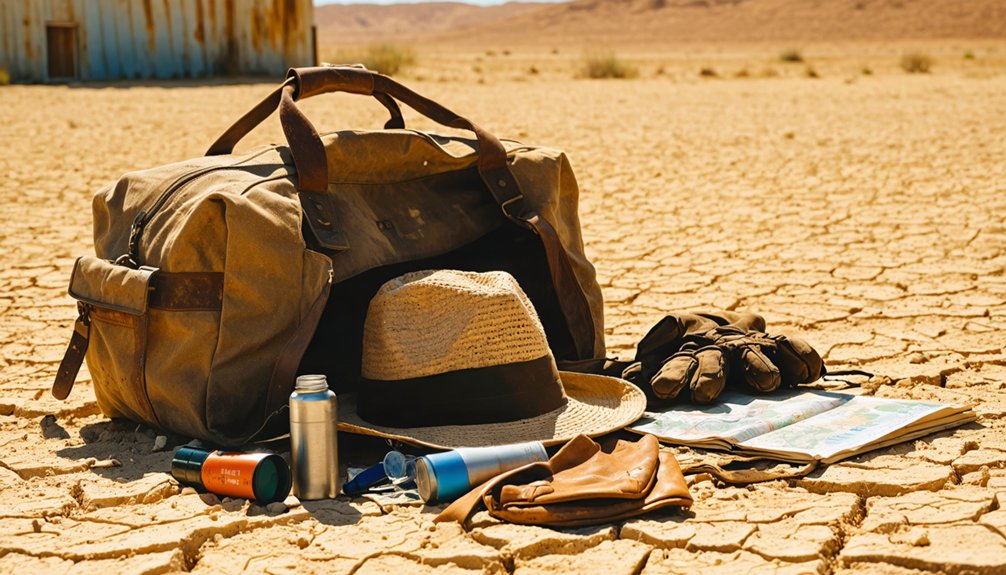
You’ll want to pack at least a gallon of water per person per day, since Candelaria sits in an unforgiving high desert with no reliable water sources nearby.
Bring a dust mask or respirator, because the same toxic dust that once caused miners’ respiratory disease still blows across the windswept ruins.
Finally, load offline maps and a compass before you leave civilization, since this remote site sits seven miles from the nearest historical marker with no cell service to guide you.
Essential Water Supply Needs
Pack these essentials:
- One gallon per person daily minimum — desert heat accelerates dehydration faster than you’ll expect.
- Emergency reserve supply — carry an additional two gallons per person beyond your planned stay.
- Water purification tablets or filter — backup systems guarantee freedom if supplies run unexpectedly low.
No gas stations, stores, or running water exist nearby. You’re responsible for everything you need.
Respect the desert’s terms, and Candelaria rewards you with authentic, untamed exploration.
Protective Gear For Dust
Candelaria’s toxic history makes dust protection a non-negotiable priority. Decades of dry stamp mill operation scattered heavy-metal-laced particles across the site, and those particles don’t stay put. Desert winds constantly stir them back into the air you’ll breathe while exploring ruins and the historic cemetery.
Pack an N95 respirator — not a basic dust mask — to genuinely protect your respiratory health. A well-fitted respirator filters fine silica and metalite particles that a cloth mask simply can’t stop.
Bring safety glasses to shield your eyes from windblown grit, and tuck a spare respirator into your bag. Candelaria’s remoteness means no supply runs are possible once you’re there. Proper dust protection lets you roam freely without trading tomorrow’s health for today’s adventure.
Once you leave paved roads behind, Candelaria’s coordinates — 38°09′32″N 118°05′21″W — become the most important numbers you’re carrying.
This remote, windswept site sits roughly 120 miles from Wadsworth, where cell signals vanish fast.
Pack these three navigation essentials:
- Offline maps downloaded before departure — navigation apps like Gaia GPS or OnX let you track your position without cellular service.
- A dedicated GPS device with preloaded waypoints, giving you a reliable backup if your phone dies in the desert heat.
- A printed topographic map of Mineral County — old-school, but it never loses battery.
You’re traveling through true high-desert isolation here.
Don’t trust a single device alone. Redundancy isn’t paranoia — it’s what keeps your adventure from becoming a rescue operation.
What Ghost Towns and Sites Are Near Candelaria, Nevada?
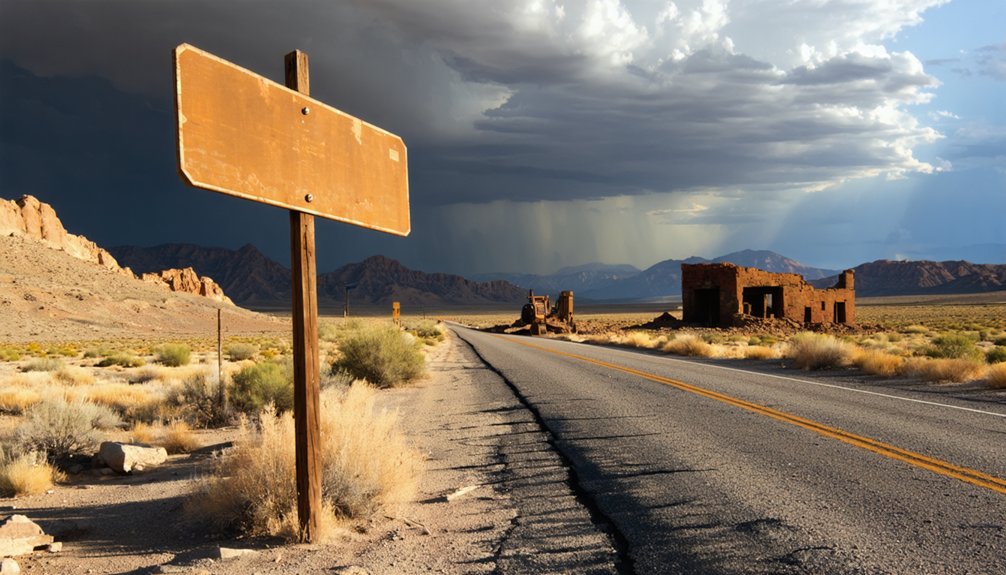
Nestled within the same desolate stretch of southwestern Nevada, several ghost towns and ruins sit close enough to Candelaria to make for a rewarding day of exploration.
Metallic City, just three-quarters of a mile south, once shared Candelaria’s mining history but wasn’t as fortunate — modern open-pit operations completely obliterated it. You’ll find no ruins there, only a sobering reminder of how industrial progress erases the past.
Candelaria itself, however, survived relatively intact, offering you stone mercantile buildings, miners’ cabins, native stone-terraced hillsides, and a historic cemetery worth wandering through.
The surrounding district represents one of southwestern Nevada’s most productive ghost towns corridors from the 1870s onward.
Pack your camera, bring enough fuel, and give yourself a full day to absorb everything these forgotten places offer.
Is It Safe to Explore Candelaria’s Abandoned Ruins?
Wandering through Candelaria’s stone ruins feels thrilling, but knowing what hazards await you makes the difference between a memorable trip and a dangerous one.
Safety concerns here are real — unstable structures, abandoned mine shafts, and toxic dust from old dry stamp mill operations still pose serious risks. Use these exploration tips to stay safe:
- Never enter crumbling buildings — weakened native stone walls collapse without warning.
- Avoid open mine shafts — unseen vertical drops hide beneath overgrown brush around the Northern Belle district.
- Wear an N95 mask — historic toxic dust residue lingers in disturbed soil from dry milling operations.
You’re free to roam Candelaria’s cemetery and terraced hillsides, but respect the site’s boundaries where Kinross Gold’s reclamation work remains active.
Frequently Asked Questions
Was Candelaria Ever Considered for Official Nevada State Historic Designation?
The knowledge doesn’t confirm Candelaria’s official Nevada state historic designation, but you can’t ignore its ghost town significance. Its surviving ruins and Wells Fargo building absolutely warrant serious historic preservation consideration for freedom-loving explorers like you.
Can You Legally Take Artifacts or Souvenirs From Candelaria’s Ruins?
You shouldn’t remove anything from Candelaria’s ruins. Artifact preservation laws carry serious legal implications, so leave relics where they rest. Respect the site’s history, embrace the freedom of exploration, and you’ll carry memories—not stolen pieces—home.
Is There Cell Phone Coverage or Emergency Services Near Candelaria?
Like a signal lost in the void, cell service availability vanishes at Candelaria’s remote, windswept ruins. You’re on your own out there — emergency response could take hours, so pack supplies and plan carefully before exploring.
Did Any Famous Historical Figures Ever Visit or Live in Candelaria?
The knowledge doesn’t confirm any famous visitors, but Candelaria’s legends carry deep historical significance. You’d walk streets once bustling with frontier characters, ambitious miners, and bold entrepreneurs who shaped Nevada’s wildest silver boom era.
Are Guided Tours of Candelaria Available Through Any Organizations?
No formal guided exploration exists, but you’re the captain of your own adventure here. Chart your course through Candelaria’s ruins independently, uncovering local history through crumbling walls, historic cemeteries, and frontier remnants that speak for themselves.
References
- https://erikjengh.wordpress.com/2016/06/25/candelaria-and-metallic-city-a-tale-of-two-cities/
- https://nevadamining.org/nevada-mining-ghost-towns-candelaria/
- https://travelnevada.com/ghost-town/candelaria-ghost-town/
- https://en.wikipedia.org/wiki/Candelaria
- https://shpo.nv.gov/nevadas-historical-markers/historical-markers/candelaria-and-metallic-city
- https://www.youtube.com/watch?v=tvkMSX-F-cQ
- https://www.nvexpeditions.com/mineral/candelaria.php
- https://forgottennevada.org/sites/candelaria.html