Planning a road trip to Woodruff, Kansas means heading 20 miles north of Phillipsburg into a windswept stretch of prairie near the Nebraska line. Once home to nearly 300 residents and 40 businesses, this ghost town has dwindled to just 13 people by 2020. You’ll find abandoned homes, railroad grade depressions, and open prairie where a bustling community once thrived. Stock up on supplies in Phillipsburg before you go — there’s much more to uncover about Woodruff’s fascinating rise and fall.
Key Takeaways
- Woodruff sits 20 miles north of Phillipsburg, Kansas, near the Nebraska border, making Phillipsburg the ideal base camp for your visit.
- The town once had nearly 300 residents and 40 businesses, but only 13 residents remained by the 2020 census.
- No commercial buildings, stores, or fuel stops exist in Woodruff, so stock up on water, snacks, and fuel in Phillipsburg.
- Cell service is limited, so download offline maps beforehand and check rural road conditions, especially after heavy rain.
- Visit during spring or fall for mild temperatures, and explore on weekdays for uninterrupted solitude and a richer historical experience.
Woodruff, Kansas: A Ghost Town 20 Miles From the Nebraska Line
Tucked against the Nebraska state line in Phillips County, Woodruff, Kansas sits roughly 20 miles north of Phillipsburg along the quiet banks of Prairie Dog Creek.
Once a booming settlement of nearly 300 souls, this unincorporated community carries a rich railroad history tied to the Chicago, Burlington & Quincy Railroad that helped it thrive in its early days.
You’ll find a town shaped by agricultural heritage, where farmers and ranchers once relied on nearly 40 business establishments to sustain their livelihoods.
Today, Woodruff’s 2020 census counted just 13 residents, its business buildings long gone.
What remains are scattered residences and rolling prairies that whisper stories of a vibrant past.
If you crave open roads and forgotten history, Woodruff rewards your curiosity.
How Woodruff Went From a Railroad Boomtown to Nearly Nothing
Woodruff’s rise was swift, built on railroad ambition and prairie promise. The Chicago, Burlington & Quincy Railroad’s influence drove nearly 40 businesses into this small Kansas town by 1906.
Then the economic shift hit hard, and Woodruff couldn’t recover.
When the economic tide turned, Woodruff had no lifeline to grab — only a slow, inevitable unraveling.
Here’s what unraveled the town:
- Railroad dependency left Woodruff vulnerable when transportation patterns changed and commerce dried up
- Population decline dropped sharply from 200 residents in 1910, stripping away the customer base local businesses needed
- Post office closure on March 15, 1956, delivered the final blow, triggering the removal of all remaining business buildings
Today you’ll find scattered residences and open prairie where a booming community once stood.
Woodruff didn’t vanish overnight — it quietly faded, leaving the plains to reclaim what ambition once built.
What’s Left to See in Woodruff Today
When you pull into Woodruff today, you’ll find a handful of scattered prairie residences standing where nearly 40 businesses once thrived.
The commercial buildings — the bank, hotel, hardware store, and Alfalfa Mill — are completely gone, leaving open land where a booming town of 300 once operated.
You can still trace the historic Chicago, Burlington & Quincy Railroad route that originally put Woodruff on the map, making the quiet drive a rewarding experience for anyone who appreciates the layered history beneath the plains.
Scattered Prairie Residences Remain
Few traces of Woodruff’s once-bustling streets survive today, but what remains carries a quiet, haunting beauty that makes the drive worthwhile.
You’ll find scattered abandoned homes standing against the open sky, silent witnesses to a community that once thrived with nearly 300 residents. The prairie heritage here speaks through every weathered board and overgrown lot.
As you explore, watch for:
- Isolated residences dotting the landscape where business buildings once stood
- Open prairie views stretching toward the Nebraska state line just north
- Prairie Dog Creek, still flowing quietly through the land that shaped Woodruff’s founding
No shops, no crowds — just wide-open freedom and raw history.
You’re fundamentally walking through a living photograph of Kansas’s agricultural past.
Vanished Business Buildings
Once nearly 40 business establishments lined Woodruff’s streets — a bank, hotel, hardware dealer, blacksmith, Alfalfa Mill, and general merchandise stores all humming with commerce by 1906 — but you won’t find a single one standing today.
The post office closure on March 15, 1956, triggered the final exodus, and every business building followed, leaving behind vanishing storefronts that exist now only in historical records and faded photographs.
When you walk these empty grounds, you’re standing where real people built real lost livelihoods — farmers traded supplies, ranchers negotiated deals, and neighbors exchanged news.
The Chicago, Burlington & Quincy Railroad once made this prairie hub feel permanent. It wasn’t.
What remains is open sky, quiet land, and the invisible weight of everything that once thrived here.
Historic Railroad Route Remnants
The Chicago, Burlington & Quincy Railroad corridor that once made Woodruff feel permanent left behind subtle but readable marks on the Kansas prairie. You can still trace this ghost town’s railroad history if you know what to look for.
Watch for these remnants during your visit:
- Grade depressions running through the landscape where the railroad bed once carried freight and passengers northward
- Vegetation patterns that follow the old right-of-way, revealing disturbed soil where tracks connected Woodruff to larger markets
- Road alignments near Prairie Dog Creek that historically paralleled the rail line serving this farming community
You’ll need patience and a sharp eye, but reading these landscape clues connects you directly to Woodruff’s boom years. That’s the quiet reward of exploring Kansas ghost towns on your own terms.
Which Other Phillips County Ghost Towns Are Worth the Drive?
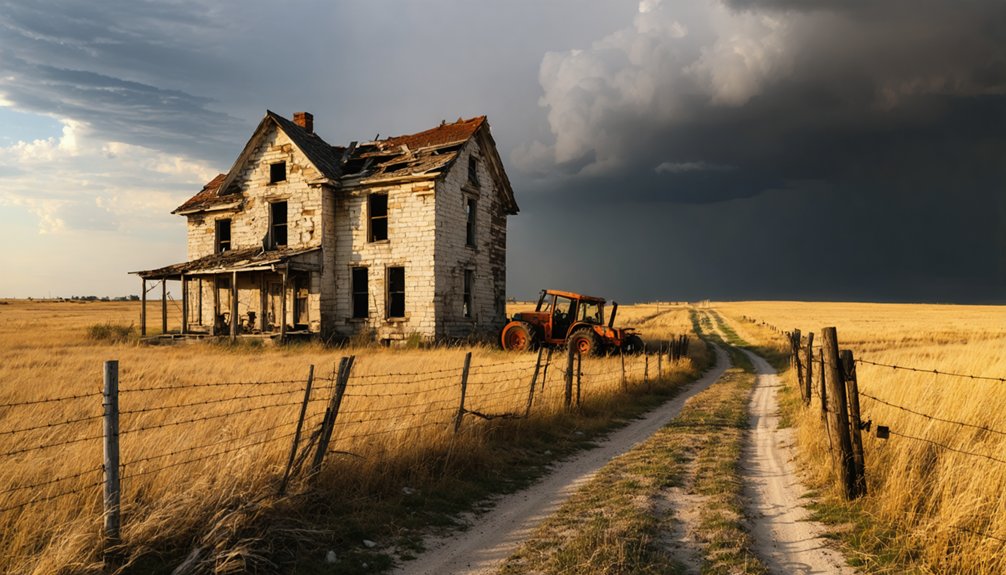
While Woodruff makes a rewarding stop, Phillips County’s ghost town landscape doesn’t end there. The county holds several forgotten settlements that share Woodruff’s ghost town history, each shaped by the same relentless agricultural heritage that built and ultimately abandoned them.
Glade, Logan, and Kirwin offer their own quiet stories of boom and bust across the rolling Kansas plains. You’ll find weathered structures, empty lots, and stretches of rural road that once buzzed with commerce.
Each stop adds another layer to your understanding of how farming communities thrived, then faded when railroads shifted and populations thinned.
Pack a map, fill your tank in Phillipsburg, and give yourself a full day. This corner of northwestern Kansas rewards the curious traveler willing to wander its unhurried backroads.
How to Get to Woodruff From Phillipsburg
Getting to Woodruff from Phillipsburg takes roughly 20 miles of northbound driving through some of the quietest prairie landscape in Kansas.
Twenty miles north of Phillipsburg, the Kansas prairie opens wide and quiet, pointing you straight toward Woodruff.
You’ll head straight toward the Nebraska state line, following rural roads that cut through rolling farmland with almost no traffic. This ghost town sits in Granite Township, Phillips County, making it an easy solo drive for anyone chasing local history.
Here’s what to expect on your route:
- Start in Phillipsburg, the county seat, and head north on rural roads toward the Nebraska border
- Watch for Prairie Dog Creek, a landmark tied directly to Woodruff’s original settlement
- Arrive with low expectations for signage — this ghost town offers scattered residences and zero business buildings
Pack a map, embrace the solitude, and enjoy the ride.
When Should You Make the Drive to Woodruff?

When you make the drive to Woodruff matters more than you might expect. Spring and fall offer the best season for this road trip, giving you mild temperatures and stunning prairie scenery without summer’s brutal heat or winter’s icy rural roads.
April through June brings wildflowers across the rolling plains, while September and October paint the landscape in golden tones that make the quiet remnants feel even more atmospheric.
Avoid January and February entirely — northwestern Kansas roads near the Nebraska border can become treacherous fast. Summer works if you start early and carry extra water, but midday heat turns a peaceful exploration into an endurance test.
Weekdays give you uninterrupted solitude, which honestly suits a ghost town perfectly. You’ll want that silence to feel the weight of Woodruff’s faded history.
What to Pack for a Day Trip to Woodruff and the Prairie
Once you’ve picked your season, packing smart makes the difference between a satisfying prairie adventure and an uncomfortable slog.
Woodruff’s remote location means no stores, no services, just open sky and scattered residences. Come prepared and you’ll move freely across the landscape.
Woodruff offers no shortcuts — just wide-open space and the freedom that comes with arriving fully prepared.
- Water and snacks: Bring more than you think you need; the nearest town is 20 miles south in Phillipsburg.
- Camera and binoculars: Local wildlife roams these rolling prairies, and you’ll want close-up views without disturbing anything.
- Notebook and reference materials: Historical markers and rural signage reward those who document details for later research.
Wear layered clothing, sturdy shoes, and sun protection.
Cell service runs thin out here, so download offline maps before leaving Phillipsburg.
Where to Eat and Stay Near Woodruff
Phillipsburg serves as your base camp for exploring Woodruff, sitting 20 miles south and offering the only reliable food and lodging within reasonable distance.
You’ll find local dining options ranging from casual diners to family restaurants that fuel you up before heading north into the quiet prairie. Stock up on snacks and water too, since you won’t find anything open in Woodruff itself.
For nearby accommodations, Phillipsburg has motels that give you a comfortable overnight without breaking the bank. Staying the night lets you explore Phillips County’s other ghost towns without rushing.
Book ahead during summer weekends when road-trippers move through the region. Phillipsburg also serves as the county seat, so you’ll have access to gas stations and basic supplies before you hit those rural roads north.
What to Know Before You Visit Woodruff, Kansas
Visiting Woodruff means stepping into a place where the past has nearly vanished, so preparation matters more than you’d expect for such a short drive.
This unincorporated community sits 20 miles north of Phillipsburg, with no services, businesses, or fuel stops waiting for you. Respecting the remaining residents and their prairie heritage keeps this ghost town history accessible for future explorers.
Before heading out, keep these essentials in mind:
- Fuel up in Phillipsburg — there’s nothing available once you head north toward Nebraska
- Bring water and snacks — the rolling plains offer no conveniences
- Check road conditions — rural routes near the Nebraska border can deteriorate after heavy rain
Pack light, plan smart, and enjoy the freedom of open Kansas prairie.
Frequently Asked Questions
Is There Cell Phone Signal Available When Visiting Woodruff, Kansas?
Cell coverage in Woodruff, Kansas isn’t guaranteed, as signal strength can be spotty in this remote prairie ghost town. You’ll want to download offline maps before venturing out to explore its quiet, wide-open rural landscape.
Are There Any Guided Ghost Town Tours Available in Phillips County?
No official guided tours exist, but you can blaze your own trail exploring Phillips County’s ghost town history and local legends — saddle up your horseless carriage and roam freely through Woodruff’s hauntingly quiet, story-rich prairie landscape!
Can You Legally Metal Detect or Artifact Hunt in Woodruff?
You’ll need landowner permission for metal detecting regulations on private property. Practice artifact hunting ethics by respecting the site, leaving history undisturbed, and never removing items from land you don’t own or haven’t secured access to.
Are Pets Allowed to Roam Freely in Woodruff’s Open Areas?
Like frontier settlers, you’re free to roam! Woodruff’s open prairies have no formal pet friendly policies, but you’ll want to monitor wildlife interactions closely — your pets shouldn’t disturb the natural ecosystem thriving in this quiet ghost town.
Does Woodruff Flood Seasonally Due to Its Prairie Dog Creek Location?
Prairie Dog Creek’s creek dynamics can bring seasonal flood risks your way, so you’ll want to plan visits carefully. Spring rains swell the creek, potentially affecting Woodruff’s low-lying areas, making timing your ghost town adventure absolutely essential!
References
- https://legendsofkansas.com/woodruff-kansas/
- https://michael-hankins.com/2025/12/17/woodruff-kansas-blues/
- https://www.ksgenweb.org/KSPhillips/towns/woodruff.html
- https://www.youtube.com/watch?v=8dtIPX7pIqI
- https://legendsofkansas.com/butler-county-extinct-towns/
- https://abandonedkansas.wordpress.com/category/chase-county/