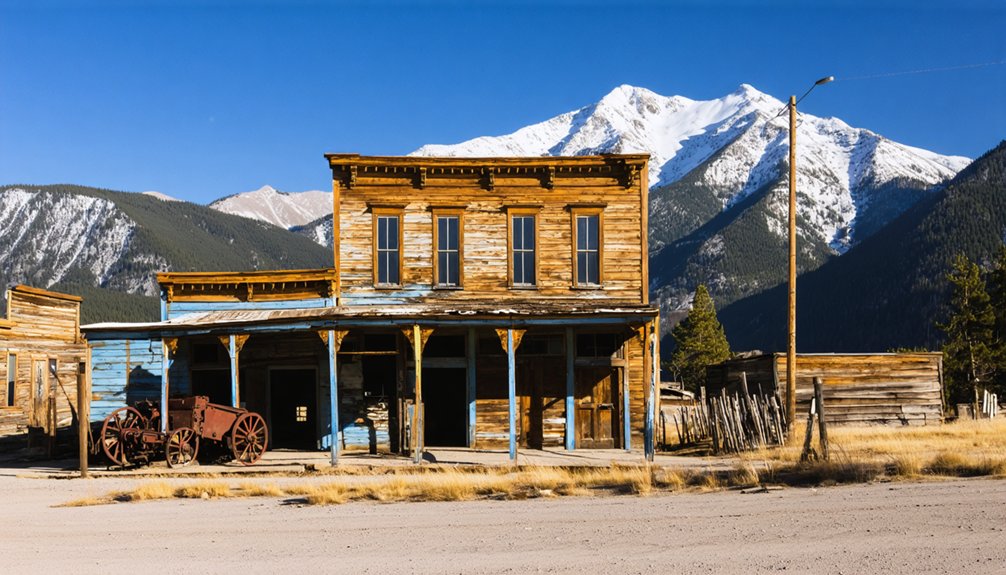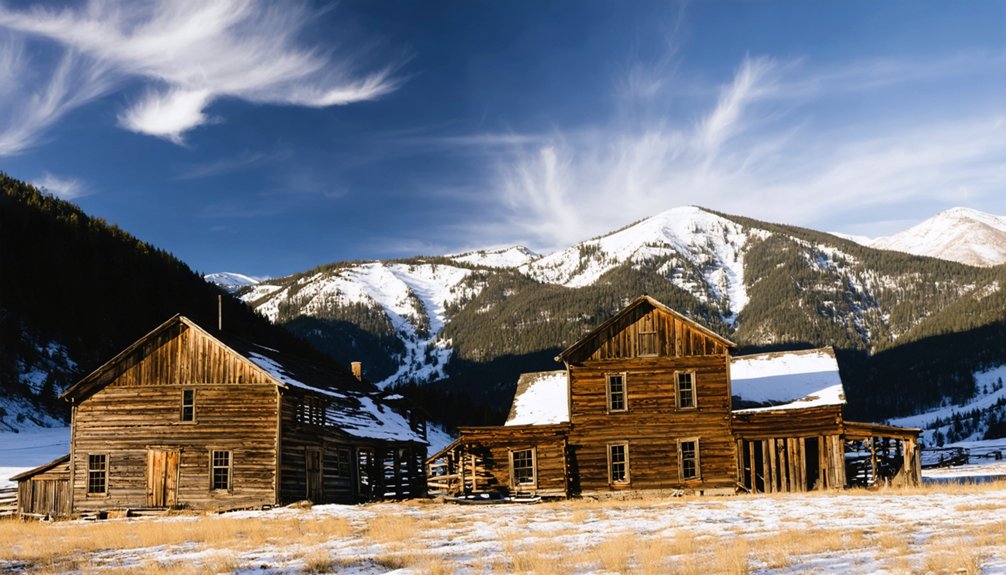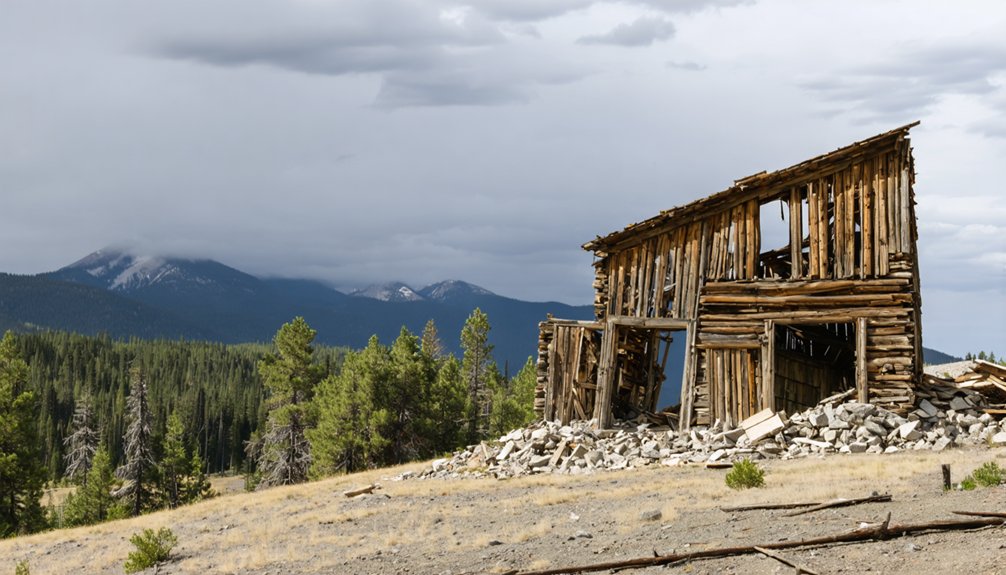
To plan your ghost town road trip to Caribou, Colorado, start in Nederland and head 4.7 miles west on County Road 128. You’ll arrive at nearly 10,000 feet, where silver fever once drew 3,000 miners to a thriving boomtown in the 1870s. Today, only stone ruins, scattered foundations, and a weathered cemetery remain. Visit between June and September for the best access. Everything you need to make the most of this trip is just ahead.
Key Takeaways
- Caribou ghost town is located 20 miles west of Boulder; start your trip in Nederland and follow County Road 128 for 4.7 miles.
- Visit between June and September for the best road accessibility, arriving early to avoid afternoon thunderstorms at nearly 10,000 feet elevation.
- Remaining remnants include two stone ruins, a collapsed cabin, a boarded-up mine entrance, scattered foundations, and a cemetery.
- Free, reservation-free camping is available in Roosevelt National Forest, just a few miles east of the ghost town.
- Stop in Nederland before heading to Caribou to stock up on supplies, dine locally, and explore trails around Barker Reservoir.
Why Caribou Ghost Town Is Worth the Drive From Boulder
Just 20 miles west of Boulder, Caribou ghost town packs a remarkable amount of history into a short drive. By 1875, this silver mining settlement housed 3,000 residents, three saloons, a brewery, and a three-story hotel.
Today, you’ll find stone ruins, a collapsed wooden cabin, and a boarded-up mine entrance — all silent reminders of a town that fires and poor management eventually swallowed whole.
Stone ruins, a collapsed cabin, a boarded-up mine — all that remains of a town consumed by fire and failure.
You’ll want your camera ready. The ruins photograph beautifully against the Indian Peaks Wilderness backdrop, especially in early morning light when shadows define the crumbling stonework.
Photography tips from seasoned visitors suggest shooting during golden hour for dramatic contrast.
Local legends surround Caribou’s violent decline, making every crumbling foundation feel charged with story. It’s raw, unfiltered history you can walk through freely.
How to Get to Caribou Ghost Town From Nederland
Getting to Caribou takes only one short drive down County Road 128, also known as Caribou Road, beginning at the quirky mountain town of Nederland.
The driving directions are straightforward, and the scenic views along the 4.7-mile route remind you why the West still calls to the restless.
Here’s what to know before you go:
- Start point: Nederland, Colorado, roughly 20 miles west of Boulder
- Navigation address: 4898 Caribou Rd, Nederland, CO 80466
- Road type: 2WD-accessible during summer months
- Total distance: 4.7 miles from Nederland to the site
- Winter warning: Snow and rough conditions limit access seasonally
You’ll arrive at GPS coordinates 39°58′50″N 105°34′40″W, stepping into what once housed 3,000 souls chasing silver at 10,000 feet.
The Silver Mining History Behind Caribou’s Rise and Fall
When you stand among Caribou’s stone ruins, you’re standing where silver fever once drew thousands of fortune-seekers to these windswept Colorado highlands in the early 1870s.
By 1875, the town had exploded to 3,000 residents, complete with saloons, a brewery, a hotel, and a newspaper — a full civilization carved out of a 10,000-foot mountainside.
But poor mine management and a series of devastating fires slowly gutted the town’s prosperity, and by 1905, Caribou was silent.
Silver Rush Origins
Silver fever hit Caribou hard in the early 1870s, transforming a windswept Rocky Mountain ridge into a boomtown almost overnight. Prospectors chased rich silver veins to this rugged elevation, building a community that briefly rivaled larger Colorado settlements.
That silver mining legacy defines everything you’ll encounter at this ghost town today.
At its peak, Caribou boasted:
- A population of 3,000 residents by 1875
- 100 houses plus a three-story hotel
- Three saloons and a working brewery
- A church and an active town newspaper
- A mine that drew fortune-seekers from across the region
Poor management and devastating fires eventually stripped Caribou bare, and residents scattered by 1905.
What drew thousands now draws only the curious — and that’s exactly why you should visit.
Peak Population And Prosperity
By 1875, Caribou had exploded into a full-fledged mountain community of 3,000 residents — remarkable for a town perched near 10,000 feet in one of Colorado’s most unforgiving climates. The population demographics reflected a classic silver boom: miners, merchants, entrepreneurs, and families all chasing the same dream of wealth carved from the earth.
At its peak, you’d have found 100 houses, a three-story hotel, three saloons, a brewery, a church, and a local newspaper — the full architecture of a self-sustaining society.
That mining legacy wasn’t just economic; it was cultural, shaping an entire community’s identity around silver extraction. But prosperity built on a single resource rarely holds. Poor mine management and repeated fires slowly dismantled everything Caribou’s ambitious founders had built.
Fires And Abandonment
Caribou’s decline wasn’t sudden — it unraveled through a brutal combination of mismanagement and fire. What was once a thriving silver camp became a ghost town by 1905, hollowed out by forces no community could easily survive.
The fire impact hit repeatedly, each blaze stripping away infrastructure and morale:
- Multiple fires destroyed homes, businesses, and community structures
- Poor mine management drained financial resources between disasters
- Harsh weather accelerated structural deterioration between rebuilding efforts
- Residents gradually relocated rather than rebuild on unstable ground
By 1905, the remaining population simply walked away.
You’re now visiting what those fires and failures left behind — two stone ruins, a collapsed cabin, and a boarded mine entrance. Caribou didn’t fade quietly; it burned, stumbled, and finally surrendered to the mountain.
What’s Still Standing at the Caribou Ghost Town Site
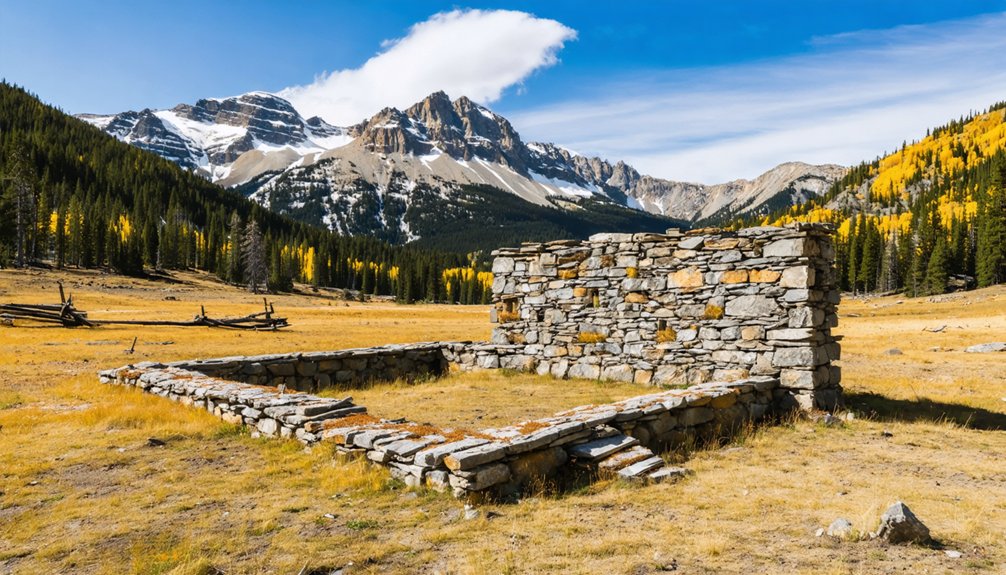
When you arrive at the Caribou ghost town site, you’ll find only two stone ruins still standing where 100 houses and a three-story hotel once defined a booming silver settlement.
You can also spot a boarded-up mining entrance and a collapsed wooden cabin, quiet reminders of the industry that drew 3,000 residents to this windswept hillside by 1875.
The remnants are sparse, but standing among them, you’ll feel the weight of what fire, mismanagement, and brutal weather ultimately erased.
Standing Stone Ruins
Despite once housing 3,000 residents, a three-story hotel, and three saloons, Caribou’s footprint has shrunk to almost nothing.
What you’ll find today are raw, honest remnants worth exploring:
- Two standing stone structures offer the best stone structure preservation on-site
- A collapsed wooden cabin hints at the working-class lives once lived here
- A boarded-up mine entrance marks where silver was pulled from the earth
- Foundations scattered across the ground trace the town’s original layout
- A cemetery within the town boundaries holds those who never left
For ghost town photography, the stone ruins photograph beautifully against Colorado’s open sky.
You’re walking through what 3,000 people once called home — and only these stones remained stubborn enough to stay.
Mining Site Remnants
Beyond the standing stone walls, the mining remnants at Caribou tell a quieter, more industrial story. You’ll notice a boarded-up mining entrance marking where men once carved silver from the mountain, its sealed opening a stark reminder of the labor that built this place.
Nearby, foundations press through the soil like exposed bones, and a stone bunkhouse still anchors the landscape with surprising solidity.
These ghost town architecture fragments don’t shout history — they whisper it. Walk carefully among the mining artifacts scattered across the site, and you’ll feel the weight of what Caribou once was: a thriving industrial community at nearly 10,000 feet.
Every crumbling wall and rusted remnant represents ambition, hardship, and a town that burned and faded long before anyone thought to preserve it.
How Caribou’s 10,000-Foot Elevation Affects When You Should Visit
Sitting at nearly 10,000 feet above sea level, Caribou rewards summer visitors but punishes those who arrive unprepared or off-season. The elevation impact here is real — thin air, sudden storms, and brutal winters shaped this town’s history and still govern your seasonal visits today.
Plan around these conditions:
- June through September offers the most accessible and safest window for exploration.
- Winter roads on County Road 128 become treacherous and often impassable.
- Afternoon thunderstorms strike fast during summer, so arrive early.
- Temperature drops sharply after sunset, even in July — layer up.
- High-altitude fatigue hits quickly, especially if you’re driving up from Denver or Boulder.
Caribou’s miners endured this relentlessly. You only have to for a day.
Where to Camp Near Caribou in Roosevelt National Forest
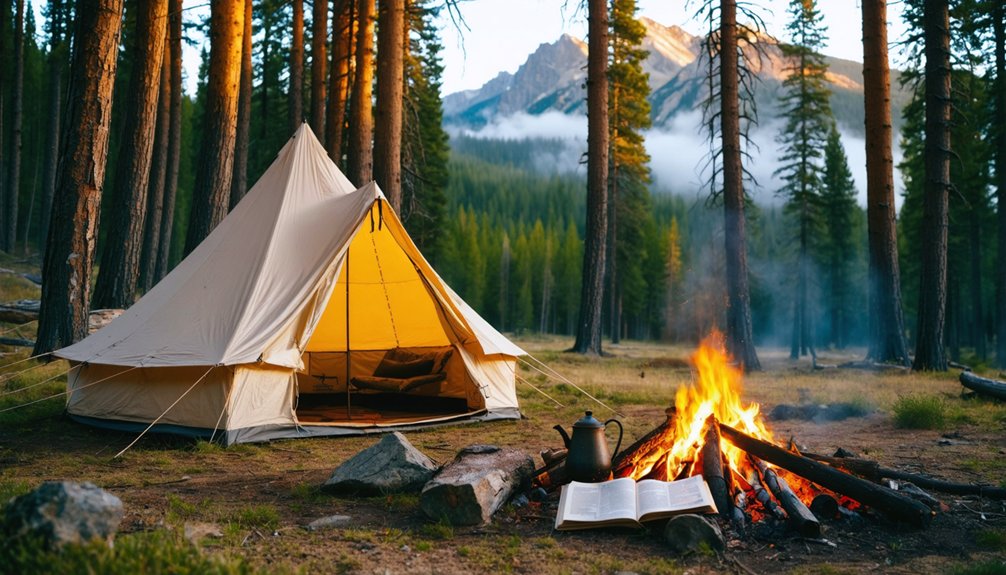
A few miles east of the ghost town, Roosevelt National Forest opens up and gives you room to set up camp without a reservation or a fee. You’re sleeping in the same mountains that once sheltered 3,000 silver miners, and that history makes the cold air feel earned.
Follow basic camping tips: use preexisting sites, pack out everything you bring in, and keep fires contained. Forest regulations prohibit creating new clearings or disturbing the landscape, so tread lightly and leave the terrain as you found it.
Nederland sits just five miles away if you need supplies before heading out. The road in is 2WD-friendly during summer, so you don’t need a rugged rig to claim your spot under these high-country pines.
What to Do in Nederland Before or After Caribou
Nederland sits five miles east of Caribou, and it punches well above its weight as a mountain stopover.
Before or after exploring the ghost town, spend time in this quirky, independent-minded community where local dining and outdoor activities give you real reasons to linger.
Here’s what you can explore:
- Grab local dining at one of Nederland’s eclectic restaurants or cafés
- Stock up on supplies before heading west on Caribou Road
- Explore nearby trails for outdoor activities around Barker Reservoir
- Browse independent shops reflecting Nederland’s free-spirited mountain culture
- Visit local breweries for a well-earned drink after your ghost town trek
Nederland doesn’t pretend to be anything it isn’t — and that’s exactly why it fits perfectly into a road trip built around authentic Colorado history.
Frequently Asked Questions
Is There an Entrance Fee to Visit the Caribou Ghost Town Site?
You’ll find no entrance fee to explore Caribou’s ghost town history firsthand. Walk freely among the ruins, breathe in Caribou legends, and let the wind carry you back to 1875 without spending a dime.
Are Pets Allowed on the Trails Around the Caribou Ghost Town Area?
The knowledge doesn’t confirm pet-friendly policies for Caribou’s trails, but Roosevelt National Forest generally welcomes leashed dogs. Practice good trail etiquette, keep your companion close, and explore these windswept, silver-rush remnants responsibly together.
Can You Find Artifacts or Take Souvenirs From the Caribou Ghost Town?
You can’t take artifacts or souvenirs from Caribou. Federal laws protect artifact preservation at sites of historical significance. Leave everything you find — it’s the ruins’ story to tell, not yours to pocket.
Is a Guided Tour Available for Visiting Caribou Ghost Town?
No guided tour options exist for Caribou’s ghost town history—you’ve got endless freedom to explore solo! You’ll uncover centuries of silver-mining secrets entirely on your own terms, wandering the hauntingly beautiful ruins at your own adventurous pace.
How Long Does a Typical Visit to Caribou Ghost Town Usually Take?
You’ll typically spend 1–2 hours exploring Caribou’s haunting ruins. Wandering the remnants lets you absorb its historic significance fully, and your visitor experiences deepen as you roam freely through this evocative, windswept silver-mining ghost town.
References
- https://www.islands.com/2126733/caribou-city-colorado-near-boulder-once-thriving-ghost-town-ruins-hidden-scenic-wilderness-abandoned/
- https://www.youtube.com/watch?v=3poy7dPDdjU
- https://www.uncovercolorado.com/ghost-towns/caribou/
- https://www.youtube.com/watch?v=u92GOqIrrdk
- https://www.youtube.com/watch?v=DRzIEuiR7lg
- https://95rockfm.com/colorado-trip-caribou-nederland/
- https://forgottenivy.com/exploring-caribou-ghost-town-the-haunting-remains-of-the-past/
- https://www.businessinsider.com/colorado-caribou-ghost-town-photo-tour-2022-11
- https://www.theroadwanderer.net/highcoun.htm
- https://www.youtube.com/watch?v=7wP4JhpmxoE