You’ll find Carson Hill four miles south of Angels Camp on Highway 49, sitting atop ground that once yielded nearly $26 million in gold. This Sierra Nevada foothill ghost town offers genuine ruins, mineshafts, and Historical Landmark #274 — all without admission fees or tourist crowds. Spring wildflowers and fall golden light make for the most rewarding visits. The full story of California’s richest ghost town is far more fascinating than you’d expect.
Key Takeaways
- Carson Hill, located four miles south of Angels Camp via Highway 49, is free to access with no gates or admission fees.
- The site produced nearly $26 million in gold, including California’s largest nugget weighing 195 pounds troy, discovered in 1854.
- Key attractions include Historical Landmark #274, stone foundations, mineshafts, and the Morgan Mine area for authentic ghost town exploration.
- Spring and fall offer the best visiting conditions, with mild temperatures, blooming wildflowers, and enhanced lighting on historic structures.
- Arrive early, wear appropriate footwear, exercise caution near mineshafts, and avoid summer midday heat exceeding 100°F.
Why Carson Hill Is the Gold Rush Ghost Town Worth Stopping For
When most Gold Rush ghost towns offer little more than a historical marker and a faded memory, Carson Hill delivers something genuinely worth pulling over for.
You’re standing where miners pulled nearly $26 million in gold from the earth, where the largest nugget ever found in California — 195 pounds troy — surfaced in 1854.
The historical significance here isn’t manufactured for tourists; it’s embedded in the landscape itself.
Explorable mineshafts, crumbling stone structures, and Highway 49 monuments connect you directly to one of America’s most dramatic boom-and-bust stories.
Carson Hill went from California’s most populated camp to a ghost town practically overnight.
That raw, unpolished history is exactly what makes it worth the stop.
Getting to Carson Hill: Highway 49 Access and What to Expect
Reaching Carson Hill is straightforward, and that accessibility is part of its appeal. You’ll follow Highway 49 through the Sierra Nevada foothills, arriving at elevation 1,447 feet just four miles south-southeast of Angels Camp. Ghost town exploration doesn’t get more open-road than this.
Follow Highway 49 into the Sierra Nevada foothills — Carson Hill sits wide open, ungated, and waiting just four miles south of Angels Camp.
Here’s what you’ll encounter along the way:
- Rolling foothill terrain framing a landscape unchanged in character since the Gold Rush era
- Highway 49 markers directing you toward mining history embedded in California’s Gold Country corridor
- Coordinates 38°01′42″N, 120°30′24″W pinpointing your destination with precision
- Remnants of mineshafts and stone structures visible roadside, offering immediate, unfiltered glimpses into Carson Hill’s past
No gates. No admission. Just open road, raw history, and the freedom to explore on your own terms.
The 1850 Gold Strike That Put Carson Hill on the Map
October 20, 1850, changed everything. While tracking a mule, miner John Hance stumbled upon a massive quartz column and broke off a 14-pound gold nugget — a gold discovery that ignited a frenzy unlike anything California had witnessed. You can almost feel the electricity that must’ve crackled through camp that day.
Miners flooded Carson Hill, deploying aggressive mining techniques — blasting veins with explosives and collecting gold fragments without deep excavation. The approach worked spectacularly.
The Morgan Mine alone produced over $3 million within its first two years. By November 1854, someone unearthed the largest gold nugget ever found in California: 195 pounds troy, valued at $43,000.
Carson Hill didn’t just participate in the Gold Rush — it defined it. Freedom and fortune walked hand in hand here.
Carson Hill’s Richest Mines and the Nuggets That Broke Records
Behind that initial frenzy of discovery lay a deeper story — one carved into Carson Hill’s bedrock by some of the most productive mines in Gold Rush history.
The Morgan Mine alone generated over $3 million in its first two years. Miners used bold mining techniques — blasting veins with explosives and collecting gold without deep digging.
The nugget discoveries here became legendary:
- 1850 — John Hance breaks off a 14-pound nugget while tracking a mule
- 1853 — Legal disputes force quartz mines to shut down
- 1854 — The largest California gold nugget ever found weighs 195–214 pounds troy
- $43,000 — Its value at the time, an extraordinary fortune
You’re standing where freedom meant striking it rich overnight.
The Carson Hill Ghost Town Legend You Won’t Find in History Books
Among Carson Hill’s most memorable tales, you’ll find one that blurs the line between devotion and desire — a funeral interrupted when mourners spotted gold glinting in the freshly dug grave.
The minister dropped his Bible mid-verse, and the congregation abandoned the coffin as everyone scrambled to claim the shiny flecks scattered in the dark earth.
It’s the kind of story that captures Carson Hill’s raw, gold-fevered soul better than any production record ever could.
Gold In The Grave
Some legends don’t make it into the history books, but they stick to a place like gold dust to a miner’s palm — and Carson Hill has one worth telling.
During a burial service, mourners witnessed one of history’s most chaotic grave discoveries mid-ceremony. Mining folklore preserves it simply: gold caught someone’s eye in the freshly turned dirt.
Here’s how it unfolded:
- A funeral was underway at the Carson Hill cemetery
- Glinting gold appeared in the excavated grave soil
- The minister stopped mid-prayer
- Every mourner — including the preacher — dropped everything and staked a claim
No historical record confirms it. No monument marks it. But that’s exactly what makes it unforgettable.
Out here, even death couldn’t compete with the promise buried just beneath your feet.
Minister Drops His Bible
The preacher had his Bible open, words rising over a fresh grave, when the dirt itself interrupted him. Someone spotted gold glinting in the turned earth at the burial site.
The minister’s dilemma unfolded in seconds — Scripture or gold? He chose gold.
So did everyone else.
Mourners dropped everything. The grieving family scattered. Even the minister abandoned his post, Bible hitting the ground as he clawed toward the shimmer in the soil.
You won’t find this story carved into any monument along Highway 49, but Carson Hill locals kept it alive for generations.
It captures something raw about the Gold Rush mindset — a place where fortune rewrote every human priority overnight.
Walk that ground today, and you’ll feel exactly why it happened.
Faith Meets Fortune
Carson Hill doesn’t offer this story on any official marker, but it’s the one that sticks — a funeral interrupted mid-prayer when mourners spotted gold gleaming in the freshly turned grave dirt.
Even faith journeys bent toward fortune tales here. Picture the scene:
- A minister mid-sermon, Bible open, voice carrying over bowed heads
- A glint catching someone’s eye in the loose, dark soil
- One person breaking rank — then everyone following
- The minister himself dropping his Bible, joining the scramble
Nobody recorded whose grave it was or whether the service ever resumed. Carson Hill has that effect — it rewrites priorities without apology.
You’re standing where raw instinct overruled reverence, where gold didn’t just change lives, it interrupted death itself.
What’s Left to See: Ruins, Shafts, and Landmarks on the Ground
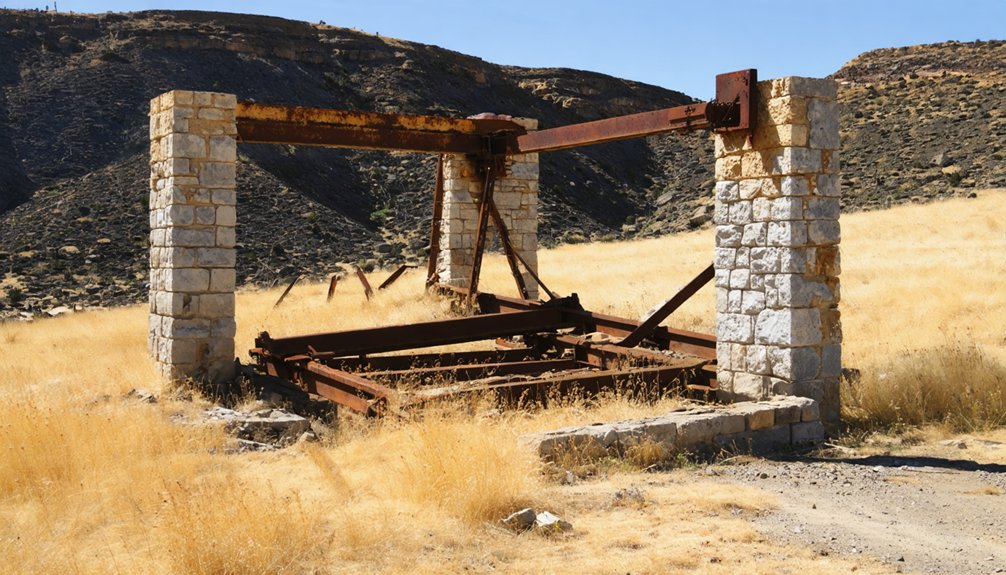
Although little remains of what was once a booming Gold Rush settlement, you’ll still find enough at Carson Hill to make the detour worthwhile.
Pull over along Highway 49 and step into genuine ruins exploration — crumbling stone foundations, weathered concrete walls, and dark mineshafts that once swallowed men whole in pursuit of fortune.
A historical landmark marker anchors the site, grounding you in the mining history that produced nearly $26 million in gold.
You’re standing where the Morgan Mine once operated and where the largest California gold nugget ever recorded — 195 pounds troy — emerged from the earth in 1854.
It’s raw, unpolished, and quietly powerful.
No gift shop, no guided tour. Just open land, old scars in the hillside, and a story worth remembering.
When to Visit Carson Hill for the Best Experience
When you visit Carson Hill matters more than you might think. The Sierra Nevada foothills shift dramatically with the seasons, and timing your trip shapes everything you’ll experience on the ground.
- Spring (March–May): Wildflowers blanket the hillsides, temperatures stay mild, and local wildlife — deer, hawks, wild turkeys — move freely through the scrubland near the old mine sites.
- Fall (September–October): Golden light hits the remaining stone structures beautifully, and seasonal events in nearby Angels Camp draw history enthusiasts.
- Summer: Heat exceeds 100°F regularly — explore early morning only.
- Winter: Sparse crowds give you the place entirely to yourself, though Highway 49 occasionally sees fog and frost.
Avoid holiday weekends if solitude and open exploration matter to you.
Gold Country Stops That Pair Perfectly With Carson Hill
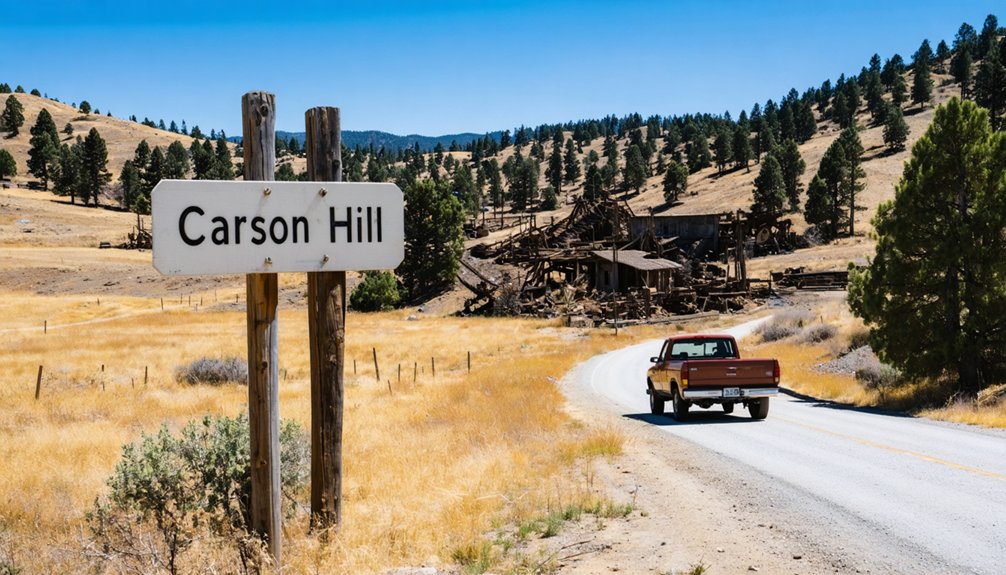
Nestled along Highway 49, Carson Hill sits at the heart of California’s Gold Country, and you’d be missing half the story if you didn’t push further down the road.
Angels Camp, just four miles north, pulses with Gold Rush heritage, offering historical reenactments that drag 1850s frontier life right into the present.
Angels Camp breathes Gold Rush history, where living reenactments haul the lawless 1850s frontier straight into today.
Columbia State Historic Park lets you try gold panning in streams where fortune-seekers once staked everything they owned.
Head south toward Sonora, where ornate Victorian storefronts still whisper of overnight wealth.
Each stop along Highway 49 builds a richer picture of the era that transformed California from wilderness into legend.
Treat the highway itself as the artifact — every mile connects another ghost, another strike, another story worth chasing.
How to Spend One Day at Carson Hill Without Missing Anything
You’ll want to arrive at Carson Hill early, when morning light hits the Sierra Nevada foothills and the remnants of what was once California’s richest mining camp feel almost alive again.
Spend the heart of your day walking the historic sites along Highway 49, where explorable mineshafts, stone ruins, and California Historical Landmark #274 tell the story of $26 million in gold pulled from this earth.
As the afternoon fades, let the drive out on that same old highway carry you through a quiet reflection on how a thunderous boomtown turned ghost town almost overnight.
Morning Arrival And Orientation
Arriving at Carson Hill early in the morning puts you ahead of the Sierra Nevada heat and gives you the clearest sense of how this modest stretch of Highway 49, just four miles south-southeast of Angels Camp, once roared with Gold Rush ambition.
Sip your morning coffee while taking in the scenic views at elevation 1,447 feet before the day’s crowds arrive.
Orient yourself by noting four key reference points:
- The Highway 49 corridor marking the former townsite
- Carson Creek below the hill, where James H. Carson discovered gold in 1848
- The Morgan Mine area, site of the 195-pound nugget
- Historical Landmark #274 monument anchoring the entire site
From here, every direction tells a story worth following.
Exploring Key Historic Sites
Once you’ve got your bearings at the Highway 49 corridor, start your day at Historical Landmark #274, the stone monument anchoring the townsite where Carson Hill’s brief, explosive prosperity is formally acknowledged.
Study what ghost town architecture survives — concrete foundations, crumbling walls — and reconstruct the boomtown mentally.
Then walk toward the Morgan Mine area, where miners used innovative mining techniques, blasting quartz veins with explosives rather than digging conventionally.
It’s where John Hance broke off a 14-pound nugget in 1850 and where the largest California gold nugget — 195 pounds troy — surfaced in 1854.
Explore the mineshafts carefully. Each opening tells you something real about how Carson Hill’s men worked fast, struck rich, and vanished just as quickly when legal disputes silenced everything.
Evening Departure And Reflection
As afternoon light softens across the Sierra Nevada foothills, take a final slow pass along Highway 49 before pointing your car north toward Angels Camp.
Carson Hill rewards those who linger with evening reflections that feel impossible elsewhere.
Carry these ghost town stories with you:
- James Carson discovered gold here in 1848, igniting a frenzy that produced $26 million.
- A 195-pound nugget — California’s largest ever — emerged from the Morgan Mine in 1854.
- A funeral once stopped mid-ceremony when mourners spotted gold glinting in fresh grave dirt.
- Three years after the 1850 strike, this thriving community stood virtually abandoned.
The foothills darken quickly.
Drive away knowing Carson Hill surrendered its fortune but kept its soul.
Carson Hill’s Legacy: California Historical Landmark #274
Carson Hill’s designation as California Historical Landmark #274 stands as a tribute to the remarkable events that unfolded here during the Gold Rush era.
This ghost town’s historical significance runs deep, shaped by revolutionary mining techniques that extracted nearly $26 million in gold.
You’ll walk ground where miners blasted quartz veins, unearthing the largest California gold nugget ever recorded — 195 pounds troy, valued at $43,000 in 1854.
Carson Hill’s local legends add layers to its story, from John Hance’s 14-pound nugget discovery to funeral ceremonies interrupted by gleaming gold.
The landmark designation preserves these narratives, ensuring they’re never forgotten.
Standing here, you’re connecting with California’s raw, untamed history — a freedom-seeker’s paradise frozen in geological and human time.
Frequently Asked Questions
Is Carson Hill Suitable for Children and Families to Explore Safely?
Like pioneers chasing dreams, you’ll find Carson Hill offers family friendly activities, but you must take safety precautions around old mineshafts. Explore monuments and remnants freely along Highway 49, where Gold Rush history awaits your adventurous family.
Are There Any Entry Fees or Permits Required to Visit Carson Hill?
You don’t face any entry requirements at Carson Hill! Simply drive Highway 49 and explore freely. This site’s historical significance belongs to everyone — it’s an open, accessible tribute to California’s remarkable Gold Rush heritage.
Can Visitors Legally Pan for Gold Near Carson Hill Today?
“Fortune favors the bold!” You’ll need to check current gold panning regulations before prospecting near Carson Hill. Its historical significance makes it protected ground, so verify local permissions to freely and legally chase your golden dreams.
Is Camping Available Near Carson Hill for Overnight Road Trippers?
You’ll find camping amenities at nearby New Melones Lake, where you can embrace freedom under Gold Country stars. Explore nearby attractions like Carson Hill’s evocative mineshafts and historic Highway 49, echoing California’s legendary 1850s rush.
What Should Visitors Wear and Bring When Exploring Carson Hill Ruins?
Pack your exploration gear wisely — you’ll want sturdy boots, layered clothing for Sierra Nevada’s weather considerations, a flashlight, and water. Carson Hill’s rugged ruins and mineshafts demand respect for the same wild land Gold Rush miners once conquered.
References
- https://en.wikipedia.org/wiki/Carson_Hill
- https://kids.kiddle.co/Carson_Hill
- https://www.youtube.com/watch?v=-jeEu1kTChM
- https://www.calaverashistory.org/carson-hill
- https://ohp.parks.ca.gov/ListedResources/Detail/274
- http://cali49.com/hwy49/2013/11/2/carson-hill
- https://www.mindat.org/loc-211627.html
- https://sierranevadageotourism.org/entries/carson-hill-no-275-california-historic-landmark/c70c6c6c-47ff-4f15-9570-41a75e1e2253
- https://westernmininghistory.com/mine-detail/10310598/