Planning a ghost town road trip to Pond City, Kansas means trading modern conveniences for raw, windswept history. You’ll find weathered headstones, crumbling foundations, and the ghostly outline of what was once a thriving 1880s cattle hub. Visit in spring or fall, pack sturdy boots, and download offline maps before you go — cell service disappears fast out here. There’s more to uncover about getting there, what to bring, and nearby ghost towns worth adding to your route.
Key Takeaways
- Pond City, established in 1887, features crumbling foundations, cellar holes, an old pond site, and an abandoned pioneer cemetery as key exploration spots.
- Visit during spring or fall for mild weather, as summer temperatures exceed 100°F and winter roads can become muddy or icy.
- Pack sturdy boots, ample water, sunscreen, a hat, a camera, and printed maps, as cell service near Pond City is unreliable.
- Much of the land is private property, so contact local historical societies, secure landowner permission, and carry written permission letters when exploring.
- Plan a 50-mile one-day loop from Ashland, incorporating Pond City, Englewood ghost town, Clark County Museum, and Cimarron National Grassland stops.
What’s Left of Pond City, Kansas Today?
Where Pond City once buzzed with cattle trade and frontier commerce, you’ll now find little more than silence and scattered remnants swallowed by the Kansas plains.
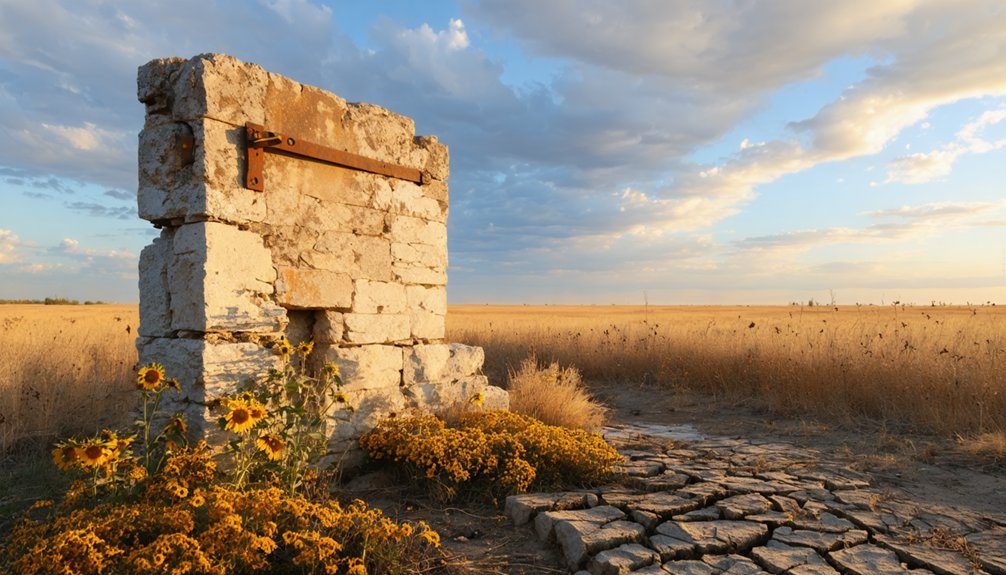
Crumbling foundations and cellar holes dot the landscape, whispering pioneer stories of a community that once supported 200-300 residents during the 1890s cattle boom. You won’t encounter any standing abandoned structures — the land has reclaimed nearly everything.
Crumbling foundations and cellar holes are all that remain where 200-300 pioneers once called Pond City home.
However, the old pond site remains visible, along with an abandoned cemetery holding pioneer graves that connect you directly to the town’s forgotten past.
Surrounding farmland has absorbed most evidence of former streets and buildings. It’s a raw, unfiltered slice of frontier history that rewards curious travelers willing to look closely at what the earth hasn’t completely erased.
How Pond City Rose and Fell as a Kansas Cattle Town
When Pond City sprang to life in 1887, it rode the twin engines of the land rush and cattle boom that were reshaping southern Kansas. Settlers followed the cattle industry north, and Pond City’s natural water source locked in those early settlement patterns, drawing ranchers, traders, and homesteaders looking for open opportunity.
At its peak, the town supported 200 to 300 residents and functioned as a legitimate shipping and trade hub.
Then the railroad chose Ashland instead. That single decision unraveled everything. Droughts hammered agriculture through the 1890s, commerce drifted toward stronger rail connections, and families quietly pulled up stakes.
Can You Walk the Cemetery and Pioneer Sites?
If you’re hoping to walk the grounds of Pond City, the abandoned pioneer cemetery stands as the most accessible and rewarding stop, offering weathered headstones that connect you directly to the town’s 1880s settlers.
Much of the surrounding land is private property, so you’ll need to watch for posted signs and stick to public access points before wandering toward the old well and pond site.
Beyond the cemetery, you’ll find little more than crumbling foundations, cellar holes, and stretches of open farmland where a bustling cattle town once stood.
Finding The Pioneer Cemetery
Among the few tangible remnants of Pond City, the pioneer cemetery stands as the most moving and accessible site you’ll find during your visit.
Head southeast from the old townsite along the dirt road, and you’ll spot weathered headstones rising from the prairie grass. The cemetery history here stretches back to the 1880s, connecting you directly to the settlement’s founding generation.
Walk carefully among the markers, and you’ll piece together pioneer stories through faded inscriptions — surnames of ranchers, farmers, and children who shaped this forgotten community.
Many stones have crumbled or tilted, so watch your step. The site remains unfenced in areas, giving you freedom to explore respectfully.
Bring water, wear sturdy boots, and photograph the markers to help preserve these irreplaceable records of the past.
Navigating Private Property
Exploring Pond City’s remnants means traversing a patchwork of private farmland, so you’ll need to do your homework before setting foot beyond the roadside.
Strong landowner relations are your golden ticket here — a quick knock on a nearby ranch door and a respectful introduction often opens gates that no map can reveal.
Property etiquette isn’t just courtesy; it’s what keeps these sites accessible for future explorers like you.
Before you go, keep these essentials in mind:
- Contact Clark County locals or historical societies for landowner contacts
- Always close gates behind you and stay on established paths
- Carry a printed permission letter if a landowner grants verbal access
Respect the land, honor the people working it, and you’ll earn an authentic experience worth every dusty mile.
What Remains Today
What little survives of Pond City greets you not with buildings but with silence and soil — crumbling foundations, shadowed cellar holes, and an old pond site that once drew settlers and cattle alike.
You’ll find the abandoned pioneer cemetery, where weathered headstones speak to the town’s historical significance and the hard lives etched into Clark County’s past. Local legends suggest unmarked graves and forgotten stories lie scattered across the surrounding farmland.
You can walk these grounds carefully, reading names and dates that connect you directly to the 1887 land rush era. No standing structures remain — just repurposed ranch buildings nearby and open Kansas sky above.
Bring water, wear sturdy boots, and move slowly. This place rewards patience over speed.
How to Get to Pond City From Ashland or Dodge City
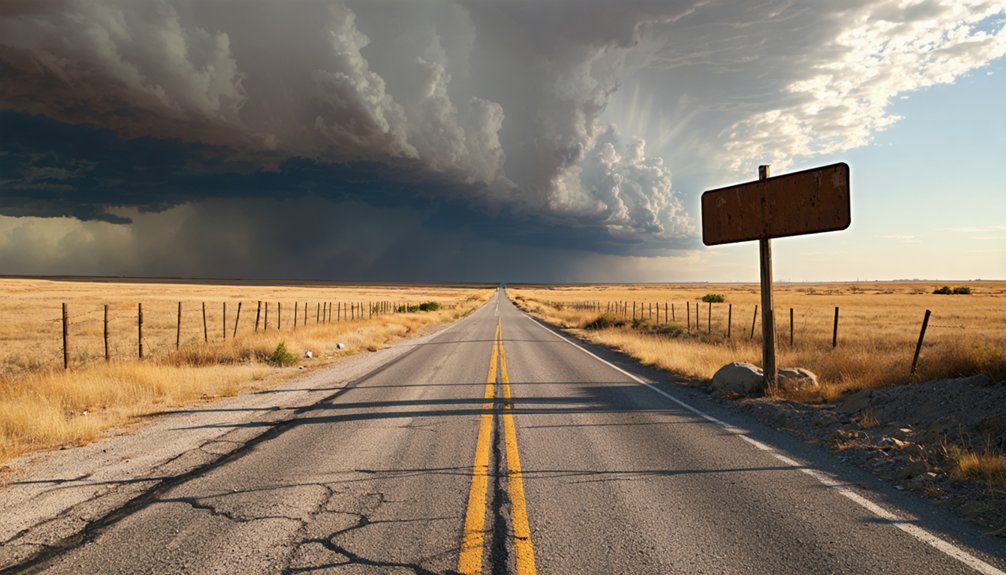
Getting to Pond City takes a bit of planning, but the drive itself sets the mood for a genuine ghost town experience. From Ashland, head northwest on KS-183 for about 15 miles, then turn east onto dirt roads toward the site. From Dodge City, it’s roughly a two-to-three hour detour south on KS-183.
Reaching Pond City requires a little planning — but that winding drive through Clark County is half the adventure.
Keep these driving directions in mind before you head out:
- Verify road conditions beforehand, especially after rain, since gravel and dirt roads can become impassable.
- Fill your tank in Ashland — rural Clark County offers zero services beyond town.
- Respect posted signs — some land carries historical significance as private ranch property still actively used today.
Pack a paper map as a backup, since cell coverage gets unreliable fast out here.
Best Time to Visit Pond City, Kansas
You’ll get the most out of your Pond City visit by planning your trip for spring or fall, when mild temperatures make wandering across open farmland genuinely comfortable.
Summer heat in Clark County can push past 100°F, turning a leisurely ghost town explore into an exhausting ordeal, so you’ll want to avoid July and August if possible.
Winter isn’t ideal either, since muddy or icy dirt roads can leave you stranded miles from the highway.
Ideal Seasons For Visiting
Although Pond City’s remote Clark County location makes it accessible year-round, spring and fall offer the most rewarding visits. Mild temperatures make exploring crumbling foundations and the pioneer cemetery far more comfortable, while seasonal activities like birdwatching bring local wildlife encounters you won’t find in peak summer heat.
Plan your trip around these seasonal highlights:
- Spring (April–May): Wildflowers bloom across the prairie, and migrating birds fill the Cimarron River valley.
- Fall (September–October): Crisp air and golden grasslands create stunning photography conditions.
- Avoid Summer: Intense Kansas heat above 100°F can make exposed farmland exploration genuinely dangerous.
Winter visits are possible, but unpredictable road conditions on rural dirt roads can leave you stranded miles from help.
Weather Conditions To Expect
Knowing which seasons work best is only half the picture — understanding what the weather actually does out there shapes a smarter, safer trip.
Kansas weather patterns hit hard and fast, especially in Clark County’s open terrain.
Spring delivers mild temperatures but unpredictable storms — tornadoes aren’t rare here.
Summer bakes the plains relentlessly, with temperatures pushing past 100°F and little shade available at an exposed ghost town site.
Fall offers the most forgiving seasonal variations, cooling things down while keeping roads passable.
Winter brings biting wind and occasional ice, making rural dirt roads genuinely treacherous.
Whatever season you pick, always check forecasts the morning you leave.
Cell service is spotty near Pond City, so download offline maps and pack water.
The land doesn’t accommodate the unprepared.
Avoiding Summer Heat
Summer in Clark County doesn’t ease up — it punishes. Triple-digit temperatures bake the open prairie, turning your ghost town history exploration into an endurance test.
Smart summer travel means timing your visit right — and for Pond City, that means skipping July and August entirely.
Spring and fall hand you the freedom to roam comfortably, with mild temperatures and fewer crowds.
Consider these timing tips:
- April through May offers wildflower blooms, cooler mornings, and firm dirt roads after winter thaw
- September through October delivers golden light, harvest-season charm, and bearable afternoons
- Early mornings during any season keep you ahead of the heat if summer’s your only option
You came to explore abandoned history — not collapse beside a crumbling foundation.
What to Bring for a Pond City Day Trip?
Since Pond City sits in the remote Clark County grasslands with no modern amenities, packing smart makes the difference between a memorable adventure and a miserable afternoon.
You’ll want sturdy boots for traversing uneven cellar holes and crumbling foundations during your ghost town exploration. Bring plenty of water, sunscreen, and a hat — shade doesn’t exist here.
Pack a printed map or download offline directions before leaving Ashland, since cell service gets spotty fast. A camera captures Pond City history beautifully, especially the weathered cemetery markers and abandoned pond site.
Toss in bug spray for spring visits and a light jacket for fall breezes.
Respect private property boundaries, so keep a copy of your route and stay on accessible paths. Leave nothing behind except footprints.
Ghost Towns Near Pond City Worth Adding to Your Route
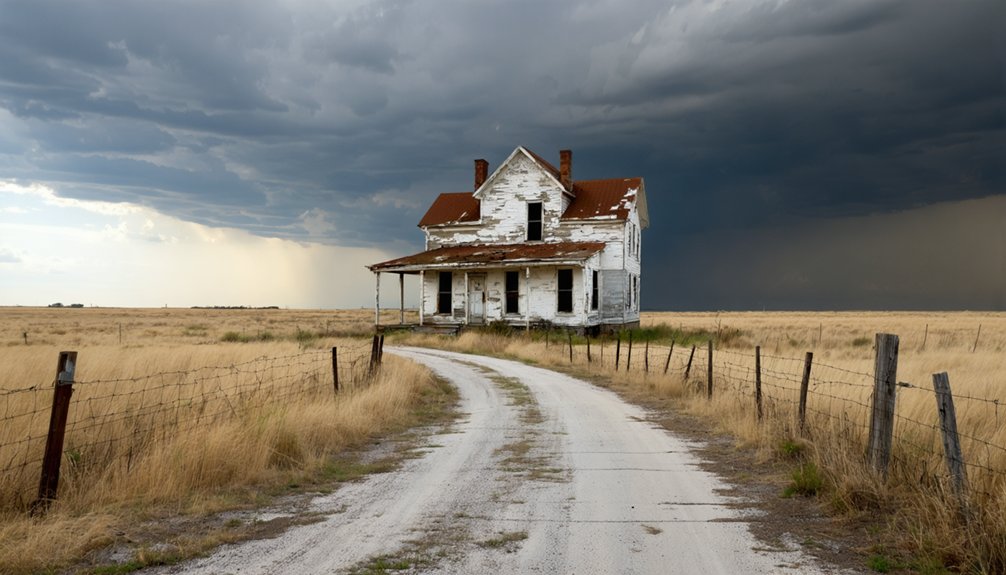
Once your bag’s packed and you’re ready to hit the gravel roads around Pond City, it’s worth stretching that day trip into a small ghost town circuit — Clark County and its neighbors hold several forgotten communities that reward curious travelers.
Each stop adds rich ghost town history and cattle ranching context to your journey:
- Englewood, just 10 miles south, once thrived as a cattle ranching hub before economic collapse emptied its streets.
- Ashland’s Clark County Museum preserves artifacts documenting the region’s frontier settlement and ranching decline.
- Cimarron National Grassland connects you to Santa Fe Trail ruts, grounding the wider historical landscape.
You’re building a fuller picture of southwestern Kansas — communities that boomed, broke, and quietly disappeared, leaving only foundations and stories worth chasing.
Other Clark County Stops Close to Pond City
Beyond the ghost town circuit, Clark County packs in a few more stops that’ll deepen your understanding of this overlooked corner of Kansas.
Head into Ashland to explore the Clark County Museum, where local artifacts connect the region’s cattle boom history to places like Pond City. It’s compact but surprisingly rich in pioneer-era detail.
Drive east roughly 20 miles and you’ll hit Mullinville’s roadside folk art installations — a wildly unexpected attraction that breaks up the landscape beautifully.
Back south, the Santa Fe Trail ruts offer tangible proof of westward migration that shaped this entire area.
These stops aren’t tourist traps — they’re authentic slices of history that reward curious travelers willing to roam off the beaten path through Clark County’s wide-open terrain.
How to Build a One-Day Clark County Ghost Town Loop
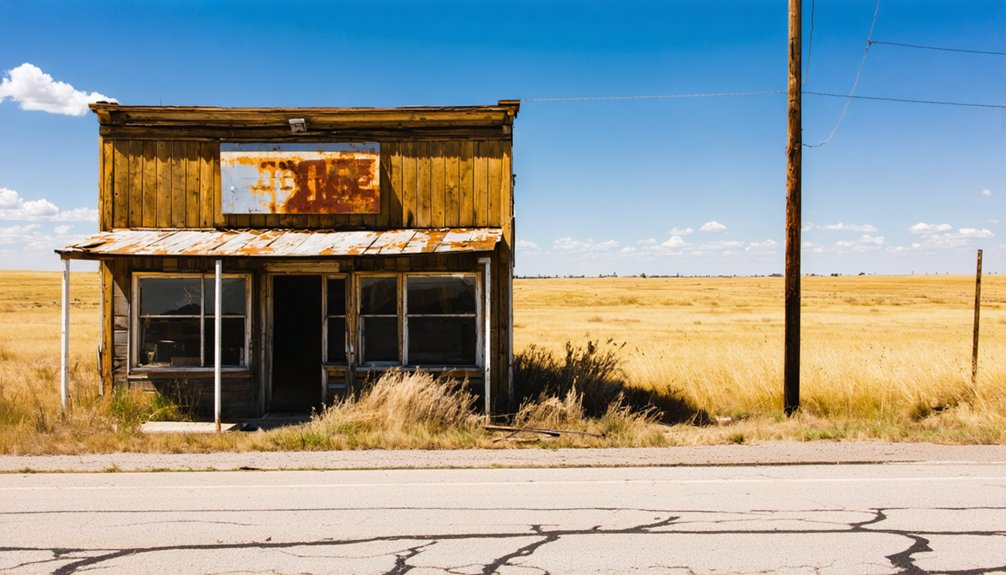
A single day is enough to string together Clark County’s ghost town highlights into a satisfying loop that starts and ends in Ashland.
Hit the road early, drive south on KS-183, then swing east toward Pond City’s crumbling foundations before pushing down to Englewood. You’ll cover genuine pioneer lifestyle history without backtracking much.
Keep your loop tight with these essentials:
- Ashland’s Clark County Museum – Ground yourself in the area’s historical significance before heading into the field
- Pond City site – Walk the old well area and cemetery for raw, unfiltered frontier atmosphere
- Englewood ghost town – Cap your exploration with another abandoned townsite just ten miles south
Pack water, wear sturdy shoes, and respect private property boundaries.
The whole loop runs roughly 50 miles round-trip.
Frequently Asked Questions
Is Pond City, Kansas an Officially Recognized Ghost Town?
Once thriving, now silent — Pond City isn’t officially recognized as a ghost town, but you’ll find abandoned structures and local legends whispering its forgotten history across Clark County’s windswept Kansas plains.
Who Owns the Land Where Pond City Once Stood?
Private landowners hold the land ownership where Pond City once stood. You’ll want to respect their boundaries while appreciating the site’s historical significance. It’s mostly farmland now, so always watch for no trespassing signs before exploring.
Are There Any Local Guided Tours Available for Pond City?
Hark, no formal guided tours exist, but you’ll find local attractions like Ashland’s Clark County Museum offering historical significance. Explore freely on your own terms, combining nearby Englewood’s ghost town for a richer, self-guided adventure.
Was Pond City Ever Featured in Historical Preservation Efforts?
Pond City hasn’t seen major formal preservation efforts, but you’ll find its historical significance acknowledged locally. Preservation challenges like private ownership and remote location make protecting its crumbling foundations and pioneer cemetery particularly difficult for dedicated history enthusiasts.
Can Metal Detecting or Artifact Collecting Be Done at Pond City?
You’ll want to check local laws before metal detecting at Pond City, as artifact preservation rules apply. Always get landowner permission first, since much of the site sits on private property you must respect.
References
- https://www.youtube.com/watch?v=A7guEY4xsug
- https://www.businessinsider.com/photos-of-ghost-town-treece-kansas-2017-4
- https://legendsofkansas.com/kansas-ghost-town-list/
- https://www.youtube.com/watch?v=dy7nLwjHkbY
- https://www.visitgck.com/eminence-and-ravanna-the-story-of-finney-countys-ghost-towns/
- https://www.legendsofamerica.com/ks-ghosttowns/
- https://legendsofkansas.com/anderson-county-extinct-towns/
- https://www.youtube.com/watch?v=8MTb39F-4tc