Catamount, Massachusetts is a quiet ghost town tucked into Franklin County’s hills, and it’s worth every mile of the drive. You’ll find mossy stone foundations, cellar holes, and a historic plaque marking the first American school to fly a flag in 1812. There are no crowds, no admission fees, just rugged trails and layered history waiting underfoot. Stick around, and you’ll discover everything you need to plan the perfect visit.
Key Takeaways
- Catamount, Massachusetts, near Colrain in Franklin County, is a ghost town abandoned by the early 20th century and now part of Catamount State Forest.
- The site features mossy stone foundations, cellar holes, and a historic plaque marking the first American flag flown over a public school in 1812.
- Motor vehicles are prohibited, so visitors must explore entirely on foot; reliable transportation is needed to reach this remote area.
- Wear sturdy, ankle-supporting hiking boots and pack water, a trail map, and weather-appropriate layers for the rugged, uneven terrain.
- Fall is the best time to visit, offering crisp air and clearer visibility, while late spring through early fall provides the most accessible conditions.
What Is Catamount, Massachusetts?
Nestled in the hills near Colrain in Franklin County, Catamount, Massachusetts, is a ghost town that’s been swallowed whole by time and forest. Once a thriving farming community settled in the mid-1700s, it faded into silence and was fully abandoned by the early 20th century.
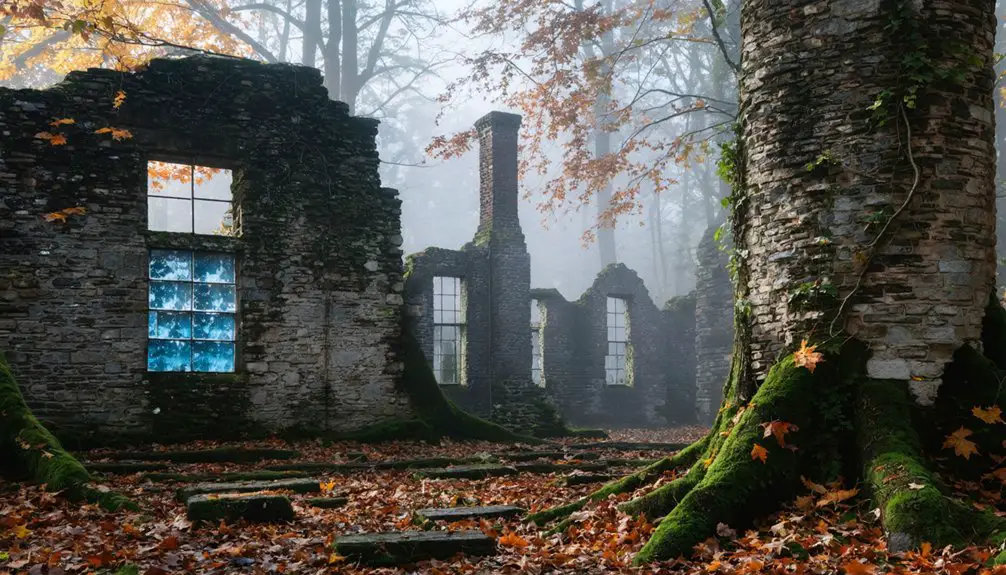
Today, it’s part of Catamount State Forest, created in 1967 when the Commonwealth of Massachusetts purchased the land for historical preservation. You won’t find dramatic ruins here — just mossy stone foundations, cellar holes, and overgrown trails whispering ghost town mysteries beneath the trees.
What makes Catamount genuinely remarkable is its distinction as the first place in the United States to fly an American flag over a public school, back in 1812. This forgotten village carries serious historical weight.
The History Behind Catamount’s Forgotten Ghost Town
When you explore Catamount’s past, you’ll find a farming community that took root in the mid-1700s, carved out by settlers who struggled against poor soil and harsh terrain until the village quietly faded and was fully abandoned in the early 20th century.
The Commonwealth of Massachusetts purchased the land in 1967, preserving what little remained under the designation of Catamount State Forest.
Before its decline, though, the village earned a permanent place in American history — in 1812, this remote hillside school became the first public school in the United States to fly an American flag.
Catamount’s Farming Community Origins
Carved into the rugged hill slopes near Colrain, Massachusetts, Catamount began as a modest farming community sometime in the mid-1700s to early 1800s, decades after Colrain itself was established in 1735.
Settlers pushed into this isolated terrain, carving out their existence through determined farming practices on poor, unforgiving soil. Community life took shape slowly, with families like the Davenports and Stacys putting down roots that would last generations.
They built schoolhouses, mills, and homesteads, transforming raw wilderness into a functioning village. Yet the land never made things easy. The harsh topography and remote location tested every family that called Catamount home.
What they built here wasn’t just a settlement — it was a reflection of resilience against conditions that would eventually reclaim everything they’d worked so hard to create.
The Village’s Gradual Decline
As the 19th century wore on, the same harsh soil and unforgiving terrain that had tested Catamount’s founders began winning the long battle against the community. Economic challenges mounted as farming the rocky hillsides proved increasingly unsustainable, pushing families to seek better opportunities elsewhere.
Village demographics shifted dramatically as younger generations left for more prosperous lowland towns, leaving behind aging residents and crumbling homesteads. The population thinned steadily, and by the early 20th century, Catamount had fallen completely silent.
What once represented a determined community’s fight for self-sufficiency became a collection of mossy foundations slowly reclaimed by forest. When you walk those trails today, you’re moving through the quiet evidence of that long farewell — cellar holes and stone markers standing as the village’s final testimony.
A Historic Flag Milestone
Before Catamount faded into forest silence, it quietly secured its place in American history. In 1812, the public school here became the first in the United States to fly an American flag — a moment of profound flag history that most Americans have never heard of.
You’ll find a large plaque embedded in stone marking this exact spot, a powerful reminder of the site’s educational significance. This wasn’t just a forgotten farming village; it was a pioneer in expressing national identity through public education.
When you walk these trails today, you’re standing where a community declared something meaningful about freedom and civic pride.
That stone marker connects you directly to a turning point in how Americans understood the relationship between schools and national identity.
Why This Ghost Town Is Worth the Drive
Though Catamount doesn’t offer dramatic crumbling ruins or ghost-hunting thrills, it delivers something rarer — a genuine sense of place that most tourist stops can’t manufacture.
You’ll walk where families once farmed, schooled their children, and raised the first American flag over a public school in 1812. That historical significance alone sets Catamount apart from other ghost towns.
The mossy foundations and cellar holes aren’t just scenery — they’re evidence of real lives lived in isolation.
No crowds, no admission fees, no guardrails between you and history. Just quiet woods, rugged terrain, and the freedom to explore at your own pace.
If you value authentic, unfiltered experiences over curated attractions, Catamount rewards the drive every single time.
How to Get to Catamount State Forest
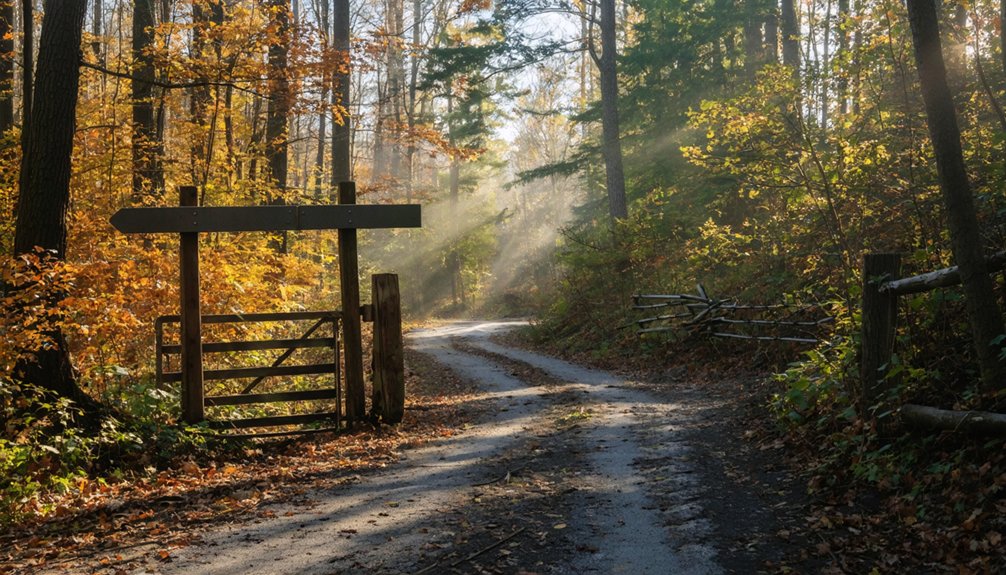
Getting to Catamount State Forest takes some deliberate planning since it sits deep in the hills of western Massachusetts, near Colrain in Franklin County. You’ll need reliable transportation to reach this remote corner of the state, as the terrain is rugged and the roads less traveled.
Once you arrive, leave the vehicle behind — motor vehicles aren’t permitted inside the forest, so your ghost town explorations happen entirely on foot.
Wear sturdy hiking boots and pack essentials before hitting the trails. The walking paths wind past historical landmarks, mossy stone foundations, and cellar holes that quietly tell the village’s story.
There’s no hand-holding here, which makes the experience feel genuinely wild and freeing. Plan your route ahead, and you’ll navigate this forgotten landscape with confidence.
Foundations, Markers, and the Historic Flag Site
As you wander through Catamount State Forest, you’ll notice mossy stone foundations scattered across the landscape — quiet remnants of the farming families who once called this hillside home.
The foundations mark where homes, mills, and other structures once stood, giving you a tangible sense of the community that thrived here centuries ago.
Most strikingly, you’ll find a large plaque embedded in stone marking the site of the former schoolhouse, where in 1812 the first American flag was flown over a public school in the United States.
Mossy Foundations Remain
What remains of Catamount isn’t dramatic—no crumbling walls or collapsed rooftops—but the mossy stone foundations scattered across the forest floor tell a quiet, compelling story.
As you walk the trails of Catamount State Forest, you’ll notice these mossy remnants emerging from the undergrowth, each one marking where a family once built their life on this unforgiving hillside.
These foundations aren’t roped off or labeled with interpretive signs. They’re simply there, waiting for you to find them.
That raw accessibility makes historical exploration here feel genuinely personal—you’re piecing together a vanished community on your own terms.
Cellar holes and former mill sites add further texture to the landscape, rewarding curious visitors who take their time moving through the trees.
Historic Flag Marker
Among the quiet remnants of Catamount, one marker stands out for its historical weight: a large plaque embedded in stone that commemorates the first time an American flag flew over a public school in the United States.
That flag raising happened here in 1812, making this site’s historic significance undeniable.
When you find the marker, you’re standing where American schoolchildren first learned beneath their nation’s flag — a small but powerful act of identity.
The stone sits in the woods, weathered and unhurried, surrounded by the same silence that reclaimed the village decades ago.
There’s something striking about discovering this level of national importance tucked into an overgrown hillside. It rewards the effort you make to reach it on foot.
Trail Conditions, Gear, and What to Expect Underfoot
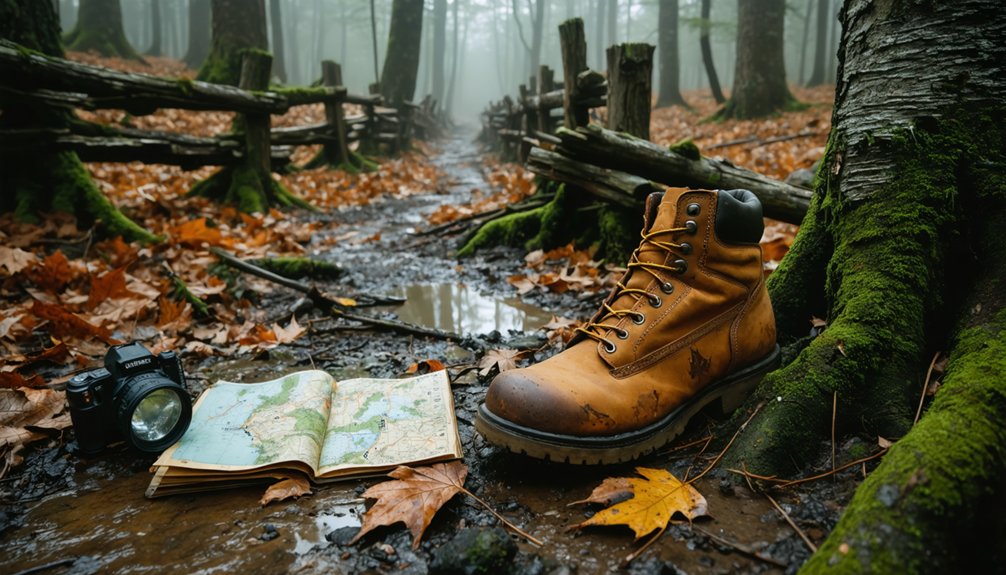
Hiking into Catamount means trading paved roads for rugged, uneven terrain that’ll test your footing at every turn. Trail conditions vary seasonally, with muddy patches, root-covered paths, and slippery moss making every step deliberate.
You’re walking ground that’s been reclaiming itself for over a century, so don’t expect groomed walkways.
Pack your hiking gear accordingly. Sturdy, ankle-supporting boots are non-negotiable here. Bring water, a trail map, and weather-appropriate layers since the hillside terrain shifts conditions quickly. Motor vehicles aren’t permitted, so you’re committed to the full walk in and out.
What you’ll find underfoot tells the real story — mossy stone foundations, sunken cellar holes, and forgotten mill sites emerging quietly from the forest floor.
Walk slowly. This place rewards patience.
Nearby Stops to Pair With Your Catamount Visit
Once you’ve finished exploring Catamount’s quiet ruins, Colrain itself is worth a slow drive through. The Arthur A. Smith Covered Bridge stands as one of the region’s most photographed landmarks, giving you a tangible connection to rural New England’s past.
If your ghost town attractions checklist isn’t complete, head toward Cape Ann and visit Dogtown, Massachusetts’s other famous abandoned village. It’s a different landscape entirely but shares that same eerie, overgrown energy that draws people to rural exploration.
The roads connecting these stops wind through Franklin County’s rolling hills, farmland, and forest.
You’re not rushing between tourist traps here — you’re moving through living history at your own pace, on your own terms, with nothing but open road ahead.
Best Time of Year to Visit Catamount
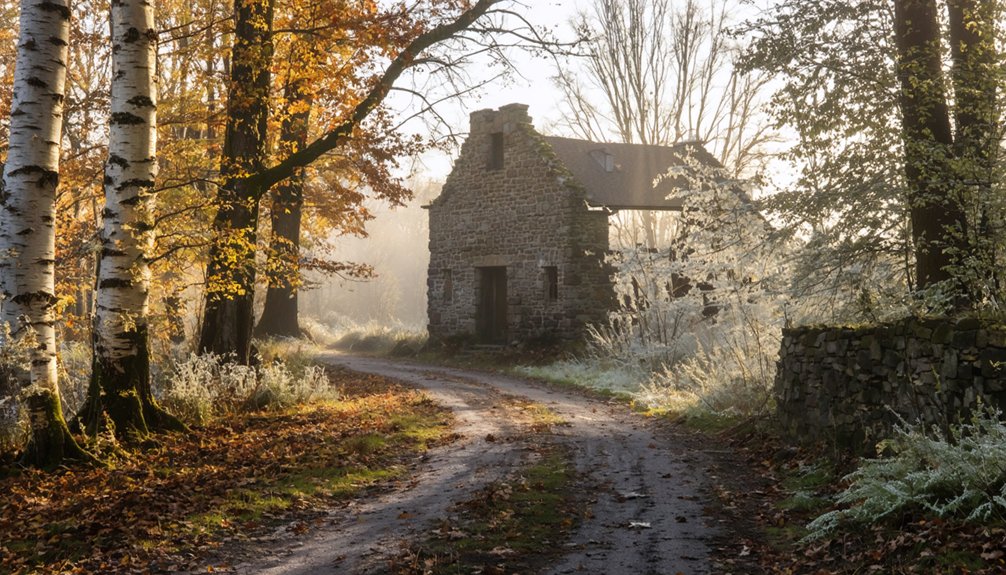
When you visit matters as much as where you go, and Catamount rewards you differently depending on the season.
Late spring through early fall offers the most accessible seasonal weather for exploring the rugged terrain. Summer brings lush greenery that softens the mossy foundations, though thick foliage can obscure cellar holes and markers.
Fall delivers crisp air and thinning leaves, making stone remnants far easier to spot along the trails. It’s arguably the finest season for photography and discovery.
Winter visits are possible but demand serious preparation given the remote, snow-covered landscape.
A few essential hiking tips: wear sturdy boots, carry water, and bring a trail map since no motor vehicles can assist you if conditions shift unexpectedly.
Plan ahead and you’ll experience Catamount at its best.
Frequently Asked Questions
Are There Any Paranormal or Ghost Sightings Reported at Catamount?
You won’t find any reported ghostly legends or supernatural experiences at Catamount. Despite its eerie, abandoned atmosphere and silent, overgrown landscape, no paranormal sightings have been documented, leaving you free to explore its mysteries undisturbed.
Who Owns the Land That Catamount State Forest Sits on Today?
The Commonwealth of Massachusetts owns the land, having purchased it in 1967. You’re stepping onto grounds rich with land ownership history and historical significance, where a forgotten farming community’s legacy is now preserved for your exploration.
Can Visitors Bring Pets or Dogs Along the Catamount Trails?
The knowledge doesn’t specify pet policies for Catamount’s trails — because apparently, even the ghosts didn’t leave that memo. Practice good trail etiquette, and check with Catamount State Forest directly before bringing your furry adventure companion!
Is There an Entrance Fee to Access Catamount State Forest Trails?
There’s no entrance fee to access Catamount State Forest’s trails, so you’re free to explore without cost! You’ll discover trail accessibility that connects you to remarkable historical significance, wandering among mossy foundations of this beautifully abandoned Massachusetts ghost town.
Are There Any Guided Tours Officially Offered at Catamount State Forest?
No official guided experiences exist here — you’ll forge your own path through Catamount’s silence. Yet that freedom amplifies its historical significance, letting you personally uncover mossy foundations and the legendary flag-raising marker independently.
References
- https://theculturetrip.com/north-america/usa/massachusetts/articles/must-visit-ghost-towns-in-massachusetts
- https://wsbs.com/this-ma-village-has-been-deemed-as-a-ghost-town/
- http://www.ghosttowns.com/states/ma/catamount.html
- https://elixir664.rssing.com/chan-80289887/article980.html
- https://www.touristsecrets.com/destinations/united-states/massachusetts/mysteries-of-massachusetts-dogtown-villages/
- https://historyofmassachusetts.org/ghost-towns-massachusetts/
- https://newenglandwithlove.com/ghost-towns-in-massachusetts/
- https://www.youtube.com/watch?v=_DK85quY_Eo
- https://westernmasshilltownhikers.com/2024/09/10/catamount-state-forest-in-colrain/
- https://www.youtube.com/watch?v=hC974ijSV1Q