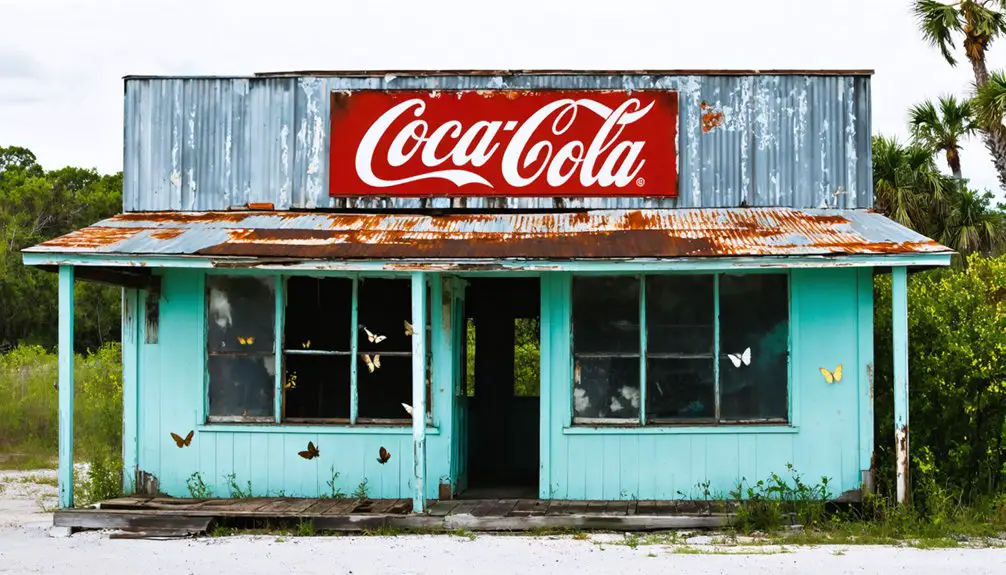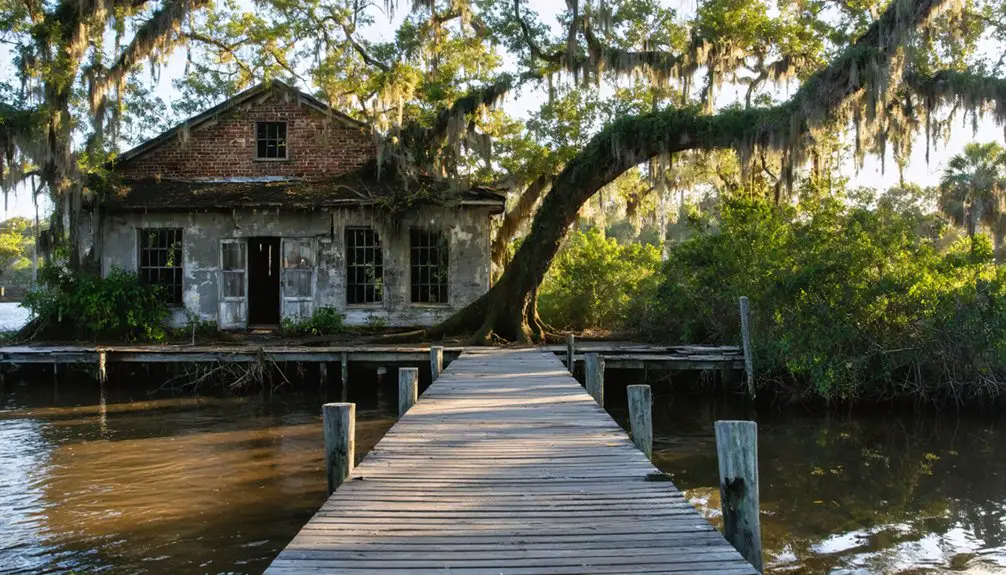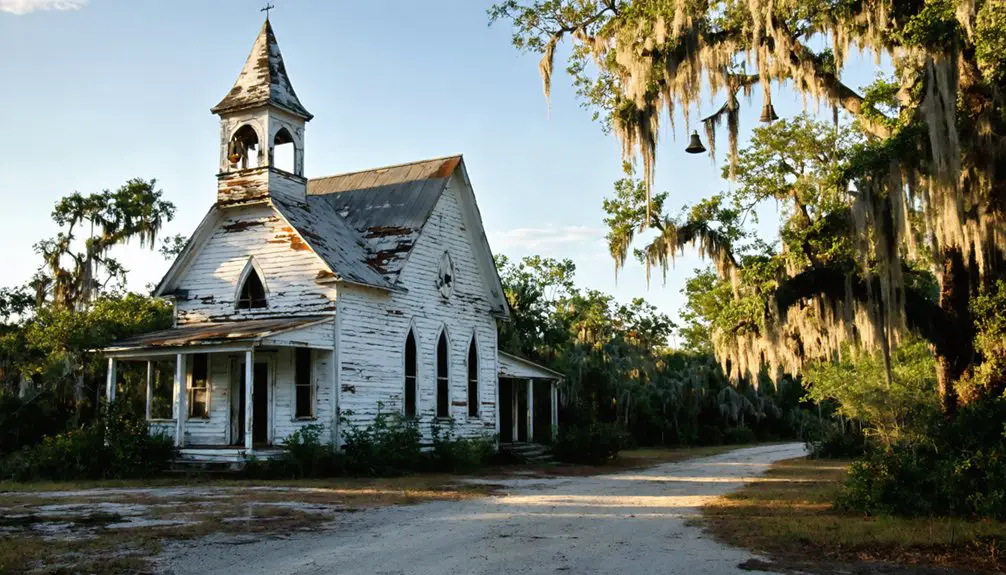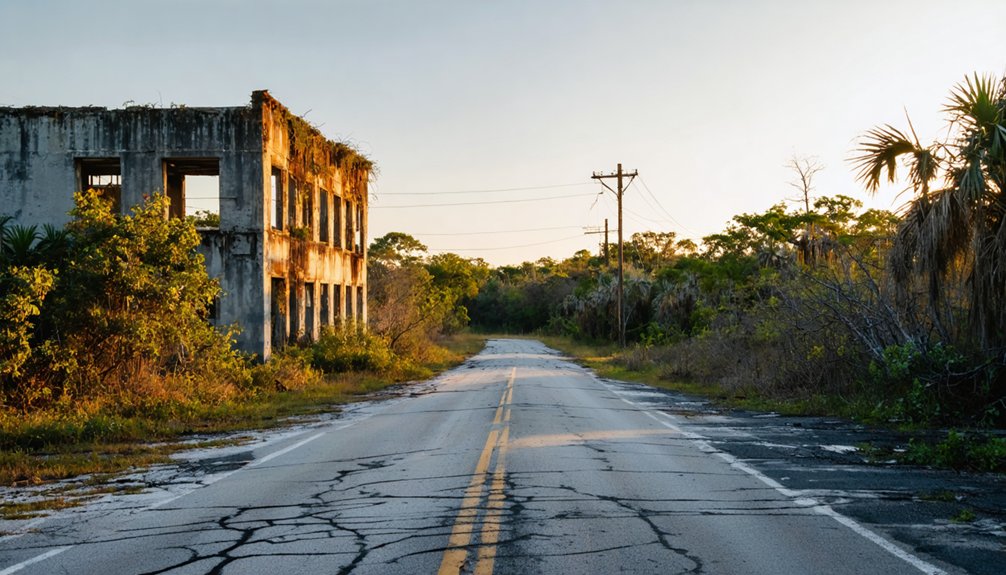
Centralia, Florida isn’t on any tourist map, but if you drive out to Hernando County with a printed preserve map and a full water bottle, you’ll find the overgrown footprint of a logging town that once housed up to 1,500 people before vanishing in less than a decade. The J.C. Turner Lumber Company built it fast, and exhausted timber supplies erased it just as quickly. Everything you need to plan your trip and explore the site is just ahead.
Key Takeaways
- Centralia, located off U.S. 19 in Hernando County, Florida, was a logging boom town that thrived in the early 1900s before disappearing by the 1920s.
- The J.C. Turner Lumber Company drove Centralia’s growth, harvesting over 15,000 acres of timber until supplies were exhausted in 1917.
- Visible remnants include scattered concrete, faint road traces, and old railroad beds largely reclaimed by dense forest since the 1960s.
- Visitors should stay on designated routes, respect wildlife management area boundaries, and avoid artifact collecting while arriving during daylight hours.
- Combine your visit with nearby Chassahowitzka National Wildlife Refuge and Weeki Wachee Springs for a comprehensive full-day regional exploration.
What Was Centralia, Florida?
Once a thriving logging boom town tucked into Hernando County, Florida, Centralia rose quickly in the early 1900s as the J.C. Turner Lumber Company carved through more than 15,000 acres of cypress, cedar, and pine.
At its peak, around 1,500 to 2,000 people called it home, supported by a general store, hotel, drugstore, school, church, and even a Greek bakery.
A railroad hauled lumber out and supplies in, keeping the whole operation alive.
But when the timber ran out around 1917, the mill shut down and the town quietly died.
Today, Centralia exists mostly in historical legends, ghost stories, and forest-covered foundations.
If you’re drawn to places where nature reclaims human ambition, this forgotten sawmill town is worth adding to your road trip.
How a Sawmill Built Centralia Into a Town of 1,500
The J.C. Turner Lumber Company planted the seed of Centralia when it established a massive sawmill to harvest more than 15,000 acres of cypress, cedar, and pine across coastal Hernando County.
That single industrial operation pulled in roughly 1,500 mill workers and their families, creating an instant demand for housing, food, and everyday services.
To meet those needs, the town quickly filled out with a general store, drugstore, hotel, restaurant, church, school, and even a Greek bakery — all built to keep a logging workforce running.
J.C. Turner Lumber Company
Before Centralia had a post office, a hotel, or a Greek bakery, it had a sawmill — and that mill was the whole reason the town existed. The J.C. Turner Lumber Company moved into Hernando County’s coastal lowlands and set up an operation that would harvest more than 15,000 acres of cypress, cedar, and pine.
That single enterprise pulled roughly 1,500 workers and their families into a settlement that built itself up fast around the mill’s needs. Today, those same logged-over lands have transformed into eco tourism opportunities you can actually walk through.
Wildlife observation has replaced timber production, and the forest that reclaimed the old mill site gives you a rare chance to see industrial history swallowed whole by nature on your own terms.
Mill Workers and Families
Bringing in 15,000 acres worth of timber doesn’t happen without an army of people, and the J.C. Turner operation recruited one fast. At its peak, Centralia housed somewhere between 1,200 and 1,500 mill workers and their families, transforming raw Florida wilderness into a functioning community almost overnight.
You’d have found children walking to school, families shopping at the general store, and workers unwinding at the movie house after long shifts. That kind of concentrated life breeds local legends, and Centralia has its share of ghost stories tied to the laborers who built the place and vanished with it.
When the timber ran out and the mill went quiet, those people scattered, leaving behind only foundations and the faint memory of a town that briefly roared.
Town Services and Businesses
Running a sawmill town meant feeding, supplying, and entertaining over a thousand people who’d nowhere else to go. Centralia delivered. You’d have found a general store, drugstore, hotel, restaurant, and even a Greek bakery operating within this remote Hernando County settlement.
A church, school, boarding house, and movie house rounded out daily life, reflecting the cultural impact of blending workers from different backgrounds into one tight-knit community.
A railroad line connected Centralia to the outside world, hauling lumber out and bringing supplies in. The post office, opened in 1910, made the town official.
Today, preservation efforts protect what little remains of this self-contained world. Walking the overgrown site, you’re fundamentally tracing the footprint of a fully functioning town that vanished almost as fast as it appeared.
Why Centralia Disappeared in Less Than a Decade
When you look at how quickly Centralia collapsed, you can trace it almost entirely back to one brutal reality: the timber ran out.
By 1917, loggers had stripped more than 15,000 acres of old-growth cypress, cedar, and pine from the surrounding coastal land, leaving the J.C. Turner sawmill with nothing left to cut.
Once the mill shut down, the town’s entire reason for existing vanished with it.
Timber Supply Ran Out
Once the timber ran out, Centralia’s fate was fundamentally sealed. By 1917, loggers had stripped more than 15,000 acres of cypress, cedar, and pine from the surrounding coastal land. The timber industry simply consumed itself, leaving nothing left to harvest.
When the sawmill shut down, the economic engine driving every business, home, and family in town died with it.
You can see this pattern repeated across Florida’s logging history — a classic boom-to-bust cycle that turned thriving communities into ghost towns within years. Workers packed up and moved on, buildings emptied, and the forest slowly reclaimed what had once been a bustling company town.
Centralia didn’t fade gradually; it collapsed quickly once the last log cleared the mill.
Mill Closure Followed Quickly
The mill didn’t linger after the timber ran out — it closed fast, and the town followed. Once the J.C. Turner Lumber Company lost its timber supply around 1917, industrial decline moved quickly. There was no reason to keep the operation running, so the mill shut down, and workers scattered to find opportunities elsewhere.
Without the mill, Centralia had no economic foundation. The general store, hotel, restaurant, and boarding house all depended on those 1,200-plus workers showing up daily. When they left, the businesses collapsed too.
By the early 1920s, the town was fundamentally gone.
What you’ll find today reflects decades of wildlife preservation efforts that transformed this abandoned industrial site into protected conservation land — a powerful contrast to what once stood here.
What Remains at the Centralia Ghost Town Site Today
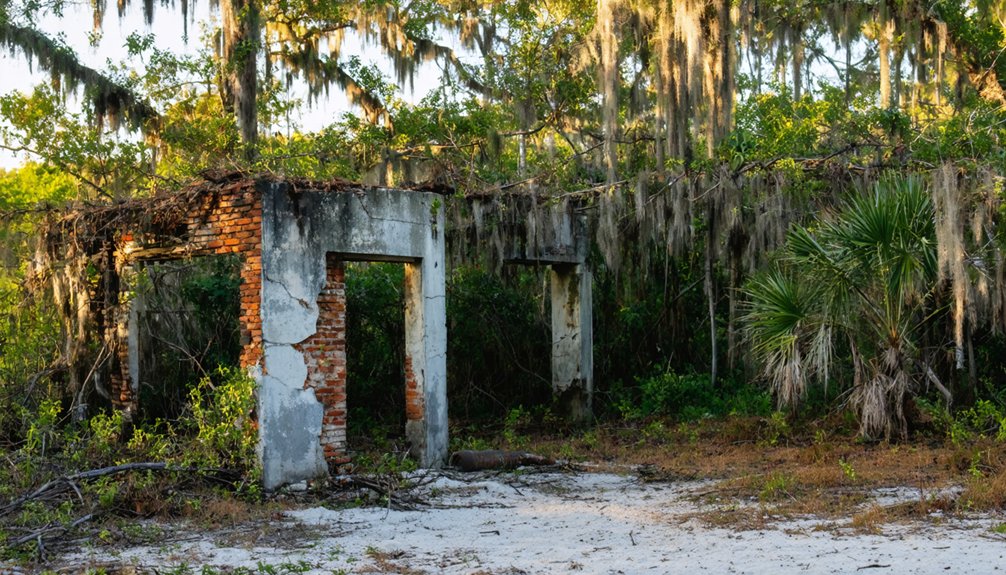
Although Centralia’s bustling sawmill economy once supported nearly 2,000 residents, you’ll find very little evidence of that former life when you visit today. Urban decay has surrendered entirely to nature here, with thick vegetation swallowing nearly every trace of the former company town.
Nature has swallowed nearly every trace of Centralia’s once-thriving sawmill town of 2,000 residents.
What you can still discover are scattered foundations, remnants of old roads, and faint railroad traces threading through the forest.
Historic preservation efforts have transformed this reclaimed wilderness into a protected conservation landscape. The Turner company reseeded the area with slash pines in the 1960s, and Florida Fish and Wildlife Conservation Commission acquired the land in 1985.
Today, walking through dense second-growth forest, you’re fundamentally reading the landscape itself — a quiet, powerful record of a boom-to-bust cycle that erased an entire community within a single decade.
What the Centralia Site Actually Looks Like on the Ground
Stepping into the Centralia site, you’ll immediately notice how completely the forest has reclaimed what was once a thriving industrial town. Urban decay here doesn’t look like crumbling buildings — it looks like dense, quiet woods swallowing every trace of human ambition.
Forest reclamation has been so thorough that most visitors walk directly over foundations without realizing it.
What you’ll actually see are subtle ground-level clues: scattered concrete remnants, faint depressions where structures once stood, and old road traces threading between the slash pines planted in the 1960s. Railroad bed outlines are still detectable if you know where to look.
The contrast between the industrial scale this town once operated at and the peaceful wilderness surrounding you today makes the experience genuinely striking.
How to Visit Centralia Without Breaking Preserve Rules
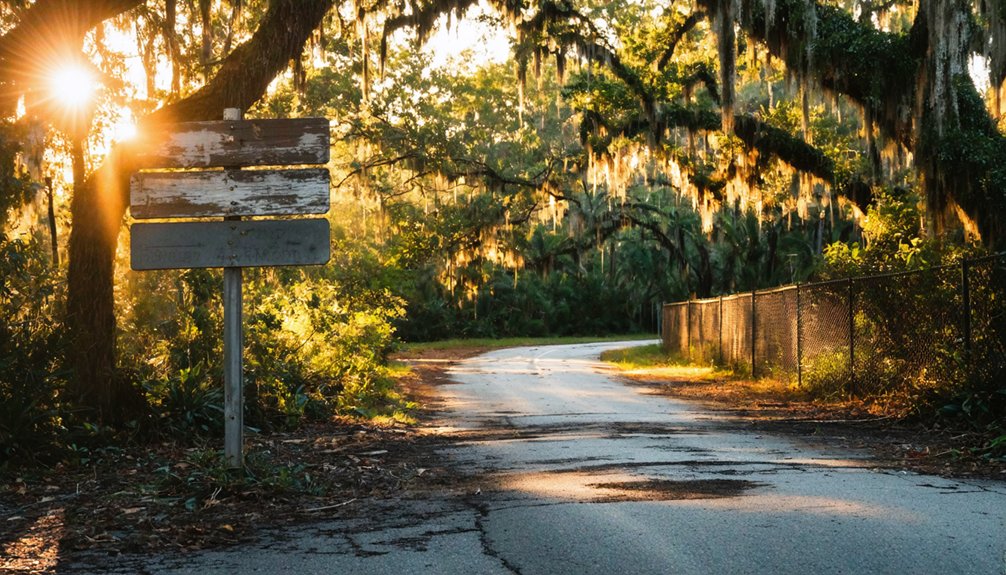
Knowing what’s out there’s one thing — getting there without running into trouble with preserve rules is another. Centralia sits inside protected land, so you’ll need to stick to designated routes and respect the boundaries of the Chassahowitzka Wildlife Management Area.
A small entrance fee may apply, and you’ll find maps and a kiosk with historical context near the access point. Don’t let the urban legends and ghost stories tempt you into hauling out souvenirs — artifact collecting and metal detecting are illegal here, full stop. Rangers take that seriously.
Stay on allowed trails, bring water, and treat this as a wilderness experience with a historical edge. The land reclaimed this town once; it doesn’t need you helping yourself to what little remains.
How to Get to Centralia, Florida
Getting to Centralia is straightforward once you know where to look. Head to U.S. 19 in Hernando County, Florida, and watch for the historic marker south of Centralia Road. That marker is your anchor point for the entire visit.
From there, you’re entering the Chassahowitzka Wildlife Management Area, so arrive prepared with a map and expect a small entrance fee. The roads leading into the preserve are rural and unpaved in sections, so a reliable vehicle helps.
You won’t find flashy signs pointing toward ghost stories or urban legends about this forgotten mill town. Centralia rewards the curious traveler who does their homework beforehand.
Download preserve maps, note permitted access routes, and plan your arrival during daylight hours for the best exploration experience.
Historic Sites Near the Centralia Ghost Town in Hernando County
While Centralia itself makes for a compelling destination, Hernando County surrounds it with enough additional history to justify a full day on the road.
The Chassahowitzka National Wildlife Refuge borders the ghost town site and offers paddling trails through old-growth coastal wilderness.
Nearby Weeki Wachee Springs carries its own share of urban legends tied to the natural springs that once drew settlers and traders through the region.
Historic U.S. 19 itself connects you to several small communities that each hold ghost stories rooted in Florida’s logging and frontier past.
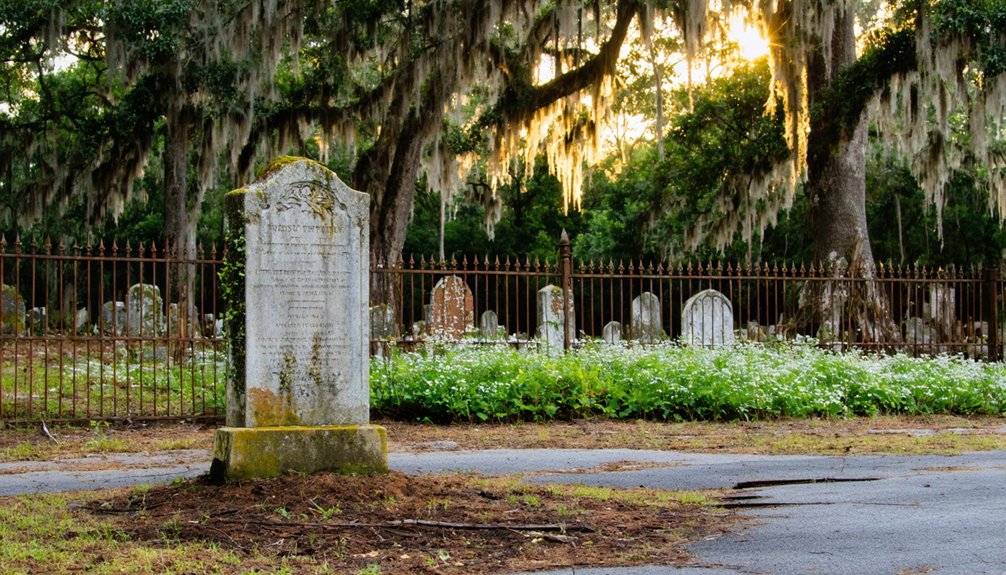
You’ll find roadside markers, old cemeteries, and preserved natural areas that deepen the regional context.
Treating Centralia as the centerpiece of a broader Hernando County loop rewards curious travelers who want more than a single stop.
Frequently Asked Questions
Is Centralia, Florida Related to the Famous Centralia, Pennsylvania Mine Fire?
They’re not related! Florida’s Centralia earned its historical significance as a logging boom town, while Pennsylvania’s Centralia gained fame for its devastating mine fire. You’ve got two entirely different ghost towns sharing one compelling name!
What Is the Best Time of Year to Visit Centralia?
Winter’s gentle embrace makes Florida’s seasonal weather most welcoming. You’ll find the best visiting times between November and March, when cooler temperatures and lower humidity let you freely explore Centralia’s forest-covered remnants without summer’s oppressive heat slowing you down.
Are Pets Allowed When Exploring the Centralia Ghost Town Site?
The knowledge doesn’t confirm pet policies, so you’ll want to check current visitor guidelines before heading out. For pet safety, contact the Chassahowitzka Wildlife Management Area directly to get the most accurate, up-to-date rules.
Can Children Safely Enjoy a Visit to the Centralia Site?
Yes, children can safely enjoy Centralia’s ghost town! You’ll find it’s a fantastic setting for family activities, sparking curiosity about history and nature. Prioritize child safety by keeping kids on designated trails within this wild, reclaimed wilderness.
Is Photography Permitted Inside the Centralia Wildlife Management Area?
You’ll find wildlife photography is generally permitted within the area, though you should verify any permission requirements before your visit. Capture the stunning regrown wilderness freely, but remember artifact collecting remains strictly prohibited on this protected land.
References
- http://www.fivay.org/centralia.html
- https://floridatrailblazer.com/2018/01/25/centralia-ghost-town-in-hernando-county/
- https://www.youtube.com/watch?v=Lv9sIPn3NgU
- https://centraliarailroad.com/history-of-centralia/
- https://www.youtube.com/watch?v=XqJW34XBreU
- https://www.youtube.com/watch?v=KDktu4qnZns
- https://www.youtube.com/watch?v=fAu5kj5Q5uo
- https://www.youtube.com/watch?v=q3Ku9qga-H4