Centropolis, Kansas spent exactly one day as the proposed territorial capital before politics and corruption ended its ambitions. Today, you’ll find aging buildings, two active churches, and layers of forgotten history waiting along Franklin County’s back roads. Start in Centropolis, then work your way through nearby ghost towns like Minneola, Silkville, and Homewood for a full-day loop. Stick around, and you’ll uncover everything you need to make this road trip unforgettable.
Key Takeaways
- Centropolis, Kansas, established in 1855, features aging buildings and two active churches, offering authentic ghost town exploration opportunities for curious travelers.
- Begin your route at Centropolis, then visit nearby ghost towns including Minneola, Peoria, Ransomville, Silkville, and Homewood, all completable in one day.
- The railroad bypassing Centropolis caused its economic decline, making it a ghost town after the post office closed in 1930.
- Always seek permission before entering privately owned lands, watch your footing near deteriorating structures, and never remove artifacts or disturb cemeteries.
- Bring water, a charged phone, and inform someone of your route before exploring these remote Franklin County ghost town locations.
What Makes Centropolis, Kansas Worth the Drive
Centropolis, Kansas packs more history into its quiet stretch of Franklin County than most towns ten times its size.
You’re stepping into the first settlement in the county, a place that once aimed to become the Kansas territorial capital. That ambition didn’t pan out, but the Centropolis history it left behind is remarkable.
Founded in 1855 by Perry Fuller, it boomed fast and faded just as quickly when the railroad chose other routes.
Centropolis rose swiftly in 1855 under Perry Fuller’s vision, then faded just as fast when the railroad passed it by.
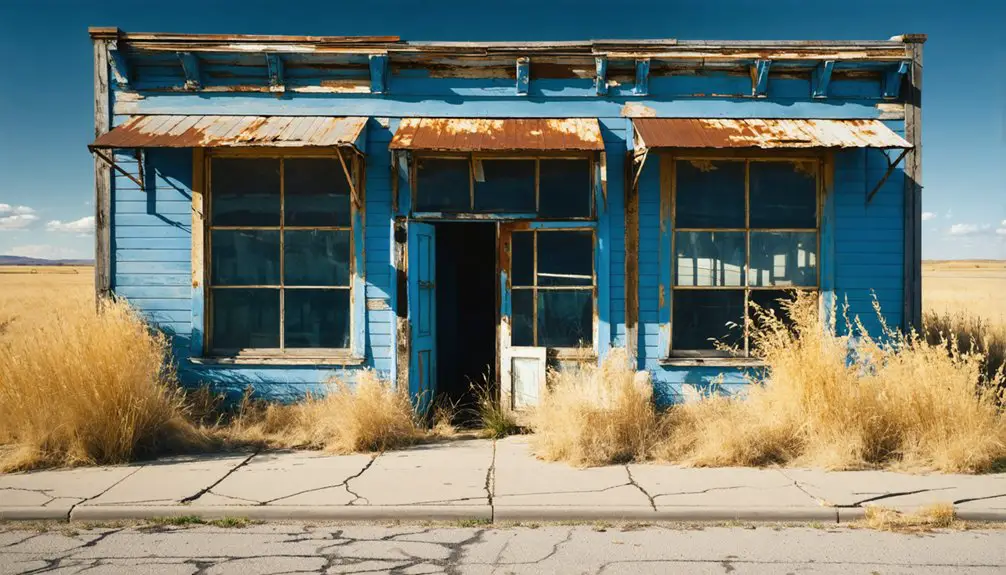
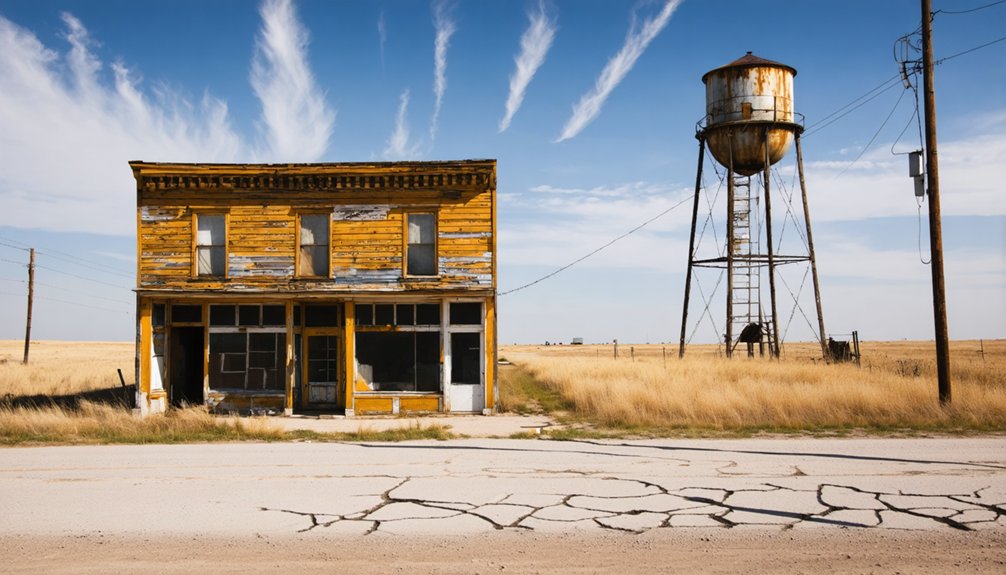
Today, ghost town exploration here rewards the curious traveler. Two active churches, several aging buildings, and a structure dated to 1883 still stand.
You won’t find a post office or a bustling main street, but you’ll find something better — authentic, untouched history waiting for those willing to seek it out.
What You Can Still See in Centropolis Today
A handful of structures have outlasted Centropolis’s faded ambitions, and they’re worth slowing down for. These historic landmarks carry community stories you won’t find in any museum.
Look for:
- An 1883 building — one of the oldest surviving structures, quietly holding its ground on the Kansas plain.
- A 1926 business — proof that Centropolis kept pushing forward long after its capital dreams collapsed.
- Two active churches — including one dating to 1858, still serving the small community today.
- The old post office site — once housed in a granary razed in 1930, now just a memory worth standing near.
You’re walking through layers of ambition, survival, and honest small-town endurance.
Bring curiosity — Centropolis rewards it.
How Centropolis Became Kansas’s First: and Most Forgotten: Town
When you trace Centropolis back to its roots, you find Perry Fuller staking his claim in 1855, establishing a trading post and sparking what locals boldly envisioned as a future metropolis.
Fuller and his associates even pushed to make nearby Minneola the Kansas territorial capital, a bid that collapsed after just one chaotic, corrupt day.
Then the railroad sealed the town’s fate by routing its lines through competing towns, leaving Centropolis to quietly fade into the kind of forgotten history you’re now driving out to find.
Perry Fuller’s 1855 Settlement
Before Kansas was even a state, a man named Perry Fuller staked his claim in what would become Franklin County, setting up a trading post in 1855 that served the Ottawa Indians and quietly planted the seeds of the region’s first town.
Perry’s Vision attracted early settlers fast. By 1856, the Centropolis Town Company had formed, and the town boasted:
- Grocery and dry goods stores serving frontier needs
- Hotels and boarding houses welcoming new arrivals
- Livery stables supporting overland movement
- Restaurants feeding a growing population
Early settlers saw real possibility here — a free place to build something lasting. Fuller’s ambition even shaped the name itself, blending “central” and “metropolis.”
That boldness defined Centropolis before railroads, politics, and time quietly worked against it.
Failed Territorial Capital Bid
Perry Fuller didn’t stop at building a frontier trading post — he swung for something far bigger. He and his associates purchased land near Minneola, just one mile from Centropolis, and pushed hard to make it Kansas’s territorial capital.
Their territorial aspirations nearly paid off — the free-state legislature seriously considered abandoning Lecompton, and Minneola actually received the designation. But the victory came through corrupt methods and lasted exactly one day. No legislature ever convened there. No governor unpacked his bags.
That fleeting moment carries real historical significance for you as a visitor. You’re standing near ground zero of a power struggle that shaped early Kansas politics.
Fuller’s ambition carved Centropolis into the historical record, even if the capital dreams quickly crumbled into dust.
Railroad Bypass Sealed Fate
After Fuller’s capital dreams collapsed, Centropolis faced an even quieter killer: the railroad. When rail lines bypassed the town entirely, railroad impact reshaped town dynamics overnight.
Opportunity didn’t disappear — it just relocated down the tracks.
The railroad chose these stops instead:
- Norwood — pulled commerce eastward
- LeLoup — redirected local trade routes
- Baldwin City — absorbed regional growth permanently
- Nearby settlements — flourished while Centropolis withered
Without rail access, businesses couldn’t compete. Merchants lost shipping advantages, travelers chose connected towns, and residents followed economic opportunity elsewhere.
The post office eventually closed in 1930, cementing Centropolis’s ghost town classification.
You’re witnessing what happens when infrastructure decisions erase ambition. The town didn’t die loudly — it simply got left behind, one bypassed mile at a time.
Why the Territorial Capital Bid Put Centropolis on the Map for One Day
You might be surprised to learn that this tiny Kansas settlement once had its sights set on becoming the territorial capital.
Perry Fuller and his associates purchased land near the neighboring site of Minneola, just a mile away, and used questionable methods to push it through as the designated capital.
Minneola’s reign lasted exactly one day — no legislature ever met there, no governor ever moved in, and the whole ambitious scheme collapsed almost as fast as it began.
Fuller’s Capital Ambitions
When ambition meets opportunity, even a small Kansas settlement can briefly capture the attention of an entire territory.
Perry Fuller’s capital aspirations drove bold territorial ambitions that nearly rewrote Kansas history.
Fuller’s strategy unfolded fast:
- He settled Centropolis in 1855, establishing trade with Ottawa Indians and building immediate commercial momentum.
- He formed the Centropolis Town Company in 1856, aggressively selling lots to attract settlers and investors.
- He purchased land near Minneola, positioning the site one mile away as the ideal territorial capital location.
- He influenced the free-state legislature, pushing a convention to abandon Lecompton and recognize Minneola as capital — a designation that lasted exactly one day.
You’re standing where that audacious dream briefly lived.
Minneola’s One-Day Reign
Fuller’s land grab near Minneola wasn’t just ambition — it was a calculated gamble that briefly paid off in the most spectacular, short-lived way imaginable.
Through questionable political maneuvering, Minneola — just one mile from Centropolis — was designated Kansas’s territorial capital. That’s Minneola history made overnight, though it unraveled just as fast.
The capital significance lasted exactly one day. No legislature convened. No governor unpacked his bags. The free-state convention had considered abandoning Lecompton, and Fuller’s group seized that window, but the scheme collapsed under its own corruption.
Today, nothing remains of Minneola. You won’t find a marker or a building — just open land carrying a remarkable secret.
That one wild day, however, permanently wove Centropolis into Kansas’s political story.
Plan Your Centropolis Ghost Town Road Trip Route
Centropolis makes an ideal starting point for a Franklin County ghost town road trip, and since Minneola sits just a mile away, you can knock out both stops before you’ve barely left the driveway.
From there, the region rewards ghost town exploration with sites carrying real historical significance. Follow this route:
- Centropolis – Walk the remaining buildings, visit both active churches
- Minneola – One mile out, nothing remains, but the story runs deep
- Peoria and Ransomville – Continue northeast through Franklin County’s forgotten corridors
- Silkville and Homewood – Round out your loop with these rural remnants
Bring a map, keep your tank full, and embrace the open road. These towns won’t find themselves.
Nearby Franklin County Ghost Towns Worth Adding to Your Route
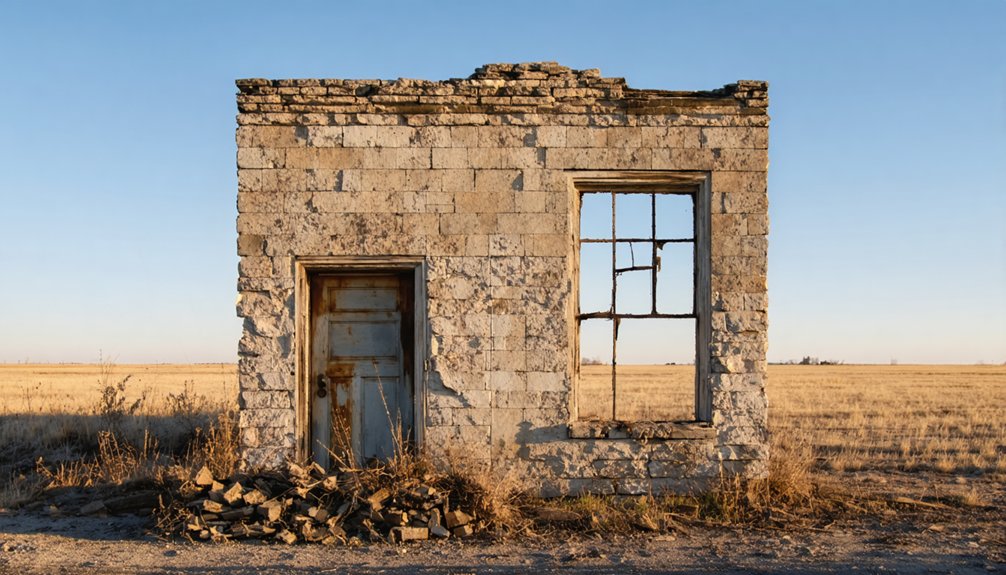
Once you’ve worked Centropolis and Minneola into your itinerary, Franklin County gives you plenty more to chase. Add Peoria, Ransomville, Silkville, and Homewood to your ghost town exploration list, and you’ll uncover layers of historical significance that stretch well beyond Centropolis itself.
Silkville stands out for its unusual past as a French silk-farming colony, while Peoria and Ransomville offer quieter remnants that reward patient explorers. Homewood rounds out the county’s forgotten landscape nicely.
Silkville’s French silk-farming roots make it a standout, while Peoria, Ransomville, and Homewood reward those who linger.
Don’t stop at the county line, either. Ladore, over in Neosho County, once held 1,000 residents by 1870 and now offers only a cemetery to mark its existence.
Each stop deepens your understanding of how quickly ambitious settlements rose, stalled, and disappeared across Kansas.
The Best Franklin County Ghost Town Loop You Can Drive in a Day
With a single day and a reliable car, you can string together one of Franklin County’s most rewarding ghost town loops, hitting Centropolis, Peoria, Ransomville, Silkville, and Homewood before the sun drops.
Each stop layers ghost town history onto the last, building a vivid picture of a region that once buzzed with ambition.
Follow this sequence for maximum impact:
- Start at Centropolis — explore abandoned buildings and active churches.
- Swing through Minneola — one mile away, nothing remains but open land.
- Push toward Silkville — a fascinating communal settlement story awaits.
- Finish at Peoria or Homewood — quiet endings to a full day.
You’ll return home having covered real ground, not just miles.
How to Explore Centropolis and Kansas Ghost Towns Without Getting Into Trouble
Exploring Kansas ghost towns rewards the curious, but it’ll get you into real trouble fast if you don’t respect a few ground rules.
Ghost town etiquette starts with one principle: never trespass. Most land surrounding Centropolis and nearby sites is privately owned. Always seek permission before stepping onto any property.
Trespassing isn’t just rude — it’s the fastest way to ruin ghost town exploration for everyone.
Exploring safely means watching your footing around deteriorating structures — collapsing floors and unstable walls don’t announce themselves. Bring water, a charged phone, and tell someone your route before you leave.
Don’t remove artifacts or disturb cemeteries. These remnants are irreplaceable pieces of Kansas history, and disturbing them carries legal consequences.
Photograph freely, but leave everything exactly as you found it. Respecting these places keeps them accessible for every curious traveler who follows your tracks.
Frequently Asked Questions
Did Centropolis Ever Have a Functioning School for Local Children?
Like a fading echo, Centropolis’s school history isn’t confirmed in available records, but its community impact ran deep — you’ll find two active churches and historic buildings that still whisper stories of this once-ambitious Kansas settlement.
What Native American Tribes Originally Inhabited the Centropolis Area?
You’ll find that the Ottawa Indians originally inhabited the Centropolis area, shaping rich Native culture across the region. Their Tribal history directly influenced Perry Fuller’s early trading post, established to serve this indigenous community in 1855.
Are There Any Annual Events or Festivals Held in Centropolis Today?
You won’t find documented annual activities or local traditions in Centropolis today. It’s a quiet, faded ghost town with only two active churches and scattered remnants, making your visit feel like a peaceful, personal historical discovery.
Was Perry Fuller Involved in Any Other Kansas Settlements Beyond Centropolis?
Beyond Centropolis, Perry Fuller’s Kansas Settlements ambitions stretched further—you’ll find he also bought land near Minneola, boldly promoting it as the territorial capital site, showcasing his relentless drive to shape Kansas’s pioneering frontier destiny.
Can Visitors Legally Enter or Photograph the Remaining Centropolis Buildings?
Like Indiana Jones exploring ancient ruins, you’ll find ghost town exploration here thrilling, but photography regulations and building access depend on private ownership—always respect property rights and seek permission before entering or photographing Centropolis’s remaining structures.
References
- https://en.wikipedia.org/wiki/Minneola
- https://www.youtube.com/watch?v=WwkBPVxO1vc
- https://www.kancoll.org/articles/progress/minneola.htm
- https://www.youtube.com/watch?v=SyTlkr_4aFM
- https://www.franklincokshistory.org/wp-content/uploads/2011/03/Centropolis.pdf
- https://en.wikipedia.org/wiki/Centropolis
- https://legendsofkansas.com/franklin-county-extinct-towns/
- https://abandonedkansas.wordpress.com/category/franklin-county/
- https://esirc.emporia.edu/bitstreams/b4b4cde4-15d4-4284-a3b5-8430fb9e324e/download