Planning a ghost town road trip to Lake, Vermont means trading tourist traps for genuine history. Use Lake Bomoseen as your base camp and explore West Castleton’s slate ruins, just steps from the shoreline. Drive to Ricker Basin near Waterbury for an eerily serene abandoned village experience. Then tackle Glastenbury’s mysterious mountain trails if you’re feeling adventurous. Pack smart, tell someone your plans, and visit between late May and October. There’s far more to uncover ahead.
Key Takeaways
- Vermont’s top ghost towns include West Castleton, Glastenbury, and Ricker Basin, each offering unique historical ruins and abandoned landscapes to explore.
- Visit between late May and early October for optimal trail access, with summer offering the longest daylight hours for safe exploration.
- Pack navigation tools, a first aid kit, water, snacks, weather-appropriate clothing, and a headlamp before venturing into remote ghost towns.
- Always notify someone of your plans before exploring remote areas and conduct all explorations during daylight hours for safety.
- Arrive early to maximize exploration time, and respect the historical significance of each site by following responsible exploration guidelines.
Vermont’s Best Ghost Towns Worth the Drive
Vermont hides some of the Northeast’s most compelling ghost towns, and a road trip through the lake region uncovers history that feels genuinely untouched.
You’ll find abandoned slate industry ruins at West Castleton inside Bomoseen State Park, cellar holes swallowed by forest near Glastenbury, and the eerily preserved Ricker Basin settlement at Little River State Park.
Each site carries ghost town legends rooted in real industry collapse, unexplained disappearances, and communities nature slowly reclaimed.
Glastenbury Mountain alone witnessed multiple mysterious vanishings that permanently shaped Vermont law enforcement history.
Before you head out, prioritize hiking safety by exploring during daylight, notifying someone of your plans, and grabbing trail guides from park offices.
These aren’t tourist traps — they’re genuine wilderness history waiting for curious, independent explorers like you.
What Makes Lake Bomoseen’s Ghost Town Trail Special?
At Bomoseen State Park, you’ll walk an easy three-quarter-mile Slate History Trail through the abandoned ruins of West Castleton, a once-thriving 1800s slate industry hub.
The trail guide, available at the park office or as a downloadable print, points out the historical significance of each crumbling site you’ll encounter along the route.
Best of all, you’ll enjoy breathtaking views of Lake Bomoseen as a stunning backdrop to your ghost town exploration.
Slate Industry Historical Ruins
Tucked within Bomoseen State Park, the Slate History Trail gives you a rare glimpse into West Castleton’s 19th-century slate industry, where abandoned ruins tell the story of a once-thriving village.
This easy ¾-mile walk carries deep historical significance, letting you explore slate production remnants at your own pace. Pick up a trail guide at the park office or download one beforehand.
You’ll encounter:
- Crumbling stone foundations where workers once lived and labored
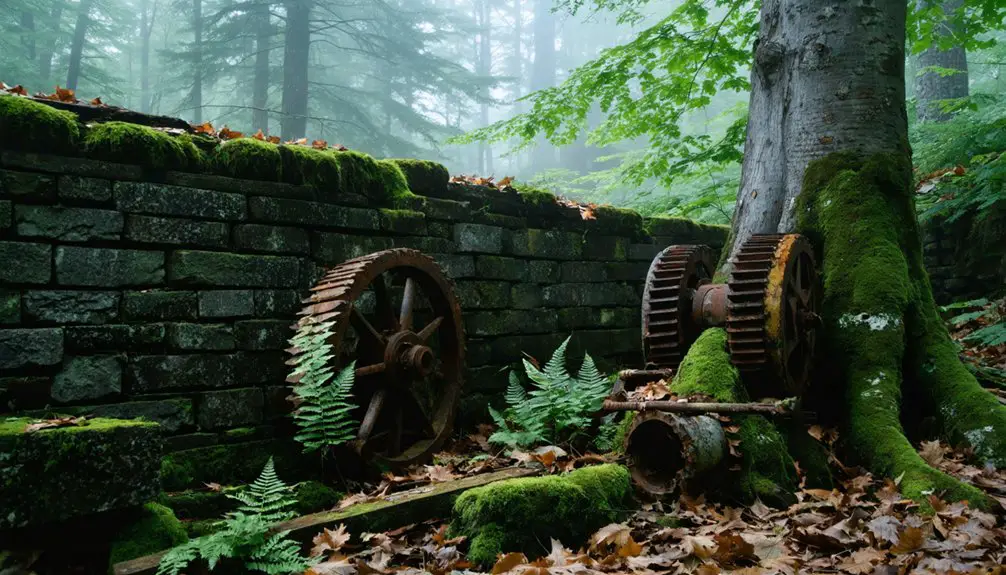
- Rusted machinery fragments half-swallowed by encroaching forest growth
- Quarry remains that reveal the sheer scale of slate production operations
The trail takes roughly one hour to complete, making it an accessible yet genuinely immersive experience into Vermont’s industrial past without sacrificing your entire day.
Scenic Lake Views
What truly sets the Slate History Trail apart is how it pairs industrial ruins with breathtaking lake views, giving you a dual experience few ghost town hikes can match.
As you wander through West Castleton’s abandoned remnants, Lake Bomoseen opens up beside you, offering stunning natural contrast against the crumbling slate-era structures.
The lake’s historical significance runs deep here — it witnessed an entire industry rise and collapse along its shores.
Beyond exploring ruins, you’ll find lake activities that extend your adventure, from fishing to simply absorbing the water’s peaceful expanse.
You’re not just walking through a ghost town; you’re standing at the intersection of natural beauty and forgotten history.
That combination makes Bomoseen unlike any other ghost town destination you’ll find in Vermont.
Ricker Basin: Vermont’s Most Accessible Abandoned Village
If you’re looking for another ghost town adventure, head to Ricker Basin at Little River State Park near Waterbury, where Vermont’s most accessible abandoned village awaits you.
You’ll wander through pristine woodlands accompanied by meandering streams and expansive greenery that have slowly reclaimed this forgotten settlement.
The fresh Vermont air and serene natural environment make this hike as rejuvenating as it’s historically fascinating.
Ricker Basin Trail Overview
Nestled on Little River Road just off River Road between Bolton and Waterbury, Ricker Basin offers one of Vermont’s most accessible ghost town experiences within Little River State Park.
This trail combines hiking tips, historical significance, and local folklore into one unforgettable journey through Vermont’s reclaimed wilderness.
Picture yourself discovering:
- Meandering streams weaving quietly through dense woodland, reflecting dappled sunlight across moss-covered stones.
- Cellar holes and remnants of former homes, slowly consumed by roots and forest undergrowth.
- Expansive green canopies stretching endlessly overhead, creating a cathedral-like atmosphere above forgotten foundations.
You’ll breathe fresh Vermont air while contemplating the lives once lived here.
Notify a friend before heading out, and explore during daylight hours to fully appreciate Ricker Basin’s hauntingly beautiful landscape.
Scenic Natural Features
Ricker Basin’s scenic natural features transform what could be a simple historical hike into a full sensory experience. Meandering streams wind through dense woodland, creating a soundtrack that accompanies your exploration of the abandoned village remains.
Vermont’s expansive greenery stretches across the landscape in every direction, pulling you deeper into natural tranquility while historical intrigue lingers around every cellar hole and forgotten foundation.
You’ll breathe in crisp forest air as sunlight filters through the tree canopy overhead. The Little River corridor connecting Bolton and Waterbury delivers pristine wilderness that genuinely refreshes the spirit.
Unlike crowded tourist destinations, Ricker Basin rewards you with solitude, raw beauty, and authentic connection to Vermont’s past. Nature has reclaimed this space deliberately, making each discovery feel earned rather than manufactured.
Why Glastenbury Ghost Town Was Abandoned and Never Resettled
Glastenbury was once a thriving small community, but by the early 1900s, its residents had packed up and left for good. Declining industry, isolation, and eerie ghost town legends surrounding mysterious disappearances made resettlement unappealing.
Glastenbury history reveals a place the forest simply reclaimed.
Picture what you’d discover exploring this forgotten landscape:
- Crumbling cellar holes half-swallowed by tree roots, hinting at families who once called this wilderness home.
- Ancient charcoal kiln remains standing as silent monuments to the industry that briefly sustained the community.
- Dense forest trails where four people mysteriously vanished, their disappearances never fully explained.
You’re free to explore this hauntingly beautiful place, but tell someone where you’re going before you venture into Glastenbury’s wilderness.
How to Reach Glastenbury Mountain and Fayville
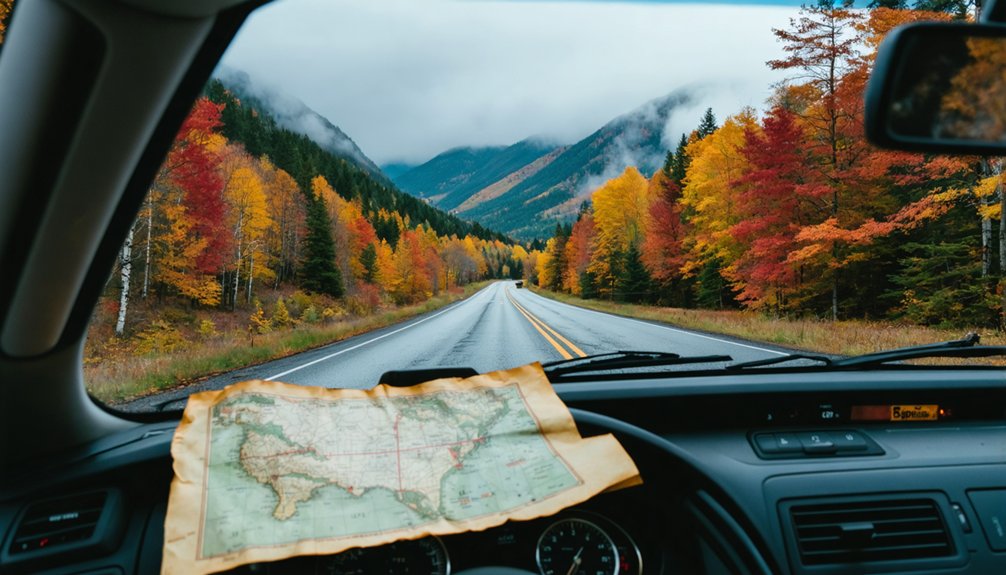
Reaching Glastenbury Mountain and Fayville requires some planning, but the journey itself sets the tone for the ghost town adventure ahead.
For Glastenbury access, you’ll tackle a challenging hike through deep forest, with the Appalachian Trail serving as your primary route into the wilderness. It’s a serious commitment, so notify someone before heading out and explore only during daylight hours.
Fayville exploration offers a more accessible alternative. Take fire road 71 off Route 9 in Woodford, which allows vehicle access directly to Fayville’s ruins.
Fire Road 71 off Route 9 in Woodford puts you within driving distance of Fayville’s forgotten ruins.
From there, you can venture further toward Glastenbury Mountain on foot if conditions permit. Either way, you’re trading convenience for authenticity — dense Vermont wilderness surrounding cellar holes and charcoal kiln remains that whisper stories of a community that simply vanished.
What to Pack and Who to Tell Before You Go
Before venturing into Vermont’s remote ghost town wilderness, there’s one rule that overrides everything else: tell someone where you’re going and when you expect to return.
These forests swallow cell signals whole, and daylight disappears faster than you’d expect among the trees.
Follow these packing essentials and safety tips before hitting the trail:
- Navigation tools — Download offline maps, carry a physical compass, and print the Slate History Trail guide from Bomoseen’s park office.
- Survival basics — Pack water, snacks, a first aid kit, and a headlamp with fresh batteries.
- Weather-ready layers — Vermont’s wilderness shifts quickly; lightweight rain gear and sturdy boots handle unpredictable conditions.
Explore freely, but explore smart — the wilderness doesn’t negotiate.
The Best Time to Visit Vermont’s Ghost Towns
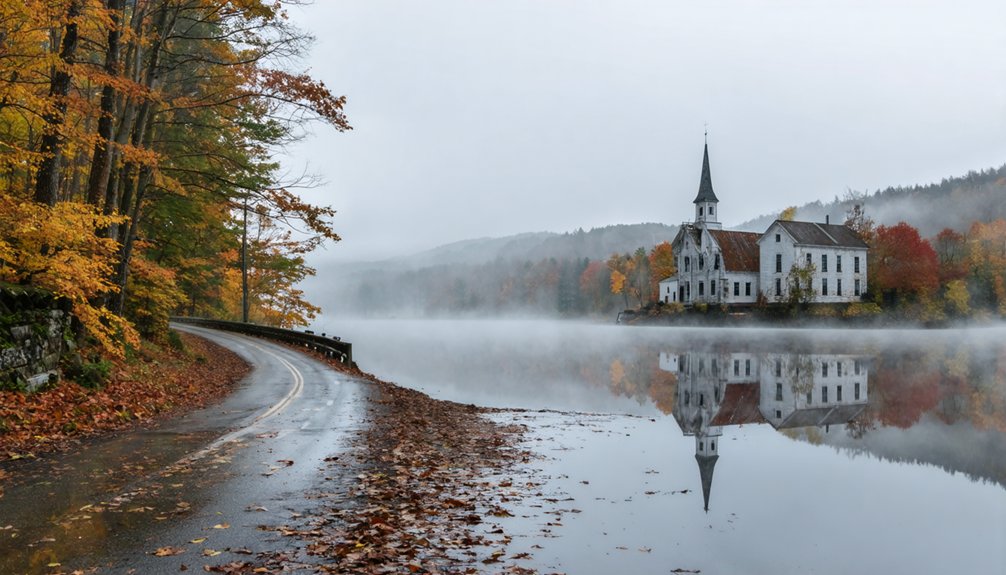
Once your pack is ready and someone knows your itinerary, timing your visit becomes the next deciding factor. Vermont’s ghost towns reward visitors differently across every season, so knowing the seasonal highlights helps you plan smarter.
The best months for exploration run from late May through early October. Summer offers long daylight hours, making remote sites like Ricker Basin and Glastenbury safer to navigate.
Fall transforms the surrounding forests into vivid color, adding dramatic atmosphere to West Castleton’s slate ruins along Lake Bomoseen.
Avoid deep winter visits to these backcountry locations. Snow obscures cellar holes and trail markers, turning manageable hikes into genuine hazards.
Spring mud season slows access roads considerably.
Choose your window wisely, arrive early, and you’ll experience Vermont’s forgotten communities at their most atmospheric and accessible.
All Four Vermont Ghost Towns on One Route
Hitting all 4 ghost towns in a single Vermont road trip is ambitious but entirely doable with the right routing.
Start south, then work your way north, weaving through dense forests and forgotten histories rich with ghost town legends.
- Glastenbury/Fayville – Begin near Bennington, exploring cellar holes and charcoal kilns shrouded in mystery and unexplained disappearances.
- West Castleton at Bomoseen – Drive northwest to walk the easy ¾-mile Slate History Trail through abandoned slate industry ruins beside stunning lake views.
- Ricker Basin – Finish near Waterbury at Little River State Park, where meandering streams frame haunting remnants of a vanished community.
Tell someone your itinerary before heading out — hiking safety matters deeply when you’re chasing history through Vermont’s reclaimed wilderness.
Frequently Asked Questions
Can Trail Guides for the Slate History Trail Be Downloaded and Printed?
Yes, you can download and print trail guides for your slate history exploration! Grab this convenient trail guide availability option before heading out, so you’re fully prepared to uncover West Castleton’s fascinating abandoned ruins independently.
How Long Does It Take to Drive to the Slate History Trail?
Hit the road and you’ll arrive at the Slate History Trail in about 1 hour and 40 minutes! Cruising scenic routes past Vermont’s historical landmarks makes the drive an unforgettable journey worth every mile you’ll travel.
How Many People Have Disappeared From Glastenbury Mountain Over the Years?
You’ll discover that four people have mysteriously vanished from Glastenbury Mountain, fueling chilling Glastenbury legends that haunt the area. These mysterious disappearances even sparked the formation of Vermont State Police, making this ghost town destination truly unforgettable.
Did the Glastenbury Disappearances Lead to the Formation of Vermont State Police?
Yes, the Glastenbury legends actually sparked Vermont’s State Police formation! These Vermont mysteries surrounding the unexplained disappearances you’ll encounter on your adventure directly prompted officials to establish the state’s very own police force.
Is Lake Champlain Located Near Bomoseen State Park in Vermont?
Like two stars in the same sky, Lake Champlain and Bomoseen State Park aren’t neighbors — they’re miles apart in Vermont geography. You’ll find Lake Champlain closer to Burlington, not Bomoseen.
References
- https://www.vermonter.com/ricker-basin-vermont-ghost-town/
- https://usghostadventures.com/burlington-ghost-tour/
- https://www.youtube.com/watch?v=Yy85eB_ZBh8
- https://www.onlyinyourstate.com/trip-ideas/vermont/creepy-fall-day-trip-vt
- https://ournewenglandlegends.com/the-mystery-of-glastenbury-mountain-vermont/
- https://myfamilytravels.com/supposedly-boring-vermont-towns-hiding-some-truly-strange-landmarks
- https://travelswithallie.blog/2019/10/03/ghost-towns-old-mines-dirt-roads-around-lake-city/