Chimney Point isn’t your typical ghost town, but it’ll haunt you just the same. Tucked along Vermont’s western edge where Lake Champlain narrows, this site carries 7,500 years of human history across Native American, French colonial, and Revolutionary War chapters. You can explore the 1785 Tavern Museum, open late May through mid-October, and cross the Lake Champlain Bridge to reach it. Stick around and you’ll uncover why every civilization that passed through fought to claim this ground.
Key Takeaways
- Chimney Point, Vermont, gets its name from chimneys left by abandoned Fort de Pieux, built by French soldiers in 1731 and deserted by 1735.
- The 1785 Tavern Museum offers exhibits on Native American, French Colonial, and early American history, open Wednesday–Sunday, late May to mid-October.
- Admission to the museum costs $3.00 for adults, with free entry for children 14 and under, making it an affordable stop.
- Nearby Fort Ticonderoga, just 20 minutes away, adds another ghost town-worthy historical destination to your road trip itinerary.
- Vergennes, America’s smallest city, is a nearby stop featuring ghost stories from the War of 1812, perfect for ghost town enthusiasts.
Why Chimney Point Sits at One of Vermont’s Most Strategic Locations
Jutting into Lake Champlain like a natural checkpoint, Chimney Point sits at one of the most tactically valuable spots in the entire Northeast. The peninsula narrows the lake dramatically, creating a chokepoint that armies, traders, and explorers couldn’t ignore.
You’re standing where Routes 125 and 17 now intersect, but for centuries this ground controlled movement between what’s now Vermont and New York.
The strategic advantages here shaped empires. Native Americans recognized the location’s value nearly 7,500 years ago. French soldiers built Fort de Pieux in 1731.
Then American and British forces battled over the same ground during the Revolutionary War. The historical significance runs deep because whoever controlled this narrows controlled the corridor.
American and British forces clashed here during the Revolution — control the narrows, control the corridor.
Geography made Chimney Point a prize worth fighting for, repeatedly.
Who Lived at Chimney Point 7,500 Years Before the First Europeans
When you stand at Chimney Point today, you’re standing on ground that people have called home for nearly 7,500 years.
Long before Europeans ever glimpsed Lake Champlain, Native Americans camped and hunted along these shores, drawn by the narrows and the resources they provided.
During the Archaic period, stretching from roughly 7,000 to 1,000 B.C., the Abenaki people refined their way of life here, adapting to shifting climates and building a deep, lasting connection to this landscape.
Ancient Native American Presence
Long before Europeans ever set foot near Lake Champlain, people were already living, hunting, and thriving at Chimney Point. Nearly 7,500 years ago, Native American tribes claimed this peninsula as their own, using it as a prime camp for ancient hunting and survival.
As you walk the grounds today, you’re standing where the Abenaki people once adapted to shifting climates during the Archaic period, spanning roughly 7,000 to 1,000 B.C. Their Native American traditions weren’t primitive — they were sophisticated, deeply connected to the land, and built to endure.
These weren’t temporary visitors passing through. They were a permanent presence who understood this landscape intimately.
The museum’s artifacts bring their story to life, giving you a rare, tangible connection to thousands of years of human history.
Abenaki Archaic Period Adaptation
The Abenaki people weren’t just passing through Chimney Point — they built a life here. During the Archaic period, spanning roughly 7,000 to 1,000 B.C., Abenaki culture evolved alongside a shifting climate, demanding constant adaptation and ingenuity.
You’re standing on ground where generations of skilled hunters and gatherers refined their tools, techniques, and survival strategies.
These Archaic innovations allowed the Abenaki to thrive in a landscape that challenged every season. They read Lake Champlain‘s rhythms, tracked game through dense forests, and established seasonal camps with remarkable precision.
When you visit Chimney Point today, you’re not just touring a historic site — you’re walking through nearly 7,500 years of human resilience. The Abenaki didn’t simply survive here; they mastered this place.
How the French Built a Fort Here and Left Their Chimneys Behind
France’s ambitions on Lake Champlain took shape in 1731 when French soldiers constructed Fort de Pieux—also known as Fort Pointe-à-la-Chevelure—right here at this strategic narrows.
This fort construction gave France a commanding presence over the waterway, controlling movement between what’s now Vermont and New York. The garrison operated until the late summer of 1735, when French forces ultimately abandoned the position under British pressure.
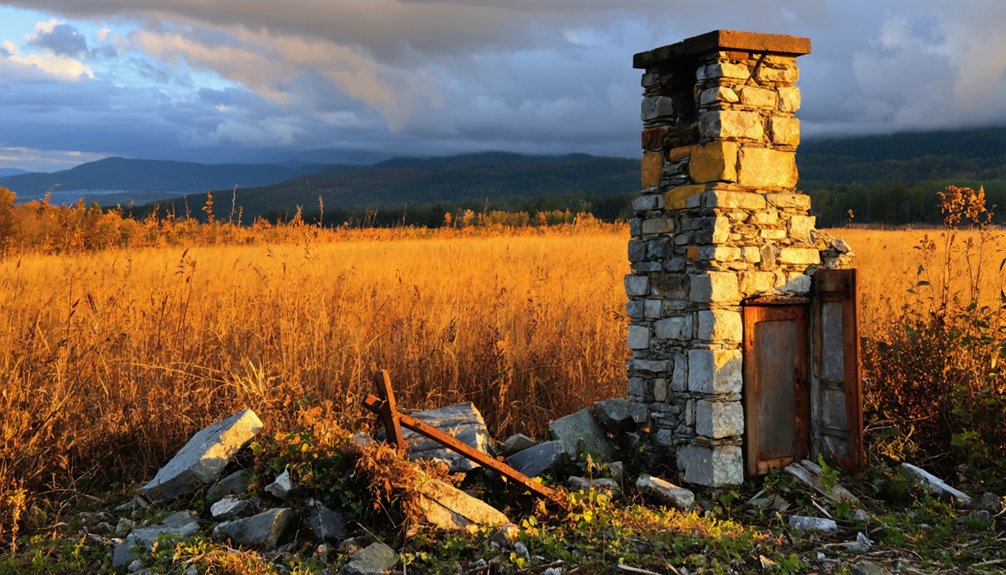
When they left, they didn’t take everything. The chimneys of their dwellings stood stubbornly behind, rising from the landscape like silent sentinels marking a vanished civilization.
Those chimney remnants gave this place its enduring name—Chimney Point. You’re fundamentally walking ground where an entire colonial chapter rose, collapsed, and left nothing but stone fingers pointing toward the sky.
Why American and British Forces Both Wanted Chimney Point
Abandoned chimneys marking French defeat didn’t make Chimney Point any less valuable—they just changed who wanted it.
Between 1775 and 1777, both American and British forces recognized Chimney Point’s significance as a critical strategic position. You’re standing where military strategies collided during the Revolutionary War, at a natural narrows where Lake Champlain compressed water traffic into a controllable corridor.
Whoever held this peninsula controlled movement between New York and Vermont. Both sides used it as a fortified camp and guarded depot, storing the provisions that kept armies alive and moving.
That’s not coincidence—it’s geography dictating military reality. The same features that drew French soldiers in 1731 kept drawing armies decades later.
Control Chimney Point, and you controlled the lake. Control the lake, and you controlled the frontier.
Inside the 1785 Tavern Museum at Chimney Point
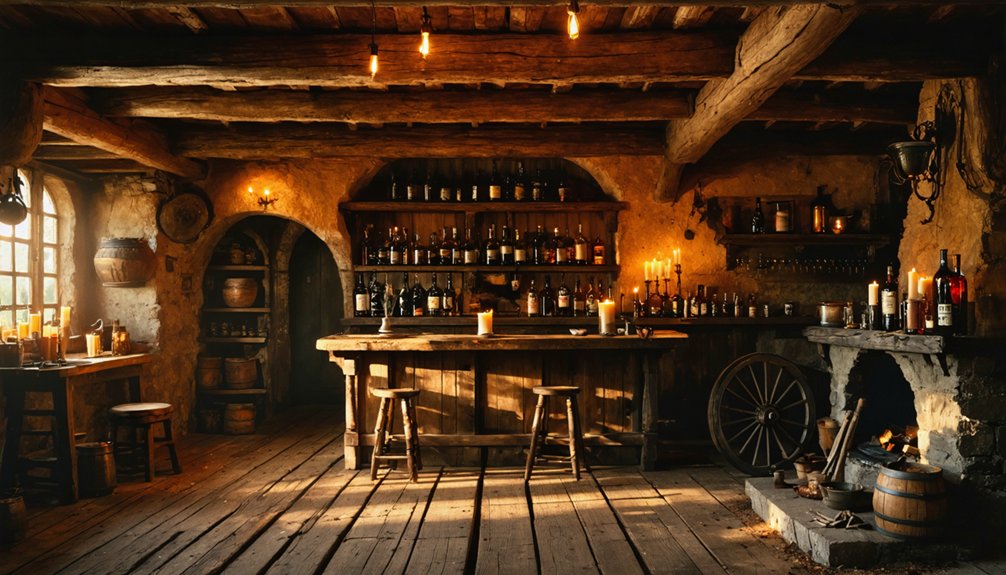
Wars end, armies move on, and landscapes transform—but a tavern built in 1785 still anchors Chimney Point’s story.
When you step inside, you’re walking into living tavern history that once welcomed travelers like Thomas Jefferson and James Madison.
Today, the building operates as a museum where you’ll explore exhibits spanning three distinct cultures—Native American, French Colonial, and early American.
The museum exhibits display artifacts recovered from archaeological digs connected to the Lake Champlain Bridge project, giving you a rare, tangible connection to the people who shaped this land across thousands of years.
You can visit Wednesday through Sunday, from 9:30 a.m. to 5:00 p.m., between late May and mid-October.
Adult admission runs just $3.00, and kids 14 and under get in free.
Chimney Point Admission Costs and Visitor Hours
Visiting Chimney Point won’t strain your budget—adult admission runs just $3.00, and children 14 and under get in free.
If you’re traveling with a group of 10 or more, call ahead and reserve your spot to pay just $2.00 per person.
Visitor hours run Wednesday through Sunday, 9:30 a.m. to 5:00 p.m., with seasonal access from late May through mid-October.
Plan your road trip accordingly, since the site closes during the colder months.
You’ll find Chimney Point at 17W VT Route 17, Addison, Vermont 05491.
For questions about admission fees or visitor hours, call (802) 759-2412 or reach out through Vermont’s state website.
With low costs and flexible hours, there’s little reason to skip this historic stop.
Getting to Chimney Point Across the Lake Champlain Bridge
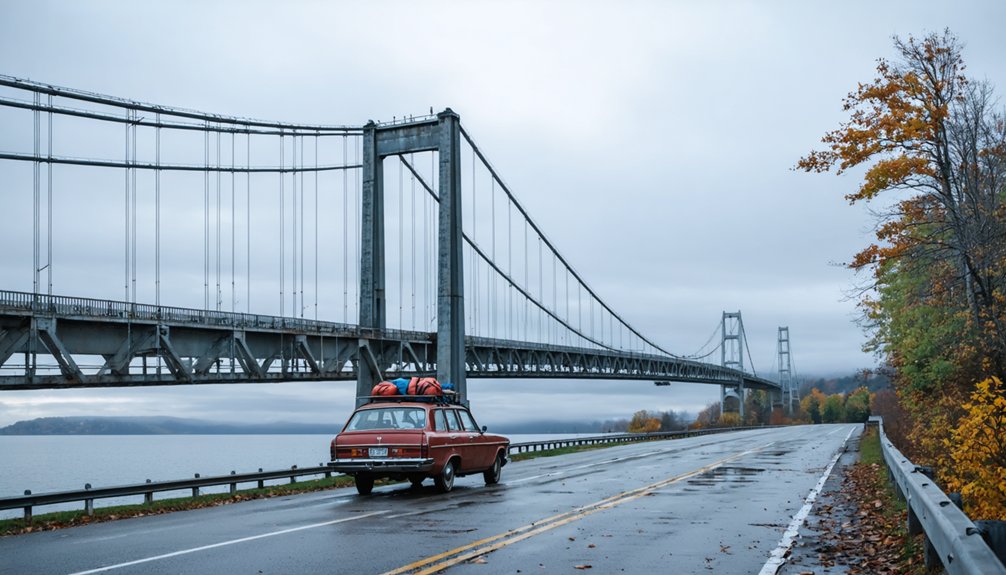
If you’re coming from New York, you’ll cross the Lake Champlain Bridge directly into the heart of the site, landing at the junction of Routes 125 and 17 in Addison, Vermont.
The bridge spans the narrows that Chimney Point’s peninsula helps create, giving you a striking view of the waterway that made this location so strategically valuable for centuries.
Once you’re across, you can’t miss the historic tavern standing just off the corner where the two routes meet.
Bridge Access From New York
Crossing the Lake Champlain Bridge from New York puts you directly at Chimney Point‘s doorstep, making a visit from the western shore remarkably straightforward.
The bridge’s history runs deep, connecting Vermont and New York across waters that once carried French soldiers, Native Americans, and Revolutionary War troops. As you drive across, you’ll catch scenic views of the lake stretching north and south, framing the landscape exactly as explorers saw it centuries ago.
Once you cross, you’ve arrived — Chimney Point sits right at the bridge’s eastern terminus where Routes 125 and 17 meet. There’s no complicated navigation or lengthy detour.
Park your vehicle, step out, and you’re standing on ground that’s witnessed 7,500 years of human history unfolding along these shores.
Routes 125 And 17 Junction
The junction of Routes 125 and 17 is exactly where you’ll land after crossing the Lake Champlain Bridge, and it couldn’t be simpler to navigate. This corner marks your arrival at Chimney Point, placing you immediately at the heart of the site’s historical significance.
You’ve just traveled the same corridor where Native Americans, French soldiers, and Revolutionary War troops once moved freely across this land.
Pull over and take a moment before heading inside. The scenic views stretching across Lake Champlain reward you instantly, with the bridge framing the water behind you and Vermont’s green landscape ahead.
You’re standing at a genuine crossroads of American history, and the museum sits right there at the corner, ready to deliver everything you came to discover.
Navigating The Lake Champlain Narrows
Spanning 3,026 feet over Lake Champlain, the Lake Champlain Bridge connects Crown Point, New York, to Chimney Point, Vermont, and you’ll cross it to reach the site.
As you drive across, you’re traversing narrows where the lake compresses into a strategic channel that shaped centuries of lake strategies for Native Americans, French soldiers, and Revolutionary War troops alike. The water below isn’t just scenery — it’s a corridor that armies fought to control.
Once you cross, you’ll arrive directly at the junction of Routes 125 and 17, where Chimney Point juts into the lake on Vermont’s eastern shore.
Pull over, take in the view, and let the geography tell you exactly why everyone from the Abenaki to George Washington’s forces valued this ground.
Historic and Outdoor Sites Within 30 Minutes of Chimney Point
Just across the Lake Champlain Bridge, Fort Ticonderoga in New York stands as one of the most storied military sites in North America, and it’s roughly a 20-minute drive from Chimney Point.
You’ll walk the same grounds where French, British, and American forces clashed during some of history’s most pivotal battles.
Back on the Vermont side, Dead Creek Wildlife Management Area offers outstanding outdoor adventures, drawing birdwatchers and hunters seeking wide-open spaces.
Vergennes, America’s smallest city, sits within 30 minutes and carries its own local ghost stories tied to the War of 1812.
Button Bay State Park delivers stunning lake views and fossil-rich shorelines perfect for exploration.
These nearby destinations make Chimney Point an ideal base for a full regional adventure.
Chimney Point Is Only Open Late May Through Mid-October
Before you pack your bags for Chimney Point, know that the museum only opens its doors from late May through mid-October, running Wednesday through Sunday from 9:30 a.m. to 5:00 p.m.
Timing your ghost town road trip around this seasonal window guarantees you won’t arrive to locked doors and missed history. Plan your visit between Wednesday and Sunday, and you’ll have plenty of time to explore artifacts spanning 7,500 years of Native American, French, and early American culture.
Arriving outside these hours means walking past a closed tavern with no way inside. Check the schedule before hitting the road, confirm your travel dates, and you’ll experience everything this remarkable historic peninsula has to offer without any frustrating surprises.
What the Lake Champlain Bridge Archaeological Dig Uncovered
When the Lake Champlain Bridge underwent construction, archaeological excavations unearthed a remarkable collection of artifacts spanning thousands of years of human history.
You’ll find these discoveries on display inside the 1785 tavern museum, where they bring Native American, French colonial, and early American cultures to life.
The exhibits connect you directly to the layers of civilization that once thrived at this strategic narrows.
Artifacts Discovered During Excavation
During the Lake Champlain Bridge archaeological dig, workers unearthed a remarkable collection of artifacts that now bring Chimney Point’s layered past to life inside the museum.
You’ll see objects spanning thousands of years, from Native American tools to French colonial remnants and early American relics.
The artifact significance becomes clear when you realize each piece represents a distinct culture that once claimed this strategic shoreline.
Excavation techniques used during the project followed careful, methodical processes, ensuring fragile items survived intact for future study and public display.
When you visit, you’re not just looking at objects behind glass — you’re tracing the decisions, struggles, and daily lives of people who shaped this region.
The dig fundamentally handed history back to the public in tangible, undeniable form.
Findings Displayed in Museum
Those carefully excavated artifacts don’t simply sit in storage — they’re on full display inside the 1785 tavern, arranged to tell the complete story of Chimney Point’s multicultural past.
You’ll move through exhibits showcasing Native American tools, French colonial remnants, and early American pieces, each carrying artifacts significance that connects you directly to lives lived thousands of years ago.
The Lake Champlain Bridge archaeological dig contributed groundbreaking finds that deepened understanding of the region’s cultural heritage, and curators wove those discoveries seamlessly into the museum’s narrative.
Walking these floors, you’re not just observing objects behind glass — you’re tracing an unbroken human story stretching back 7,500 years.
Every artifact commands your attention, demanding that you acknowledge the remarkable people who shaped this extraordinary stretch of Vermont shoreline.
Frequently Asked Questions
Did Jefferson and Madison Visit Chimney Point at the Same Time?
Yes, Jefferson and Madison both stayed at the 1785 tavern, and their shared visit adds incredible historical significance! You’ll totally vibe with the visitor experiences, connecting with freedom-loving founders who shaped America’s destiny there.
Is Chimney Point Accessible by Boat From New York State?
You can reach Chimney Point via boat travel from New York, as it juts into Lake Champlain’s narrows! You’ll love arriving by water, embracing the freedom of the lake while exploring this remarkable historic treasure.
Are Photography and Videography Permitted Inside the Chimney Point Museum?
The available knowledge doesn’t cover photography guidelines or videography restrictions for Chimney Point Museum. You’ll want to contact them directly at (802) 759-2412 to confirm what you can freely capture inside!
Does Chimney Point Offer Educational Programs for School Groups?
Even if you think history’s boring, Chimney Point’s field trips prove otherwise! You’ll uncover the site’s rich historical significance through hands-on exhibits spanning Native American, French, and early American cultures, sparking your students’ curiosity and love of freedom.
Is the Chimney Point Museum Wheelchair Accessible for Visitors?
The knowledge base doesn’t confirm the museum’s wheelchair amenities or accessibility features, so you’ll want to contact Chimney Point directly at (802) 759-2412 to explore your freedom to visit comfortably and confidently!
References
- https://www.nps.gov/parkhistory/online_books/explorers/sitee30.htm
- https://historicsites.vermont.gov/chimney-point
- https://en.wikipedia.org/wiki/Chimney_Point
- https://vermonthistoryexplorer.org/client_media/files/HistoricRoots/chimneypoint.pdf
- https://npgallery.nps.gov/NRHP/GetAsset/NRHP/71000073_text
- https://northerndepartment.org/site/chimney-point/
- https://www.youtube.com/watch?v=6cHpupHCVx0
- https://historicsites.vermont.gov/chimney-point/exhibits
- http://freepages.rootsweb.com/~gtusa/history/usa/vt.htm
- https://nicevermont.com/historicvermont/chimneypoint/chimneypoint/