Planning a ghost town road trip to Chinese Camp means driving CA-120 into one of California’s most haunting Gold Rush relics. You’ll find crumbling storefronts, a centuries-old church, and hand-built rock walls that Chinese settlers left behind after extracting $2.5 million in gold. The town once held 5,000 residents and witnessed California’s first tong war in 1856. Pack light, drive slow, and keep exploring — there’s far more layered history here than first meets the eye.
Key Takeaways
- Chinese Camp, founded in 1849, sits 17 miles west of Groveland along CA-120, making it an easy stop between Stockton and Yosemite.
- Begin your visit at the Chinese Camp Store and Tavern for supplies, local history, and an orientation to the town.
- Explore Main Street’s weathered ruins, including the 1855 Saint Francis Xavier Church, the oldest in Tuolumne County.
- Walk Red Hills Road and J-59 to discover mining heritage sites tied to the historic 1856 tong wars.
- End your day with a quiet picnic at Don Pedro Reservoir, offering scenic views alongside rich historical reflection.
Ghost Town, Gold Rush, and California’s First Tong War
Chinese Camp’s story begins in 1849, when Englishmen arrived in California’s Motherlode Gold Belt and put Chinese miners to work extracting gold from the Sierra Nevada foothills.
During the gold rush era, the town’s population swelled to an estimated 5,000 Chinese residents, making it a thriving hub of mining, commerce, and stage travel.
But life here wasn’t peaceful. In 1856, Chinese Camp earned a darker distinction when California’s first tong wars erupted nearby, pitting the Sam Yap and Yan Woo tongs against each other in a violent clash near the Red Hills.
How to Reach Chinese Camp via CA-120
Tucked 17 miles west of Groveland along CA-120, Chinese Camp sits at the edge of Tuolumne County where the Sierra Nevada foothills flatten into open rangeland.
You’ll cruise through rolling golden hills and scattered oaks before the town quietly appears roadside. The Chinese Camp Store and Tavern marks your entry point, making it one of the most practical historic stops to grab supplies and pick up local history before exploring further.
CA-120 connects you to some of California’s most rewarding scenic routes, linking Chinese Camp westward toward Stockton or eastward through Big Oak Flat toward Yosemite.
Whether you’re chasing Gold Rush history or craving open road solitude, this stretch delivers both. Pull over, slow down, and let the landscape tell its story.
The History Behind Every Crumbling Wall on Main Street
What you’re walking through on Main Street isn’t just decay—it’s the layered remains of a town that once hummed with thousands of residents, stagecoach traffic, and the clatter of Chinese mining operations.
This mining legacy shaped every structure still standing.
Three cultural heritage highlights anchor your walk:
- The 1854 post office — a stone-and-brick symbol of frontier commerce, recently destroyed by wildfire
- Saint Francis Xavier Church — built 1855, the oldest in Tuolumne County
- Abandoned business district ruins — Chinese-side buildings lost to fire or neglect
You’re not just sightseeing—you’re reading history through weathered walls.
Each crumbling facade reflects a community that extracted $2.5 million in gold and built an entire civilization around it.
Chinese Camp Landmarks Worth Stopping to Photograph
Every crumbling wall, rusted hinge, and weathered facade in this ghost town doubles as a ready-made photograph. The photographic opportunities here reward anyone who slows down and looks carefully.
Saint Francis Xavier Roman Catholic Church, built in 1855, stands as the oldest in Tuolumne County, its aged exterior carrying undeniable historical significance. The stone and brick post office, constructed in 1854, survived generations before wildfire claimed it in September 2025, making earlier photographs of it now irreplaceable records.
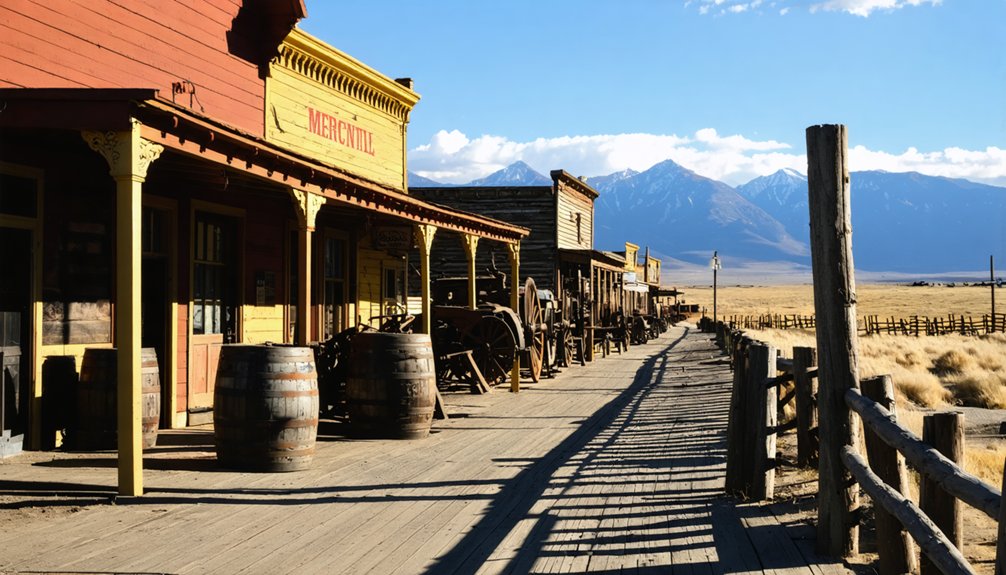
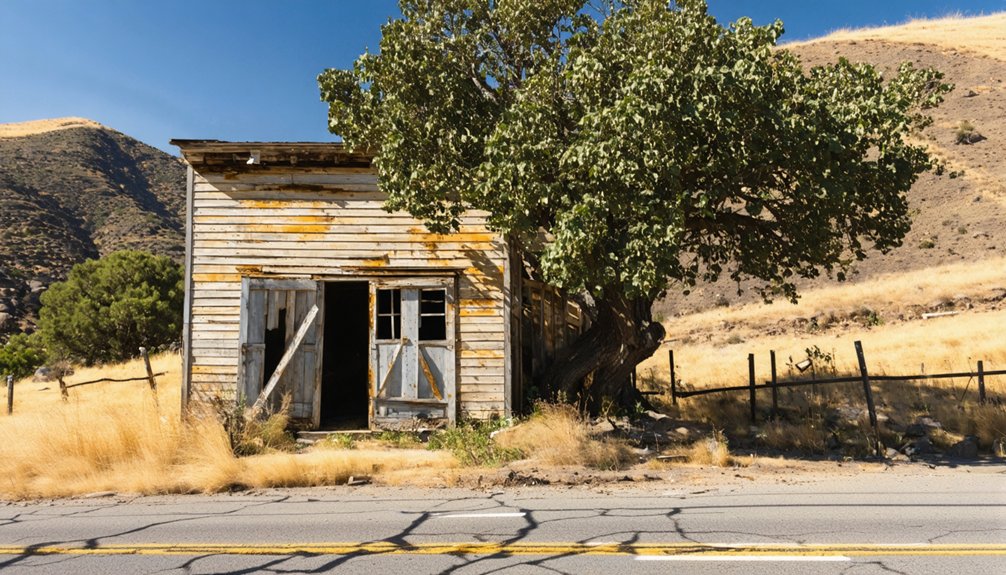
Along Main Street, collapsed storefronts and abandoned buildings frame striking compositions. Chinese settlers’ hand-built rock walls stretch across the landscape, silent monuments to extraordinary labor.
Nearby graveyards offer haunting, photogenic scenes. Don Pedro Reservoir provides open water contrasting beautifully against the surrounding dry foothills, completing your visual journey through this remarkable place.
How to Spend a Full Day Without Missing Anything
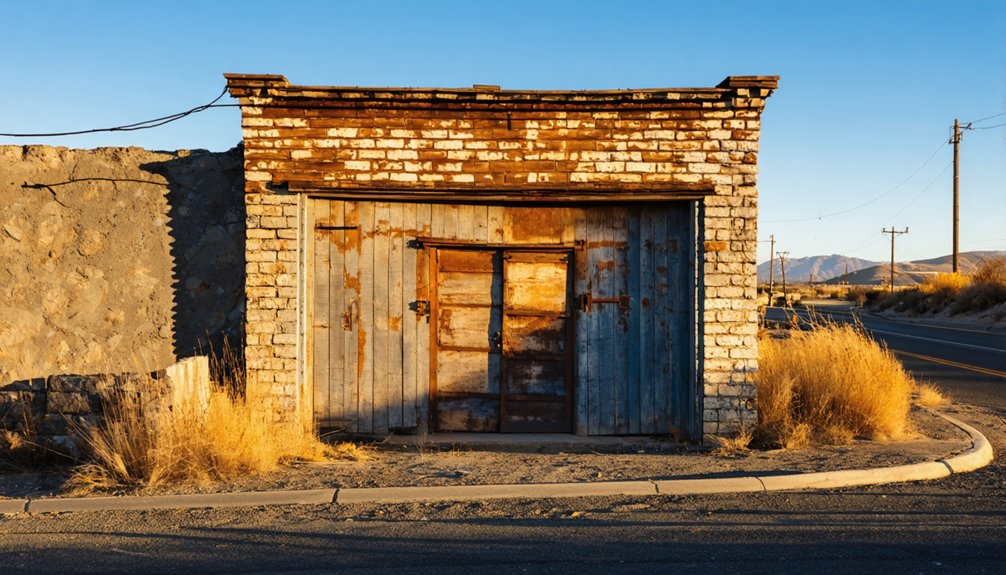
A full day in Chinese Camp rewards you most when you arrive early, starting at the Chinese Camp Store and Tavern near the CA-120 entrance, where you can pick up supplies and gather local history before stepping into the ruins.
Work your way through these highlights:
- Main Street ruins – Walk the weathered business district, exploring architecture that survived fire, abandonment, and decades of decay.
- Mining heritage sites – Head toward Red Hills Road and J-59, where Chinese miners once worked quit claims and the first California tong war unfolded.
- Don Pedro Reservoir – Close the afternoon with a solitary picnic and open water views before the drive back.
Pack light, move slowly, and let the silence tell the story.
Frequently Asked Questions
Is Chinese Camp Store and Tavern Open Year-Round for Visitors?
Swipe right on adventure! The Chinese Camp Store and Tavern’s year-round hours let you explore Chinese Camp history and local attractions, stocking you up with supplies, coins, fossils, and camping gear whenever you visit.
Are There Any Camping Facilities Near Chinese Camp for Overnight Stays?
The knowledge doesn’t mention specific camping facilities, but you’ll find camping options near Don Pedro Reservoir, one of the area’s stunning nearby attractions. Stock up at the Chinese Camp Store and Tavern before setting up camp!
What Recent Wildfire Damage Has Affected Chinese Camp’s Historic Buildings?
Like a dragon’s breath, the September 2025 TCU Lightning Complex wildfire’s wildfire impact scorched Chinese Camp’s soul—destroying the cherished 1854 post office. You’ll witness historic preservation‘s urgency firsthand, as time’s relentless march claimed this irreplaceable landmark forever.
Can Visitors Legally Enter the Privately Owned Buildings on Main Street?
You can’t enter the privately owned buildings on Main Street — property rights restrict building access to the public. You’ll want to admire their weathered, decaying facades from the road and respect the owner’s boundaries.
What Items Can Be Purchased at the Chinese Camp Store and Tavern?
With $2.5 million in gold once extracted here, you’ll find local souvenirs like camping items, blankets, coins, fossils, and rocks — plus historical artifacts connecting you to Chinese Camp’s incredible gold rush legacy at the Store and Tavern.
References
- https://thefootloosescribbler.com/2021/04/30/missing-in-action-chinese-camp-a-california-ghost-town/
- https://en.wikipedia.org/wiki/Chinese_Camp
- https://nvtami.com/2026/01/07/china-camp-bodies-woodcutter-camps/
- https://ohp.parks.ca.gov/ListedResources/Detail/423
- https://sfghosts.com/china-camp-state-park/
- https://grovelandmuseum.org/chinese-camp
- https://www.youtube.com/watch?v=OB6_jgj7J74
- https://www.visittuolumne.com/The-History-of-Chinese-Camp-Brochure.pdf