Planning a ghost town road trip to Chisana, Alaska means venturing deep into Wrangell-St. Elias National Park, the largest national park in America. You’ll explore Alaska’s last great gold rush settlement, where log cabins from the 1913 boom still stand frozen in time. Visit between late June and August, pack essential survival gear, and prepare for glacier crossings and wildlife encounters. There’s far more to uncover about this legendary ghost town than meets the eye.
Key Takeaways
- Chisana, located in Wrangell-St. Elias National Park, was Alaska’s last great gold rush town, once home to over 1,000 inhabitants in log cabins.
- Gold was discovered in 1913, triggering a brief but intense boom, with several historic log cabins still preserved by the National Park Service.
- The best time to visit is late June through August, offering cleared mountain passes, peak temperatures around 60°F, and optimal visibility.
- Reaching Chisana requires navigating rugged terrain, glacier crossings, and narrow valleys, so preparation, proper gear, and navigation tools are essential.
- Base accommodations in nearby McCarthy or Kennecott, which offer lodges, guides, and supplies; reservations are strongly recommended during summer months.
What Makes Chisana Alaska’s Most Fascinating Ghost Town?
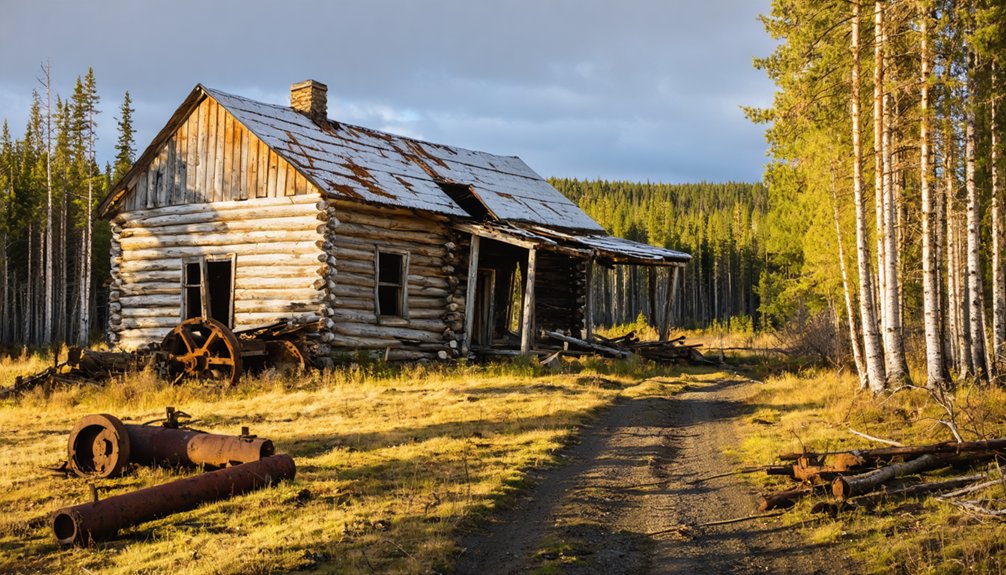
Deep in the heart of Wrangell-St. Elias National Park, Chisana whispers stories of Alaska’s last great gold rush.
You’ll discover a place where Chisana legends blend seamlessly with Athabascan heritage, creating a uniquely layered history unlike any other ghost town.
Three Athabascan groups — the Ahtna, Southern Tutchone, and Upper Tanana — called this wilderness home long before prospectors arrived in 1913.
Before gold fever struck in 1913, three Athabascan peoples — the Ahtna, Southern Tutchone, and Upper Tanana — shaped this wilderness.
Within months, the town exploded into the world’s largest log cabin settlement, housing over 1,000 miners and their families.
Then, just as quickly, it emptied.
Today, you’ll walk through preserved mining-era cabins maintained by the National Park Service, surrounded by untamed wilderness that hasn’t changed in centuries.
It’s raw, authentic history you can actually touch.
The Unlikely Gold Rush That Built and Buried Chisana
When prospectors struck gold in 1913, they triggered Alaska’s last great gold rush — nearly two decades after the initial rushes had faded from memory.
Word spread fast to Blackburn, McCarthy, Chitina, and Cordova, sending thousands of stampeders charging through treacherous valleys, glaciers, and rivers.
Chisana exploded into the world’s largest log cabin town almost overnight, with 450 cabins housing over 1,000 miners and their families.
You can almost feel the electric energy that once charged these remote wilderness streets.
But unpredictable fortunes defined Chisana’s story. The boom lasted only a couple of years before the gold thinned out.
Historic Cabins and Structures Still Standing in Chisana
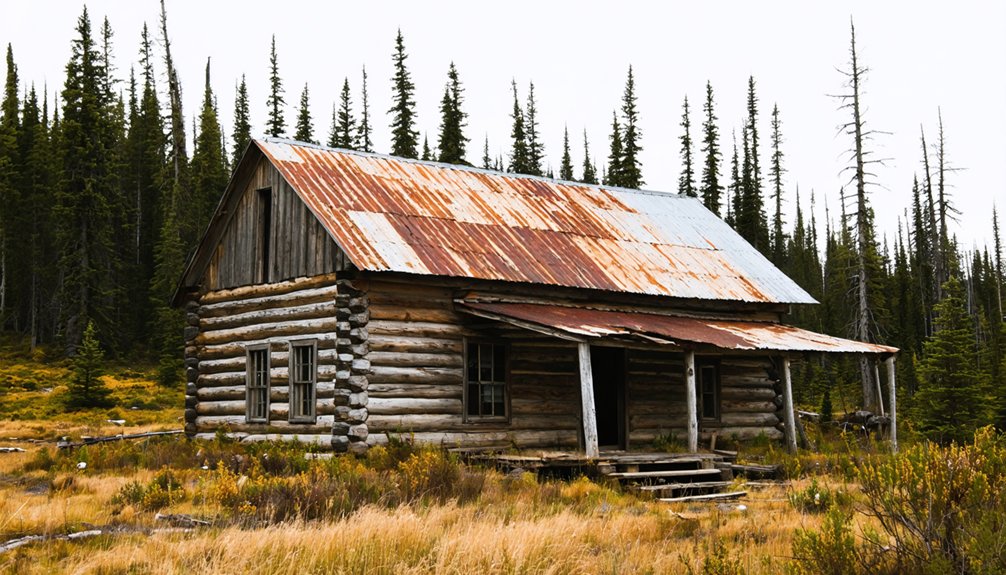
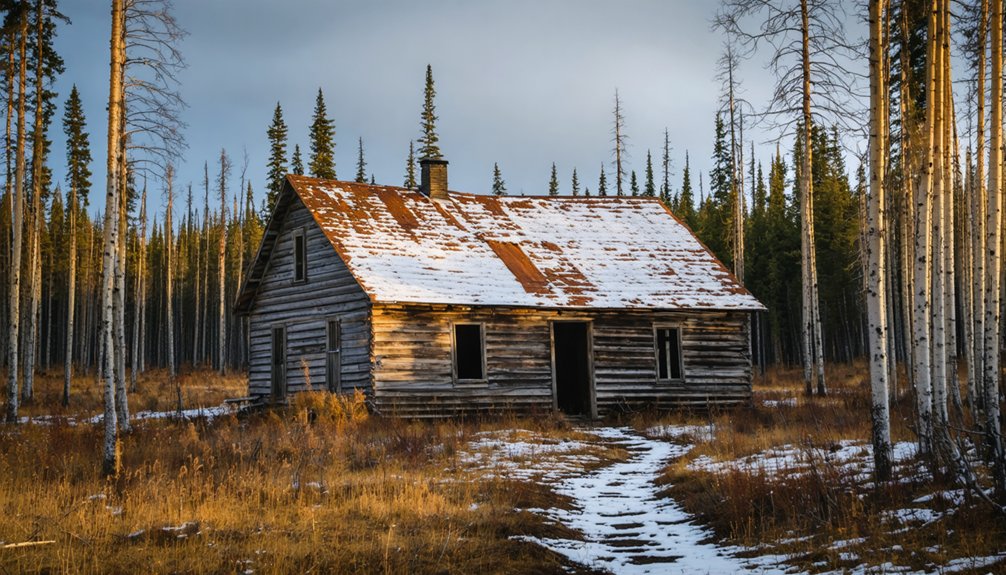
When you arrive in Chisana, you’ll find a handful of surviving log cabins that once made this the largest log cabin town in the world.
The National Park Service actively maintains some of these structures, protecting them from the harsh Alaskan elements that have claimed so many others.
Several of Chisana’s historic buildings earned a place on the National Register of Historic Places, giving you a rare chance to walk through a preserved snapshot of Alaska’s last great gold rush.
Surviving Log Cabins
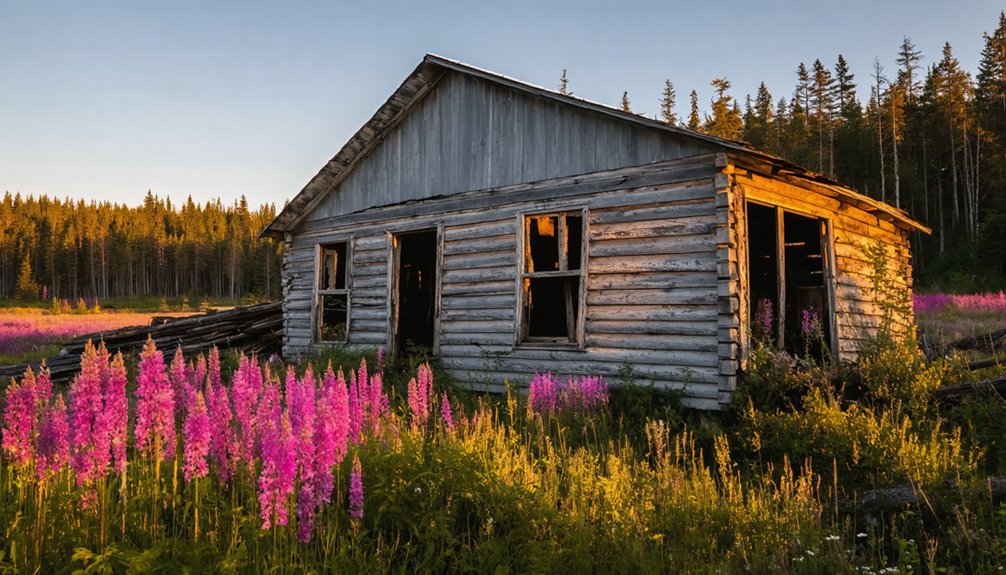
Though time has claimed most of Chisana’s once-bustling settlement, a handful of weathered log cabins still stand as tangible reminders of the 1913 gold rush that briefly made this remote Alaskan wilderness the world’s largest log cabin town.
You’ll find these structures scattered across the landscape, their log cabin architecture reflecting the raw ingenuity of miners who built an entire community from surrounding timber. The National Park Service maintains select cabins, preserving their historical significance for visitors willing to make the trek.
Others lean and sag, surrendering slowly to Alaska’s unforgiving elements. Walking among them, you’re stepping directly into a moment when over 1,000 prospectors carved civilization from wilderness, chasing gold that ultimately ran out within just a few years.
National Park Service Preservation
Since Chisana sits entirely within Wrangell-St. Elias National Park, the National Park Service actively oversees preservation efforts for its remaining structures. The park, established in 1978, is the largest in the United States — bigger than Switzerland — giving it the resources and authority to protect Chisana’s historical significance.
Rangers maintain select log cabins, keeping them structurally sound so you can witness firsthand what life looked like during Alaska’s last great gold rush. Not everything survives time and harsh winters, though. Some cabins continue deteriorating beyond repair.
What’s remarkable is that Chisana remains private property despite park surroundings, creating a unique tension between preservation and ownership.
When you visit, you’re stepping into a carefully protected yet genuinely weathered slice of early 20th-century Alaskan frontier history.
National Register Historic Structures
Several historic cabins and structures in Chisana earned a place on the National Register of Historic Places, recognizing their cultural and architectural significance to Alaska’s last gold rush era.
These surviving log cabins represent authentic frontier architecture from the 1913 boom, offering ghost town tourism enthusiasts a rare, tangible connection to Alaska’s mining past. You’ll walk among structures that once sheltered over 1,000 gold miners and their families during Chisana’s brief but intense peak.
Historic preservation efforts have kept select cabins standing against decades of harsh Alaskan weather and neglect.
When you visit, you’re experiencing living history within Wrangell-St. Elias National Park’s boundaries, where the world’s largest national park surrounds this private property ghost town, amplifying the remote, untouched atmosphere that makes Chisana genuinely unforgettable.
How to Reach Chisana Through Wrangell-St. Elias National Park
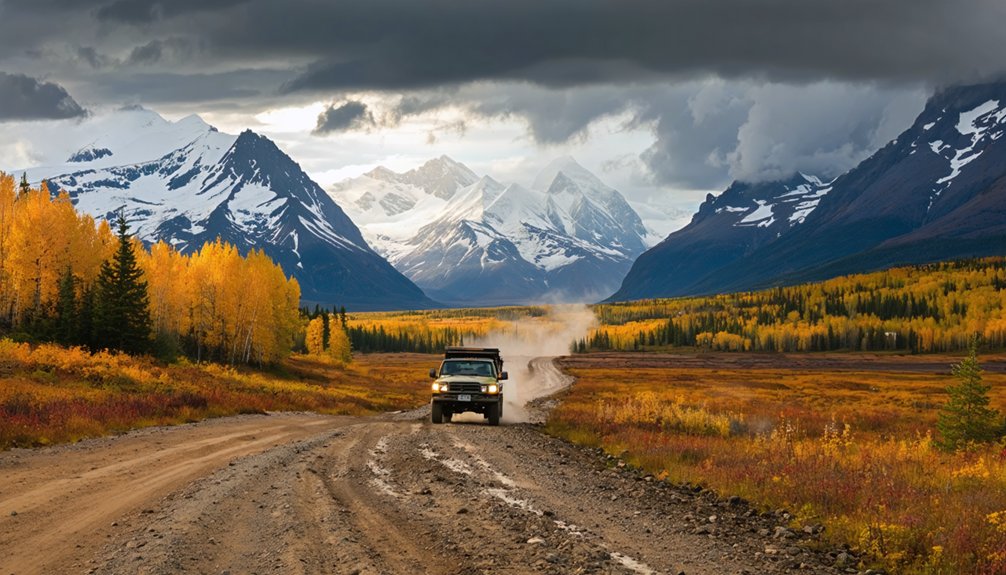
Reaching Chisana means committing to one of Alaska’s most remote and demanding journeys, as you’ll navigate treacherous historic routes through the heart of Wrangell-St. Elias National Park.
You’ll cross rugged terrain shaped by narrow valleys, active glaciers, and unpredictable river crossings that have challenged travelers since the gold rush era.
Whether you’re flying into the small airstrip or tackling the overland trail, you need to prepare for conditions that demand respect for the wilderness surrounding this ghost town.
Getting to Chisana isn’t easy, and that’s part of what makes the journey worthwhile. Remote navigation demands preparation, flexibility, and respect for Alaska’s raw wilderness. Trail conditions shift constantly, shaped by glaciers, narrow valleys, and unpredictable river crossings.
Before you set out, understand what you’re facing:
- Skolai Pass Route — Follow the same corridor explorers used in 1891, cutting through rugged terrain where the Wrangell Mountains dominate every horizon.
- Valley and Glacier Crossings — You’ll thread through narrow valleys and traverse glacier edges where footing demands constant attention.
- River Fords — Expect swift, cold water crossings that require timing, confidence, and solid gear.
You’re not driving a paved highway here. You’re carving your own path into one of America’s last true frontiers.
Traversing Wrangell-St. Elias Terrain
Wrangell-St. Elias is North America’s largest national park, and it doesn’t make reaching Chisana easy. You’ll face genuine terrain challenges crossing narrow valleys, glaciers, and rivers that have tested travelers since the gold rush era.
Rugged navigation isn’t optional here — it’s the price of admission to one of Alaska’s most authentic ghost towns.
You’ll push through the same Wrangells that thousands of stampeders once braved, following historic routes carved by prospectors chasing fortune. The landscape demands respect: unpredictable weather, river crossings, and remote wilderness define every mile.
Pack appropriately, know your route, and file a travel plan before heading out.
The reward waiting on the other side is Chisana’s preserved mining-era structures, sitting largely untouched since the town’s abandonment in the 1920s.
The Best Time of Year to Visit Chisana
Chisana’s remote location and extreme subarctic climate make timing your visit critical. Choose wisely, and you’ll experience this ghost town in its full rugged glory. Weather considerations aren’t optional here — they’re survival basics.
Best visiting season: Late June through August offers the most accessible window. Here’s what each month delivers:
- June — Snowmelt clears treacherous mountain passes, wildflowers blanket valleys, and daylight stretches nearly 20 hours, maximizing exploration time.
- July — Temperatures peak around 60°F, rivers run calmer, and the historic log cabins emerge from winter’s grip in stunning clarity.
- August — Fewer travelers, golden light, and early tundra colors create breathtaking photography opportunities before winter reclaims the land.
Avoid spring and fall — unpredictable ice and snowstorms can strand you indefinitely.
What to Pack for the Chisana Backcountry in Any Season
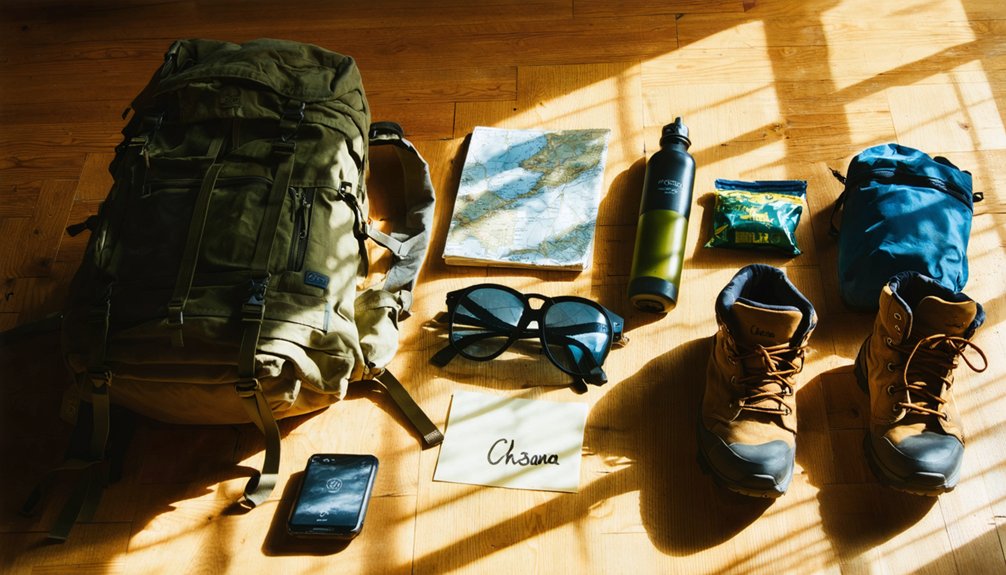
Once you’ve locked in your travel window, your pack becomes your lifeline in Chisana’s unforgiving backcountry. Your backcountry essentials should include a reliable map and compass, water filtration system, emergency shelter, first aid kit, and enough high-calorie food for unexpected delays.
Cell service doesn’t exist here, so a satellite communicator isn’t optional — it’s critical.
In Chisana’s remote backcountry, a satellite communicator isn’t a luxury — it’s the difference between rescue and tragedy.
Seasonal gear demands honest assessment. Summer calls for waterproof layers, insect repellent, and bear spray. Fall requires insulated clothing and traction devices as early ice forms on trails.
Winter demands extreme cold-weather gear, avalanche safety equipment, and navigation tools for whiteout conditions. Spring brings unstable river crossings and unpredictable snowmelt.
Regardless of season, pack light but pack smart. Chisana rewards the well-prepared and punishes the careless.
Bears, Glaciers, and River Crossings on the Chisana Route
The Chisana route doesn’t just test your gear — it tests your judgment. Wildlife encounters happen without warning, glaciers shift beneath your boots, and rivers run cold and fast enough to knock you off your feet.
Prepare your mind for these three realities:
- Bears patrol every valley — carry bear spray, make noise, and never leave food unsecured overnight.
- Glaciers crack and calve — step carefully, probe uncertain ice, and never cross alone.
- River crossings demand respect — unbuckle your pack straps before wading, read the current, and choose your line wisely.
The scenic vistas reward every calculated risk.
But freedom out here belongs to those who stay sharp, not reckless.
Where to Stay Near Chisana Before and After Your Visit
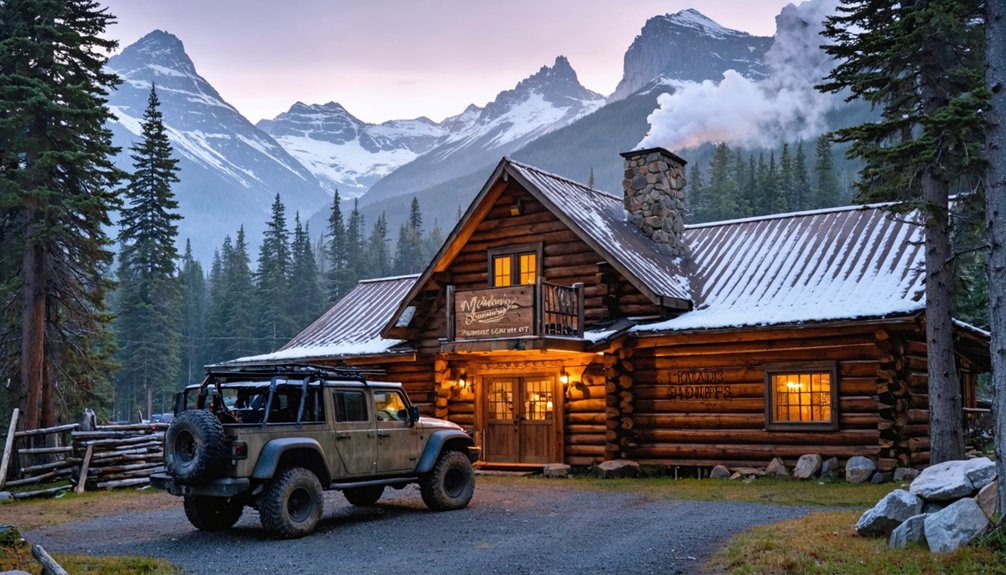
After you’ve navigated the bears, glaciers, and river crossings, you’ll want a solid base camp before and after pushing into Chisana’s backcountry.
McCarthy serves as your best hub, offering accommodation options ranging from rustic lodges to wilderness camps that match the region’s raw character. You’ll find local amenities surprisingly functional here — fuel, basic supplies, and knowledgeable guides who understand these unforgiving routes.
McCarthy delivers everything a serious backcountry traveler needs — lodging, fuel, supplies, and guides who know these ruthless routes.
Kennecott, just a short walk from McCarthy, provides additional lodging inside a stunning historic copper mining complex.
Both towns sit within Wrangell-St. Elias National Park, giving you immediate access to trailheads and river launch points.
Book early — these spots fill fast during summer.
Cell service is nearly nonexistent, so confirm reservations well before you leave civilization behind.
How to Stay Alive in Chisana’s Unforgiving Backcountry
Surviving Chisana’s backcountry demands preparation that goes well beyond standard hiking protocols. You’re entering true wilderness where self-reliance isn’t optional — it’s everything.
Master these wilderness survival essentials before stepping foot on the trail:
- Navigation skills are non-negotiable — GPS devices fail in remote valleys, so carry topographic maps and a reliable compass. Know how to use both.
- Pack for sudden weather shifts — temperatures drop dangerously fast near glaciers, so layer aggressively and carry emergency shelter regardless of forecast.
- Wildlife awareness saves lives — brown bears roam freely throughout Wrangell-St. Elias, making bear spray, proper food storage, and campsite selection critical daily decisions.
Chisana rewards adventurous spirits who respect its rawness. Underestimate it, and the wilderness wins.
Frequently Asked Questions
Can You Legally Enter Chisana’s Private Property Surrounded by National Parkland?
You can’t enter Chisana’s private property without permission—national park regulations protect surrounding lands, but private property access requires the owner’s consent. Respect boundaries while you’re exploring this fascinating ghost town within Wrangell-St. Elias National Park.
Which Indigenous Athabascan Groups Originally Called the Chisana Region Home?
Three Athabascan culture groups called Chisana home: the Ahtna, Southern Tutchone, and Upper Tanana. Each practiced their traditional practices across distinct territories, with the Upper Tanana’s influence centered around the Chisana River itself.
Did Any Miners Permanently Settle in Chisana After the Gold Rush Ended?
Few miners permanently settled after the gold rush ended — most abandoned Chisana by 1924. You’ll discover the miners’ legacy woven into the settlement history through deteriorating log cabins that still whisper tales of Alaska’s last great gold boom.
How Much Gold Was Actually Extracted From Chisana’s Mines Historically?
Coincidentally, just as gold fever peaked, Chisana’s mines had already peaked too — you’ll find that eight mines used basic gold extraction and mining techniques to produce only $23,400 worth of gold in 1924.
Are There Guided Tours Specifically Focused on Chisana’s Indigenous Cultural History?
Specific guided tours focusing on Chisana’s indigenous cultural history aren’t well-documented, but you’ll find that cultural preservation efforts and local traditions shine through ranger-led programs within Wrangell-St. Elias National Park, offering you rich Athabascan heritage insights.
References
- http://north2arctic.com/chisana/
- https://www.miningnewsnorth.com/story/2023/02/03/mining-history/rediscovering-the-gold-rush-town-of-chena/7802.html
- https://npshistory.com/publications/wrst/bleakley/chap1.htm
- https://www.nps.gov/wrst/learn/historyculture/upload/chisana-mining-district-history.pdf
- https://en.wikipedia.org/wiki/List_of_ghost_towns_in_Alaska
- https://www.atlasobscura.com/places/kennicott-ghost-town
- https://alaskamininghalloffame.org/inductees/sulzer.php
- https://npshistory.com/publications/wrst/clr-chisana-gold-hill.pdf