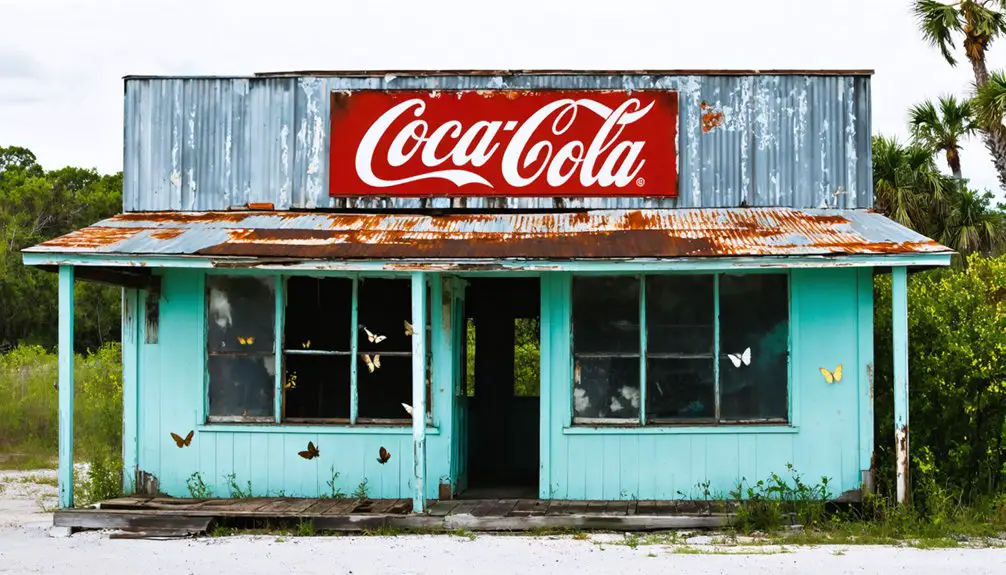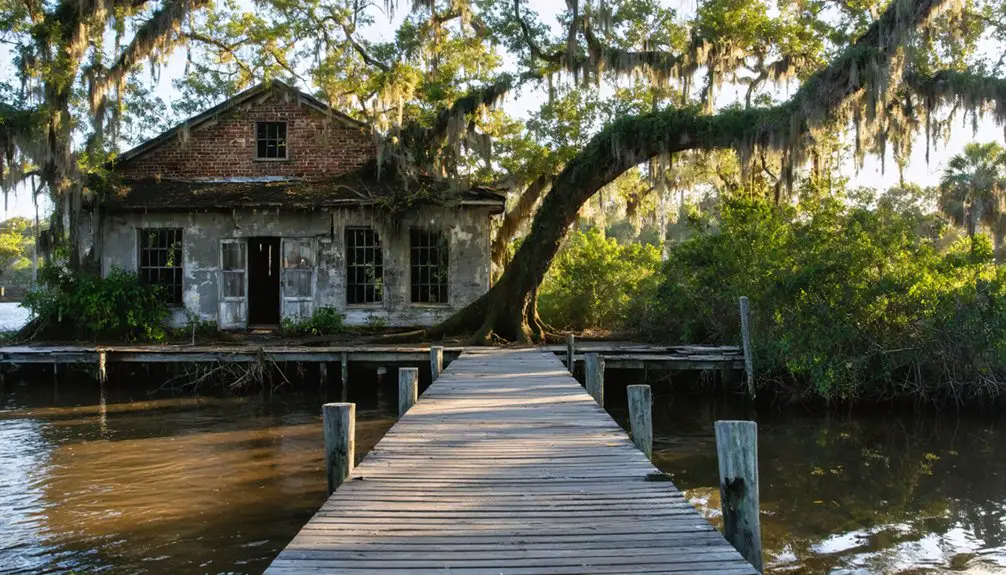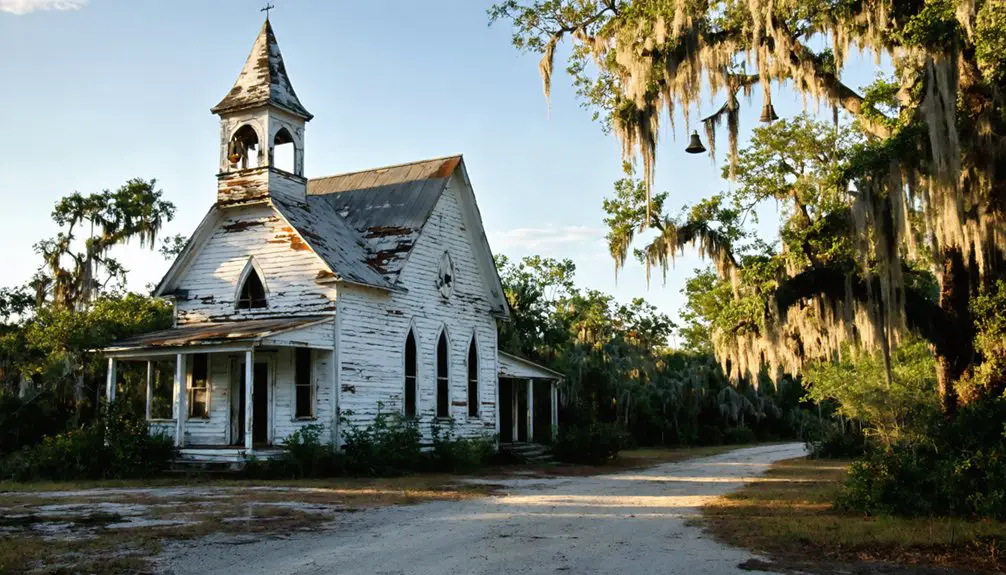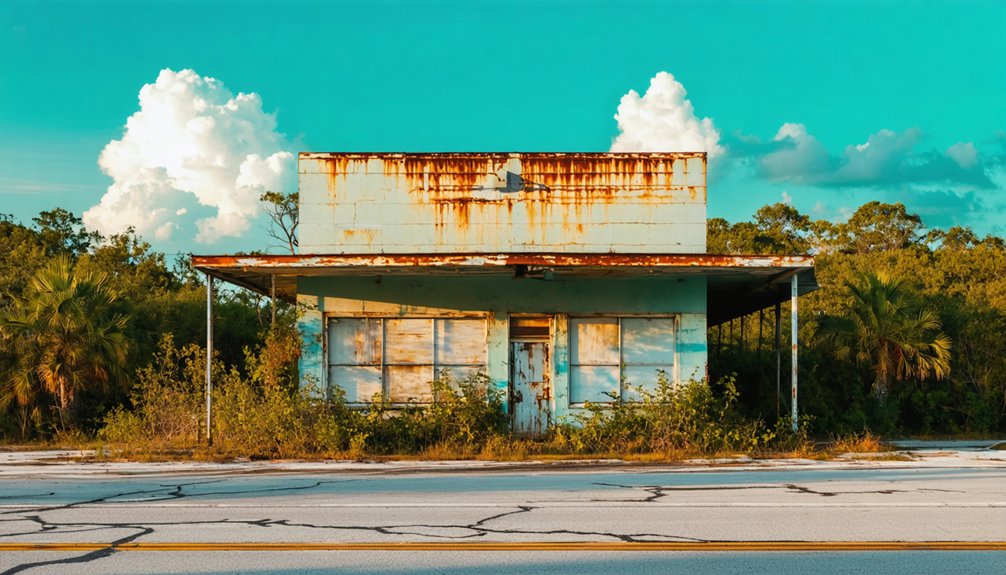
To plan your Citrus Center ghost town road trip, head to Highway 78 in Glades County, roughly halfway between Moore Haven and Ortona. Your standard 2WD vehicle handles the route easily. You’ll spot a historic road sign, weathered barn, and old school foundations from the highway itself, since the public road into the site is closed. Pair your visit with nearby ghost towns Goodno and Hall City, and there’s far more to this forgotten corridor than first appears.
Key Takeaways
- Citrus Center sits on Highway 78 in Glades County, roughly halfway between Moore Haven and Ortona, making it an easy road trip detour.
- Standard 2WD vehicles handle the roads fine, though summer visitors should prepare for intense Florida heat before heading out.
- Visible remnants include old school foundations, a weathered barn, and a road sign doubling as a community grave marker.
- Access to the site is restricted, so most ghost town exploration happens from Highway 78’s roadside vantage point.
- Nearby ghost towns Hall City and Goodno, plus the LaBelle Heritage Museum, round out a fuller regional ghost town road trip.
Where Is Citrus Center and How to Get There?
Tucked between Moore Haven and Ortona along Highway 78 in Glades County, Florida, Citrus Center sits at the corner of Hwy 78 and Wayman Road, directly across from People’s Ranch.
Some historical records also reference Hendry County, reflecting boundary ambiguities common to Florida’s rural interior.
Understanding the Citrus Center location reveals a settlement deliberately shaped by water, not roads. Early settlers accessed the town entirely by canal off the Caloosahatchee River, making river navigation the town’s original lifeline.
Today, those access routes look dramatically different. The road leading directly into the site is closed to the public, but you can still view the remains from Highway 78 itself.
Plan your visit knowing you’ll be observing this ghost town from the road, not walking its grounds.
What’s Left to See at Citrus Center Today?
Once you’ve located Citrus Center from Highway 78, the next question is what you’ll actually find there. Honest answer: not much, but enough to stir your imagination.
The old school foundations represent the most visible historic remnants, scattered across a vast prairie that swallowed this once-bustling settlement whole. A weathered barn from German settler Bernhardt’s family manor still stands at the site’s outskirts, defying time with quiet stubbornness.
Crumbling school foundations and a stubborn old barn are all that remain of Citrus Center’s forgotten story.
A road sign marker, half-hidden in roadside grasses, serves as both identifier and grave marker for the community. These ghostly echoes are yours to absorb from Highway 78 itself, since the road into the site remains closed to the public.
What remains rewards the historically curious traveler willing to look past the prairie’s deceptive emptiness.
How Citrus Center Rose, Thrived, and Was Abandoned
Before roads carved up South Florida’s interior, Citrus Center lived and breathed through water. Canal access off the Caloosahatchee River fueled its population growth, drawing pioneers whose spirit built a genuine community infrastructure — a two-story hotel, church, post office, and school — all without a single road connecting them to the outside world.
The agricultural boom made Citrus Center an essential trade route stop, moving watermelons, tropical fruit, and honey by steamboat. At its peak, roughly 100 residents called this settlement home.
Then transportation shifts rewrote everything. New highways redirected commerce toward Moore Haven, steamboat travel collapsed, and the Great Depression delivered the final blow.
Economic decline hollowed out what pioneer spirit had built, leaving behind historical significance preserved now only in foundations, a barn, and silence.
How to Plan Your Citrus Center Ghost Town Road Trip
Reaching Citrus Center requires minimal navigational effort — you’ll find the site on Highway 78 in Glades County, positioned roughly halfway between Moore Haven and Ortona at the corner of Wayman Road, directly across from People’s Ranch.
Standard 2WD vehicles handle the roads without difficulty. Summer visits are possible, though Florida’s heat is unforgiving, so plan accordingly.
The road into the site remains closed to the public, but the highway marker and visible foundations offer enough ghost town history to reward the detour.
For deeper context, stop at the LaBelle Heritage Museum before arriving. Nearby ghost towns Goodno and Hall City pair well as road trip tips for extending your route.
Together, these stops paint a vivid portrait of Florida’s forgotten frontier settlements.
Goodno, Hall City, and the LaBelle Museum Near Citrus Center
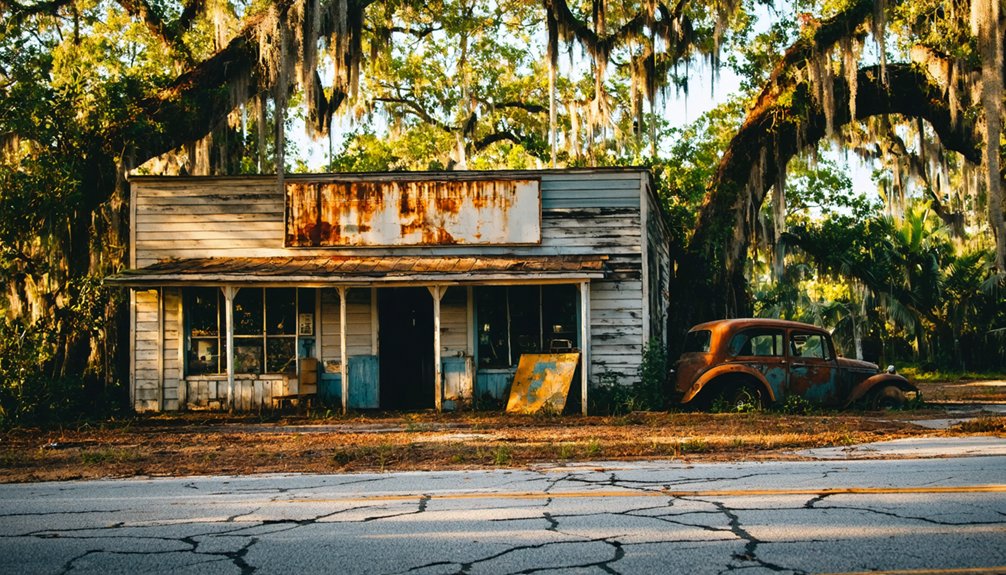
Three ghost towns within striking distance of each other transform a single-site detour into a genuine exploration of Florida’s lost frontier. While Citrus Center anchors your route, you’d be shortchanging yourself by skipping what surrounds it.
- Goodno history reveals another drowned settlement swallowed by Lake Okeechobee’s expanding waters.
- Hall City once thrived nearby before roads and economics erased it from the landscape.
- LaBelle artifacts at the Heritage Museum contextualize why these communities collapsed so rapidly.
- Ghost town exploration gains depth when you cross-reference all three sites against each other.
Together, they form a corridor of vanished ambition across Hendry and Glades counties.
You’re not just visiting ruins — you’re reading a regional story written in abandoned foundations and silence.
Frequently Asked Questions
What County Does Citrus Center Officially Belong To?
You’ll find Citrus Center officially belongs to Glades County, Florida. Its rich Citrus history and abandoned structures whisper tales of a forgotten pioneer era, inviting your free spirit to explore this hauntingly beautiful, overlooked corner of American heritage.
Who Was the German Settler Bernhardt Connected to Citrus Center?
Like many frontier pioneers who staked claims in untamed Florida, Bernhardt’s exact identity remains unclear. You’ll find his Bernhardt legacy lives on through an old barn — a lone sentinel preserving Citrus history on the vast prairie.
What Goods Were Traded at Citrus Center During Its Peak?
You’d have found watermelon, tropical fruit, and honey traded at Citrus Center’s trading posts, goods that defined its historical significance before economic decline silenced local legends along the Caloosahatchee’s once-bustling waterways.
How Large Was the Hotel Built at Citrus Center in 1917?
You’ll find the 1917 hotel’s hotel capacity was remarkable — it’s one of South Florida’s largest structures of its era. Its architectural style rose two impressive stories, embodying frontier ambition and the freedom of pioneering settlement.
Can Visitors Legally Access the Citrus Center Ghost Town Site?
Like a locked treasure chest, ghost town access here isn’t yours to claim — legal considerations keep the road closed to you. You can only view Citrus Center’s haunting remains from Highway 78.
References
- https://etchey.wordpress.com/2009/11/15/sunday-drive-to-citrus-center/
- https://www.ghosttowns.com/states/fl/citruscenter.html
- https://thesurvivalgardener.com/tourist-trapped-florida-citrus-center/
- https://www.youtube.com/watch?v=U70n0HI1gFE
- https://cccourthouse.org/wp-content/uploads/2023/12/Ghost-towns-and-Cemeteries-of-Citrus-County.pdf
- https://www.tripadvisor.com/ShowUserReviews-g34599-d12124478-r562010802-Florida_Citrus_Center_and_Souvenir_World-St_Augustine_Florida.html
- https://abandonedfl.com/mannfield/
- https://www.ocalastyle.com/ghost-towns-of-lake-sumter/
- https://www.youtube.com/watch?v=JCRMdauQGAU