Clayville, Illinois is a ghost town that’s absolutely worth the detour. You’ll find the 1824 Broadwell Inn, the oldest brick building in central Illinois, standing as a preserved relic of the Springfield–Beardstown stagecoach corridor. It’s just 20 minutes from Springfield via Route 125, making it an easy road trip add-on. Spring and fall bring living history events with costumed interpreters and hands-on demonstrations. Stick around to uncover everything this forgotten frontier stop has to offer.
Key Takeaways
- Clayville is 20 minutes from Springfield via Illinois Route 125, making it an easy day trip or addition to a longer road trip.
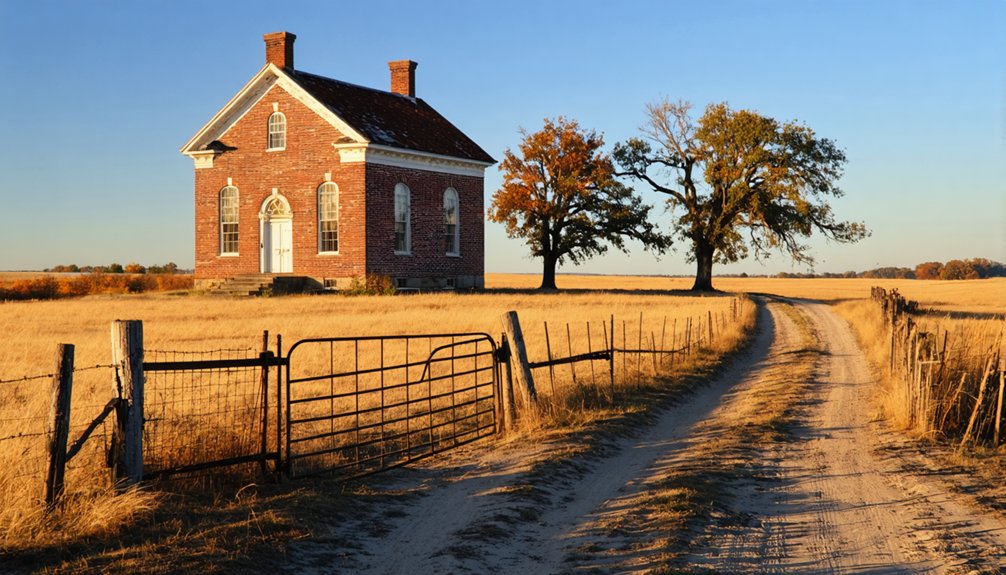
- The 1824 Broadwell Inn, the oldest brick building in central Illinois, is the centerpiece of Clayville’s ghost town experience.
- Spring and fall are ideal visit times, featuring historical reenactments, costumed interpreters, and pioneer skill demonstrations.
- Pair Clayville with nearby Springfield attractions, including Lincoln’s Home National Historic Site and the Abraham Lincoln Presidential Library.
- Pack water and wear sturdy shoes, as visitor amenities are minimal and terrain is uneven throughout the historic grounds.
What Makes Clayville, Illinois Worth the Drive?
When most ghost towns vanish without a trace, Clayville defies that fate — it’s preserved one of the oldest brick buildings in central Illinois, the 1824 Broadwell Inn, still standing on its original foundation.
You’re not just visiting a relic; you’re stepping into a living snapshot of pioneer life along the historic Springfield–Beardstown stagecoach corridor.
Clayville’s real draw is its layered transportation history. This hamlet once fueled westward movement, feeding and sheltering travelers before railroads erased its purpose entirely.
Clayville once powered westward dreams — then the railroads arrived, and silence swallowed everything it built.
That rise-and-fall story feels tangible here, not just written in a textbook. Relocated log cabins, period artifacts, and interpretive exhibits make the experience immersive.
If you crave open roads and authentic history without crowds or barriers, Clayville delivers exactly that kind of unfiltered freedom.
The Rise and Fall of Clayville’s Frontier Stagecoach Era
Clayville’s story begins in 1824, the same year the Broadwell family laid the first bricks of their roadside inn along the Springfield–Beardstown corridor. For two decades, this humble crossroads thrived as travelers depended on stagecoach routes connecting central Illinois communities.
Pioneer life here revolved around three essentials:
- Rest – weary travelers found food and lodging at the Broadwell Inn
- Trade – merchants exchanged goods along this crucial frontier artery
- Connection – settlers maintained communication between Springfield and Illinois River ports
Then railroads arrived. Almost overnight, those same stagecoach routes became irrelevant, and Clayville’s commerce evaporated.
Inside the Broadwell Inn: Illinois’s Oldest Surviving Brick Building
When you step inside the Broadwell Inn, you’re walking into the oldest surviving brick building in Sangamon County, constructed by the Broadwell family in 1824.
You’ll notice the craftsmanship in the handmade brick walls, a tribute to the clay-rich soil that gave Clayville its name and its early economic identity.
Period-appropriate furnishings fill the interior, letting you picture the weary stagecoach travelers who once ate, drank, and rested here along the Springfield–Beardstown corridor.
Inn’s Historic Origins
Built in 1824 by the Broadwell family, the inn standing before you is the oldest surviving brick building in Sangamon County — a distinction that makes it far more than a roadside curiosity.
This structure embodies the Broadwell Legacy and anchors the region’s Pioneer Heritage in tangible, walkable history.
Three reasons this building matters:
- It served as a working tavern, feeding and sheltering travelers along the Springfield–Beardstown stagecoach corridor.
- Its clay-rich brick construction represented frontier ambition — durable materials built to outlast a generation.
- It survived railroad-era abandonment intact, preserving what most frontier stops lost forever.
You’re standing inside a building that witnessed Illinois transform from raw frontier to connected state.
That story doesn’t belong in a textbook — it belongs right here, beneath your feet.
Period Furnishings Inside
Step through the Broadwell Inn’s doorway and you’ll find period furnishings that reconstruct daily frontier life with quiet precision — rough-hewn tables, rope beds, iron cookware, and simple wooden chairs that reflect what travelers and innkeepers actually used in the 1830s and 1840s.
The period decor isn’t decorative theater; it’s a deliberate effort to restore authenticity to Illinois’s oldest surviving brick building.
You’ll notice how compact and functional everything feels. Space was earned, not wasted. Each artifact reinforces the historical significance of this structure — a place where stagecoach riders ate, slept, and prepared for the next stretch of frontier road.
Walking through these rooms, you’re not observing history behind glass. You’re standing inside it, free to take in every detail at your own pace.
Architectural Brick Details
Beyond the furnishings, the walls themselves tell the deeper story. The Broadwell Inn’s brick construction makes it Sangamon County’s oldest surviving brick building, and you can see exactly why that matters when you study the masonry up close.
Frontier builders didn’t waste motion — every course of brick reflects deliberate, skilled craftsmanship.
Notice these three architectural details worth stopping for:
- Mortar joint patterns revealing hand-laid precision uncommon for 1824 frontier conditions
- Wall thickness demonstrating insulation strategies predating modern architectural styles
- Corner brickwork showing interlocking techniques that gave the structure nearly 200 years of durability
Run your hand along the surface and you’ll feel history that no photograph captures. This building survived because its makers built it to last.
When Clayville Really Comes Alive: Seasonal Events and Living History
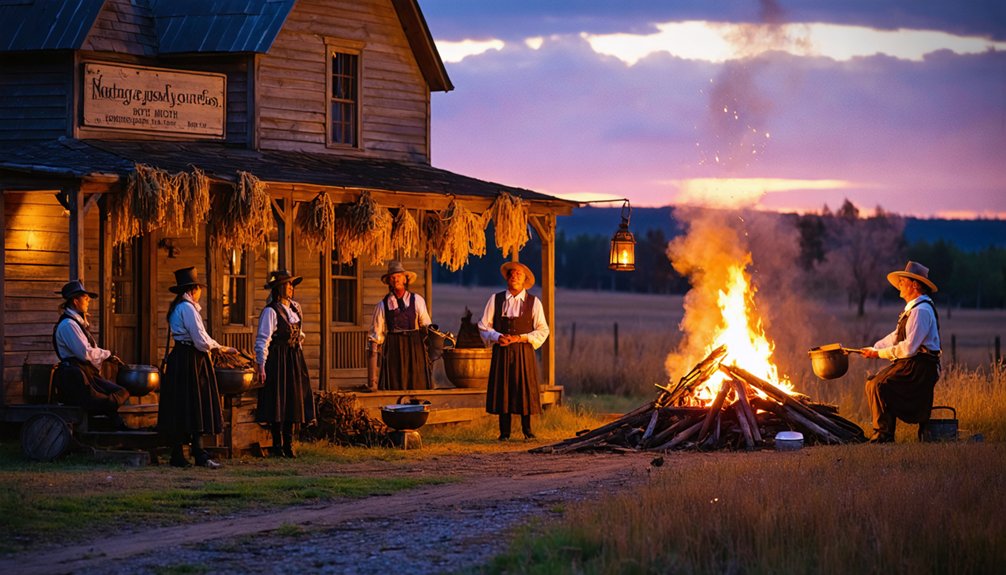
While Clayville’s weathered brick and timber tell a quiet story most days, the site truly awakens during its seasonal events and living history programs.
You’ll witness historical reenactments that transform the grounds into a breathing snapshot of pioneer life, complete with period-accurate clothing, tools, and trades. Costumed interpreters demonstrate frontier skills like blacksmithing, cooking over open hearths, and candle-making, pulling you directly into the 1830s stagecoach era.
Educational workshops target school groups and families, though curious solo travelers find them equally rewarding. Scheduling your visit around these programs isn’t just smart planning—it’s the difference between reading a historical marker and actually feeling the past.
Check the official Clayville Historic Site website for current event dates before hitting the road.
What to Expect on a Guided Tour of Clayville?
Booking a guided tour at Clayville puts you face-to-face with one of central Illinois’s most compelling frontier stories.
You’ll walk through authentic spaces where stagecoach travelers once rested, traded, and pushed westward. Guides bring pioneer life and travel history into sharp focus, letting you move at your own pace through this preserved landscape.
Here’s what you can expect:
- Broadwell Inn walkthrough – Explore period furnishings inside the oldest surviving brick building in Sangamon County.
- Log cabin exploration – Step inside relocated 19th-century structures that illustrate everyday domestic frontier life.
- Corridor storytelling – Learn how the Springfield–Beardstown stagecoach route shaped commerce and migration across central Illinois.
You’ll leave with a genuine sense of how freely people once carved paths through this land.
The Best Time of Year to Visit Clayville?
You’ll get the most out of Clayville during late spring through early fall, when the grounds are accessible, the weather cooperates, and the site’s interpretive programs are in full swing.
Summer months tend to draw the largest crowds, particularly school groups and families keen to experience seasonal reenactments and hands‑on frontier workshops.
If you want a richer, more immersive visit, check the official site calendar before you go, since special events can transform a quiet walk through the pioneer village into something genuinely memorable.
Peak Season For Visits
Since Clayville’s programming tends to peak in spring and fall, those seasons offer the richest experience for most visitors. Mild temperatures make exploring the outdoor pioneer village comfortable, and seasonal events bring the site’s historical significance to life.
Visitor Tips for peak-season planning:
- Spring (April–May): Educational workshops and school group tours run frequently, so arrive early to avoid crowds and secure guided tour slots.
- Fall (September–October): Harvest-themed reenactments and demonstrations showcase frontier trade and daily pioneer life at their most vivid.
- Weekends: Staff-led interpretive programs typically run on weekends, giving you direct access to knowledgeable guides.
You’ll get the most from Clayville by timing your visit around these windows, ensuring you experience both its atmosphere and structured programming fully.
Seasonal Events And Programs
Clayville’s calendar shapes your visit as much as the site itself does. Seasonal events and programs breathe life into the preserved grounds, transforming a quiet historic site into an immersive frontier experience.
Spring and fall typically bring the most activity, with historical reenactments staged around the Broadwell Inn and surrounding log cabins. You’ll watch costumed interpreters demonstrate pioneer crafts like blacksmithing, candle-making, and weaving, giving you a tangible sense of mid-19th-century daily life.
School groups often schedule educational workshops during these peak months, so expect a livelier atmosphere.
Summer visits tend to be quieter but still rewarding. Before you go, check the official Clayville Historic Site website for an updated events calendar, since schedules shift yearly and some programs require advance registration.
How to Get to Clayville From Springfield
Getting to Clayville from Springfield takes only about 20 minutes and follows a straightforward route heading northwest. These travel tips make your road trip effortless:
- Head northwest on Illinois Route 125 from Springfield toward Pleasant Plains — it’s your primary corridor.
- Watch for signs near Pleasant Plains — Clayville Historic Site sits roughly one mile north of Interstate 74 and U.S. Highway 150.
- Park on-site — the grounds are free to navigate, though expect uneven pioneer-style terrain underfoot.
You’ll drive through rolling central Illinois farmland before the site appears almost unexpectedly along the roadside.
It’s a genuinely rewarding detour that costs you minimal time but delivers serious historical depth.
Combine it with nearby Jacksonville or downtown Springfield for a full day of exploration.
Nearby Stops to Pair With Your Clayville Visit
Several worthwhile stops sit within easy reach of Clayville, making it simple to build a full ghost-town road trip around your visit.
Pleasant Plains itself offers small-town charm worth a quick detour, while Springfield—just a short drive east—delivers heavyweight local attractions rooted in deep historical significance. You can tour Lincoln’s Home National Historic Site, walk through the Abraham Lincoln Presidential Library and Museum, or explore Oak Ridge Cemetery, where Lincoln is buried.
Heading west, Jacksonville provides additional 19th-century architecture and heritage sites that complement Clayville’s frontier narrative.
String these destinations together along Illinois Route 125, and you’ve crafted a rewarding central Illinois road trip that moves fluidly between preserved history, open roads, and the quiet thrill of standing where settlers once built their lives from scratch.
Hours, Admission, Parking, and Accessibility at Clayville
Before you make the drive out to Clayville, it’s worth checking the official Clayville Historic Site or Visit Springfield Illinois websites for the most current hours and admission details, since seasonal schedules and fees can shift.
Here’s what to keep in mind before arriving:
- Parking is available on-site, giving you the freedom to arrive on your own schedule without stress.
- Visitor amenities are minimal but functional — pack water and wear sturdy shoes, since the grounds feature uneven pioneer-style terrain.
- Accessibility options may be limited given the historic nature of the structures, so contact the site directly if you have mobility considerations.
Planning ahead guarantees you spend less time troubleshooting and more time exploring this fascinating slice of Illinois frontier history.
Frequently Asked Questions
Is Clayville Historic Site Suitable for Young Children and Toddlers?
Yes, Clayville’s child friendly activities like guided tours and reenactments keep young ones engaged! However, you’ll want to mind safety considerations, as the grounds feature uneven pioneer-style surfaces that can challenge toddlers exploring the historic site.
Can Visitors Take Photographs Inside the Broadwell Inn?
The knowledge base doesn’t specify photography guidelines for the Broadwell Inn’s interior. You’ll want to check directly with site staff, who’ll help you capture its historical significance while respecting any rules protecting this remarkable frontier treasure.
Are Pets Allowed on the Clayville Historic Site Grounds?
Curious about bringing your furry friend? Pet policies aren’t confirmed in available details, so you’ll want to contact the site directly before planning your ghost town activities to guarantee a smooth, freedom-filled visit!
Does the Site Offer Group Discounts for Large Visiting Parties?
You’ll want to check the official Clayville Historic Site website for group activities and visiting packages tailored to large parties, as they may offer special discounts perfect for your adventurous crew exploring Illinois frontier history.
Is the Clayville Historic Site Available for Private Event Rentals?
Like a living time capsule, Clayville’s historical significance makes it a fascinating venue! For event planning details regarding private rentals, you’ll want to contact the site directly, as their official website doesn’t confirm this availability.
References
- https://clayville.org
- https://a-z-animals.com/blog/forgotten-ghost-towns-in-illinois/
- https://en.wikipedia.org/wiki/Clayville
- https://www.ideals.illinois.edu/items/15474
- https://www.onlyinyourstate.com/trip-ideas/illinois/ghost-towns-il
- https://en.wikipedia.org/wiki/List_of_ghost_towns_in_Illinois
- https://drloihjournal.blogspot.com/2022/09/lost-towns-of-illinois-clayville.html
- https://www.wikidata.org/wiki/Q16988315
- http://www.clayville.org/History
- https://urbexunderground.com/ghost-towns-in-illinois/