Planning a ghost town road trip to Clemscott, Oklahoma means driving Carter County’s backroads to find what the Healdton Oil Boom left behind. You’ll discover scattered stone foundations, weathered structures, and earthen depressions where roads and railroads once thrived. Spring and fall offer the best conditions, so pack sturdy boots, water, and a camera. This south-central Oklahoma ghost town rewards curious explorers willing to look closely — and there’s far more to uncover than you’d expect.
Key Takeaways
- Clemscott, Oklahoma, located in Carter County, emerged during the early 20th-century Healdton Oil Field boom and is now a remote ghost town.
- Visitors can explore scattered stone foundations, weathered structures, earthen depressions, abandoned railroad grades, and deserted cemeteries marking the town’s former existence.
- A 40-mile loop on paved and gravel county roads connects key sites; bring water, sturdy boots, a camera, and offline maps.
- Spring and fall offer the best visits due to mild temperatures and clear skies; summer heat and winter mud create challenging conditions.
- Nearby ghost towns like Texola, Skedee, and Meridian complement the trip, each reflecting oil-boom growth and railroad-era abandonment.
What Was Clemscott, Oklahoma?
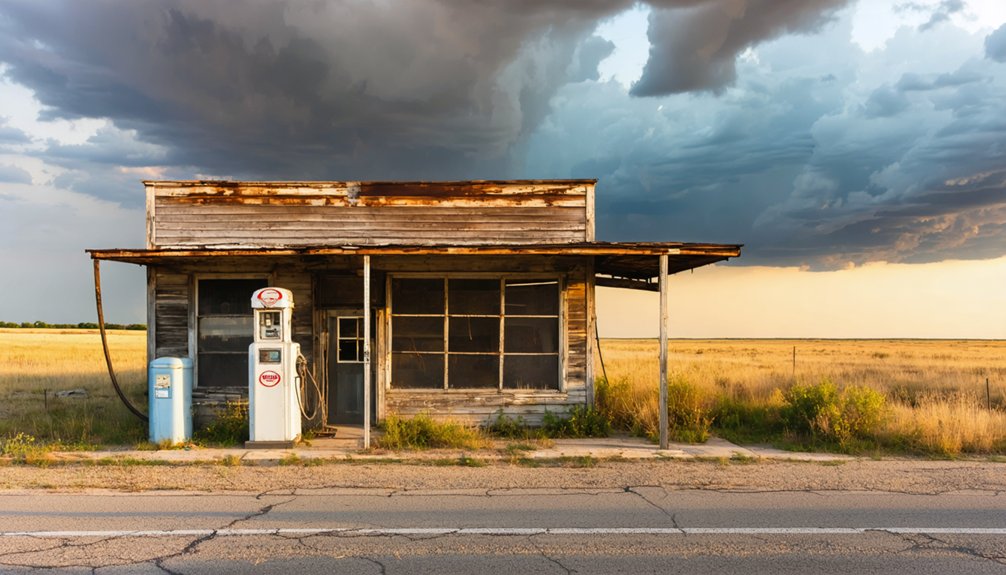
Tucked away in Carter County, Oklahoma, Clemscott was a small oil camp that emerged during the frenzied early 20th-century oil boom tied to the Healdton Oil Field.
Its Clemscott history mirrors countless similar settlements — built fast, lived hard, and abandoned once the oil dried up. Workers flooded in chasing opportunity, transforming raw land into a functioning camp practically overnight.
But when production peaked and declined, the population vanished just as quickly. Today, minimal remnants mark where this community once stood, earning it a place in ghost town records.
Exploring this oil camp legacy means stepping into a world where economic forces shaped and erased entire communities. You’ll find yourself standing where thousands once worked, breathing life into land that now belongs to silence and history.
Where Exactly Is Clemscott Located in Carter County?
If you’re plotting your route, you’ll find Clemscott tucked within Carter County in south-central Oklahoma.
The site sits near the Healdton Oil Field, the booming petroleum hub that originally drew workers and families to the area in the early 20th century.
Pull up a county map, and you’ll notice how this region’s geography shaped the rise and fall of oil camps like Clemscott.
Carter County Map Location
Clemscott sits in Carter County, a region in south-central Oklahoma that you can find roughly between Ardmore and the Texas border.
Pull up any detailed Oklahoma map, and you’ll spot Carter County nestled within the Arbuckle Mountain foothills, where rolling terrain meets oil-rich lowlands.
Clemscott’s location history ties directly to the Healdton Oil Field, which drove frantic settlement across this corner of the state during the 1910s and 1920s. The camp emerged where workers needed housing close to active wells, making geographic convenience its founding logic.
Today, no major highway sign points you toward it, so you’ll want a county road map or reliable GPS before heading out.
The freedom to explore this forgotten corner rewards those willing to navigate its quiet backroads independently.
Healdton Oil Field Proximity
Nestled within the Healdton Oil Field‘s historic footprint, Clemscott sits close enough to the field’s core operations that its entire existence depended on well activity just beyond its doorstep.
When you trace Healdton history back to its roots, you’ll find the oil boom of the 1910s and 1920s practically built Clemscott overnight. Thousands of workers flooded Carter County chasing black gold, and camps like Clemscott sprang up to house them.
The field’s peak production years kept the community breathing, but once the wells slowed, so did everything else.
Today, standing near Clemscott’s remnants means standing directly within one of Oklahoma’s most consequential petroleum corridors. You’re not just visiting a ghost town — you’re walking ground that once fueled an entire region’s economy.
How the Healdton Oil Boom Built and Buried Clemscott
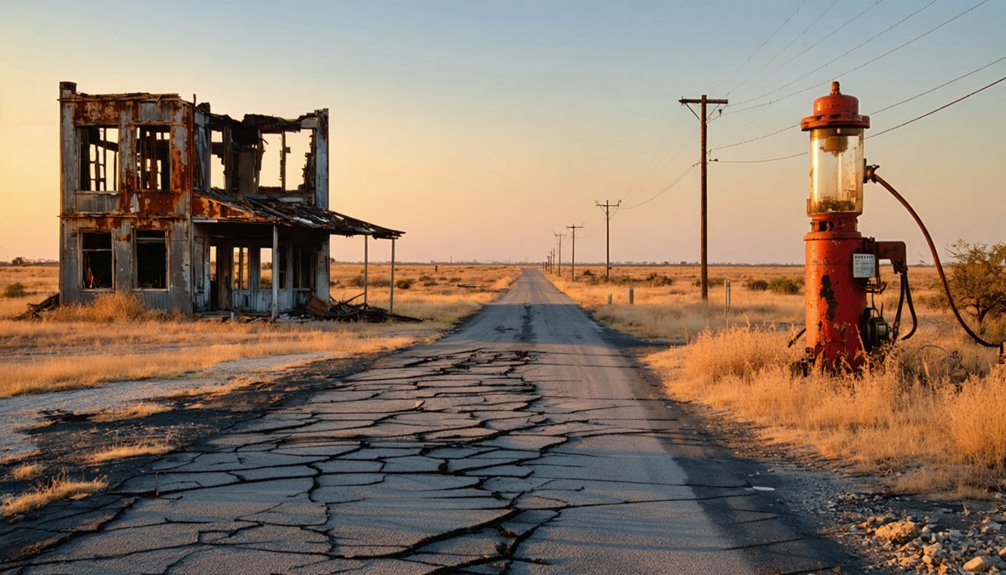
When oil fever swept through Carter County in the early 20th century, it didn’t just reshape the land — it built entire communities from scratch. Clemscott emerged almost overnight, a direct product of oil boom impact on the Healdton Oil Field’s explosive growth.
Workers flooded in, temporary structures went up, and a functioning camp took shape in what had previously been quiet Oklahoma countryside.
But ghost town history teaches a hard lesson: what oil builds, oil exhaustion buries. Once production peaked and workers moved on, Clemscott’s population collapsed.
No railroad secured its future. No alternative economy cushioned the fall. The camp that energy created simply dissolved back into the landscape, leaving behind minimal remnants for curious road trippers willing to explore Carter County’s forgotten corners.
What’s Left to See at Clemscott Today?
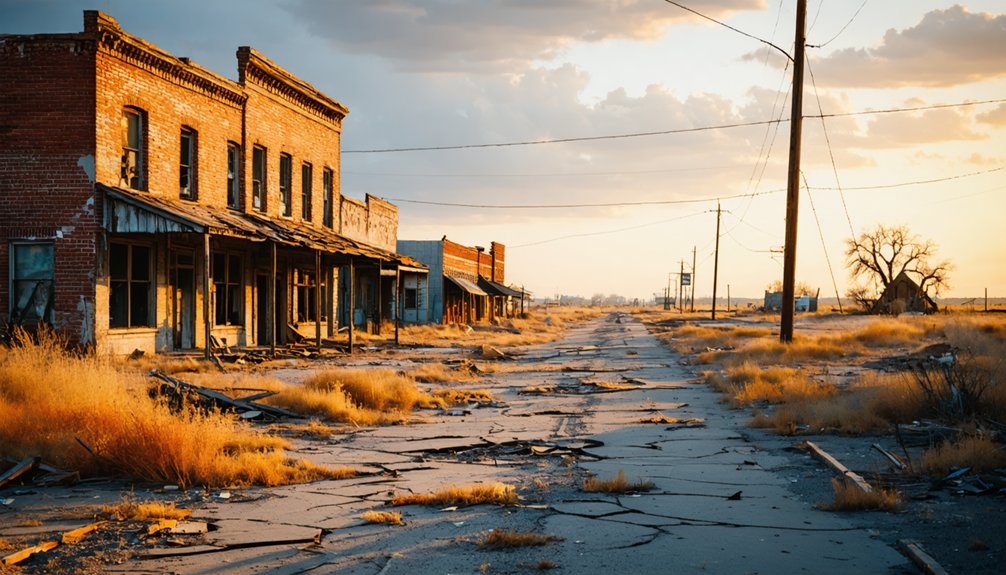
When you pull up to Clemscott today, you’ll find scattered stone foundations and structural remnants that hint at the bustling oil camp it once was.
Historical markers in the surrounding Carter County area help you piece together the broader story of the Healdton Oil Field era.
If you’re ready to extend your trip, nearby ghost towns like Texola and Skedee offer their own haunting landmarks — from an abandoned restaurant to a deserted high school — making Clemscott a natural starting point for a deeper backroads exploration.
Remaining Foundations And Structures
Though little remains of Clemscott today, you’ll still find scattered stone foundations and faded structural remnants that hint at the oil camp‘s once-bustling past. These traces of abandoned architecture carry deep historical significance, connecting you directly to Carter County’s early 20th-century oil boom.
Wander the site and you’ll discover:
- Crumbling stone foundations outlining where workers’ quarters and camp buildings once stood
- Weathered structural remnants partially reclaimed by Oklahoma’s native vegetation, creating striking visual contrasts
- Earthen depressions and grade lines marking former roads and railroad routes that fueled Healdton Oil Field operations
Each remnant tells a story of rapid growth and sudden decline.
Bring sturdy boots, a camera, and your curiosity — Clemscott rewards those willing to look closely at history’s quieter details.
Historical Markers Nearby
Beyond the foundations and earthen grades, historical markers in the surrounding area help you piece together Clemscott’s story with broader context.
Drive through Carter County and you’ll find signage referencing the Healdton Oil Field‘s historical significance, reminding you just how dramatically this region transformed during the 1910s and 1920s boom years.
Local legends surrounding rogue wildcatters, overnight boomtowns, and sudden abandonment add color to what the markers don’t say outright.
Stop at nearby communities like Healdton itself, where museum exhibits document the oil era that built and erased places like Clemscott almost overnight.
These markers won’t hand you every answer, but they’ll sharpen your understanding of why this landscape looks the way it does — quietly reclaimed, deeply layered, and worth every mile you drove to reach it.
Surrounding Ghost Town Sites
While Clemscott itself offers little more than scattered foundations and earthen grades, the surrounding Carter County landscape rewards curious explorers with a broader collection of ghost town remnants worth adding to your itinerary.
Each nearby site carries its own abandoned architecture and historical narratives that deepen your understanding of Oklahoma’s oil boom era.
Expand your road trip by visiting these standout destinations:
- Texola: Spot the iconic abandoned restaurant and service station frozen in time along old Route 66.
- Skedee: Walk the halls of a deserted high school where historical narratives echo through crumbling classrooms.
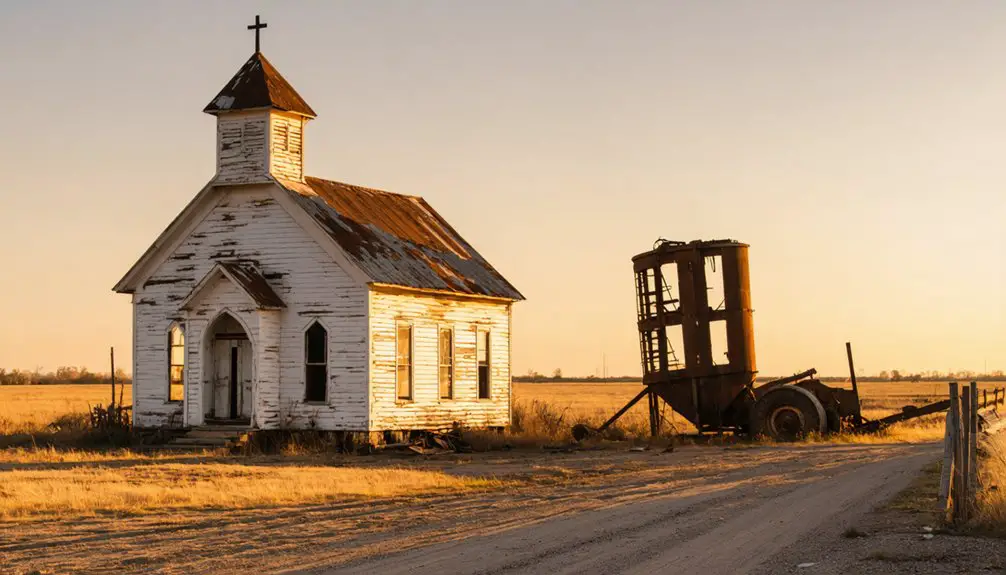
- Meridian: Photograph an abandoned church whose weathered abandoned architecture still commands the empty landscape.
These stops transform a single-site visit into a compelling, freedom-fueled journey through Oklahoma’s forgotten communities.
How Do You Drive Carter County’s Oil Camp Ghost Town Loop?
Winding through Carter County’s backroads, you’ll trace the skeleton of Oklahoma’s oil boom era on a loop that connects several forgotten camp sites anchored around the Healdton Oil Field.
Start in Healdton, then head south toward Clemscott’s minimal remnants — stone foundations and faded traces carrying real cultural significance for anyone serious about historical preservation.
Follow the old railroad grades east, where abandoned structures punctuate the landscape like punctuation marks in a forgotten sentence.
You’ll encounter deserted cemeteries with weathered gravestones that demand a moment of quiet respect.
The loop runs roughly 40 miles, entirely navigable on paved and gravel county roads.
Pack water, wear sturdy boots, and bring a camera.
These sites won’t announce themselves — you’ll have to look closely to find them.
Which Ghost Towns Near Clemscott Are Worth the Detour?
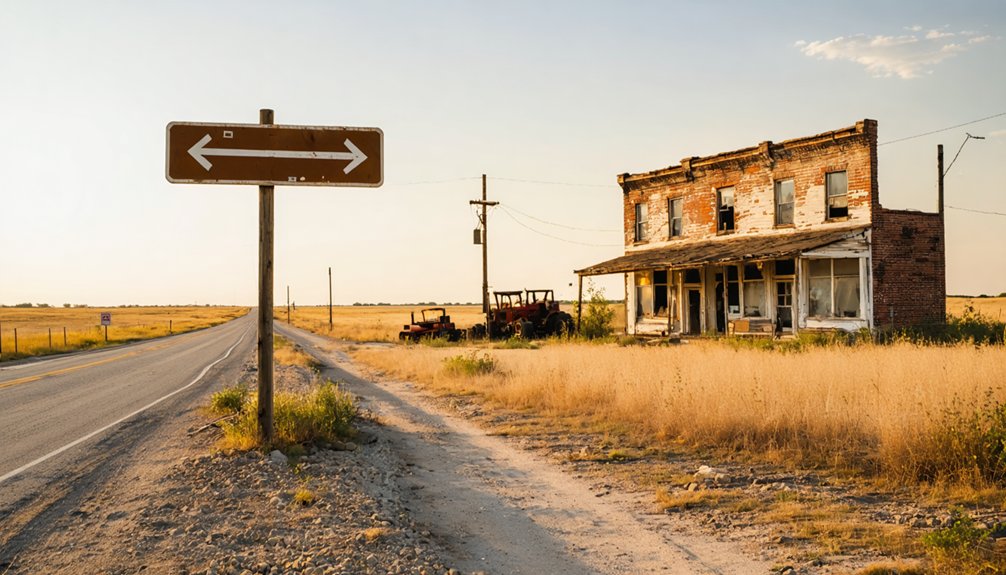
Once you’ve covered Clemscott’s remnants, several nearby ghost towns reward the extra miles. Each site carries hidden histories and abandoned dreams worth chasing down backroads.
- Texola – Catch the rusting Route 66 service station and hollow restaurant shell, frozen mid-century.
- Skedee – Walk the grounds of a deserted high school, where hallways once rang with students now long scattered.
- Meridian – Find a silent abandoned church standing against the Oklahoma sky, stubborn and forgotten.
These towns share Clemscott’s story: rapid growth, sudden collapse, and eerie stillness left behind.
Boom towns rise fast, fall faster, and leave only silence where ambition once roared.
You’ll move between oil-boom echoes and railroad-era ruins, piecing together Oklahoma’s volatile past one crumbling foundation at a time.
Pack water, fuel up early, and keep your camera ready.
When Is the Best Time to Visit Clemscott and Carter County Ghost Towns?
When you visit matters as much as where you go. Spring and fall are the best seasons for exploring Clemscott and Carter County’s ghost towns. Mild temperatures make hiking abandoned sites and backroads comfortable, and clear skies sharpen the contrast of crumbling stone foundations against open Oklahoma landscape.
Avoid summer’s brutal heat, which turns a casual explore into an exhausting ordeal. Winter works if you’re chasing solitude and stark, dramatic scenery, but muddy backroads can trap your vehicle.
Check local events in Ardmore and surrounding Carter County communities before you go. Festivals occasionally align with history-focused tours, giving you richer context for what you’re seeing.
Weekdays offer quieter exploration with fewer crowds, letting you move freely through these forgotten oil-boom remnants on your own terms.
What Should You Pack Before Exploring Oklahoma Ghost Towns?
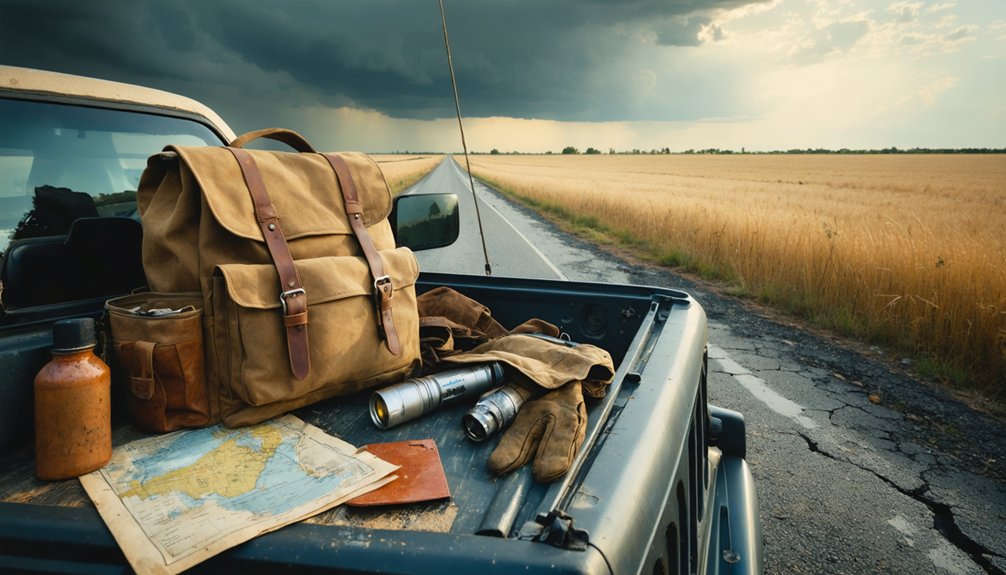
Packing right separates a rewarding ghost town trip from a frustrating one. When you’re heading into Carter County’s forgotten oil camps, preparation keeps you safe and your experience sharp. Your packing essentials should prioritize function over comfort.
Packing right separates a rewarding ghost town trip from a frustrating one — function always beats comfort in the field.
- Photography gear: Bring a wide-angle lens, extra batteries, and a tripod for capturing stone foundations and faded structures in low light.
- Navigation tools: Download offline maps since cell service disappears fast on backroad railroad grades.
- Protective gear: Wear sturdy boots, carry water, and pack a first-aid kit for uneven terrain around abandoned sites.
You’re exploring places history nearly swallowed whole — don’t let poor preparation cut your adventure short before it truly begins.
How Do You Photograph Foundations and Faded Signs at Clemscott?
When you’re shooting at Clemscott, time your visit around golden hour, when the low-angled light rakes across weathered stone foundations and deepens shadows, revealing textures that flat midday sun completely hides.
Get close to those stones and use a wide aperture to isolate crumbling edges, moss patches, and carved surfaces that tell the site’s layered history.
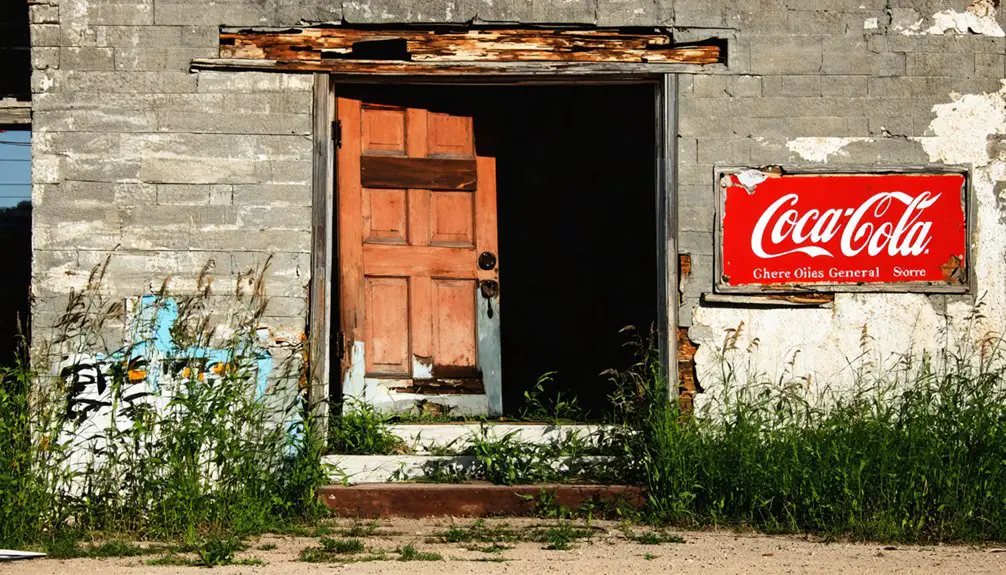
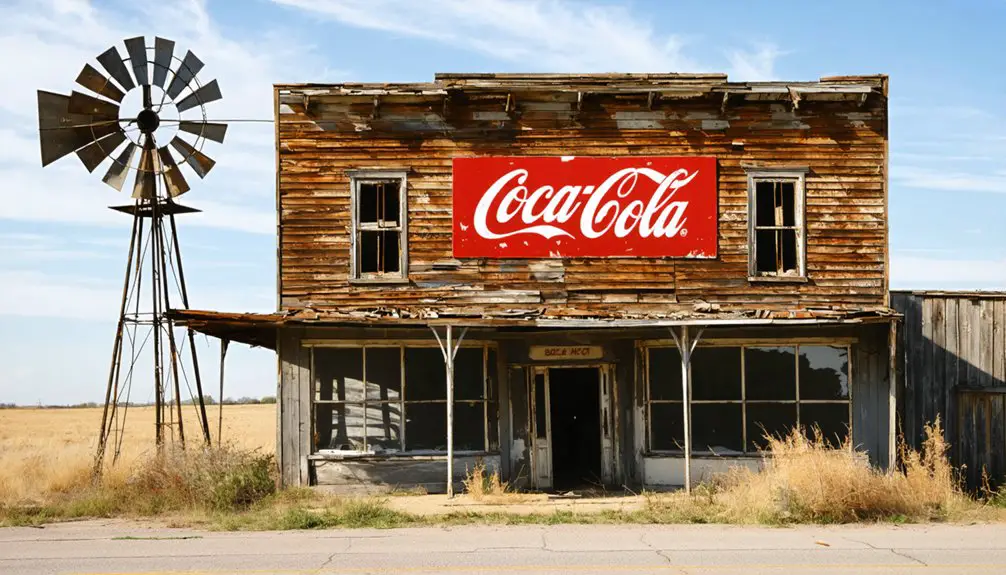
For faded signs, position yourself so the light strikes at a slight angle rather than head-on, then frame the shot tightly to cut out distractions and let the peeling paint and ghost lettering command the viewer’s full attention.
Golden Hour Lighting Tips
Golden hour transforms Clemscott’s weathered stone foundations and ghost-pale signage into something almost cinematic, so you’ll want to time your arrival about 45 minutes before sunset.
This warm, raking light deepens shadows across crumbling surfaces, revealing textures that harsh midday sun completely flattens. Master these lighting techniques to capture Clemscott at its most haunting:
- Position yourself with the sun at a low angle behind you, letting golden hour light wash across foundations for maximum texture and depth.
- Expose for the highlights on faded signs, preventing blowout while preserving those ghostly, sun-bleached details.
- Shoot horizontally across stone remnants, using long shadows as leading lines that pull viewers deeper into the frame.
You’ve got roughly 20 minutes of ideal light, so move deliberately and shoot often.
Capturing Weathered Stone Details
Clemscott’s stone foundations and faded signage reward patience and a macro lens. Get low and let weathered textures fill your frame — crumbling mortar lines, mineral stains, and eroded edges tell the site’s story better than any caption could.
Shoot stone patterns at a tight angle to emphasize depth and shadow, especially when the sun sits low and rakes across the surface.
For faded signs, polarizing filters cut glare and recover faint lettering. Bracket your exposures so you don’t lose highlight detail in bleached paint.
Move slowly around each subject — a slight shift in position can reveal texture invisible from straight on. Carry a small brush to clear debris without disturbing the site, and always leave what you find exactly as you discovered it.
Framing Faded Sign Shots
Framing a faded sign demands a different mindset than working stone foundations. You’re chasing layered paint, cracked lettering, and ghost-like impressions that whisper Clemscott’s historical significance.
Position yourself low, shooting upward to isolate weathered faded signage against open sky, letting natural light reveal texture without harsh shadows.
Consider these composition moves:
- Shoot at golden hour — raking sidelight exposes every peeling layer and deepens color contrast dramatically.
- Fill your frame deliberately — eliminate distracting backgrounds so the sign’s deterioration commands full attention.
- Include surrounding decay — a crumbling post or broken wall anchors the sign within Clemscott’s broader abandonment story.
You’re documenting something disappearing fast. Every shot you take preserves a fragment of history that weather and time will eventually erase completely.
What Are the Trespassing Laws and Site Rules for Oklahoma Ghost Towns?
Before you load up the car and head out to explore Clemscott or any of Oklahoma’s estimated 2,000 ghost towns, you’ll need to understand a few critical rules that could save you from a hefty fine or even arrest.
Oklahoma’s trespassing laws are strict — entering private property without permission is a misdemeanor, carrying fines up to $1,000.
Many ghost town sites fall on private land, so always research ownership beforehand and secure written permission when possible.
Site regulations on public lands vary by county, so check with local authorities before visiting.
Never remove artifacts, as Oklahoma law prohibits disturbing historical sites.
Stick to established backroads and railroad grades, photograph what you find, and leave everything exactly as you discovered it.
Your freedom to explore depends on responsible behavior.
Frequently Asked Questions
Did Clemscott Ever Have Its Own Post Office or Zip Code?
Like many oil boom camps, Clemscott’s postal history remains unclear—you won’t find confirmed records of its own post office or zip code, though its historical significance lives on through the thriving Healdton Oil Field era it helped define.
Are There Guided Ghost Town Tours Available in Carter County?
No specific guided tours exist for Carter County’s ghost town history, but you’ll find local historical societies that can point you toward self-guided adventures, letting you freely explore Clemscott’s fascinating, oil-boom remnants on your own terms.
Can Metal Detecting Be Legally Done at Clemscott’s Site?
Before you grab your metal detector, you’ll need to research local metal detecting regulations and legal considerations carefully. Oklahoma law restricts artifact removal from historic sites, so always secure landowner permission before you start exploring Clemscott’s grounds.
Were Any Notable Historical Figures Associated With Clemscott’s Oil Operations?
Ironically, Clemscott’s oil boom left no recorded notable figures despite its historical significance. You’d think such a bustling operation would’ve crowned legends, but history’s kept those names buried alongside the camp’s forgotten foundations.
Is Clemscott’s Location Accessible by Public Transportation From Nearby Cities?
You won’t find public transport connecting nearby cities to Clemscott’s remote Carter County location. You’ll need your own vehicle to freely explore this ghost town’s oil-era remnants, making it a true off-the-beaten-path adventure!
References
- https://www.okhistory.org/publications/enc/entry?entry=GH002
- https://en.wikipedia.org/wiki/List_of_ghost_towns_in_Oklahoma
- https://kids.kiddle.co/List_of_ghost_towns_in_Oklahoma
- https://okmag.com/blog/a-ghostly-site/
- https://www.youtube.com/watch?v=TCrMouVV5Xw