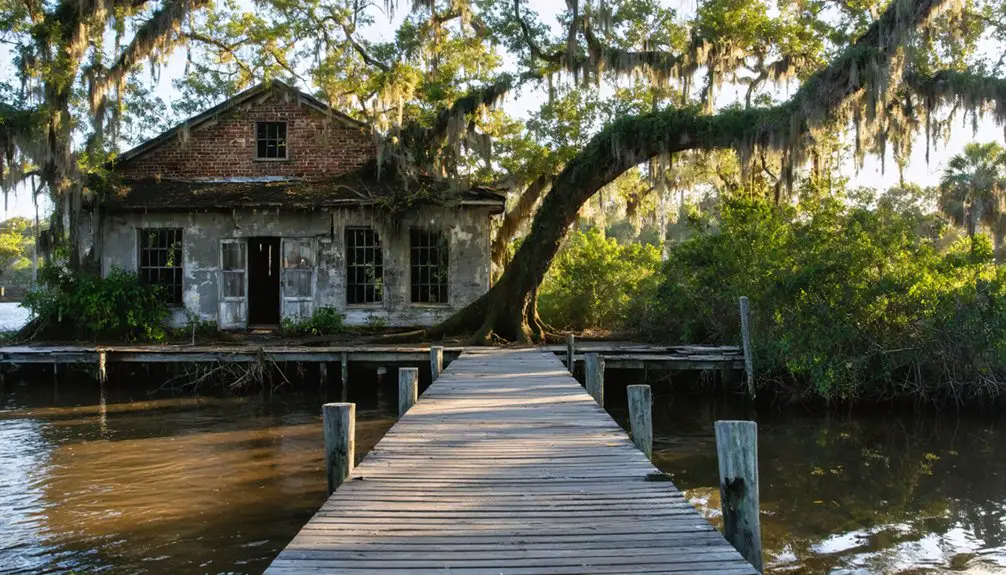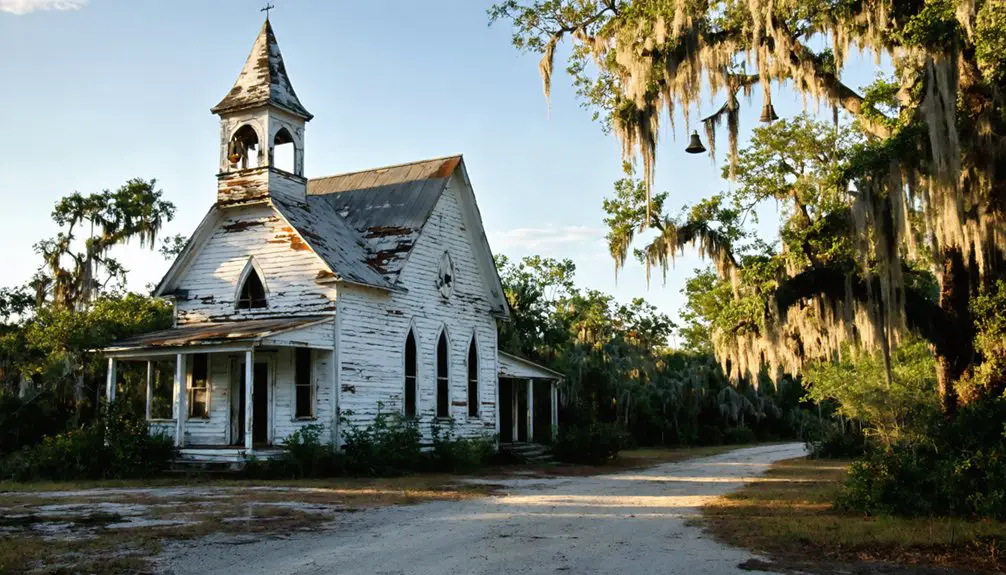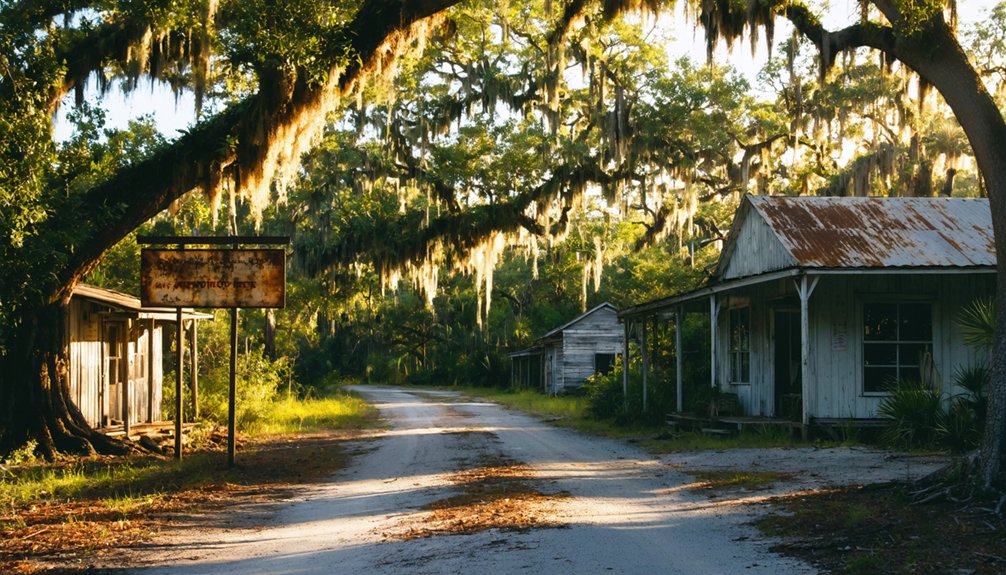
Planning a ghost town road trip to Columbus, Florida means heading to Suwannee River State Park, about 13 miles northwest of Live Oak along US-90. You’ll hike trails to a forgotten river port that once thrived with 500 residents before the Civil War wiped it out. Explore Confederate earthworks, an 1841 cemetery, and remnants of a stagecoach road. Visit between October and March for the best conditions, and there’s plenty more to uncover ahead.
Key Takeaways
- Columbus, Florida, a ghost town within Suwannee River State Park, sits at the Suwannee and Withlacoochee Rivers’ confluence, about 13 miles northwest of Live Oak.
- Key attractions include Columbus Cemetery, Confederate earthworks, sawmill remnants, and an old stagecoach road with interpretive panels explaining the town’s history.
- The best visiting months are October–November, February–March, and early December, when temperatures range between 60–75°F.
- Pack at least two liters of water, insect repellent, sturdy footwear, and an offline GPS map, as cell service is limited.
- Check park status before visiting, as Hurricane Idalia may have caused closures, and monitor National Weather Service alerts during hurricane season.
What Is the Story Behind Columbus, Florida’s Ghost Town?
Once a thriving river port, Columbus, Florida rose to prominence in 1841 at the junction of the Suwannee and Withlacoochee Rivers, where steamboats hauled up to 3,000 bales of cotton yearly through its busy ferry landing.
At its peak, this settlement of roughly 500 residents supported a general store, sawmill, and post office, making it an essential hub for river trade throughout the region.
Then the Civil War struck, gutting the economy and sending Columbus into an irreversible decline.
You’ll find no rebuilt structures or revitalized streets here — just raw ghost town history preserved in Confederate earthworks, a weathered stagecoach road, and one of Florida’s oldest cemeteries standing quietly in the trees.
Columbus didn’t fade gradually; it simply stopped, leaving the wilderness to reclaim everything it once was.
Where Is Columbus, Florida Located?
You’ll find the ghost town of Columbus tucked inside Suwannee River State Park, just outside Live Oak, Florida, where the Suwannee and Withlacoochee Rivers converge in a dramatic natural junction.
That strategic meeting of two rivers is exactly what made Columbus thrive as a 19th-century port town — and it’s what makes the hike out there feel like you’re retracing the footsteps of steamboat merchants and cotton traders.
Access the site via the park’s trail system, keeping in mind that Hurricane Idalia repairs have temporarily closed sections of the park.
Suwannee River State Park
Three rivers converge to shape the wild heart of Suwannee River State Park, near Live Oak, Florida, and it’s here that Columbus quietly waits. The Suwannee River and Withlacoochee River meet at this remote junction, carving out one of Florida’s most compelling landscapes for adventurers chasing ghost towns and forgotten history.
You’ll find Columbus tucked inside the park’s boundaries, accessible only by hiking trails that wind through dense forest. Before you visit, check the park’s current status — Hurricane Idalia forced temporary closures for repairs.
Once you’re inside, the park delivers raw, unfiltered Florida wilderness alongside genuine historical remnants. No crowds, no tourist traps — just trails, river bends, and the quiet ruins of a town that time left behind.
Near Live Oak, Florida
Finding Columbus, Florida means first finding your way to Live Oak, a small town in Suwannee County that serves as your gateway to this forgotten river settlement. From there, Suwannee River State Park holds the remnants of a once-thriving port where local legends still echo through the cypress trees.
Columbus sits at a geographically strategic position:
- River Junction – Positioned where the Suwannee and Withlacoochee Rivers meet, maximizing its historical significance as a commerce hub.
- Across from Ellaville – Its sister city sits directly opposite, once connected by an active ferry landing.
- Park Trail Access – You’ll reach the site entirely on foot through marked hiking trails.
Pack light, wear sturdy shoes, and embrace the wilderness between you and history.
River Junction Location
Columbus, Florida occupies one of the most strategically dramatic positions in the state’s interior — the exact confluence where the Suwannee and Withlacoochee Rivers collide and merge into a single, powerful current.
That river history made Columbus invaluable. Settlers and merchants recognized immediately that controlling this junction meant controlling commerce across Florida’s interior.
Today, you’ll find this ghost town tucked inside Suwannee River State Park, near Live Oak. Across the water sits Ellaville, Columbus’s former sister city, equally swallowed by time.
You can’t drive directly to the ruins — you’ll hike in through forested trails, following the same land that once buzzed with steamboats, cotton bales, and frontier ambition.
The rivers are still there, wild and indifferent, outlasting everything humans built beside them.
How Do You Get to Suwannee River State Park?
To reach Suwannee River State Park, you’ll head northwest from Live Oak, Florida, traveling along US-90 for about 13 miles until the park entrance appears on your right.
You’ll find the park sitting at the confluence of the Suwannee and Withlacoochee Rivers, a remote but accessible stretch of Florida’s interior that feels worlds away from the state’s coastal bustle.
Before you go, check the park’s status, since Hurricane Idalia forced temporary closures, and you don’t want to make the drive only to find the gates locked.
Park Location And Access
Nestled near Live Oak, Florida, Suwannee River State Park sits at the confluence of the Suwannee and Withlacoochee Rivers, making it the gateway to Columbus’s forgotten landscape.
You’ll find the park accessible via major routes near Live Oak, though trail maintenance following Hurricane Idalia has temporarily limited access. Historic preservation efforts continue shaping your experience once trails reopen.
Before you go, confirm these essentials:
- Check park status — Hurricane Idalia repairs may affect trail availability and entry points.
- Plan your route — Navigate to Live Oak, Florida first, then follow signs directly to the park entrance.
- Arrive prepared — Wear sturdy footwear for sandy stagecoach roads and uneven earthwork terrain.
Columbus rewards the adventurous traveler willing to chase history through Florida’s wild river corridors.
Driving Directions From Live Oak
From Live Oak, you’ll head west on US-90 for roughly 13 miles until the Suwannee River State Park entrance appears on your right, marking the threshold between modern Florida and the ghost town Columbus once was.
The drive itself is straightforward — US-90 cuts through open Florida landscape before the tree canopy thickens near the river.
Turn right at the park entrance, pay your fee, and follow the interior road toward the trailheads.
From there, hiking paths lead you directly into Columbus’s historical significance, where Confederate earthworks, an ancient cemetery, and remnants of a sawmill whisper ghost town legends into the Spanish moss-draped air.
Note that Hurricane Idalia repairs have temporarily closed the park, so check Florida State Parks’ website before hitting the road.
What’s Left to See at the Columbus Ghost Town?
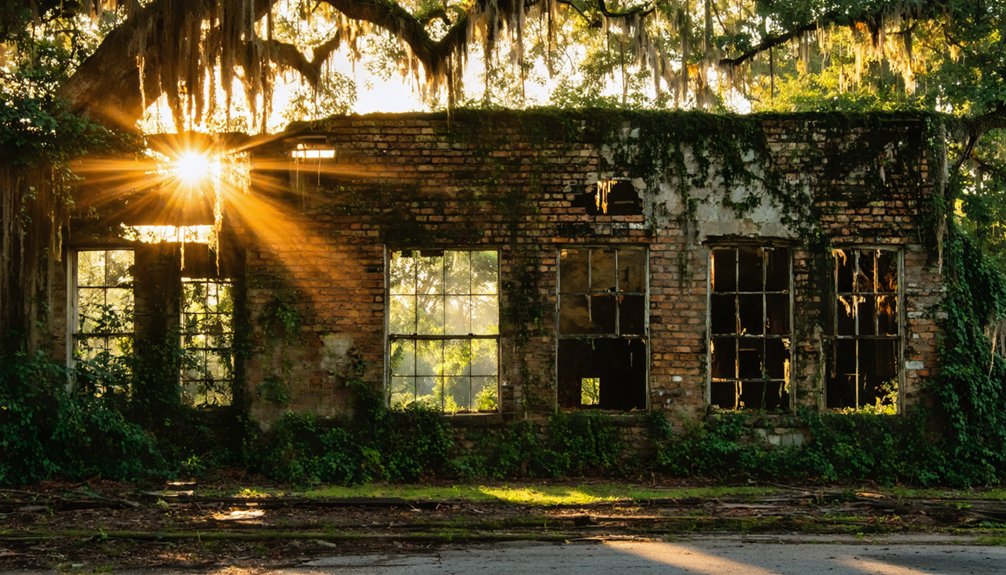
What remains of Columbus today is sparse but evocative, scattered across the forest floor like quiet clues to a vanished world. This ghost town history whispers through three remarkable survivors of river commerce and conflict:
- Columbus Cemetery – One of Florida’s oldest, tucked deep in the forest, holding the names of those who built this thriving port.
- Confederate Earthworks – Fortifications that reveal the Civil War’s brutal grip on a once-prosperous economy.
- Sawmill Remnants and Stagecoach Road – Sandy tracks and rusted machinery that trace the outlines of daily frontier life.
Interpretive panels guide you between these remnants, connecting fragments into a coherent story.
You’re not just hiking trails here — you’re walking through the bones of a town that river commerce built and war dismantled.
Which Trails Inside Suwannee River State Park Lead to Columbus?
Once you’ve absorbed the story those remnants tell, you’ll want to know exactly how to reach them — and that means getting acquainted with Suwannee River State Park’s trail system.
The park’s interconnected hiking trails wind through longleaf pine forests and Spanish moss-draped hardwoods, delivering you directly to Columbus’s scattered historical significance. Among the trail highlights, you’ll discover pathways leading to the Columbus Cemetery, Confederate earthworks, and the ghostly sandy stagecoach road.
The trails aren’t long or punishing — they reward curiosity rather than endurance. You’ll follow interpretive panels that anchor each site with context, making the walk feel less like exercise and more like time travel.
Park near Live Oak, lace up your boots, and let the forest pull you deeper into Florida’s forgotten past.
When Is the Best Time to Visit Columbus, Florida?
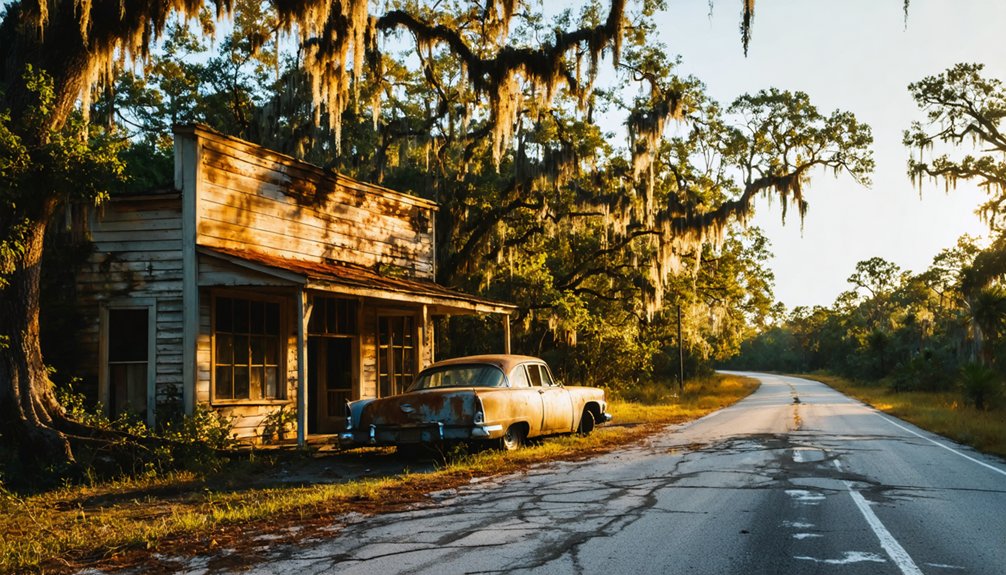
You’ll find Columbus at its most rewarding between November and April, when cooler temperatures make hiking the park’s trails far more comfortable and Florida’s notorious humidity retreats.
Steer clear of late summer and fall, when hurricane season can disrupt access—Hurricane Idalia already forced temporary park closures, so check conditions before you commit to the trip.
Suwannee River State Park follows standard Florida state park hours from 8 a.m. until sundown, giving you a solid window to explore the cemetery, earthworks, and remnant machinery without rushing.
Ideal Weather Visiting Months
Since Columbus, Florida sits deep in the humid subtropics, timing your visit matters more than you might expect. For authentic ghost town exploration without battling oppressive heat or sudden downpours, plan around these ideal windows:
- October through November — Cooler temperatures hover between 60–75°F, making cemetery trails and Confederate earthworks far more manageable on foot.
- February through March — Dry conditions reveal the historical significance of the sandy stagecoach road and sawmill remnants with stunning clarity.
- Early December — Thin winter crowds mean you’ll experience the forest-shrouded cemetery in near-total solitude.
Avoid summer visits entirely. July humidity turns trail hiking into an endurance test, and afternoon thunderstorms roll through fast and hard.
Your freedom to roam this abandoned river port depends on choosing your timing wisely.
Avoiding Hurricane Season
Timing your Columbus visit around comfortable temperatures is only half the battle — Florida’s Atlantic hurricane season runs June 1 through November 30, and it punches hard through Suwannee River country.
Hurricane Idalia already forced Suwannee River State Park into temporary closure, proving that travel safety isn’t hypothetical here. A storm doesn’t need a direct hit to shut down park access roads, flood trails, or make Columbus’s remote forest sites genuinely dangerous.
Your smartest window sits between December and May — outside hurricane season entirely.
Before any visit, check the park’s official status, monitor National Weather Service alerts, and build flexible itineraries. Hurricane preparedness means having an exit plan before you need one.
Columbus waited 180 years; it’ll wait another week if a storm rolls through.
Park Hours And Access
Suwannee River State Park opens at 8 a.m. and closes at sunset, giving you a defined window to reach Columbus’s trails, cemetery, and Confederate earthworks before the forest goes dark.
Use this park hours and access information to plan deliberately:
- Arrive early — morning light filters beautifully through the old-growth canopy, revealing the sandy stagecoach road’s contours most clearly.
- Check closure status — Hurricane Idalia repairs temporarily shuttered the park, so confirm current access before you commit to the drive.
- Contact the park directly — rangers provide real-time trail conditions and access information for specific historic sites.
The park sits near Live Oak, Florida.
No reservations are required for day hiking, so you can move freely, on your own schedule, into Columbus’s forgotten landscape.
Is Suwannee River State Park Open After Hurricane Idalia?
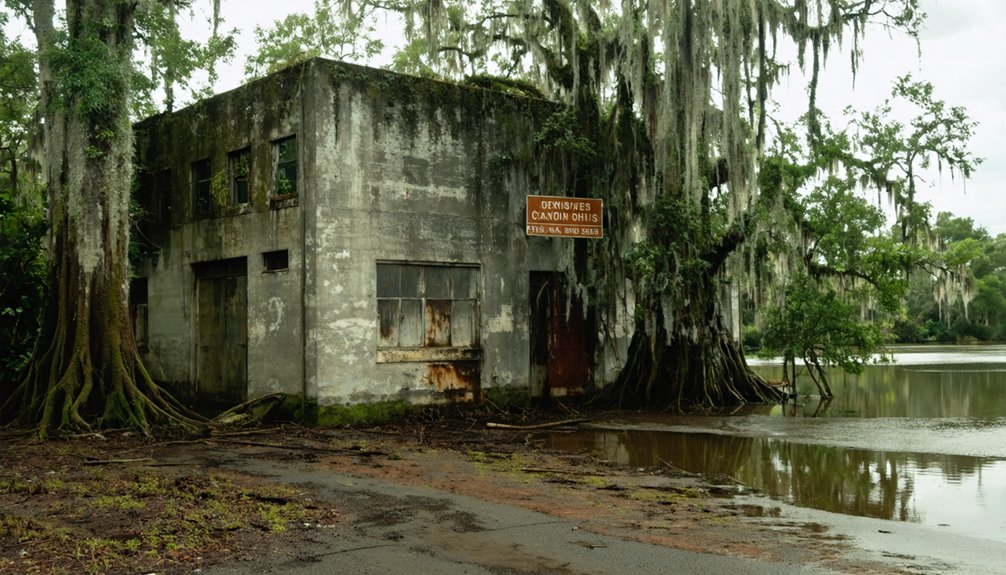
When Hurricane Idalia tore through the region, Suwannee River State Park took a hit that temporarily shut its gates to visitors.
Before you load up the car and chase down Columbus’s ghost town remnants, check the park’s current status directly with Florida State Parks. Restoration crews have been working hard to clear debris and restore hiking safety along trails leading to the cemetery and Confederate earthworks.
Before chasing Columbus’s ghost town remnants, verify trail access with Florida State Parks — restoration crews are still clearing Hurricane Idalia debris.
Don’t let a temporary closure derail your adventure. The historical significance of Columbus — one of Florida’s oldest cemeteries, crumbling sawmill remnants, and haunting stagecoach roads — absolutely justifies waiting until the park fully reopens.
Call ahead, verify trail access, and then hit the road knowing you’ll experience this forgotten river port exactly as it deserves to be explored.
What Should You Bring to Hike the Columbus Ghost Town Trails?
Packing 5 essential items before you hit the trails transforms a rough slog through Florida’s humid backcountry into a genuinely rewarding ghost town hunt.
Columbus sits deep inside Suwannee River State Park, where trail safety depends entirely on your preparation.
Your hiking essentials checklist:
- Water and electrolytes — Florida’s heat drains you faster than you’d expect; carry at least two liters.
- Insect repellent — riverside vegetation harbors aggressive mosquitoes that’ll cut your exploration short.
- Detailed trail map or downloaded offline GPS — cell service disappears quickly in this remote backcountry.
Wear moisture-wicking layers, sturdy closed-toe shoes, and bring a small flashlight for reading interpretive panels in shaded forest sections.
Columbus rewards the prepared explorer with Confederate earthworks, ancient cemetery stones, and genuine wilderness freedom.
What Else Is Worth Seeing Near Columbus, Florida?
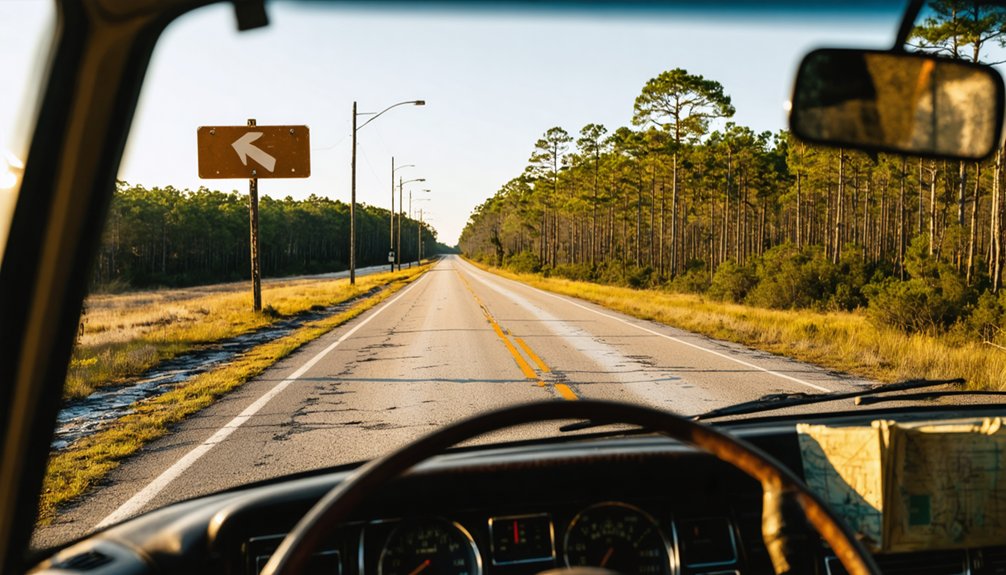
Once you’ve packed your gear and hit the Columbus trails, it’s worth knowing that Suwannee River State Park holds more than just one ghost town’s bones.
Cross the river mentally and you’ll find Ellaville, Columbus’s sister city, carrying its own historical significance through remnants of George Drew’s lumber operation. The Confederate earthworks scattered through the park connect you to a broader Civil War landscape that shaped Florida’s interior forever.
Ellaville’s remnants whisper of lumber empires and Confederate earthworks — history carved into Florida’s interior, waiting to be found.
Beyond the park’s boundaries, Live Oak offers local attractions worth your time before heading out.
The surrounding Suwannee River corridor rewards explorers willing to follow the water’s edge, where cypress-lined banks and spring-fed tributaries reveal a Florida most travelers never discover.
This entire region breathes with layered history — every trail, every bend in the river tells another story.
How Should You Behave When Visiting Columbus Cemetery?
Stepping into Columbus Cemetery means entering one of Florida’s oldest burial grounds, so you’ll want to carry yourself with quiet respect from the moment you cross the tree line.
Cemetery etiquette here isn’t about rigid rules — it’s about honoring those who built a thriving river port from nothing. Respectful behavior keeps this fragile site intact for every future explorer who follows your trail.
Follow these three simple guidelines:
- Never touch or lean against headstones — weathered markers crack easily under pressure.
- Stay on established paths — unmarked graves likely exist beyond visible stones.
- Pack out everything you bring in — leave no trace among the moss-draped trees.
You’re walking through someone’s history. Move through it like you belong there, because in a way, you do.
Frequently Asked Questions
Was Columbus, Florida Ever Considered for Permanent Settlement or City Status?
Yes, Columbus thrived as a legitimate settlement, boasting 500 residents mid-1800s. You’d have witnessed its promising growth, but population decline following the Civil War crushed its settlement history, leaving only ghost town remnants behind.
Did Any Notable Civil War Battles or Skirmishes Occur Near Columbus?
While battles didn’t rage here, you’ll find Civil War earthworks and Confederate fortifications that carry profound Historical Significance — silent sentinels where soldiers once braced for conflict, yet peace now reclaims Columbus, Florida’s forgotten, freedom-soaked wilderness.
Are There Any Guided Tours Specifically Focused on Columbus Ghost Town History?
No dedicated guided history tours exist for Columbus, but you’ll uncover ghost town legends yourself via Suwannee River State Park’s interpretive trail panels, letting you freely explore crumbling remnants and Confederate earthworks at your own adventurous pace.
Can Visitors Legally Take Artifacts or Souvenirs From the Columbus Ghost Town Site?
Boldly brave Columbus’s boundaries, but don’t pocket the past! You can’t remove anything—artifact preservation and legal regulations protect every relic. Respect these rules, and you’ll keep this adventurous ghost town’s history alive for fellow freedom-seeking explorers.
Has Any Archaeological Research or Excavation Been Conducted at Columbus, Florida?
The knowledge doesn’t confirm any archaeological research at Columbus, but you’ll discover the site’s archaeological findings and historical significance through interpretive panels, Confederate earthworks, and century-old remnants that’ll ignite your adventurous spirit exploring Florida’s forgotten past!
References
- https://www.youtube.com/watch?v=VFucpCMeUyU
- https://coastalanglermag.com/a-ghost-town-along-the-suwannee-river/
- https://theforgottensouth.com/kerr-city-florida/
- https://www.youtube.com/watch?v=kWu1SkUUH44
- https://www.oneworld365.org/blog/florida-ghost-towns
- https://usghostadventures.com/americas-most-haunted-trending/ghost-towns-to-visit-on-your-summer-road-trip-along-route-66/