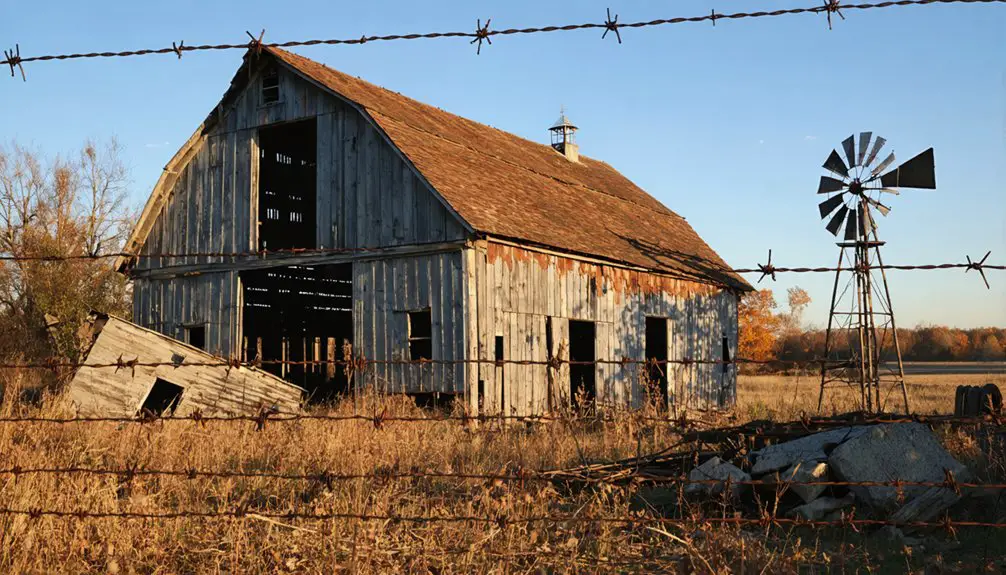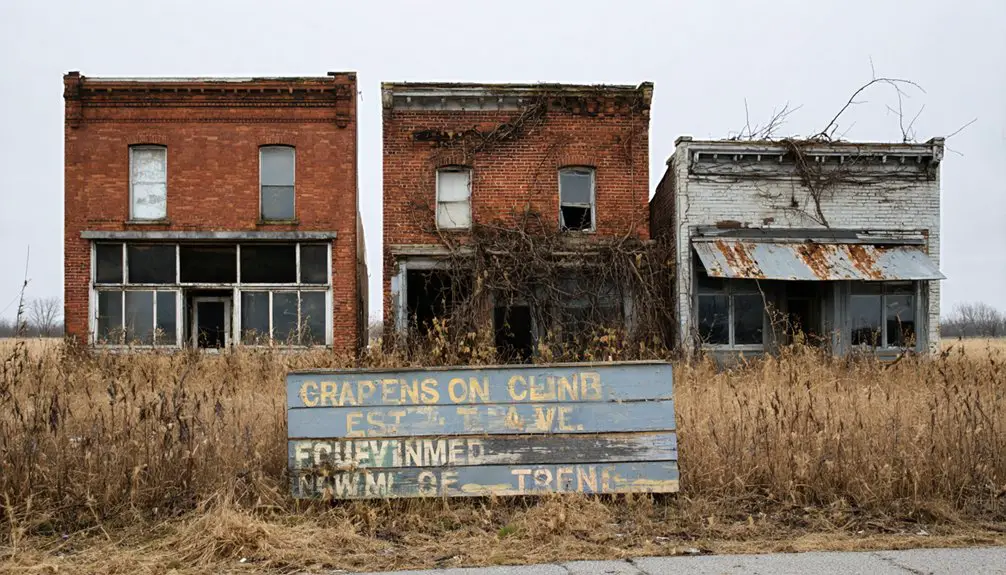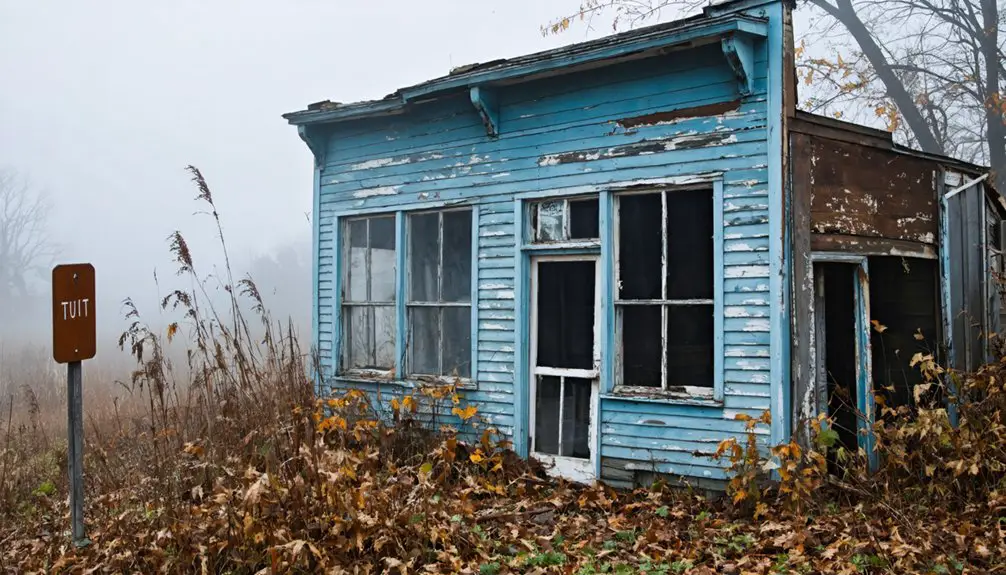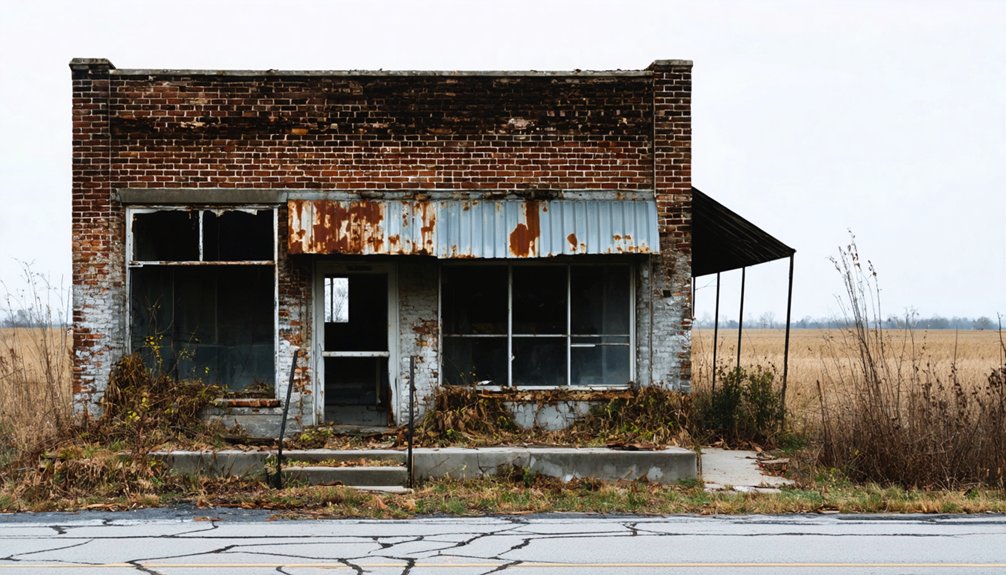
Planning a ghost town road trip to Rumley, Ohio means heading to Van Buren Township in Shelby County, where quiet farmland holds stories most travelers never find. You’ll access it along Hardin–Wapakoneta Road, just south of Blanke Road. Bring sturdy shoes, a camera, water, snacks, and a paper map since cell signal runs thin out here. Pack curiosity too, because Rumley’s layered history of diverse pioneers runs deeper than it first appears.
Key Takeaways
- Rumley is located in Van Buren Township, Shelby County, along Hardin–Wapakoneta Road, just south of Blanke Road.
- Set GPS to Shelby County to avoid confusion with New Rumley in Harrison County, which are two separate towns.
- Pack sturdy walking shoes, a camera, water, snacks, and a notebook for exploring this raw, authentic ghost town.
- Bring a paper map, as the rural area may have limited cell signal during your visit.
- Rumley’s layered history includes German immigrants, free Black pioneers, and mixed-heritage families, making it a uniquely diverse site.
Where Is Rumley, Ohio and How Do You Get There?
Tucked away in Van Buren Township, Shelby County, Rumley sits quietly along Hardin–Wapakoneta Road, just south of its intersection with Blanke Road — a stretch of rural Ohio that feels like it’s been holding its breath since the 1800s.
Understanding Rumley’s geography means accepting there’s no grand entrance or tourist signage waiting for you. You’re traversing travel routes through open farmland, following roads that haven’t changed much in purpose or character.
From Wapakoneta, head north on Hardin–Wapakoneta Road and watch for Blanke Road as your landmark. The site sits just beyond that crossroads.
It’s honest, unhurried country — the kind that rewards travelers who prefer discovering forgotten places over crowded destinations. Bring a map, trust your instincts, and let the open road lead you there.
Don’t Confuse Rumley With New Rumley, Ohio
Before you hit the road, you’ll want to note that Rumley and New Rumley are two entirely distinct Ohio towns, so don’t let the similar names throw off your navigation.
New Rumley, tucked away in Harrison County, carries its own slice of American history as the birthplace of General George Armstrong Custer, marked by a monument that draws Civil War buffs and history lovers alike.
Keep your GPS locked on Van Buren Township in Shelby County, and you’ll find the quiet, semi-abandoned Rumley you’re looking for along Hardin–Wapakoneta Rd.
Two Distinct Ohio Towns
While planning your ghost town road trip, don’t mix up Rumley and New Rumley — they’re two distinct Ohio towns with entirely different histories.
Rumley sits quietly in Van Buren Township, Shelby County, offering ghost town exploration rooted in diverse settler stories from the 1830s.
New Rumley, located in Harrison County, carries its own historical significance as the birthplace of General George Armstrong Custer, complete with a monument marking that legacy.
These towns share a similar name but nothing else. Your road trip goals determine which destination fits your journey.
If you’re chasing forgotten farming communities with Black pioneer and mixed-heritage roots, Rumley’s your stop.
If Civil War-era military history draws you, New Rumley deserves its own separate visit.
Custer’s New Rumley Connection
George Armstrong Custer’s story starts in New Rumley, Harrison County — a place that carries the weight of Civil War legend and stands miles apart from the quiet farming ghost town you’ll find in Shelby County.
Custer’s heritage draws history buffs eastward toward monuments and battlefield echoes, while Rumley’s significance lies in something quieter — free Black pioneers, mixed-heritage settlers, and a community that carved out independence on the Ohio frontier.
These two towns share a similar name but nothing else. When you’re planning your road trip, keep your maps straight.
New Rumley honors a general’s birthplace. Rumley honors everyday people who chose freedom and built something lasting in Van Buren Township, Shelby County.
Two Rumleys sit on Ohio’s map, and mixing them up will send you hours in the wrong direction.
New Rumley, in Harrison County, draws visitors honoring George Custer’s birthplace. Your destination sits in Shelby County’s Van Buren Township, a quieter, forgotten stretch of farming land.
Use these navigational tips before you leave:
- Target Hardin–Wapakoneta Road, south of its intersection with Blanke Road
- Confirm Shelby County in your GPS, not Harrison County
- Watch for local landmarks like surrounding farmland and rural road markers typical of Van Buren Township
Don’t let a name twin derail your adventure.
Both sites carry history worth exploring, but Rumley’s semi-ghost status offers something rawer, more personal, and genuinely off the beaten path.
Who Were the Diverse Settlers That Built Rumley?
When you explore Rumley’s past, you’ll find Colonel Amos Evans at the heart of its founding, a likely War of 1812 veteran who built a log dwelling, store, and tavern in the early 1830s.
Around 1832, brothers Joel and John Goings arrived from Guernsey County, purchasing 400 acres and bringing with them roots tied to the Wappoo tribe.
What makes Rumley’s story truly compelling is its diverse tapestry of settlers — German immigrants, free Black pioneers from Virginia or Maryland, and mixed-heritage families who all shaped this small Ohio community together.
Colonel Amos Evans’ Legacy
Long before Rumley took shape on any official map, Colonel Amos Evans had already planted roots in the wilds of Van Buren Township, erecting a hewed log dwelling, a general store, and a tavern in the early 1830s.
Evans’ Impact on this frontier community runs deep, establishing Rumley’s Historical Significance as a self-sufficient settlement years before its official 1837 survey.
His contributions shaped early community life:
- He built the first gathering spaces for trade and shelter
- His veteran background, likely from the War of 1812, drove disciplined frontier development
- His structures attracted diverse settlers, including European immigrants, free Black pioneers, and Native American families
You’re walking ground that Evans’ vision first cleared, making every step through Rumley a connection to Ohio’s raw, independent past.
The Goings Brothers’ Arrival
Around 1832, brothers Joel Weslin Goings and John Wesley Goings rode into Van Buren Township from Guernsey County, carrying ambitions that would reshape what Evans had started. Together, they purchased 400 acres, staking a serious claim in this frontier settlement.
Their settler contributions weren’t just about land — they brought diversity that defined Rumley’s soul. Joel married Elizabeth Cole and raised 11 children, with roots possibly tied to the Wappoo tribe.
The Goings brothers helped attract a genuinely varied community: German immigrants, free Black men, white settlers, and Native Americans all found footing here. You can feel that spirit walking the old roads today — a place where people of different origins built something meaningful together, long before anyone called it a ghost town.
Black And Native Settlers
What made Rumley genuinely remarkable wasn’t just the land claims or the log structures — it was the people who filled those acres with real, complicated lives. Free Black Pioneers from Virginia and Maryland carved out existence here alongside settlers of Native Heritage, including Joel Goings, recorded as a member of the Wappoo tribe.
This wasn’t a town built by one kind of person.
You’ll find Rumley’s diversity woven into early records:
- Free Black men established roots here before the Civil War era
- Joel Goings carried possible mixed Native and Black ancestry
- European immigrants arrived alongside non-white settlers, creating unlikely community
That layered humanity is exactly what makes standing on this quiet road feel like something genuinely worth chasing.
What Physical and Historical Evidence Survives at Rumley Today?
Though Rumley’s heyday has long since faded, the land itself still whispers its layered past to anyone willing to seek it out.
You won’t find grand restored buildings here, but physical remnants of the original 1837 survey layout still shape the terrain along Hardin–Wapakoneta Road. Historical markers reference Amos Evans’ hewed log dwelling, store, and tavern, grounding you in the site’s earliest commercial life.
The Goings brothers’ 400-acre footprint also echoes across the surrounding farmland. What survives isn’t polished or curated — it’s raw and honest, much like the diverse community that once built it.
Bring the Ohio Ghost Town Exploration resources, cross-reference with Shelby County Historical Society records, and you’ll piece together a remarkably vivid portrait of who lived, worked, and endured here.
Why Rumley Stands Out Among Ohio Ghost Towns
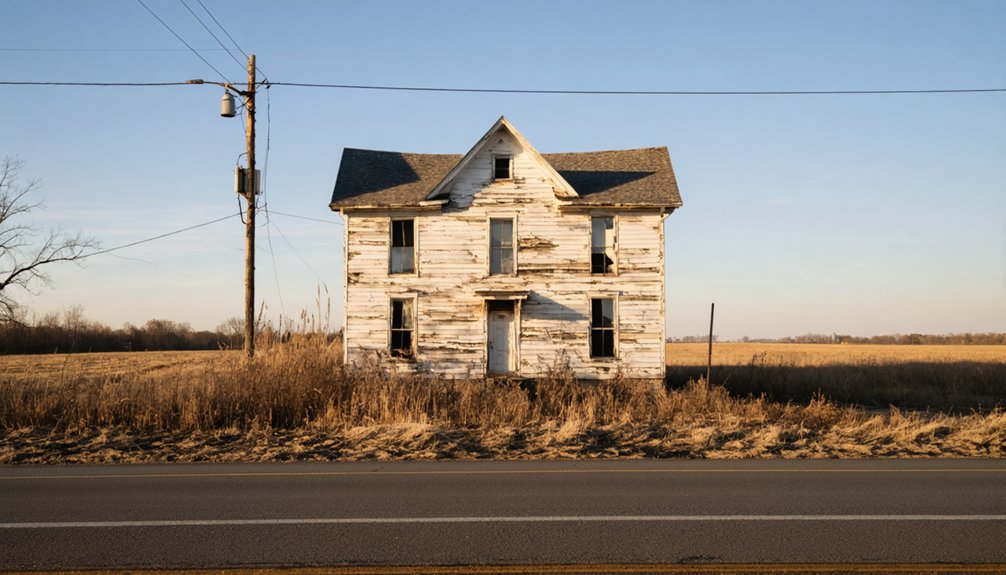
Rumley isn’t just another forgotten dot on Ohio’s ghost town map — it’s a place that defies the typical narrative. Unlike many Ghost Towns shaped by singular disasters or economic collapse, Rumley carries a richer, more layered story rooted in Cultural Heritage that most forgotten settlements never claim.
What sets Rumley apart:
- Diverse founding population — free Black men, Native Americans, and European immigrants built this community together before Ohio’s Civil War era.
- No dramatic collapse — Rumley faded quietly, preserving its mystery rather than surrendering to a documented catastrophe.
- Mixed-heritage legacy — the Goings family’s possible Wappoo tribal connections challenge conventional pioneer narratives.
You’re not just visiting a ghost town here. You’re stepping into a living question about who really built America’s rural heartland.
How to Drive to Rumley From Wapakoneta and What to Bring
Getting to Rumley is a straightforward drive that feels like slipping back in time. From Wapakoneta, head north on Hardin–Wapakoneta Road into Van Buren Township, Shelby County, stopping just south of Blanke Road.
These driving tips keep you on track: use a paper map as backup since rural signals drop unexpectedly, and allow extra time to absorb the landscape.
Pack these essential items before leaving: sturdy walking shoes for uneven terrain, a camera for capturing remnants of the 1837 survey site, water, snacks, and a notebook for jotting historical observations.
The farming fields surrounding Rumley stretch wide and quietly, echoing lives once lived freely here by Black pioneers, mixed-heritage settlers, and frontier dreamers. Arrive with curiosity and leave room for discovery.
Frequently Asked Questions
When Did Rumley Officially Transition From an Active Town to Semi-Ghost Status?
There’s no exact date recorded for Rumley’s shift to semi-ghost status. You’ll find its town history faded gradually through quiet abandonment, leaving ghost stories of diverse pioneers echoing across forgotten farming landscapes you’re free to explore.
Are There Any Guided Tours Available Specifically for Rumley Ghost Town Visits?
No formal ghost town tours exist… but don’t let that stop you! You’ll uncover Rumley’s historical significance independently, wandering freely along Hardin–Wapakoneta Rd, where Ohio Ghost Town Exploration resources guide your own nostalgic, self-directed discovery.
What Happened to the Descendants of Joel and Elizabeth Goings After 1872?
After 1872, you’d find the Goings legacy scattering through Family migration patterns across Ohio and beyond. Joel and Elizabeth’s 11 children carried their pioneering, mixed-heritage spirit into new frontiers, seeking the freedom their parents boldly claimed.
Is Rumley Privately Owned Land, or Can Visitors Freely Access the Site?
Like a door left ajar, Rumley’s private ownership remains unclear, but you’ll find visitor access along public Hardin–Wapakoneta Rd, where you can freely explore its quiet, forgotten farming remnants without trespassing concerns.
Were Any Rumley Structures Ever Relocated or Preserved in Local Museums?
No records confirm relocated structures, but you’ll find Rumley’s historical significance lives on through preservation efforts at the Shelby County Historical Society, where you can uncover the town’s diverse, freedom-seeking pioneer heritage waiting to be rediscovered.
References
- https://ohioghosttowns.org/shelby-county/
- https://fulton.ohgenweb.org/fultoncoGhostTowns.html
- https://en.wikipedia.org/wiki/List_of_ghost_towns_in_Ohio
- https://www.thefamilyshrub.com/2011/03/11/rumley-ohio-a-ghost-town-of-sorts/
- https://www.hmdb.org/m.asp?m=227788
- https://www.youtube.com/watch?v=pLPWi1AWPlw