To reach Comet, Montana, head north on High Ore Road off Interstate 15, about 20 miles from Helena. You’ll navigate rough gravel through High Ore Gulch before arriving at one of the West’s most intact ghost towns — a silver mining settlement that once employed 300 men and produced over $20 million in ore. Bring a high-clearance vehicle, pack supplies, and check road conditions before you go. There’s far more to this story than a single paragraph can hold.
Key Takeaways
- Comet, Montana sits roughly 20 miles north of Helena via High Ore Road, a rough gravel route through scenic southwest Montana wilderness.
- A high-clearance vehicle is strongly recommended year-round, as road conditions vary dramatically by season and creek crossings can challenge unprepared drivers.
- No services exist past Interstate 15, so pack water, snacks, a spare tire, and a plug kit before departing.
- Cell service is unreliable along the route, making a paper map or downloaded offline GPS navigation essential for a safe trip.
- Summer offers the most favorable travel conditions, with dry gravel roads and clear skies ideal for exploring Comet’s abandoned structures freely.
How to Get to Comet, Montana’s Abandoned Silver Mine Town
Getting to Comet, Montana requires just a short but rewarding gravel road drive through the rugged High Ore Gulch. From Interstate 15, head north on High Ore Road, winding roughly 20 miles south-southwest of Helena through classic southwest Montana wilderness.
It’s the kind of road trip that feels earned — dusty, remote, and quietly cinematic.
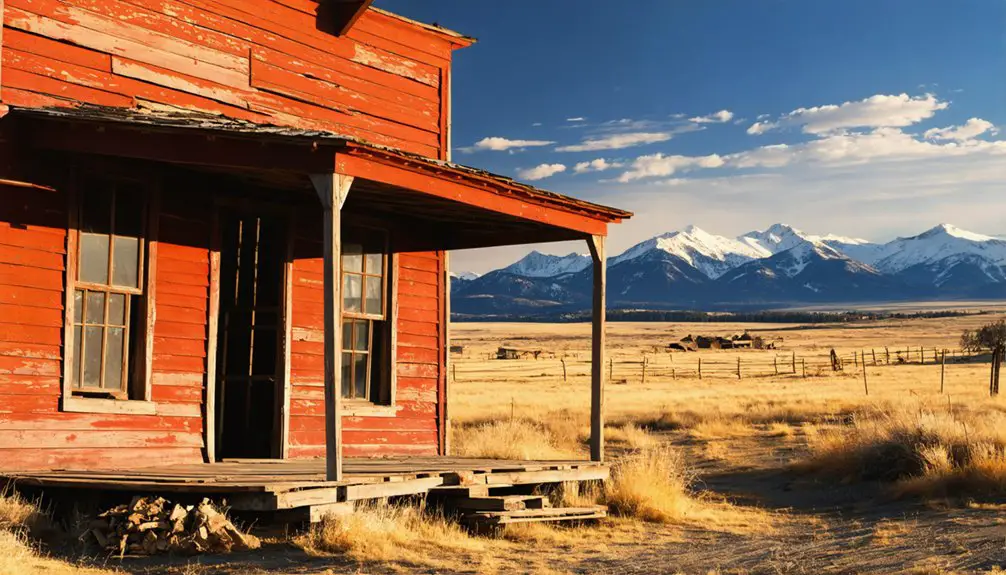
The site sits on private grazing land, but public access is open, so you’re free to explore without restriction. Follow High Ore Creek as it cuts through the gulch, leading you straight into Comet’s abandoned heart.
Ghost stories start making sense once you’re standing among the crumbling cabins and weathered ore buildings. There’s no gate keeping you out — just wide-open terrain and 150 years of silver-mining history waiting to be discovered.
Why Comet Became Montana’s Second Biggest Mine: Then Vanished
When John W. Russell struck silver galena ore along High Ore Creek in 1869, he unknowingly lit the fuse on one of Montana’s most dramatic mining stories.
By the 1930s, Comet had muscled its way into second place behind Butte, producing over $20 million in silver, lead, zinc, gold, and copper while keeping 300 men employed through the Great Depression.
Then World War II cut the story short—equipment was sold off in 1941, the population scattered, and the gulch fell silent for good.
Silver Ore Strikes Gold
Few ghost towns in Montana carry the dramatic arc of Comet — a silver strike that quietly exploded into the state’s second-largest mining venture, then vanished almost overnight.
In 1869, John W. Russell discovered silver galena ore along High Ore Creek, triggering one of the region’s most consequential silver discoveries. By 1873, the Comet Mine was patented, and investors poured over $500,000 into refining mining techniques and expanding operations.
Alta Montana Mining transformed raw potential into serious production, eventually drawing Helena’s mining elite into the venture.
You’re standing where hundreds of ambitious men once carved wealth from this gulch. They built a smelter, developed processing infrastructure, and pushed output to extraordinary levels — all from a single creek-side discovery that started everything.
Montana’s Mining Powerhouse
By the 1930s, Comet had grown into something nobody predicted from that first creek-side silver strike — Montana’s second-largest mining operation, trailing only the copper colossus at Butte. Around 300 men worked these hills, pulling silver, lead, zinc, gold, and copper from the earth, generating over $20 million in total production.
That’s a mining legacy that shaped southwest Montana’s economic identity for decades.
What’s remarkable is that Comet’s economic impact survived the Great Depression when countless operations collapsed entirely.
Then, almost without warning, everything stopped. Equipment sold off in 1941, workers scattered, and silence reclaimed High Ore Gulch. A community that had twice risen from ghost town status couldn’t survive a third abandonment.
What remains today isn’t failure — it’s evidence of something genuinely extraordinary that you can still walk through yourself.
War Ends Everything
Timing killed Comet as much as economics did. The war consequences reached deep into Montana’s gulches. When World War II consumed metal supplies and manpower, Comet couldn’t sustain operations. By 1941, the equipment sold off, and workers scattered permanently — a fate sealed not by exhausted ore but by wartime disruption.
The peace aftermath brought no revival. Unlike earlier shutdowns in 1897 and post-1913, nobody returned to restart the machinery. The concentrator sat silent. The company structures emptied. Three hundred men who’d weathered the Great Depression simply vanished into postwar America.
Today, when you drive High Ore Road into the gulch, you’re walking through that abrupt ending. The buildings didn’t crumble slowly — they stopped mid-stride, frozen the moment America’s war economy swallowed Comet whole.
What’s Still Standing at the Comet Mine Site?
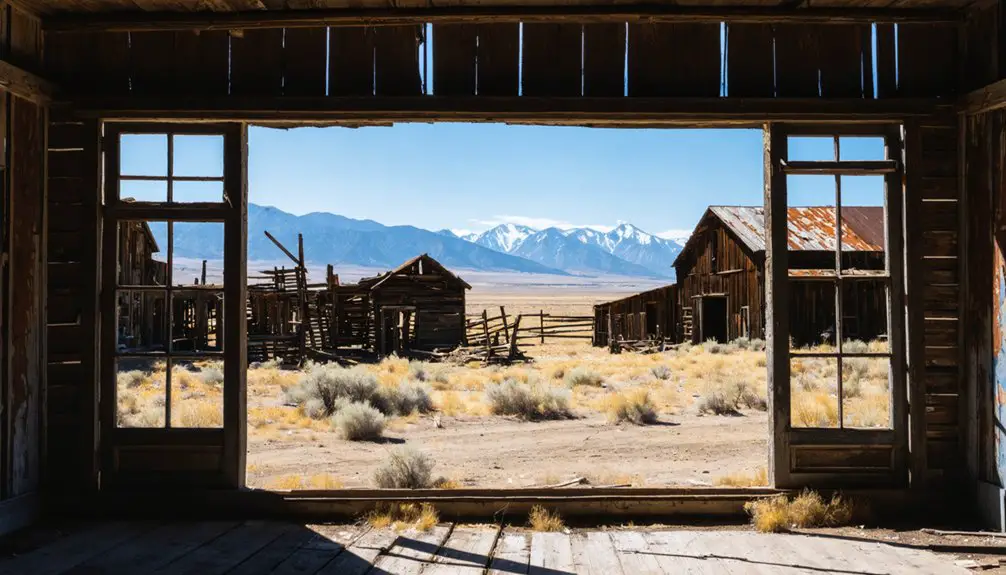
When you arrive at Comet, you’ll find the site hasn’t surrendered everything to time — the ore hopper, a large ore processing building, and several company structures still rise against the Montana sky.
The abandoned mill dominates the landscape, its weathered frame a monument to the Basin Montana Tunnel Company‘s ambitious 200-ton concentrator, once the most modern in the state.
High Ore Creek cuts between the mine buildings and the town proper, where tumble-down cabins, private buildings, and the old cemetery wait on the other side.
Standing Structures At Comet
Scattered across 35 acres of sagebrush and silence, Comet’s surviving structures tell a surprisingly vivid story for a town that’s been abandoned since 1941.
You’ll recognize the standing structures immediately — weathered, stubborn, and full of historical significance.
Walk the site and you’ll encounter:
- The ore hopper — rusted iron frames still reaching skyward
- The large ore processing building — cavernous walls holding decades of industrial memory
- Company structures — administrative bones of a once-thriving operation
- Abandoned private homes — tumble-down cabins swallowed by sagebrush
- The idle mill — silent machinery frozen mid-operation
High Ore Creek still cuts between the mine buildings and town proper, just as it did when 300 men worked these slopes.
One residence remains active — everything else belongs to time.
The Abandoned Mill Remains
Among those surviving structures, the abandoned mill demands your full attention. It’s a massive, weathered monument to the ambition that once drove 300 men through Montana’s harsh winters.
Step inside and you’ll encounter abandoned machinery frozen mid-operation, as though workers simply walked away one afternoon in 1941 and never returned.
The historical significance here runs deep. This wasn’t some modest frontier operation — Comet’s mill processed ore from what became Montana’s second-largest mining venture after Butte.
The 200-ton concentrator that Basin Montana Tunnel Company installed in 1926 represented the most modern technology available anywhere in the state.
Walk the creaking floors, study the rusting equipment, and let the silence speak. This mill produced over $20 million in silver, lead, and copper.
That history belongs to you now.
Mine Buildings Still Visible
Beyond the mill, the broader mine site reveals a striking collection of structures that have stubbornly refused to disappear. Their mine preservation speaks volumes about the historical significance of Comet’s industrial past.
You’ll wander freely through decades of raw, unfiltered history.
Watch for these surviving landmarks:
- Ore hopper — towering remnant of Comet’s silver-and-lead extraction days
- Large ore processing building — weathered walls still commanding the gulch
- Company structures — scattered administrative and operational buildings from peak production
- High Ore Creek crossing — natural dividing line between mine buildings and town proper
- Tumble-down cabins — leaning silently amid sagebrush, frozen somewhere around 1941
Nothing separates you from this unguarded history.
Walk straight into Montana’s mining legacy on your own terms.
When Is High Ore Road Actually Drivable?
High Ore Road earns its name honestly — it’s a rough gravel track that demands respect, and the season you choose to visit can make or break your trip.
Road conditions shift dramatically throughout the year, so timing matters. Late spring snowmelt turns the gulch into a muddy, rutted mess that’ll swallow a two-wheel-drive vehicle whole.
Timing is everything — spring snowmelt transforms this road into a muddy trap that’ll strand the unprepared.
Summer offers your best window — dry gravel, passable grades, and clear skies over the Boulder River watershed.
Fall works too, but watch for early storms rolling off the Continental Divide. You’ll want a high-clearance vehicle regardless of season.
Check with Jefferson County road crews before you head out, because High Ore Road doesn’t apologize for catching unprepared travelers off guard.
What to Pack for Comet’s Gravel Roads, Open Range, and Creek Crossing

Getting to Comet means earning it — most of the 20-mile run south-southwest from Helena throws gravel roads, open range cattle, and a High Ore Creek crossing at you before you ever lay eyes on an ore hopper.
Pack smart and move freely through this High Ore Gulch wilderness.
Your gravel road essentials and creek crossing tips start here:
- Spare tire and plug kit — gravel punishes the unprepared
- High-clearance vehicle — creek crossings reward ground clearance
- Water and snacks — no services exist past the Interstate 15 turnoff
- Sturdy footwear — sagebrush terrain and tumbledown cabin exploration demand it
- Paper map or downloaded offline GPS — cell signal disappears fast out here
Comet doesn’t wait for the underprepared.
Other Montana Ghost Towns Worth Adding to Your Comet Day Trip
Once you’ve packed the truck and pointed it toward Comet, you’re already deep in Montana ghost town country — and it’d be a shame to stop at just one.
Nearby Wickes processed Comet’s ore before shutting down in 1897, and its crumbling remnants reward serious ghost town photography.
Elkhorn, northeast of Boulder, preserves two ornate Gilded Age buildings against an open sky.
Garnet, east of Missoula, stands as one of Montana’s most intact mining history sites, with collapsed cabins and rusted machinery frozen mid-decay.
Each town adds another layer to the same story: boom, bust, and silence.
String two or three together, and you’ve turned a single afternoon drive into a genuine expedition through Montana’s rougher, realer past.
Before You Go: Safety at Abandoned Sites
Ghost town structures have stood without maintenance for decades. Floors, stairs and roof timbers fail without warning, and a building that looks solid from outside may not hold your weight. Stay out of standing structures unless the site is actively maintained and open to visitors.
Mine workings are the more serious hazard. Vertical shafts can be hundreds of feet deep, are often unfenced, and may be hidden by brush or capped with rotted boards. Never enter an adit, tunnel or shaft: abandoned workings can hold oxygen-poor or toxic air that gives no warning before you lose consciousness.
Enclosed spaces with rodent droppings carry a risk of hantavirus, which is contracted by breathing contaminated dust. Do not sweep or stir up dust inside old cabins and outbuildings.
Cell coverage at these sites is usually poor or absent. Tell someone your route and expected return time, and carry more water than you think you need.
Frequently Asked Questions
Is There an Entrance Fee to Visit the Comet Ghost Town?
Free as the Montana wind, you’ll pay nothing to explore Comet’s ghost town history. Just drive in, wander the abandoned mining operations, and let the silver-rush stories speak for themselves — no entrance fee required.
Are Pets Allowed When Exploring the Comet Mine Site?
No specific pet restrictions are documented, but you’ll want to practice ghost town etiquette and prioritize pet safety — keep them leashed amid the rugged terrain, private grazing land, and historically rich remnants of Comet’s adventurous mining past.
Can Visitors Legally Take Artifacts or Souvenirs From Comet?
You can’t legally take artifacts from Comet. Ghost town regulations protect what’s left of this historic site. Respect artifact preservation so future adventurers can experience the same raw, authentic glimpse into Montana’s silver-mining past that you’re enjoying today.
Is There Cell Service or Emergency Help Available Near Comet?
Like pioneers venturing into the unknown, you’re on your own out here. Don’t count on cell coverage or emergency resources near Comet — it’s remote Montana wilderness, so pack supplies, tell someone your plans, and embrace self-reliance.
Are Overnight Camping Stays Permitted at the Comet Ghost Town?
Camping regulations aren’t clearly defined for Comet, but since it’s private grazing land, you’ll want to seek landowner permission before spending a night immersed in this remarkable ghost town history beneath Montana’s expansive, star-filled skies.
References
- https://www.explorebigsky.com/the-glory-days-of-comet-montana/22805
- https://en.wikipedia.org/wiki/Comet
- https://historynet.com/ghost-towns-comet-montana/
- https://www.legendsofamerica.com/mt-comet/
- https://www.youtube.com/watch?v=I-zDRZLjhuk
- https://www.youtube.com/watch?v=1HbfHqJQNG8
- https://www.youtube.com/watch?v=YU0y9_5Ylbg
- https://treasurestate.com/ghost-towns/comet/