If you’re searching for mining ghost towns in Hawaii, you won’t find them — Hawaii never had a significant mining industry. Instead, its abandoned towns were shaped by volcanic eruptions, tsunamis, and the collapse of sugar plantations. Lava buried Kalapana, waves erased coastal settlements, and mill towns emptied when the sugar economy failed. Hawaii’s ghost towns tell a completely different story than anything you’d find on the mainland, and that story runs surprisingly deep.
Key Takeaways
- Hawaii’s ghost towns differ from traditional mining towns, with abandonments caused by volcanic eruptions, tsunamis, and plantation economy collapse instead.
- The sugar industry’s decline dismantled entire communities like Keomuku and Kawailoa, mirroring mining town abandonment patterns seen on the mainland.
- Volcanic lava flows buried communities like Kaimū and Kalapana in 1990, permanently erasing them similarly to mining town collapses.
- Unlike mining towns, Hawaii’s abandoned sites hold ancient cultural structures and archaeological findings tied to native Hawaiian heritage.
- Some Hawaiian ghost town sites, like Kaloko-Honokohau National Historic Park, are federally preserved and publicly accessible for exploration.
Did Hawaii Ever Have Mining Ghost Towns?
When most people picture a ghost town, they imagine sun-bleached storefronts and played-out silver mines baking in the American West — but Hawaii’s abandoned settlements tell a fundamentally different story.
Traditional mining methods never drove Hawaii’s economy, so you won’t find mineral extraction behind its ghost towns. Instead, their historical significance stems from volcanic destruction, tsunamis, and plantation collapse.
Economic impacts from sugar industry decline emptied entire communities, while natural disasters erased others permanently.
These sites carry deep cultural heritage — ancient fishponds, petroglyphs, and ceremonial grounds reveal archaeological findings spanning centuries.
Preservation efforts through national historic parks protect what remains.
You’ll discover that community resilience, not mining depletion, defines Hawaii’s abandoned places, making them historically richer and far more complex than conventional ghost towns suggest.
Why Hawaii’s Ghost Towns Look Nothing Like Western Mining Towns
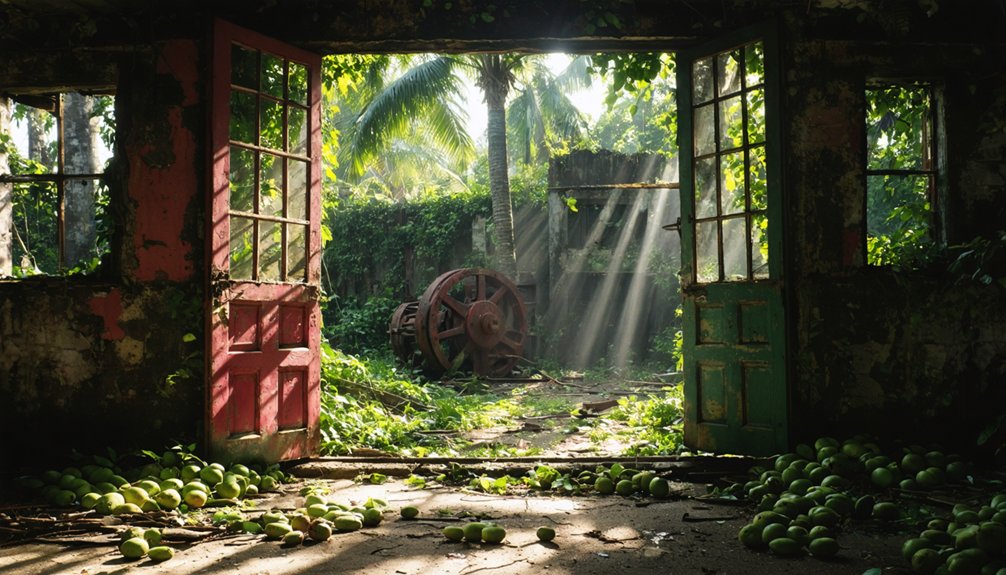
Unlike the sun-bleached storefronts and exhausted mine shafts of Nevada or Colorado, Hawaii’s ghost towns don’t follow the extractive economy model that shaped Western abandonment. You won’t find ore carts or dynamite scars here. Instead, you’ll encounter lava-swallowed foundations, tsunami-cleared coastlines, and plantation camps reclaimed by vegetation.
The historical context matters: Hawaii’s abandonments stemmed from volcanic eruptions, tidal destruction, and collapsing sugar economies — not mineral depletion.
The cultural significance runs deeper too. Sites like Waipi’o Valley and Kaunolū represent living ancestral memory, not just economic failure. Ancient fishponds, petroglyphs, and ceremonial structures remain embedded within these landscapes.
Western ghost towns mark where extraction ended. Hawaii’s mark where communities were displaced — by nature, industry, and forces entirely outside their control.
How Lava, Not Mining, Destroyed Big Island’s Ghost Towns
Nowhere does Hawaii’s geology make the case more forcefully than on the Big Island, where Kīlauea has functioned less as backdrop and more as demolition force.
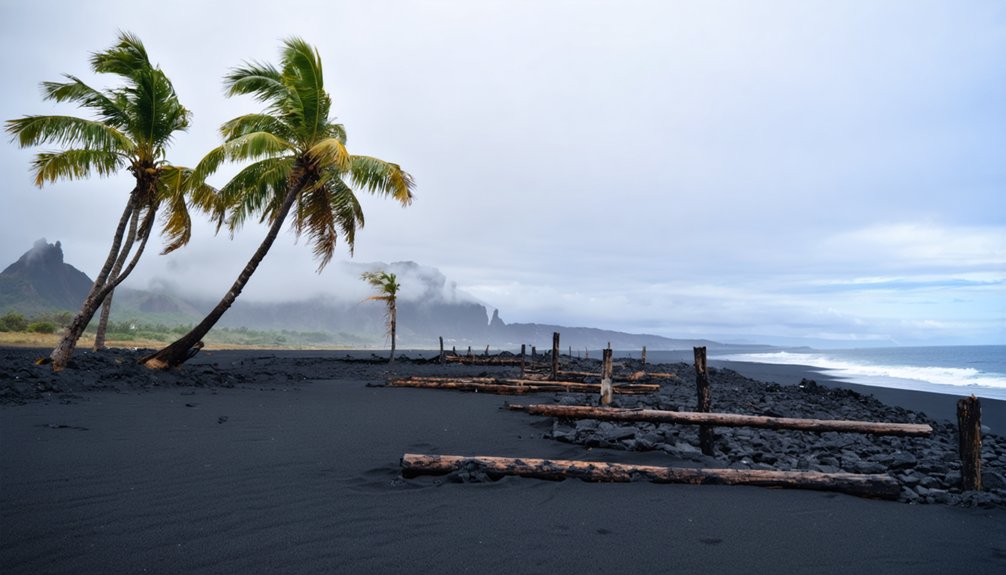
Lava flows, not economic collapse, erased Kaimū and Kalapana in 1990 when the Kūpaʻianahā vent buried both communities permanently. Kapoho suffered twice — volcanic eruptions consumed it in 1960, residents rebuilt, then the 2018 Puna eruption finished the job.
These weren’t slow declines you could negotiate around; they were categorical erasures. ʻĀpua met a different but equally geological fate, destroyed by tsunami following the 1868 earthquake and never resettled.
You won’t find mining depletion in any of these records. What you’ll find instead are communities that geology simply decided to reclaim on its own timeline.
Plantation Collapse: Why Hawaii’s Mill Towns Emptied Out
When you examine Hawaii’s mill towns, you’ll find that the sugar industry’s collapse didn’t just close factories — it erased entire communities.
Towns like Keomuku, Kawailoa, Maunaloa, and Hamakuapoko once housed thousands of plantation workers, but once the mills shut down, the economic foundation that sustained them vanished entirely.
Today, you can walk through what remains of these sites and trace the arc of an industry that shaped Hawaii’s demographic and geographic identity before disappearing almost without warning.
Sugar Industry’s Devastating Decline
While volcanic eruptions and tsunamis physically erased several Hawaiian communities, the sugar industry’s collapse dismantled entire social infrastructures—mills, housing camps, schools, and supply networks—leaving towns like Keomuku, Kawailoa, Maunaloa, and Hamakuapoko economically hollowed out.
When sugar production declined, workers didn’t just lose jobs—they lost entire self-contained worlds built around plantation life.
Economic shifts driven by global competition, rising labor costs, and shifting trade policies made Hawaiian sugar unsustainable. Once mills shuttered, there was no economic rationale for residents to stay.
You’ll notice these towns share a pattern: rapid desertion following a single industry’s failure. No diversified economy existed to absorb the shock.
What remains aren’t just empty buildings—they’re physical records of how completely dependent these communities were on one commodity’s survival.
Abandoned Mill Towns Today
Today, the physical remnants of Hawaii’s abandoned mill towns function as involuntary archives—structures, foundations, and overgrown camp housing that document how completely single-industry economies collapse.
When you walk through sites like Kawailoa or Hamakuapoko, you’re reading the historical significance of corporate dependency written directly into landscape. Sugar companies didn’t just employ workers—they controlled housing, movement, and survival.
When the industry folded, entire communities dissolved overnight. Each abandoned mill represents a population that had no economic fallback, no diversified infrastructure, no exit with dignity.
Today, some sites sit on private land, restricting your access. Others deteriorate without preservation funding. What remains isn’t nostalgia—it’s evidence.
These spaces document what happens when workers build their lives inside systems designed without their long-term freedom in mind.
The Hawaii Ghost Towns Swallowed by Tsunamis and Time
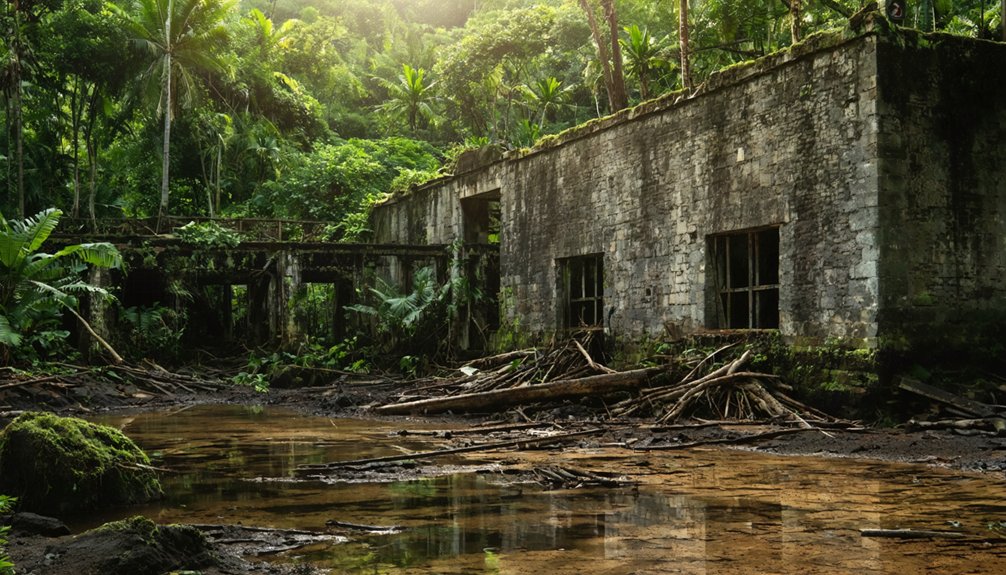
When you trace Hawaii’s ghost town origins, you’ll find that tsunamis rank among the most destructive forces, erasing entire communities within hours rather than decades.
The 1946 and 1868 waves struck Big Island settlements like ‘Āpua and Waipiʻo Valley, displacing thousands and leaving behind structural ruins that time continued to claim long after the water receded.
You’re looking at a pattern where natural disaster initiates abandonment, but gradual neglect, overgrowth, and geological change complete it.
Tsunami-Devastated Hawaiian Villages
Though volcanic eruptions often dominate Hawaii’s destruction narrative, tsunamis have quietly erased entire communities from the archipelago’s coastlines, leaving behind ghost towns defined not by economic collapse but by geological violence.
You’ll find stark evidence of tsunami impacts in places like Hālawa on Molokaʻi, where back-to-back waves in 1946 and 1957 dismantled a functioning coastal village beyond recovery.
Waipi’o Valley, once home to 10,000 residents, saw its population scatter after 1946’s devastating surge.
ʻĀpua on the Big Island vanished entirely following the 1868 earthquake-triggered wave, never resettling.
Village resilience had limits against repeated hydrological assault.
These communities didn’t fade gradually; they were structurally severed from continuity, their remains now marking coastlines where daily life once thrived with churches, stores, and generational familiarity.
Time’s Toll on Communities
Across Hawaii’s ghost town record, time operates less as a slow erosion and more as a sudden severance—communities intact one decade, structurally absent the next.
You’re examining settlements where cultural erosion didn’t creep—it detonated. Four patterns define how time claimed these places:
- Volcanic burial erased Kaimū and Kalapana within months of 1990 eruptions.
- Tsunami displacement emptied Waipiʻo Valley and Hālawa following 1946 strikes.
- Economic withdrawal collapsed plantation camps after sugar industries folded.
- Urban absorption swallowed Iwilei and Halstead beneath Honolulu’s expansion.
Each mechanism carries distinct environmental impact—lava permanently alters terrain, while economic abandonment leaves structures deteriorating without intervention.
Recognizing these patterns lets you read Hawaii’s landscape not as scenery, but as compressed historical evidence of forces no community fully controls.
Which Hawaii Ghost Towns Can You Actually Visit?
Not all of Hawaii’s ghost towns are equally accessible, and knowing which ones you can actually set foot in makes the difference between a meaningful historical visit and a trespassing charge.
For ghost town exploration, Kaloko-Honokohau National Historic Park stands as your clearest entry point—it’s federally managed, publicly accessible, and committed to historical preservation across its 1,160 acres.
Waipi’o Valley remains visitable, though vehicle restrictions apply.
Kalapana’s lava-covered remnants sit on county land, allowing cautious foot traffic.
Kaunolū on Lanai requires landowner permission.
Sites like Kawailoa and Hamakuapoko occupy private property, meaning access demands prior authorization.
Always verify current access rules before arriving. Unstable structures, wildlife, and restricted zones aren’t suggestions—they’re real constraints that determine whether your visit stays legal and safe.
What Sets Hawaii’s Abandoned Towns Apart From Anywhere Else
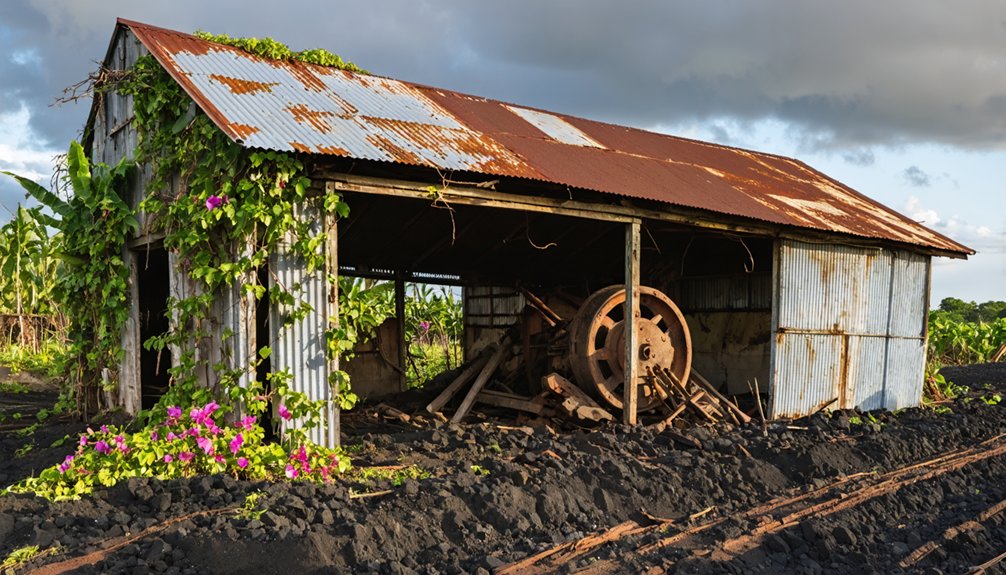
- Volcanic eruptions buried entire communities, like Kaimū and Kalapana, within weeks.
- Tsunamis erased settlements that had stood for generations, scattering residents permanently.
- Sugar plantation collapses dismantled economic ecosystems, not just buildings.
- Ancient villages carry cultural significance tied to Hawaiian sovereignty, fishing traditions, and ceremonial practice.
You’re not walking through decay here—you’re moving through layered historical preservation shaped by geology, colonialism, and nature.
That distinction matters. These sites demand a different kind of attention than anything you’d find on the mainland.
Frequently Asked Questions
Are Any Hawaii Ghost Towns Currently Submerged Underwater or Below Sea Level?
Yes, you’ll find submerged settlements exist in Hawaii’s coastal zones, where underwater archaeology reveals ancient sites consumed by rising seas and lava-redirected coastlines, offering you fascinating glimpses into communities that nature’s forces permanently claimed beneath the waves.
Did Hawaii Ever Have Active Gold or Silver Mining Operations?
Hawaii didn’t have active gold or silver mining operations. You’ll find its mining history lacked significant gold discoveries, limiting economic impacts and shaping a cultural significance tied more to volcanic resources and plantation agriculture instead.
Which Hawaii Ghost Town Has the Oldest Documented Human Habitation History?
Waipi’o Valley’s where you’ll find Hawaii’s oldest documented habitation. It’s harbored ancient artifacts and cultural significance for thousands of years, housing up to 10,000 people before 1778, making it the most historically profound prehistoric settlement you’d explore.
Are There Guided Ghost Town Tours Available on Any Hawaiian Island?
You’ll find limited formal ghost town history tours in Hawaii, but you can explore sites independently. Seek out tour experiences at Kaloko-Honokohau or Waipi’o Valley, where guided cultural excursions occasionally illuminate these abandoned communities’ layered pasts.
Have Any Abandoned Hawaii Towns Ever Been Successfully Restored or Resettled?
Few abandoned settlements see revival, yet Kapoho’s partial 1960 restoration stands out — you’d find it’s a rare success. Historical preservation efforts across Hawaii’s sites remain limited, as nature and economics continuously reclaim what communities once built.
References
- https://en.wikipedia.org/wiki/List_of_ghost_towns_in_Hawaii
- https://ghost-towns.close-to-me.com/states/hawaii/
- https://www.youtube.com/watch?v=3tGSM9Xl-4M
- https://nvtami.com/2023/04/26/big-island-hawaii-ghost-towns/
- https://www.guinnessworldrecords.com/news/2025/9/the-ghost-towns-at-the-edge-of-the-world-that-broke-record-titles-without-people
- https://www.geotab.com/ghost-towns/