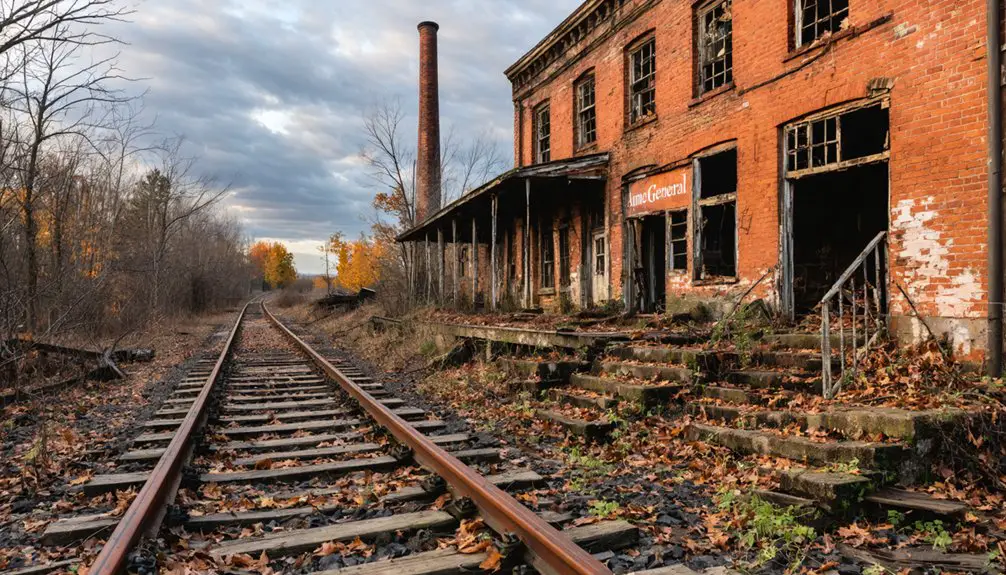
Planning a ghost town road trip to Conemaugh, Pennsylvania means heading to a reservoir-drowned town with a cursed history that locals once called “Satan’s Seat.” Take Route 22 west to the Livermore exit, park near the West Penn Trail, and explore what remains above water. During low periods, submerged chimneys break the surface like ghostly fingers. Pack waterproof boots, extra batteries, and a paper map — and there’s far more haunting history waiting just ahead.
Key Takeaways
- Conemaugh, Pennsylvania, is a submerged ghost town flooded in 1952, with visible chimneys and foundations emerging during low water periods.
- Travel west on Route 22, take the Livermore exit, and park near the West Penn Trail access point to begin exploring.
- Pack waterproof boots, a flashlight, extra camera batteries, weather-appropriate layers, and a paper map due to limited cell signals.
- Paranormal hotspots include a hilltop cemetery with phantom footsteps and the West Penn Trail, where shadowy figures and disembodied cries are reported.
- Local legends claim a witch’s curse caused the town’s repeated flooding, earning Conemaugh the ominous nickname “Satan’s Seat.”
Why Conemaugh Is Pennsylvania’s Most Haunted Underwater Ghost Town
Beneath the surface of the Conemaugh Dam reservoir lies what remains of Livermore, a Pennsylvania town that didn’t just fade away — it drowned. Founded in 1827 as a canal and railroad hub, Livermore survived devastating floods before finally succumbing to the reservoir’s rising waters in 1952.
Livermore didn’t fade — it drowned, swallowed by the Conemaugh reservoir in 1952 after a century of survival.
Today, its submerged chimneys peek through during low water periods, offering haunting glimpses into underwater mysteries that few ghost towns can match.
What makes Livermore extraordinary isn’t just its watery grave — it’s the centuries of ghostly legends surrounding it. Locals nicknamed it “Satan’s Seat” after repeated disasters, a witch’s curse, and unexplained phenomena that continue drawing paranormal investigators.
You’re not just visiting a forgotten town; you’re stepping into Pennsylvania’s most compelling intersection of documented history and supernatural mystery.
How Conemaugh Was Founded, Flooded, and Submerged Forever
When you trace Conemaugh’s origins back to 1827, you’ll find a thriving canal and railroad hub built along the Conemaugh River in Derry Township, Westmoreland County.
The town survived repeated flooding, including the catastrophic Johnstown Flood of 1889 and the devastating St. Patrick’s Day Flood of 1936, but its luck finally ran out in 1952 when the Conemaugh Dam reservoir swallowed it whole.
Today, you’re looking at a drowned town, and only during periods of low water do the ghostly chimneys of Conemaugh rise above the surface to remind you that an entire community once stood here.
Canal Town Origins
Tucked along the banks of the Conemaugh River, the town of Conemaugh was born in 1827 as a bustling hub where canal boats and early railroads converged, threading commerce through the steep Pennsylvania valleys.
Its canal history placed it at the heart of Pennsylvania’s industrial ambitions, moving goods and people through terrain that once seemed impassable. The railroad significance amplified this energy, transforming Conemaugh into a crucial artery connecting Pittsburgh’s growing economy to the wider region.
When you stand near Route 22 today, it’s worth imagining the noise, the movement, and the ambition that once defined this place.
People carved a living community from rugged geography, building something real and lasting — until nature and progress conspired to erase nearly every trace of it.
Floods And Submersion
The same river that made Conemaugh prosperous also made it vulnerable. The Conemaugh River flooded the town repeatedly, but the St. Patrick’s Day Flood of 1936 hit hardest, tearing through with devastating force.
Even the catastrophic Johnstown Flood of 1889 reached Livermore’s doorstep, adding to the town’s brutal flood history.
Then came the final blow. In 1952, the Conemaugh Dam reservoir swallowed the town entirely, erasing what disasters couldn’t finish.
Today, you’re looking at submerged structures hidden beneath still water — chimneys, foundations, and remnants of everyday life sealed beneath the surface.
When water levels drop, those ghostly rooftops resurface, giving you a rare glimpse into what’s lost. It’s unsettling, beautiful, and completely worth seeing firsthand.
The Witch’s Curse That Earned Conemaugh “Satan’s Seat”
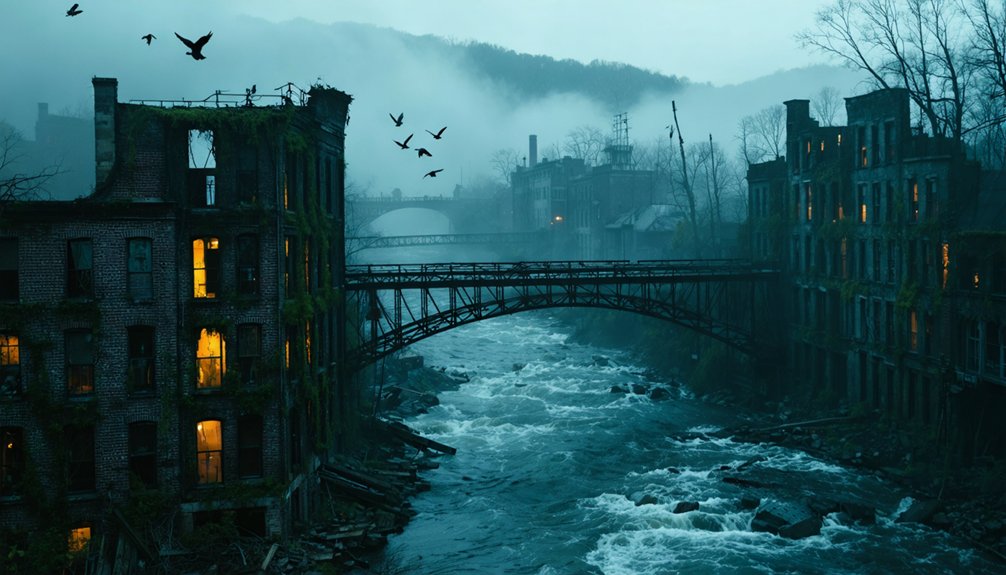
Before Conemaugh sank beneath its reservoir, locals had already given it a far darker name: “Satan’s Seat.” That nickname didn’t come from the floods alone — it grew from a legend rooted in accusation, execution, and a dying woman’s curse.
According to flood mythology passed through generations, authorities executed a woman on witchcraft charges after accusing her of practicing dark arts along the Conemaugh Valley. Before she died, she cursed the town, prophesying a devastating flood on the anniversary of her death. In 1889, that prophecy reportedly came true.
A woman condemned for witchcraft cursed the valley — and in 1889, the floodwaters proved her right.
This witchcraft history transformed how locals interpreted their misfortunes. Repeated disasters felt less like coincidence and more like fulfillment.
When you walk the surrounding trails today, you’re treading ground where generations believed something darker than floodwater shaped Conemaugh’s fate.
Paranormal Hotspots at Conemaugh’s Hilltop Cemetery and Trail
If you’re brave enough to wander Conemaugh’s hilltop cemetery, you’ll encounter phantom footsteps trailing behind you, sudden cold spots that cut through the air, and flickering lights that drain your devices without explanation.
The West Penn Trail, tracing the ghost of the old railroad grade, offers its own unsettling encounters — a hunched shadowy figure lurking at the tree line, disembodied cries carried on the wind, and chilling reports of a spectral train still running its long-drowned route.
Paranormal investigators note that both hotspots grow dramatically more active when reservoir water levels drop, as if the submerged town itself stirs awake beneath you.
Cemetery Paranormal Activity Hotspots
Perched above the waterline where the drowned town of Conemaugh once thrived, the hilltop cemetery stands as the most accessible—and most active—paranormal hotspot on the entire site.
Cemetery legends have circulated for decades, drawing curious visitors who’ve reported phantom footsteps crunching between tombstones when nobody else is around. You’ll notice sudden cold spots that appear without explanation, even on warm afternoons.
Ghost sightings here aren’t rare—flickering lights and unexplained shadows have startled seasoned investigators and casual explorers alike. Don’t be surprised when your flashlight dims or your devices malfunction entirely.
Researchers connect this intense activity directly to flood victims buried here and the infamous witch’s curse. Walk these grounds carefully; you’re stepping into ground zero of Conemaugh’s darkest, most unresolved history.
Trail Encounters And Sightings
Moving away from the cemetery’s haunted grounds, the West Penn Trail offers its own unsettling catalog of paranormal encounters.
Following the former railroad grade, you’ll walk terrain where witnesses have spotted hunched shadowy figures lurking between the trees — possibly the cursed witch herself or a flood victim still wandering.
Listen carefully, because disembodied mournful cries reportedly drift across the wind without explanation.
Ghost train sightings along the old rail line add another layer of dread, with investigators documenting demonic presences that resist rational explanation.
Your experience intensifies when reservoir water levels drop, exposing more of the submerged town below and seemingly amplifying supernatural activity above.
Come prepared, stay alert, and respect both the trail’s natural beauty and its deeply troubled history.
What to Bring When You Visit Conemaugh Ghost Town

Whether you’re hiking the West Penn Trail or picking your way through the hilltop cemetery, packing smart makes the difference between a memorable visit and a miserable one.
Pack smart or suffer — the difference between a memorable adventure and a miserable one starts before you leave home.
Low water periods reveal submerged chimneys, and ghost stories tied to local folklore demand you stay longer than planned.
Pack these essentials:
- Waterproof boots — muddy reservoir banks will swallow your sneakers whole
- Fully charged flashlight — devices fail near the cemetery, so bring a backup
- Camera with extra batteries — capture those emerging rooftops breaking the waterline
- Weather-appropriate layers — cold spots hit without warning along the trail
- Paper map or downloaded offline route — cell signals disappear deep in the Conemaugh Valley
Go prepared, stay curious, and respect what remains of Livermore beneath the surface.
Getting to Conemaugh: Your Route 22 West Directions
Getting to Conemaugh takes you west on Route 22, one of Pennsylvania’s most scenic drives through the rugged Conemaugh Valley.
Watch for the Livermore exit, your gateway to this submerged ghost town where haunted history lingers beneath still waters.
Once you’re off the highway, you’ll feel the landscape shift — rolling hills close in, and the reservoir stretches out before you, hiding what once thrived below.
Park near the West Penn Trail access point, where the former railroad grade becomes your path forward.
You’re now walking ground that floods, disasters, and decades have shaped into something genuinely eerie.
Keep your eyes on the water’s edge; when levels drop, chimney tops break the surface, reminding you that Conemaugh never fully disappeared.
Walk the West Penn Trail Above Conemaugh’s Sunken Streets
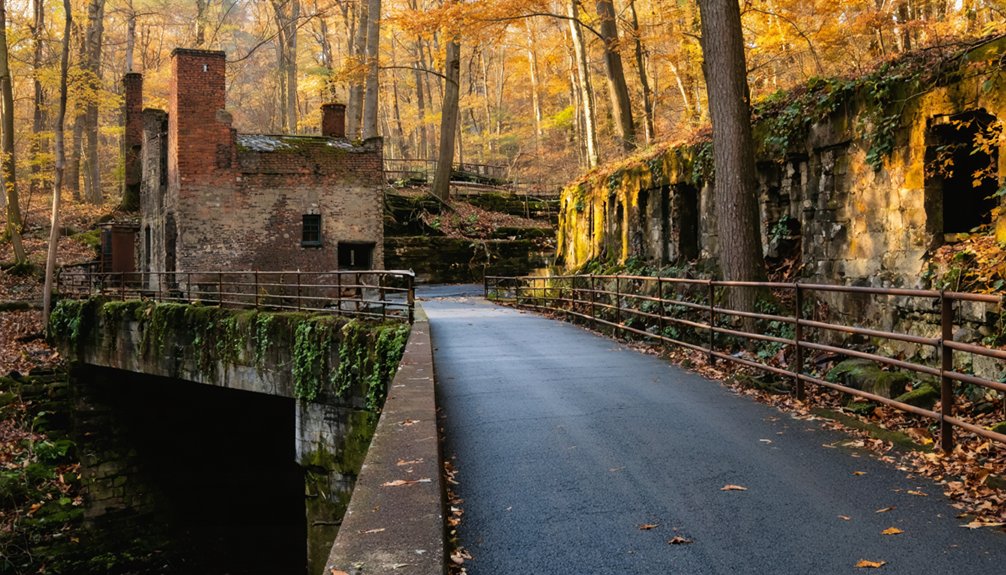
Once you step onto the West Penn Trail, you’re walking the same grade that steam engines once thundered across, hauling cargo through the Conemaugh Valley before floods and time swallowed everything below.
The West Penn Trail follows a ghost of iron and steam — same grade, same valley, different century entirely.
The trail’s historical significance hits differently knowing an entire town rests beneath that still water. Keep your senses sharp — ghostly encounters here aren’t rare.
Watch for:
- Chimneys breaking the reservoir’s surface during low water periods
- A hunched shadowy figure drifting between tree lines
- The distant moan of wind carrying something that sounds almost human
- Sudden cold pockets cutting through warm trail air
- Flickering equipment with no logical explanation
You’re not just hiking. You’re threading through layers of catastrophe, legend, and vanished lives that never quite stopped making noise.
When Low Water Reveals Conemaugh’s Submerged Chimneys
When reservoir levels drop, the drowned architecture of Conemaugh claws back toward daylight — brick chimneys piercing the waterline like gravestones refusing to stay buried.
These chimney sightings draw explorers who want unfiltered, unscripted encounters with history that mainstream tourism ignores.
You’ll want to monitor water level conditions before your visit, since dry seasons and managed reservoir drawdowns offer the clearest views.
Stand at the reservoir’s edge and you’re looking at an entire community’s skeleton — homes, foundations, and lives the Conemaugh Dam swallowed in 1952.
Nobody cordons this off or narrates it for you. You read the landscape yourself, on your own terms.
That raw access is exactly why Conemaugh rewards travelers who chase authenticity over comfort.
Frequently Asked Questions
Are There Any Guided Tours Specifically for Conemaugh Ghost Town?
No specific guided tours exist, but you can explore Conemaugh’s ghost town history independently. Trek the West Penn Trail, visit the hilltop cemetery, and embrace guided exploration on your own adventurous terms.
Is Overnight Camping Permitted Near the Conemaugh Reservoir Area?
You’ll want to check local camping regulations before pitching a tent near Conemaugh’s haunted shores. Reservoir safety rules restrict overnight stays, but the surrounding trails and wilderness invite your adventurous, freedom-seeking spirit to explore freely.
What Photography Permits Are Required at Conemaugh’s Hilltop Cemetery?
Misty tombstones loom around you—no formal photography permits are required at Conemaugh’s hilltop cemetery. You’re free to shoot, but respect cemetery etiquette and follow standard photography rules honoring this haunted, flood-scarred sacred ground.
Are There Nearby Accommodations for Visitors Exploring Conemaugh Ghost Town?
You’ll find accommodations near Route 22 West, with local dining options awaiting your adventurous spirit. Transportation options let you freely explore Conemaugh’s haunting reservoir, eerie trails, and the atmospheric hilltop cemetery at your own untamed pace.
What Local Historical Societies Preserve Records About Conemaugh’s Residents?
Like guardians of forgotten whispers, the Westmoreland County Historical Society and Derry Township archives anchor preservation efforts. You’ll uncover Conemaugh’s residents through their local archives, where drowned stories resurface, reclaiming freedom from history’s silent, watery grave.
References
- https://www.youtwoscaremepodcast.com/episodes/livermore-pa
- https://pittsburghghosts.com/livermore-pennsylvania-ghost-town/
- https://www.facebook.com/groups/abandonedrails/posts/1611485648884944/
- https://en.wikipedia.org/wiki/List_of_ghost_towns_in_Pennsylvania
- https://en.wikipedia.org/wiki/Ghost_Town_Trail
- http://www.johnstowncafe.com/johnstownarchivebookthevalleyoftheconemaugh1865.pdf
- https://archive.triblive.com/local/westmoreland/west-overton-livermore-listed-among-pennsylvanias-ghost-towns-to-explore/
- http://files.usgwarchives.net/pa/cambria/history/local/valley-of-conemaugh-05.txt