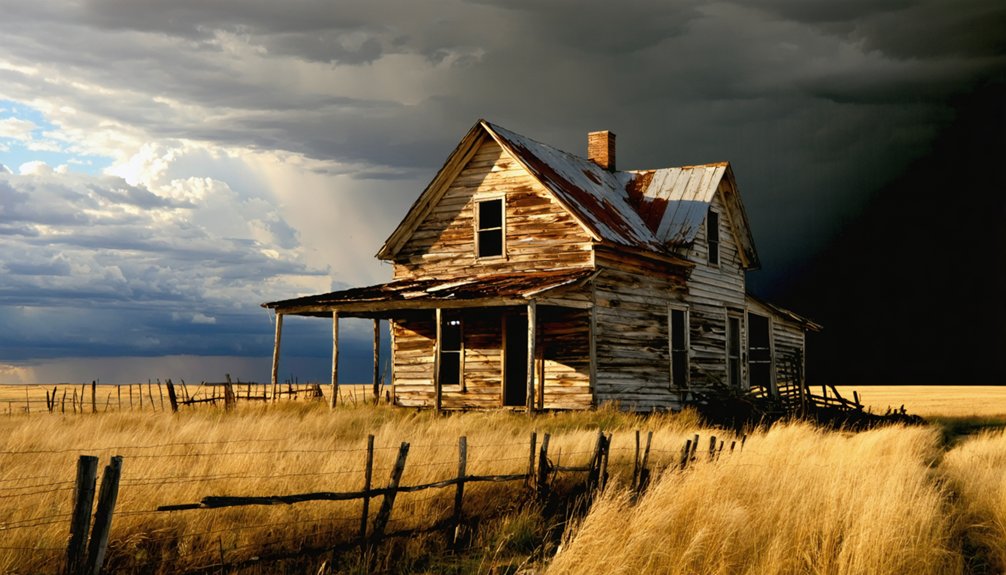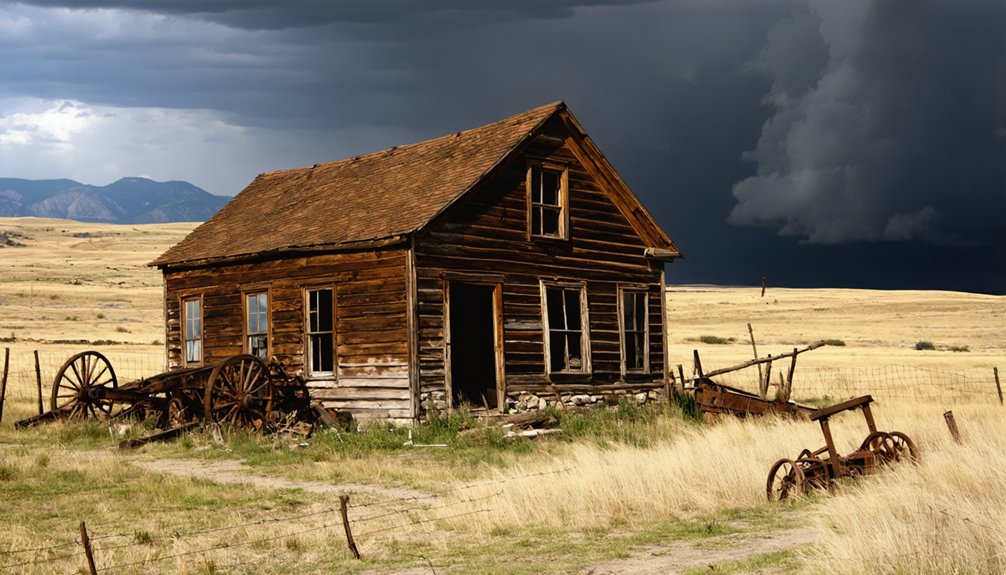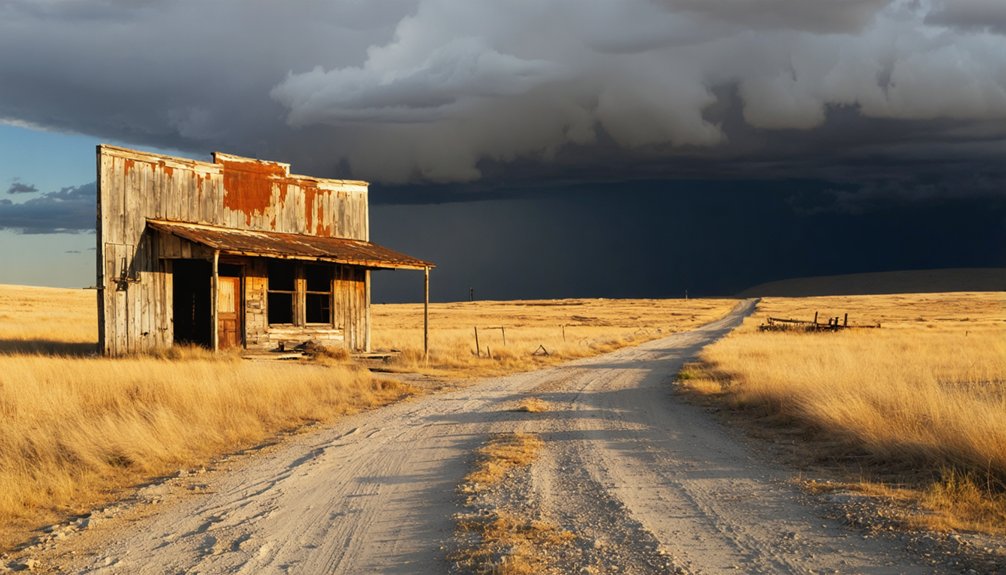
Copper Camp, South Dakota doesn’t appear on any verified map, historical registry, or geographic database — it’s most likely a product of Black Hills mining mythology rather than a real settlement. That doesn’t mean your road trip is dead, though. Real ghost towns like Galena, Silver City, Spokane, and Maitland offer genuine ruins, documented histories, and accessible trails worth exploring. Stick around to uncover everything you need to plan the ultimate Black Hills ghost town adventure.
Key Takeaways
- Copper Camp has no verified historical record in South Dakota archives, suggesting it likely originated from regional mining mythology rather than a real settlement.
- Instead, plan your road trip around confirmed ghost towns like Galena, Silver City, Spokane, Maitland, and Deadwood in the Black Hills.
- Use Google Maps or OnX Offroad to plot verified stops geographically, minimizing backtracking across winding Black Hills terrain.
- Verify destinations against South Dakota State Historical Society publications and USGS geographic databases before finalizing your itinerary.
- Pack essentials including a high-clearance vehicle, offline maps, water, first-aid kit, and recovery gear for remote fire roads.
What Is Copper Camp, South Dakota?
Copper Camp, South Dakota, doesn’t appear in any verified historical record, state archive, or geographic database — making it, for all practical purposes, a ghost town that never existed. No county registry, geological survey, or heritage register lists it. No founding year, population count, or abandonment date has ever been recorded under this name.
Its fictional origins likely stem from the region’s rich mining mythology, where names blur between documented camps and invented lore. Naming myths around Black Hills settlements spread easily, especially when copper, gold, and silver fever fueled speculation and storytelling in equal measure.
Before you pack your bags and hit the open road, you need the facts. Chasing a settlement with zero confirmed coordinates means chasing nothing — and your freedom-fueled adventure deserves a real destination.
Why No Verified Records Exist for Copper Camp
When you start digging into the history of Copper Camp, you’ll quickly hit a wall — no historical documentation exists for it anywhere.
State archives, county registries, and South Dakota Historical Society publications all come up empty, with zero entries connecting this name to any real settlement.
You won’t find coordinates, land records, or even a single photograph confirming that Copper Camp ever stood anywhere in the Black Hills.
No Historical Documentation Found
Despite what the title of this article might suggest, there’s no verified historical documentation confirming that Copper Camp ever existed as a real settlement in South Dakota. The archival silence surrounding this name is absolute. You won’t find it in state geological surveys, county registries, or Black Hills mining reports. No oral histories mention it. No photographs capture it. No land records assign it coordinates or county affiliation.
South Dakota’s ghost town history is remarkably well-documented, making this absence significant. Legitimate mining camps left paper trails — production figures, postal records, newspaper mentions. Copper Camp left nothing. Before you pack your bags chasing a destination that exists only in name, it’s worth understanding that the historical record doesn’t support this location as a real place worth visiting.
Absent From State Archives
State archives tell the real story, and for Copper Camp, that story is silence. You won’t find this name in South Dakota Historical Society publications, state geological surveys, or county-level registries. The archive absence is total — no founding date, no population count, no mining output, nothing.
When researchers trace name origins for Black Hills settlements, they follow paper trails: land grants, postal records, newspaper dispatches. Copper Camp leaves no such trail. It doesn’t appear on historical maps, heritage registers, or archaeological assessments. That kind of complete erasure doesn’t happen to real places — it happens to names that were never officially recorded because the place never existed.
Before you fuel up and head out, you deserve confirmation that your destination actually appears somewhere beyond imagination.
Zero Geographic Record Exists
Geography doesn’t lie, and every tool you’d use to plot a road trip confirms the same result: Copper Camp doesn’t exist in South Dakota‘s geographic record.
Historical cartography reveals no mapped settlement by this name, and oral traditions from Black Hills communities never reference it either.
Before you chase a phantom, check these verified sources:
- U.S. Geological Survey lists zero coordinates for Copper Camp
- No GPS platform recognizes the name within South Dakota’s boundaries
- State geographic databases assign no county affiliation to this location
- Historical cartography archives contain no surveyed land parcel under this name
- Oral traditions and recorded pioneer accounts never mention a Copper Camp settlement
You deserve a road trip built on real destinations. Don’t waste your freedom chasing a location that never existed on any map.
What the Black Hills Mining Boom Actually Looked Like
The Black Hills mining boom erupted in 1874 when General George Custer‘s expedition confirmed gold deposits in the region, triggering one of the most chaotic rushes in American history.
Thousands of prospectors flooded the hills, carving out rough settlements almost overnight. Mining camplife meant canvas tents, muddy streets, and constant noise from pickaxes splitting rock at dawn.
Ore processing defined the economic pulse of these communities. Stamp mills crushed raw quartz around the clock, and sluice boxes channeled water to separate gold from gravel.
Towns like Deadwood, Galena, and Silver City emerged from this frenzy, leaving behind ruins you can still explore today. Copper Camp, however, appears nowhere in this documented history, which matters before you commit to any road trip destination.
Ghost Towns Near Where Copper Camp Would Have Been
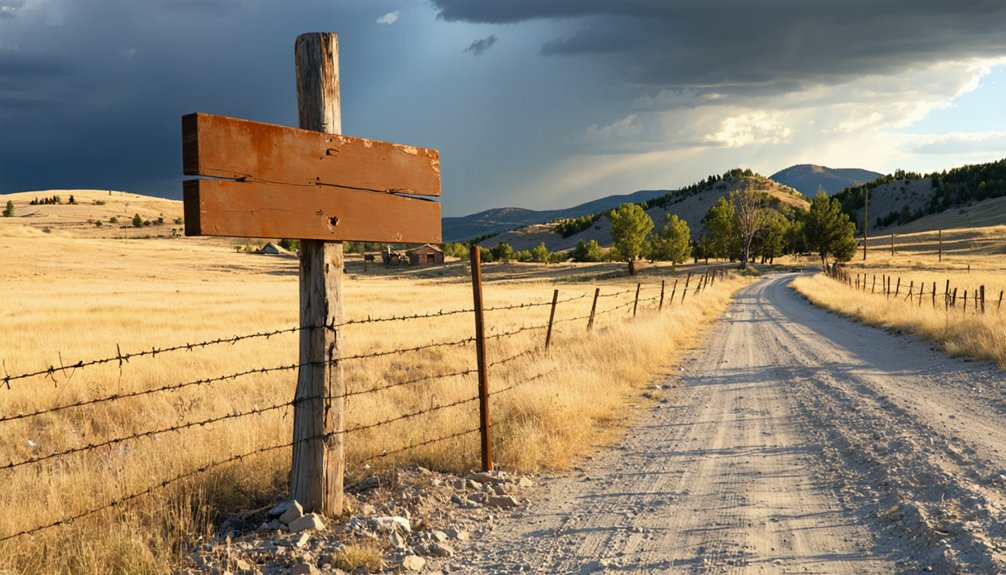
Since Copper Camp doesn’t appear in any verified South Dakota records, pinpointing an exact region is guesswork—but the Black Hills‘ Custer and Lawrence counties contain the densest concentration of documented ghost towns, so that’s your best starting point. Lean into prospecting lore and local ghostlore as your compass while you explore these verified alternatives:
Copper Camp may be legend, but the Black Hills’ ghost towns are real—and waiting to be explored.
- Galena – ATV-friendly trails wind through genuine mining ruins
- Silver City – maintained postal service until 1964, with visible structures
- Spokane – founded 1890, abandoned by 1940, Custer County’s quiet relic
- Maitland – Lawrence County ruins near Central City reward determined explorers
- Deadwood – anchors any serious Black Hills itinerary
Geological hotspots and remote campsites connect these towns, letting you build a flexible, freedom-driven route through country that actually shaped history.
Which South Dakota Ghost Towns Still Have Standing Structures?
Weathered boards, crumbling stone foundations, and rusted equipment are what separate a true ghost town experience from a bare field—and South Dakota delivers on that front if you know where to look.
Galena retains visible mine structures, while Silver City still shows building remnants from its postal-service era. Spokane in Custer County offers stone foundations worth exploring.
Before you wander, check legal access—trespassing on private land carries real consequences.
Historic preservation efforts vary by site, so some structures have stabilized walkways while others remain raw and unmanaged. Always review any available structural assessment notes posted at trailheads or county offices.
Visitor safety is your responsibility, especially around deteriorating rooflines and mine openings. Stay on marked paths and respect posted boundaries to keep these sites accessible for everyone.
How to Plan a Black Hills Ghost Town Road Trip
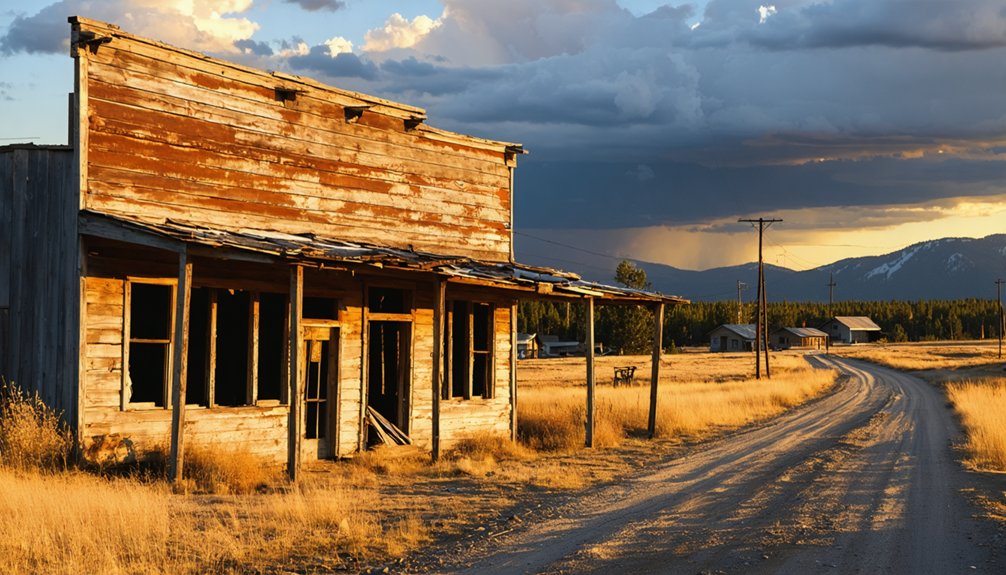
Since Copper Camp doesn’t appear in any verified South Dakota records, you’ll want to anchor your Black Hills road trip around confirmed ghost towns like Galena, Silver City, or Spokane before you map a single mile. Plot your route using U.S. Geological Survey data and county historical office resources to connect sites efficiently, minimizing backtracking across the region’s winding terrain.
Pack essentials like a paper map, high-clearance vehicle gear, water, and a first-aid kit, since many authentic ghost town sites sit far from paved roads and reliable cell service.
Choosing Verified Ghost Towns
Planning a Black Hills ghost town road trip starts with verifying your destinations actually exist. History verification prevents wasted miles and disappointing dead ends. Error corrections happen before you leave, not after you’ve driven hours into nowhere.
Cross-reference every location against these authoritative sources:
- South Dakota State Historical Society publications listing confirmed ghost towns
- U.S. Geological Survey geographic databases with named Black Hills locations
- United States Ghost Towns database for verified abandoned settlements
- County historical offices in Custer, Lawrence, or Pennington counties
- South Dakota Department of Commerce official ghost town registries
Verified destinations like Galena, Spokane, and Silver City offer real ruins, actual trails, and documented history. You deserve a road trip built on facts, not fiction. Choose confirmed locations and own every mile.
Mapping Your Route
Once you’ve locked in verified destinations like Galena, Spokane, and Silver City, mapping a logical driving sequence saves you from crisscrossing the Black Hills unnecessarily. Start by plotting each stop in map apps like Google Maps or OnX Offroad, which let you visualize distances and road conditions between sites.
The Black Hills’ winding terrain means a few extra miles can translate into significant drive time, so sequence your stops geographically rather than alphabetically. Build in route alternatives for unpaved or seasonal roads that may be inaccessible depending on weather.
Flexibility matters out here — if one road’s washed out, you’ll want a backup path already loaded. Downloading offline maps before you leave cell range keeps you moving confidently through remote stretches without losing your bearings.
Essential Road Trip Gear
Packing the right gear transforms a rough backcountry drive into a smooth, confident expedition through the Black Hills. You’re heading into remote terrain, so preparation isn’t optional — it’s your lifeline.
Essential items include:
- Navigation tools — offline maps, a compass, and printed route guides since cell service disappears fast
- First aid kit — bandages, antiseptic, pain relievers, and blister treatment for unexpected trail emergencies
- Recovery gear — tow straps, a shovel, and traction boards for muddy or rutted fire roads
- Water and food — carry more than you think you’ll need; resupply points are sparse
- Lighting — headlamps and backup batteries for exploring shadowy structures after dusk
Pack smart, stay self-sufficient, and you’ll own every mile of this wild Black Hills adventure.
What to Bring When Exploring Abandoned Mining Sites

Exploring abandoned mining sites like the verified ghost towns of South Dakota’s Black Hills demands careful preparation before you hit the road. Pack essential safety gear: sturdy boots, a hard hat, dust mask, and a reliable flashlight for traversing unstable structures.
Abandoned mining sites demand respect — pack your hard hat, dust mask, and flashlight before venturing into the Black Hills.
Carry water, a first-aid kit, and a charged phone with offline maps downloaded.
Conduct thorough historical research before arriving so you understand each site’s layout, hazards, and significance. Always confirm legal access through county offices or state land management agencies — trespassing on private claims carries real consequences.
Practice responsible site etiquette by leaving artifacts undisturbed, staying on designated paths, and carrying out all trash. Respecting these places preserves their stories for future explorers who’ll follow your trail.
The Best Time of Year to Drive the Black Hills Ghost Town Circuit
From late May through early September, you’ll find the Black Hills ghost town circuit at its most accessible, with mountain roads clear of snow and daylight stretching well into the evening hours.
Chase that summer sunrise over crumbling mine structures before crowds arrive. If you crave winter solitude, December through February rewards patient travelers with dramatic, frozen landscapes and zero competition for the best photography angles.
Plan your timing around these circuit-specific advantages:
- Late May: wildflowers frame abandoned structures at peak color
- June–July: longest daylight windows maximize exploration time
- August: stable weather with cooler morning temperatures
- September: golden foliage transforms every ruin backdrop
- Winter: empty roads and silent, snow-draped sites offer raw, unfiltered atmosphere
Every season reveals a completely different ghost town experience.
Where to Stay Along the Black Hills Ghost Town Route
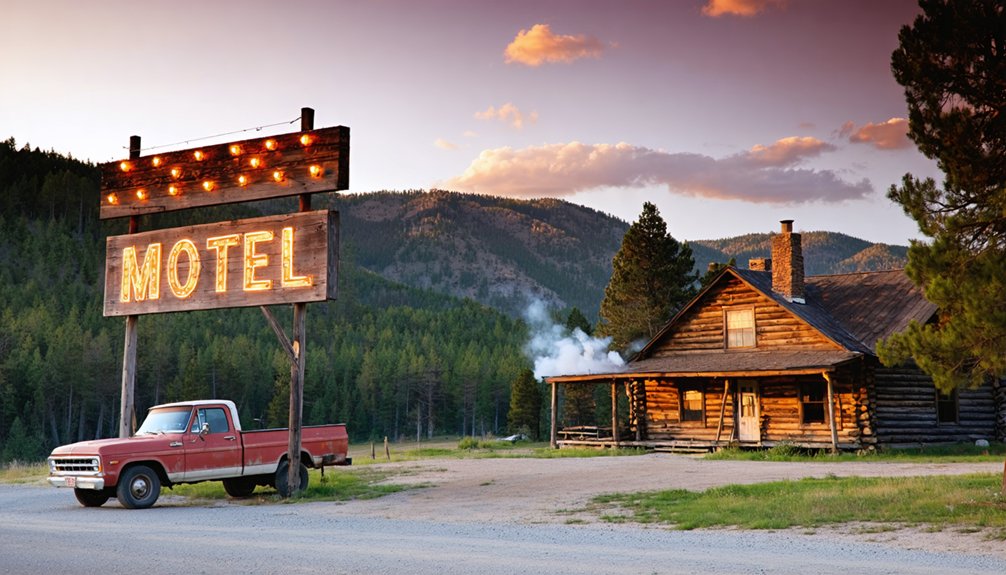
Deadwood anchors the northern end of the route and gives you the widest range of lodging, from historic hotels like the Bullock to budget lodging just off Main Street.
Historic B&Bs in Lead offer quieter stays with genuine frontier character, perfect if you want something more intimate than a chain property.
Heading south toward Custer and Hill City, you’ll find family friendly hotels with pools and easy highway access, ideal if you’re traveling with kids.
Campground options are plentiful throughout the Black Hills National Forest, with sites near Pactola Reservoir and Sheridan Lake putting you close to the ghost town circuit without draining your wallet.
Booking ahead between June and August is essential since availability tightens fast across every lodging tier.
How to Photograph Abandoned Mining Towns in South Dakota
When you’re shooting abandoned mining towns like those scattered across the Black Hills, set your camera to a low ISO (100–400) to reduce grain, use a wide aperture for moody depth, and slow your shutter speed to capture dim interior light without losing detail.
You’ll want to frame decay intentionally — rust streaks, collapsed timbers, and peeling paint all tell a story when you compose with purpose rather than just pointing and shooting.
Lighting makes or breaks these shots, so time your visit for golden hour, when warm, raking light cuts through broken windows and casts long shadows that transform crumbling structures into something hauntingly beautiful.
Best Camera Settings
Capturing the weathered beauty of South Dakota’s abandoned mining towns requires dialing in the right camera settings before you ever raise the viewfinder. Manual focus gives you precise control over crumbling textures, and a shallow depth of field isolates rust-eaten machinery against open sky.
- Set ISO between 100–400 in daylight to reduce grain on aged wood and stone
- Use f/8–f/11 for sharp, sweeping structural detail across entire building facades
- Shoot in RAW format to maximize editing flexibility for dramatic shadow recovery
- Choose a shutter speed of 1/125s or faster to eliminate wind-caused blur on loose debris
- Apply exposure compensation at -1/3 to -2/3 stops to preserve highlight detail in bright midday conditions
These settings reveal the raw, unfiltered character these forgotten places deserve.
Capturing Decay Artfully
Framing decay as art means training your eye to see structure in collapse rather than just ruin. At Copper Camp, urban decay reveals itself in layered textures — rust bleeding through iron, timber splitting along grain lines, paint curling back like manuscript pages. You’re not documenting destruction; you’re excavating time.
Move close. Abstract textures emerge where materials surrender to weather — pitted metal, cracked adobe, moss colonizing mortar joints. These details carry more emotional weight than wide establishing shots.
Work your angles deliberately. Low perspectives exaggerate height in crumbling walls. Overhead compositions transform debris fields into graphic patterns. Shoot parallel to surfaces to emphasize texture depth.
Let asymmetry guide your compositions. Decay rarely centers itself neatly, and your framing shouldn’t either. Embrace the imbalance — it’s honest.
Lighting Abandoned Spaces
Light transforms an abandoned space from a static ruin into something that breathes. At Copper Camp, you’ll want to master ambient lighting to reveal texture in rotting wood and rusted ore equipment.
Early morning and golden hour deliver soft, directional light that deepens shadows without blowing out highlights.
- Shoot during blue hour for moody, cool tones inside collapsed structures
- Use a flashlight to paint light across dark interior walls during long exposures
- Carry safety lighting like a headlamp to navigate unstable floors without tripping
- Diffuse harsh midday sun with your body or a reflector
- Bracket exposures to capture both bright exterior openings and dark interior corners
Let natural light do the heavy lifting. Your camera captures what your eyes already sense — atmosphere, silence, and time.
Frequently Asked Questions
Are There Guided Ghost Town Tours Available in the Black Hills Region?
You’ll find guided ghost town tours throughout the Black Hills, offering historic reenactments and paranormal excursions that ignite your adventurous spirit. Explore Deadwood, Galena, and Silver City through expert-led experiences that bring forgotten frontier history vividly alive.
Can Children Safely Visit Abandoned Mining Sites in South Dakota?
Like a hawk watching its nest, you’ll need sharp attention to child safety. Follow supervision guidelines, watch for site hazards, and turn exploration into educational activities — your kids can safely enjoy South Dakota’s abandoned mining sites.
Do Any Black Hills Ghost Towns Require Permits or Entry Fees?
Some Black Hills ghost towns don’t require permit requirements or access fees, letting you roam freely. Others on private or state land demand both, so you’ll want to verify each site’s rules before arriving.
Are Pets Allowed at South Dakota Ghost Town Historical Sites?
Pet policies vary wildly across South Dakota’s verified ghost towns like Galena and Deadwood. You’ll typically keep pets leashed, though service animals enjoy universal access. Always check each site’s specific rules before you arrive.
Do Local Libraries Hold Unpublished Mining Camp Maps or Records?
Yes, you’ll often find unpublished mining camp maps and records tucked within local archives at county libraries. They also preserve oral histories that reveal forgotten details, giving you the freedom to uncover authentic, undocumented stories firsthand.
References
- https://en.wikipedia.org/wiki/List_of_ghost_towns_in_South_Dakota
- http://www.momentsinlightphoto.com/2018/06/spokane-ghost-town-black-hills-sd.html
- https://southdakotamagazine.com/2019/03/28/a-ghost-town-called-spokane/
- https://en.wikipedia.org/wiki/Maitland
- https://www.sdpb.org/rural-life-and-history/spokane-south-daktoa-black-hills-ghost-town
- https://www.powderhouselodge.com/black-hills-attractions/fun-attractions/ghost-towns-of-western-south-dakota/
- https://www.facebook.com/groups/SouthDakotaBeautiful/posts/1125974071914776/
- https://www.southdakotamagazine.com/a-ghost-town-called-spokane
- https://espnsiouxfalls.com/ixp/481/p/south-dakota-ghost-towns-2/
- https://coratravels.com/blog/ghost-towns-in-south-dakota