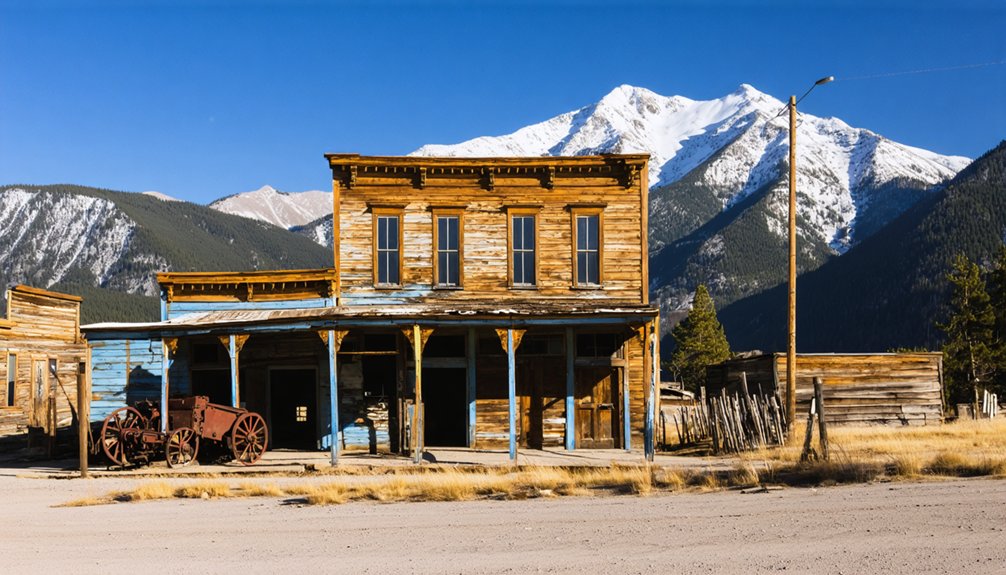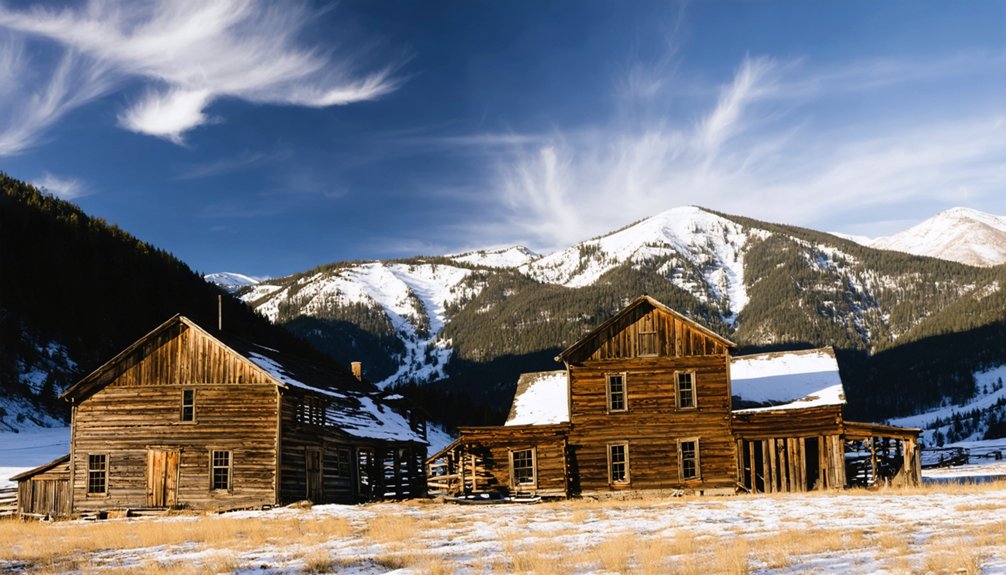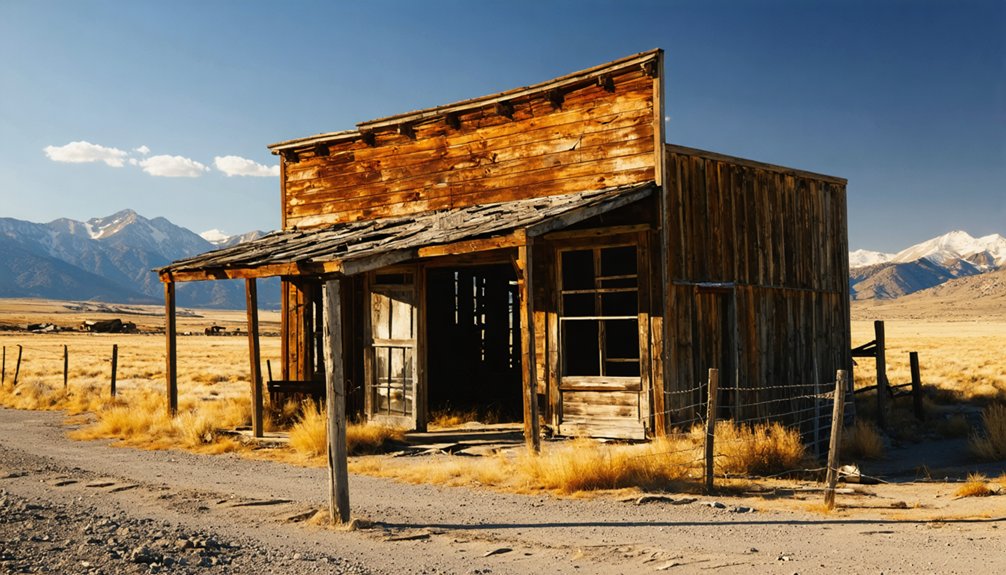
Planning a ghost town road trip to Coalmont, Colorado means heading into the North Park basin at 8,209 feet, where nearly 200 miners once called this remote stretch home. You’ll find century-old company houses with sagging rooflines, rusted mining equipment, and a restored schoolhouse still standing against the high-country sky. Summer offers the easiest access, but every season brings something different. Stick around and you’ll discover everything you need to make this trip unforgettable.
Key Takeaways
- Coalmont sits at 8,209 feet in North Park basin, preserving century-old company houses, rusted mining equipment, and a restored schoolhouse-turned-community-center.
- From Walden, drive southwest on Highway 14 for 13 miles, turn right onto County Road 24, then left into the original townsite.
- Summer offers the best visiting conditions; start early to avoid afternoon storms and enjoy long daylight hours.
- Winter snowfall can close County Road 24 entirely, so always check road conditions before traveling.
- Most land is private; park in designated turnouts, stay on accessible paths, and respect all property boundaries.
What Makes Coalmont, Colorado Worth the Drive?
Tucked into the high-elevation basin of North Park at 8,209 feet, Coalmont isn’t your typical roadside curiosity — it’s a well-preserved snapshot of Colorado’s coal-mining past that rewards the curious traveler. You’ll find rustic charm in every weathered plank and sagging roofline, telling stories of the 200 residents who once built lives around the coal seams beneath their feet.
The restored schoolhouse-turned-community-center anchors the townsite, while century-old company houses offer exceptional photographic opportunities against Jackson County’s sweeping pastoral backdrop. Large moose populations roam nearby, adding unexpected wildlife encounters to your visit.
Whether you’re chasing history, solitude, or striking imagery, Coalmont delivers something genuine — a place untouched by tourist infrastructure, where you’re free to explore Colorado’s raw, unfiltered past on your own terms.
When Is the Best Time to Visit Coalmont?
Coalmont is accessible year-round, but timing your visit can make the difference between an easy afternoon drive and a snow-blocked dead end.
Summer afternoons offer the clearest conditions, with warm temperatures, dry roads, and long daylight hours giving you plenty of time to explore the remaining structures at your own pace. The North Park region sits at over 8,000 feet, so even July can bring unexpected afternoon storms, so start early.
The shoulder seasons of late spring and early fall strike a balance between manageable weather and fewer crowds, letting you experience the site’s quiet, abandoned atmosphere without distraction.
Winter visits are risky since heavy snowfall can close County Road 24 entirely, stranding you far from Walden with no easy alternatives.
How to Get to Coalmont From Walden
Getting to Coalmont from Walden is a straightforward drive that’ll take you through some of the most open, windswept ranchland in Jackson County. Head southwest on Colorado State Highway 14 for roughly 13 miles, then turn right onto County Road 24. After three miles, take a left onto the connecting county road leading directly into the original townsite.
Road conditions are generally manageable in a standard 2WD vehicle, so you won’t need a truck or SUV for the journey. However, winter snowfall can make roads treacherous, so check conditions before heading out. Parking options are informal since the area is largely private land — pull off carefully where you see established turnouts. Respect property boundaries, stay aware of your surroundings, and you’ll have no trouble exploring freely.
The Schoolhouse, Mining Ruins, and Buildings Still Standing in Coalmont
Once you roll into Coalmont, the landscape shifts from open ranchland to something that feels like time quietly stopped. Dilapidated company houses lean against the mountain air, while the remnants of mining infrastructure dot the surrounding terrain. You’ll notice the schoolhouse restoration stands out immediately — it’s one of the few structures brought back to life, now serving as a community center locals still use today.
Walk the grounds and you’ll encounter miner artifacts preservation efforts that keep the area’s coal-mining identity visible and tangible. Rusted equipment, crumbling foundations, and century-old wooden structures paint a vivid picture of what life looked like here at peak operation. The land is mostly private, so respect boundaries, stay on accessible paths, and let the place speak for itself.
Hunting, Fishing, and Wildlife Viewing Near Coalmont
Stepping away from the ghost town ruins opens up a whole other reason to linger in Jackson County — the wildlife and outdoor recreation here are genuinely impressive.
Jackson County rewards those who linger — ghost town ruins are just the beginning of what this wild place offers.
North Park’s sprawling meadows and wetlands support one of Colorado’s densest moose populations, making moose photography a serious draw for visitors with a camera and patience.
You’ll also find excellent stream trout fishing along nearby waterways, with cold, clear water holding healthy populations year-round.
If you hunt, the region offers solid upland game opportunities across open terrain that rewards self-reliance and exploration.
Whatever you pursue, practice strong wildlife ethics — keep your distance, pack out everything, and respect private land boundaries.
Jackson County’s wildness feels earned, and treating it carefully guarantees it stays that way.
Frequently Asked Questions
What Type of Coal Was Mined at Coalmont’s Riach Coal Field?
You’ll discover that Coalmont’s Riach Coal Field produced low-sulfur bituminous seams, extracted through underground mining operations. This high-quality coal fueled an entire era, giving you a fascinating glimpse into Colorado’s raw, independent frontier spirit.
How Many Company-Owned Houses Existed at Coalmont’s Peak?
Like a well-oiled machine, Coalmont’s company housing comprised 60 homes at its peak, shaping the town layout where you’d find mining families living side by side, breathing life into this once-thriving Colorado community.
What Railroad Line Transported Coalmont’s Coal to Laramie, Wyoming?
You’ll love knowing the Laramie, Hahns Peak, and Pacific Railroad hauled Coalmont’s coal straight to Laramie, Wyoming — not giants like Union Pacific or Denver & Rio Grande — giving this scrappy, independent mining town its own bold, freewheeling legacy!
How Was the Riach Coal Field Vein Originally Discovered?
According to local lore, you’d be surprised to learn that no geological survey discovered the Riach Coal Field vein — hunters chasing a coyote stumbled upon it when the animal disappeared into a hole, revealing the rich coal deposit beneath!
How Much Coal Did the Riach Coal Field Produce During Operation?
You’ll hit the jackpot learning that the Riach Coal Field produced an estimated 400 million tons of coal! Its impressive annual output reflects the powerful mining techniques workers used throughout its remarkable operational history.
References
- https://www.facebook.com/groups/goldtrailsandghosttowns/posts/10159273112057044/
- https://www.uncovercolorado.com/towns/coalmont/
- https://www.youtube.com/watch?v=GKeVm5_bcCM
- https://www.visitnorthparkco.com/ghost-towns-of-jackson-county/
- https://en.wikipedia.org/wiki/Coalmont
- https://en.wikipedia.org/wiki/List_of_ghost_towns_in_Colorado
- https://www.youtube.com/watch?v=awkQWXHRxFo
- https://coloradosghosttowns.com/Coalmont CO.html
- https://cogenweb.org/jackson/towns.htm
- https://www.michaelkluckner.com/bciw2coalmont.html